War and Peace: What It's About & Best Translation
The translation you choose shapes the novel you read
As an Amazon Associate, we earn from qualifying purchases.
War and Peace is a historical epic that intertwines the lives of several families against the backdrop of the Napoleonic Wars. It explores themes of fate, free will, and the search for meaning in life.
Translation Comparison at a Glance
| Translation | Readability | Accuracy | Tone | Best For |
|---|---|---|---|---|
| Pevear & Volokhonsky (2007) | Moderate | Excellent | Faithful, literal | Close literary study |
| Briggs (2005) | Very high | Good | Fluent, contemporary | First-time readers |
| Maude (1922) | High | Very good | Dignified, clear | Balanced classic reading |
| Garnett (1904) | High | Fair | Edwardian, stately | Free historical version |
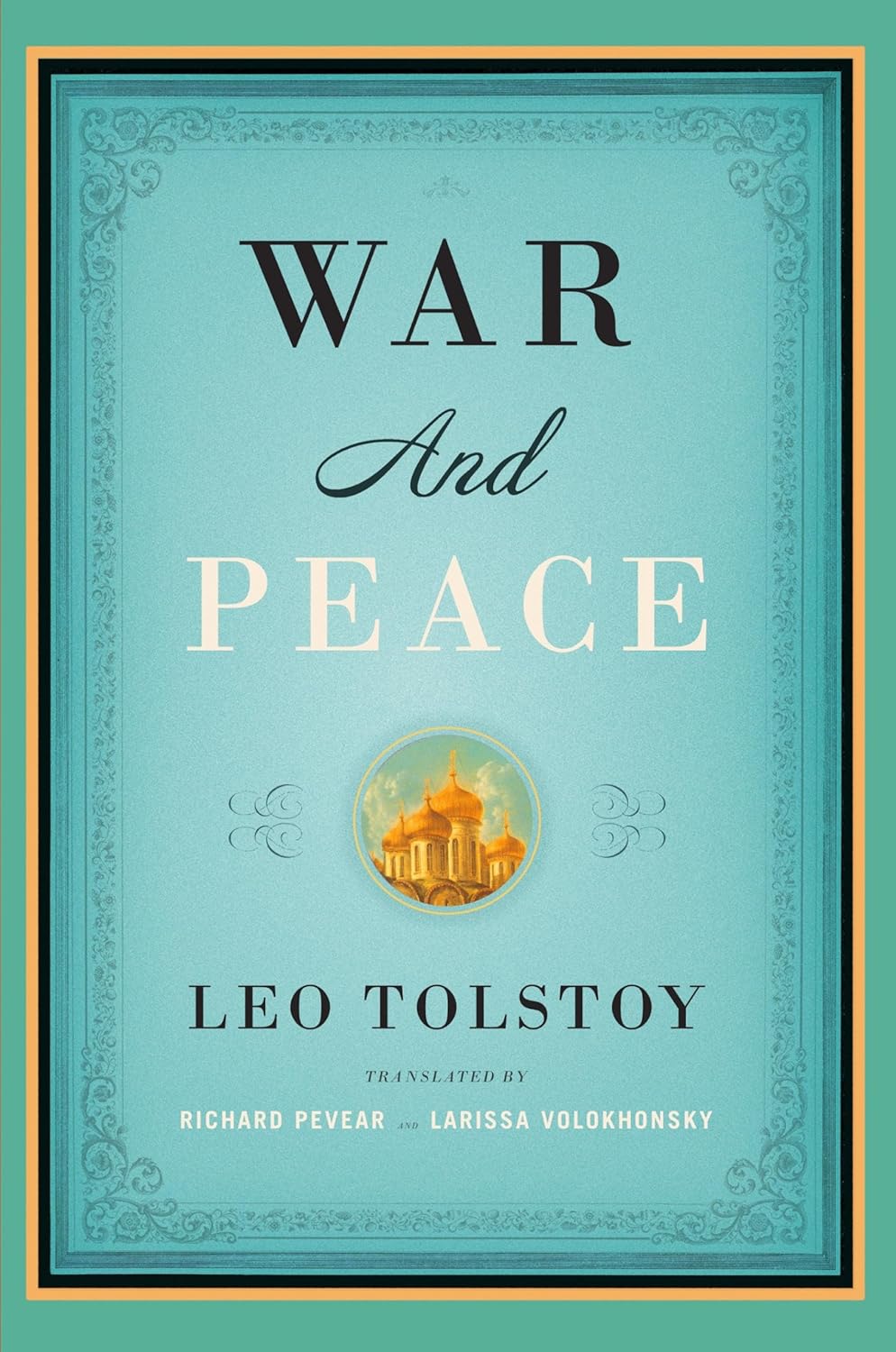
#1 — War and Peace — trans. Richard Pevear & Larissa Volokhonsky (2007)
- Readability: Moderate; long sentences preserved
- Accuracy: Excellent; closest to Tolstoy's Russian
- Tone: Faithful, literal with tonal shifts intact
- Accessibility: Best for serious literary study

Frederick Davidson's commanding yet nuanced narration captures the epic scale and intimate drama of Tolstoy's masterpiece, while the Maude translation remains the gold standard for its clarity and fidelity to the original.
Listen on Audible →Which translation is right for you?
- Choose Pevear & Volokhonsky if you want maximum fidelity to Tolstoy's long sentences, repetitions, and French passages kept in French.
- Choose Briggs if your priority is fluent, contemporary English and narrative momentum across 1,200 pages.
- Choose Maude if you want the translation Tolstoy personally approved and a balanced, dignified classic.
- Choose Garnett if you want a free, historically important version with Edwardian stateliness.
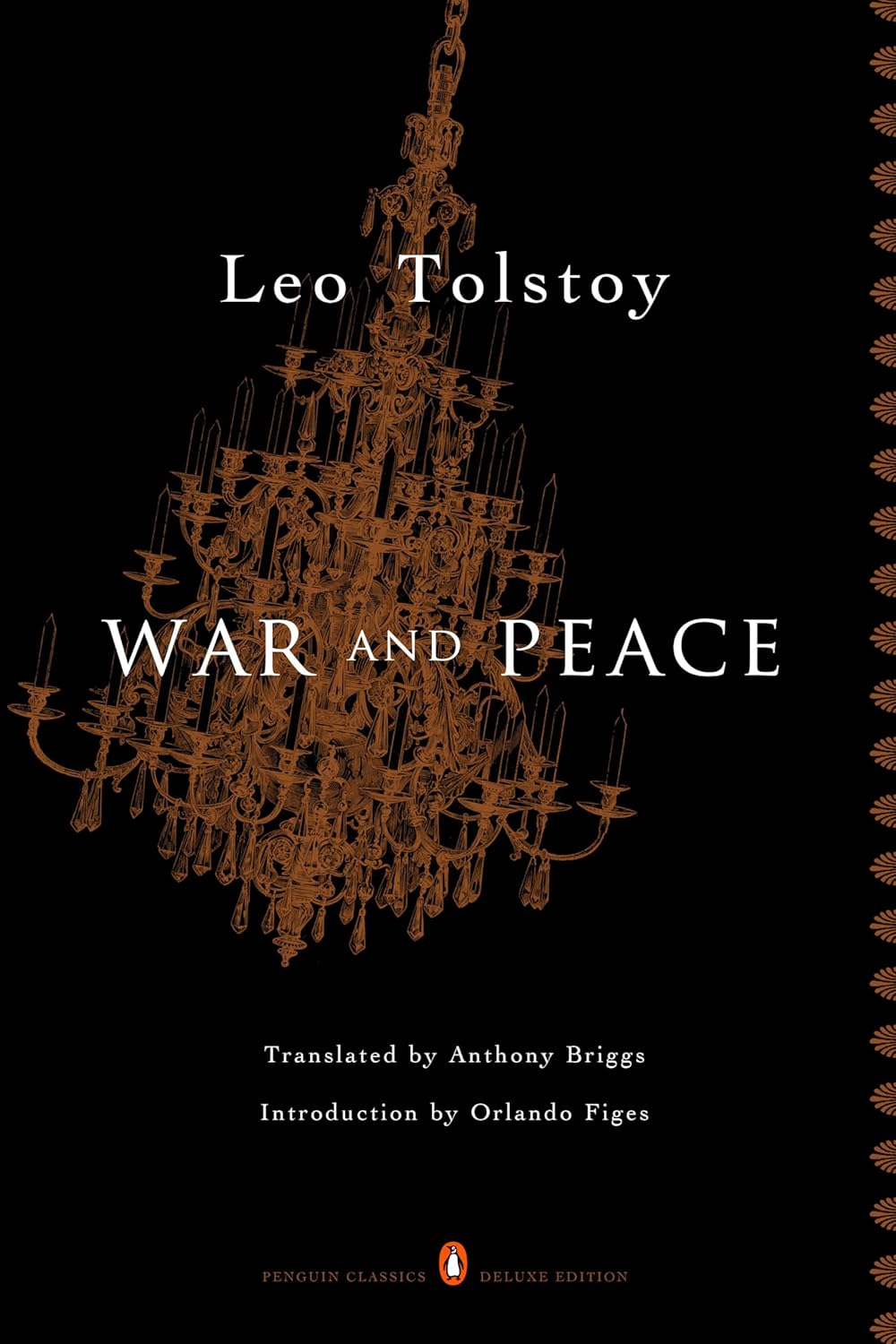
#2 — War and Peace — trans. Anthony Briggs (2005)
- Readability: Very high; fluent contemporary prose
- Accuracy: Good; prioritizes momentum
- Tone: Energetic, occasionally colloquial
- Accessibility: Ideal first-time read
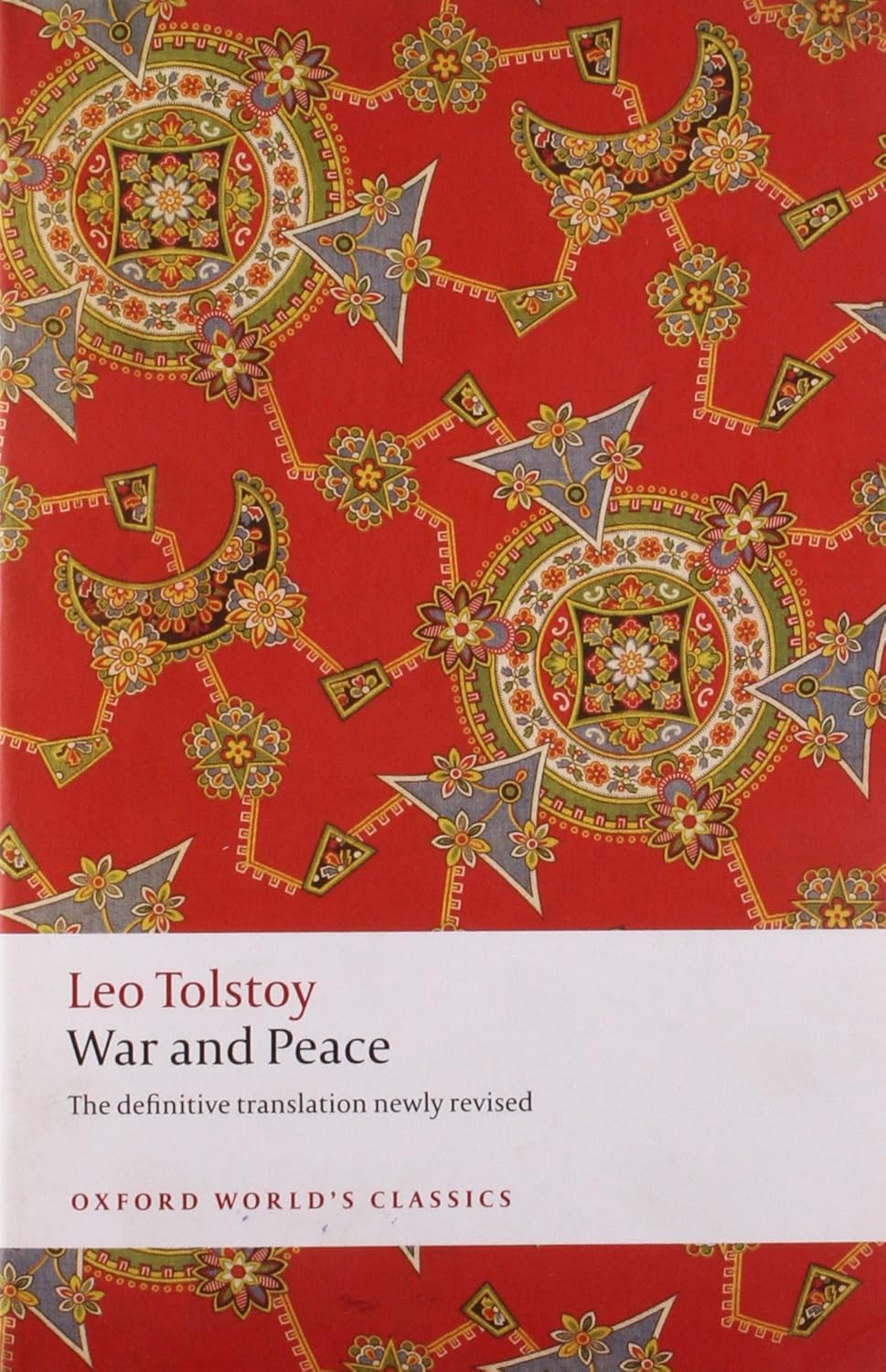
#3 — War and Peace — trans. Louise & Aylmer Maude (1922)
- Readability: High; clear and dignified
- Accuracy: Very good; author-endorsed
- Tone: Balanced, scholarly
- Accessibility: Excellent middle ground
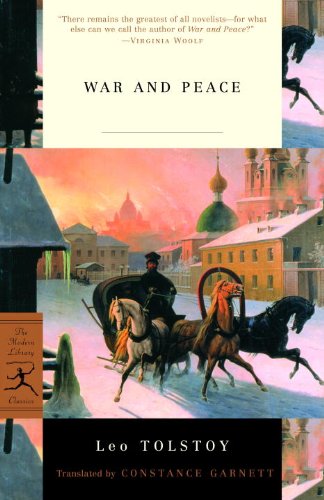
#4 — War and Peace — trans. Constance Garnett (1904)
- Readability: High; natural forward motion
- Accuracy: Fair; occasional omissions
- Tone: Edwardian, stately
- Accessibility: Best free entry point
About the Translators
Richard Pevear & Larissa Volokhonsky published their War and Peace in 2007, a decade into their project of translating the major Russian novels. Their method — Volokhonsky's literal draft reshaped by Pevear into English that preserves the roughness of the original — was well established by this point, but War and Peace presented particular challenges: the French passages, the philosophical epilogues, the sheer length. Their decision to keep the French in French, with English translations in footnotes, was the most consequential editorial choice any modern translator of the novel has made, and it is the right one.
Anthony Briggs is a British scholar and translator who spent his career at the University of Birmingham. Penguin commissioned him to replace their long-standing Rosemary Edmonds translation in 2005, and the result was an immediate success with general readers. Briggs writes in fluent contemporary British English that prioritizes narrative momentum — his battle scenes have a propulsive energy that more literal translations sacrifice for accuracy. His French passages are integrated into the English text, which is easier for non-French readers but loses something of Tolstoy's social satire.
Louise & Aylmer Maude were an English couple who lived in Russia for many years and became among Tolstoy's closest English-speaking friends. Aylmer Maude wrote the authorized two-volume biography of Tolstoy and worked directly with him on translations of his work. Tolstoy read and approved their versions — a distinction no other translator of his major novels can claim. Their War and Peace appeared in the early 1920s and remained the standard English version for decades.
Constance Garnett (1861–1946) published her War and Peace in 1904, one of her earliest major translations. It was praised by Virginia Woolf, Joseph Conrad, and D. H. Lawrence, and introduced the novel to generations of English readers. Garnett worked at remarkable speed across the entire Russian literary canon; her War and Peace has the virtues of that speed — a natural forward motion, an unforced readability — and its characteristic limitations, including occasional compressed or omitted passages.
Themes
History is War and Peace's real subject, and Tolstoy's theory of it is the most radical thing in the book. He argues — most explicitly in the second epilogue, which many readers skip and almost all scholars consider essential — that great men do not make history. They are swept along by forces they cannot comprehend or control, and their claim to have directed events is retrospective self-delusion. His portrait of Napoleon is the novel's sustained satirical achievement: a man who mistakes his position at the front of the wave for his power to create it. Kutuzov wins by doing almost nothing — sleeping through councils, avoiding decisive orders, retreating when his staff demands attack — and Tolstoy presents this passivity as the only form of military wisdom available to a human being who understands his actual situation.
The war plot and the peace plot are not separate stories. Pierre, Andrei, and Natasha are each engaged in versions of the same question the battle chapters are asking: what does it mean to live well, and is it possible to choose? Andrei moves from aristocratic ambition through disillusionment to a dying peace. Pierre stumbles through a bad marriage, Freemasonry, the Battle of Borodino as civilian observer, and French captivity toward something he can never quite articulate. Natasha's arc from youth and instinct to her final domestic life has divided readers since 1869 — whether her transformation is fulfillment or diminishment is not a question the novel settles.
The relationship between freedom and necessity runs beneath every plot. If individuals are largely carried by historical forces beyond their control — if Napoleon does not decide the outcome of Austerlitz, if Pierre does not truly choose his own life — what does agency mean? The philosophical epilogue, which feels like an interruption to many first-time readers, is Tolstoy's attempt to work through what the novel has been demonstrating for 1,200 pages. He does not resolve the question. That irresolution is part of why the novel keeps generating new interpretations.
Key Characters
Pierre Bezukhov — The illegitimate son of a wealthy count who inherits an enormous fortune and spends the novel trying to figure out what to do with himself. He passes through a bad marriage, Freemasonry, genuine military combat as a civilian, French captivity, and love before arriving at something resembling peace. He is the novel's philosophical and moral center — the character whose uncertainty about how to live most fully mirrors Tolstoy's own.
Natasha Rostova — Youth, instinct, and joy embodied. Her near-elopement with the dissolute Anatole Kuragin is the novel's most painful scene; her grief afterward and her slow recovery through nursing Andrei are its most moving. Her final domesticity — the cheerful, somewhat formidable mother and wife she becomes — has been read as both fulfillment and defeat, and Tolstoy gives readers enough evidence for both readings.
Prince Andrei Bolkonsky — The aristocratic soldier whose pride is stripped away in layers across the novel's length: the sky at Austerlitz, the oak tree in spring, Natasha's betrayal, the wound at Borodino. His dying is one of the most carefully rendered in all of fiction. He is the character in whom Tolstoy most fully works out the argument that the pursuit of glory is a form of spiritual error.
Kutuzov — The Russian commander-in-chief who wins the war by avoiding engagement, retreating when his officers demand battle, and trusting that time and the Russian winter will do what military genius cannot. Tolstoy's model of right action, which looks almost identical to inaction, and which no one around him understands while it is happening.
Napoleon — The novel's great satirical portrait. Small, theatrical, vain, convinced of his world-historical significance. Tolstoy shows him at Borodino — the scene where he should most fully be the master of events — and demonstrates that he controls nothing, understands nothing, and means nothing to the outcome of the battle.
Recommended Sources
Slavic and East European Journal — The flagship peer-reviewed publication of the American Association of Teachers of Slavic and East European Languages (AATSEEL). Regularly publishes translation criticism and Tolstoy scholarship. Available through JSTOR.
Tolstoy Studies Journal — Published annually by the North American Tolstoy Society, dedicated entirely to Tolstoy scholarship in all major languages. The most specialized peer-reviewed venue for close work on Tolstoy's texts, sources, and reception history.
Slavic Review — Published by Cambridge University Press on behalf of the Association for Slavic, East European, and Eurasian Studies. One of the two leading English-language journals in Russian literary and cultural studies, with extensive coverage of Tolstoy and translation reception.
Which translation is right for you?
Choose Pevear and Volokhonsky if you want to read War and Peace as Tolstoy wrote it — long rolling sentences, preserved repetitions, French passages in French. Choose Briggs if your primary concern is maintaining momentum across 1,200 pages; his version reads faster and the battle scenes have particular energy. Choose Maude if you find P&V slightly labored and Briggs occasionally too colloquial — it is the most balanced option, and the one Tolstoy personally endorsed. The Garnett is the right choice only if you want to read free: it is a legitimate version of the novel, but not the one to choose if you have other options.
Frequently Asked Questions
What is War and Peace about?
War and Peace is a historical epic that intertwines the lives of several families against the backdrop of the Napoleonic Wars. It explores themes of fate, free will, and the search for meaning in life.
Is War and Peace hard to read?
War and Peace can be challenging due to its length and complex themes. The Pevear & Volokhonsky translation is faithful but dense, while Briggs offers a more readable version.
Which War and Peace translation is best?
The Pevear and Volokhonsky translation is the primary recommendation for readers who want maximum fidelity to Tolstoy's Russian.
Pevear & Volokhonsky vs Briggs — which should I choose?
Choose Pevear and Volokhonsky for fidelity to the long sentences and French passages; choose Briggs for fluent contemporary English and narrative momentum across 1,200 pages.
Which translation is easiest to read?
Anthony Briggs's version is the most readable, carrying readers through the novel's length with unusual ease and energy in the battle scenes.
Which translation is most accurate?
Pevear and Volokhonsky is the most faithful modern translation, preserving Tolstoy's long sentences, repetitions, and tonal shifts.
Why does the Maude translation carry special authority?
Tolstoy personally reviewed and approved the Maude translation, making it the only English version to carry the author's endorsement.
This guide is based on reading all 4 translations and reviewing scholarly commentary. Last reviewed: June 2026.
As an Amazon Associate, I earn from qualifying purchases.
Looking for another classic? Browse all our translation guides →
For more Tolstoy, see our guide to the best Anna Karenina translation.
Also by Tolstoy, our Death of Ivan Ilyich translation guide compares Pevear & Volokhonsky against Maude.
If you enjoy Pevear & Volokhonsky, read our comparison of the best Brothers Karamazov translations.
Another Russian classic with strong P&V coverage is our Crime and Punishment translation guide.
For a different Russian masterpiece, explore our Master and Margarita translation guide.