Crime and Punishment: What It's About & Best Translation
The translation you choose shapes the novel you read
As an Amazon Associate, we earn from qualifying purchases.
Crime and Punishment follows Rodion Raskolnikov, a former student in St. Petersburg who commits a murder and grapples with the moral and psychological consequences. The novel explores themes of guilt, redemption, and the nature of evil.
Translation Comparison at a Glance
| Translation | Readability | Accuracy | Tone | Best For |
|---|---|---|---|---|
| Pevear & Volokhonsky (1992) | Moderate | Excellent | Rigorous, philosophically weighted | Most readers; academic use |
| Ready (2014) | High | Very good | Modern, captures dark humor | Readers who find P&V stilted |
| McDuff (1991) | Very high | Good | Thriller-like clarity | First-time readers wanting pace |
| Garnett (1914) | Moderate | Fair | Dignified, Victorian, dated | Historical interest; free editions |
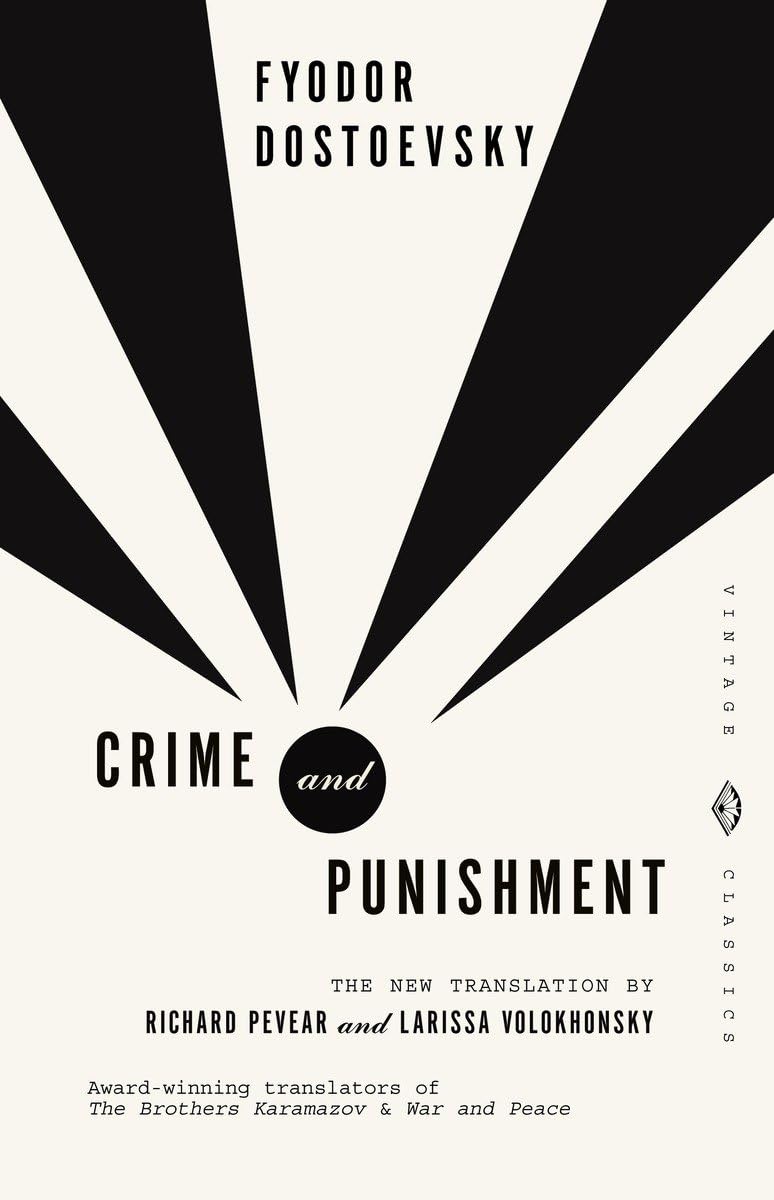
#1 — Crime and Punishment, trans. Richard Pevear & Larissa Volokhonsky (1992)
- Readability: Moderate — occasionally foreign-inflected, which is intentional
- Accuracy: Excellent — the most faithful to Dostoevsky's sentence rhythms and stylistic choices
- Tone: Rigorous, philosophically weighted, preserves the novel's strangeness
- Accessibility: Best for readers willing to sit with difficult prose; rewards the effort

Guidall's masterful narration captures the psychological depth of Dostoevsky's prose, and the Pevear/Volokhonsky translation is widely regarded as the most faithful to the original Russian.
Listen on Audible →Which translation is right for you?
- Choose Pevear & Volokhonsky if you want the most faithful, academically respected translation and don't mind prose that occasionally feels foreign.
- Choose Oliver Ready if you want modern, natural English and want to experience Dostoevsky's dark humor without the stiffness of P&V.
- Choose McDuff if you're a first-time reader who wants pace and narrative clarity above all.
- Choose Garnett if you prefer early twentieth-century English prose cadences, or want a free digital edition for historical context.
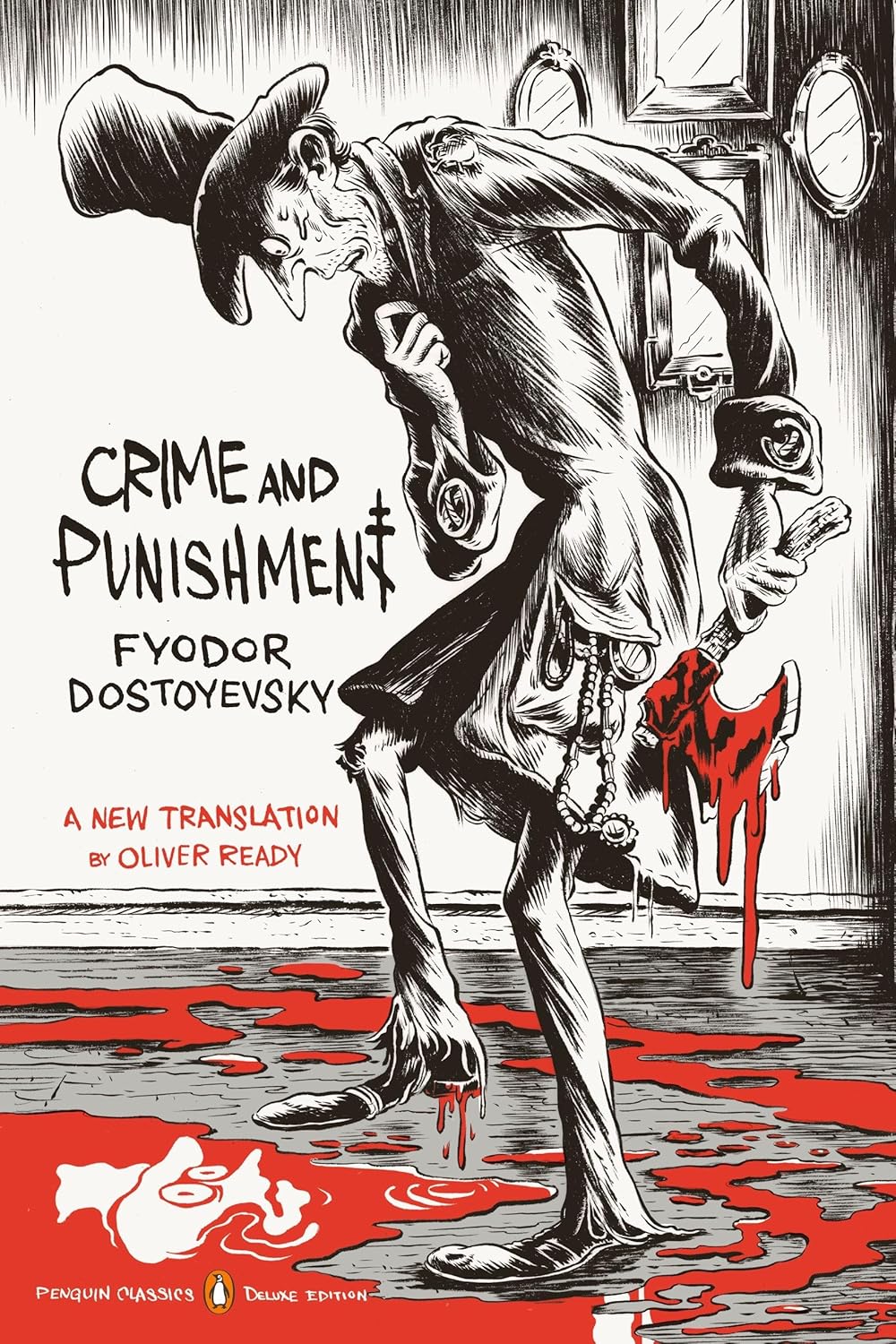
#2 — Crime and Punishment, trans. Oliver Ready (2014)
- Readability: High — natural, modern English that reads as fluent prose
- Accuracy: Very good — stays close to the Russian while prioritizing contemporary idiom
- Tone: Modern, captures the dark humor and grotesque energy P&V can underplay
- Accessibility: Excellent — easier to enter than P&V while sacrificing less than McDuff
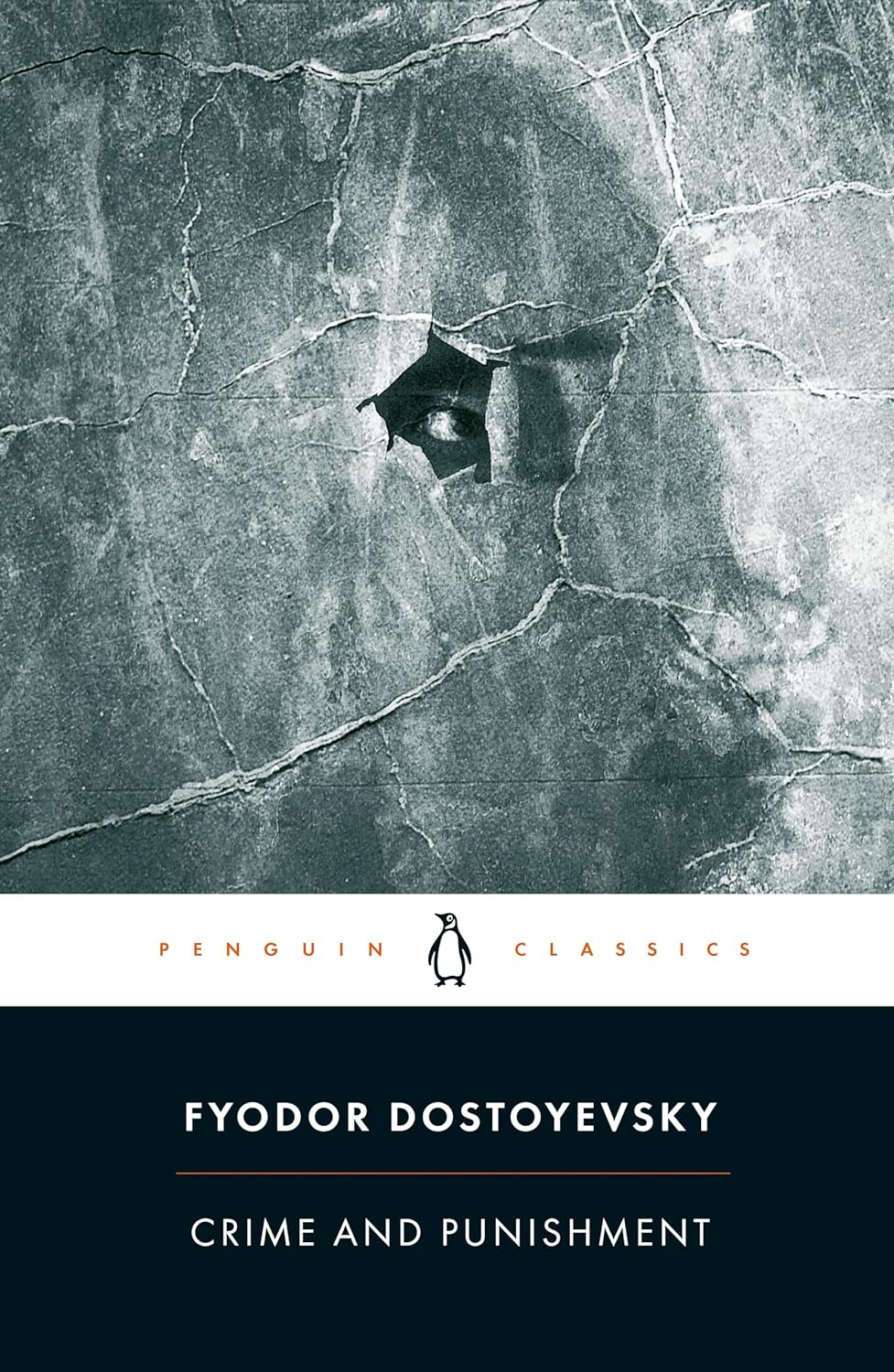
#3 — Crime and Punishment, trans. David McDuff (1991)
- Readability: Very high — lean, fast-paced, closest to a thriller in feel
- Accuracy: Good — sacrifices some literalness and philosophical texture for narrative clarity
- Tone: Propulsive, accessible, less philosophically dense than P&V or Ready
- Accessibility: The most forgiving entry point for readers apprehensive about length or density
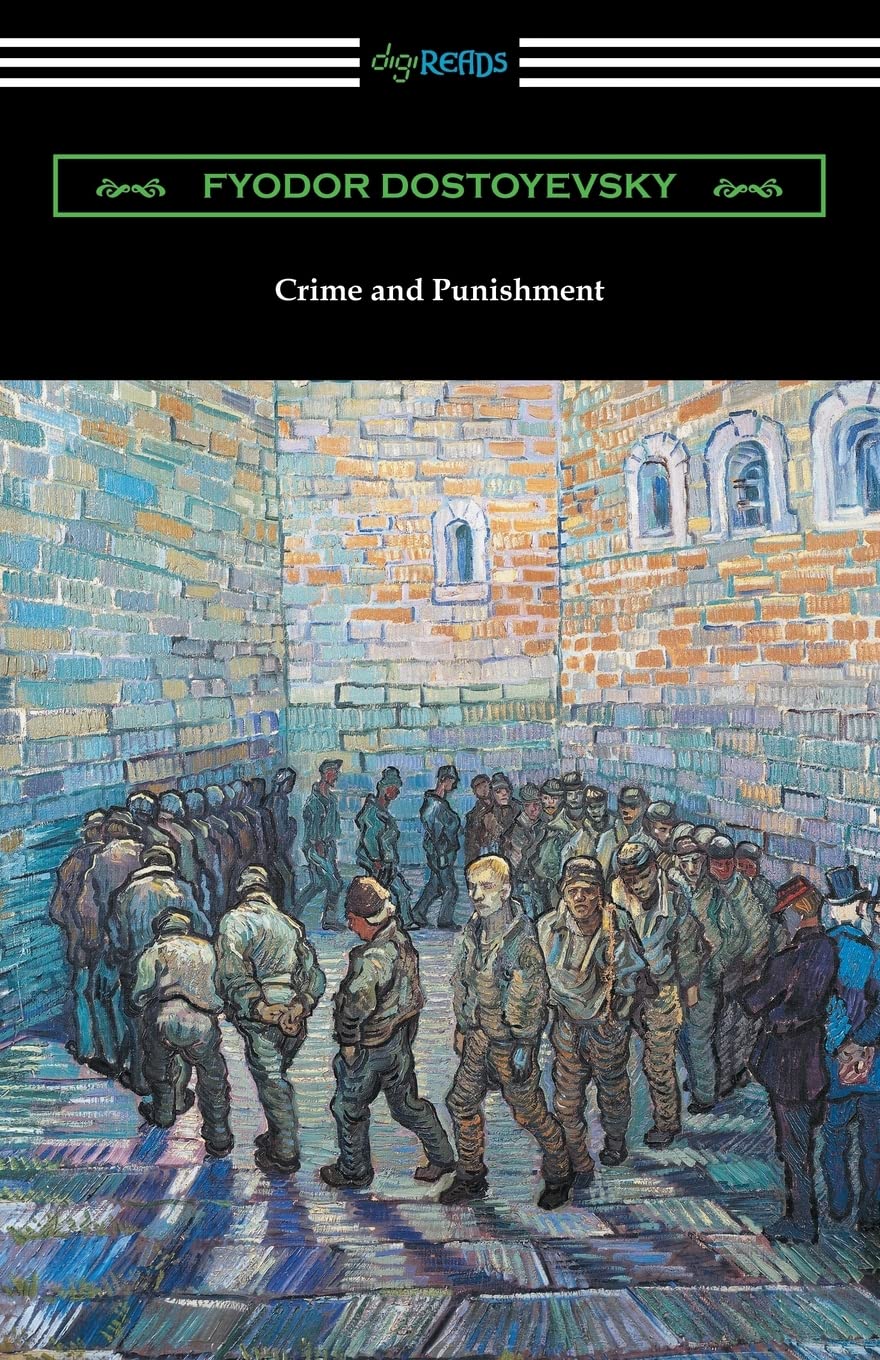
#4 — Crime and Punishment, trans. Constance Garnett (1914)
- Readability: Moderate — Victorian stateliness that has its own literary dignity
- Accuracy: Fair — smooths Dostoevsky's rougher edges, loses the jagged rhythms and dark comedy
- Tone: Dignified, literary, dated — none of the grotesque crackle of Ready or P&V
- Accessibility: Available free in many digital editions; best understood as a historical artifact
About the Translators
Richard Pevear & Larissa Volokhonsky are a married team who have translated most of the major Russian classics together. Volokhonsky, a native Russian speaker, produces a literal working draft; Pevear, an American poet and critic, shapes it into English prose. The method is controversial — critics argue the division of labor produces English that carries the pressure of Russian syntax without fully becoming English — but their translations have won the PEN/Book-of-the-Month Club Prize twice and have become the dominant academic and trade standard for Russian literature in English. See our full guide to Pevear & Volokhonsky's complete body of work.
Oliver Ready is a British scholar and translator who spent five years on his 2014 Penguin Classics edition of Crime and Punishment. A lecturer in Russian literature, Ready's approach prioritizes contemporary English idiom while staying close to the original — an attempt to resolve the tension between P&V's literalism and older versions' smoothness. His is currently the most recent major English translation of the novel.
David McDuff is a Scottish translator whose 1991 Penguin Classics translation was for many years the standard modern alternative to Garnett. McDuff has translated widely from Nordic and Russian literature and his approach — leaner and faster than P&V — reflects a preference for narrative clarity over philosophical texture.
Constance Garnett (1861–1946) translated 71 volumes of Russian literature into English, almost single-handedly introducing the Victorian and Edwardian reading public to Tolstoy, Dostoevsky, Turgenev, and Chekhov. Her Crime and Punishment (1914) was the dominant English version for more than eighty years. Her critics note a tendency to smooth Dostoevsky's rougher edges into Victorian propriety; her defenders argue she understood the emotional register of his work better than her more literal successors.
Themes
The novel's premise is deceptively simple: a young former student named Raskolnikov murders a pawnbroker and her sister, then spends the rest of the book being psychologically destroyed by what he has done. But Dostoevsky is not writing a thriller. He is interrogating a philosophical position — the idea, prevalent in 1860s Russia, that exceptional individuals are not bound by ordinary moral law. Raskolnikov has convinced himself he is one of these extraordinary people. The novel is the systematic dismantling of that conviction.
The St. Petersburg Dostoevsky creates is almost a character in itself: airless, overcrowded, suffocatingly hot, full of people at the edge of survival. At the center of the novel's moral argument is the question of redemption through suffering, which Dostoevsky took from Orthodox Christianity. Sonya Marmeladova, the novel's moral anchor, embodies this — she has suffered enormously and retained her humanity. Raskolnikov's arc is not whether he will be caught, but whether he is capable of the kind of suffering that leads somewhere. That question reads differently depending on which translation you choose.
Key Characters
Rodion Raskolnikov — the protagonist. A brilliant, arrogant, profoundly alienated former law student whose theory that extraordinary individuals have the right to transgress ordinary moral law — the "Napoleon theory" — is the philosophical engine of the novel.
Sonya Marmeladova — Raskolnikov's moral counterpart. The daughter of a drunk, forced into prostitution to support her family, she has every reason for bitterness and has none. Her faith is simple, unargued, and for Dostoevsky the only real answer to Raskolnikov's rationalism.
Porfiry Petrovich — the investigator who suspects Raskolnikov almost immediately and chooses to draw out his confession through psychological pressure rather than evidence. One of literature's great detectives, partly because he is more interested in Raskolnikov's soul than his guilt.
Avdotya Raskolnikova (Dunya) — Raskolnikov's sister, who has sacrificed her own opportunities to support him. Her subplot — involving the predatory Svidrigailov and the controlling Luzhin — mirrors her brother's story: another person navigating a world in which exploitation is normalized and dignity must be actively defended.
Arkady Svidrigailov — Raskolnikov's dark double, a man who has actually transgressed moral law repeatedly and with full knowledge. His arc is one of Dostoevsky's most unsettling arguments about where that road actually leads.
Recommended Sources
Slavic and East European Journal — The flagship peer-reviewed publication of the American Association of Teachers of Slavic and East European Languages (AATSEEL). It regularly publishes translation reviews and criticism on Dostoevsky. Back issues are available through JSTOR.
Slavic Review — Published by Cambridge University Press on behalf of the Association for Slavic, East European, and Eurasian Studies. One of the two leading English-language journals in Russian and Eastern European literary and cultural studies, covering Dostoevsky extensively including translation reception and comparative studies across the major modern versions.
Dostoevsky Studies — The journal of the International Dostoevsky Society, dedicated entirely to Dostoevsky scholarship across all major languages. The most specialized peer-reviewed venue for close work on Dostoevsky's texts and translation history.
Frequently Asked Questions
What is Crime and Punishment about?
Crime and Punishment follows Rodion Raskolnikov, a former student in St. Petersburg who commits a murder and grapples with the moral and psychological consequences. The novel explores themes of guilt, redemption, and the nature of evil.
Is Crime and Punishment hard to read?
Crime and Punishment can be challenging due to its philosophical depth and psychological complexity. Pevear & Volokhonsky's translation is rigorous, while McDuff offers a more accessible read. Ready provides a modern, idiomatic version.
Which Crime and Punishment translation is best?
Pevear and Volokhonsky (1992) is the most widely recommended. It is rigorous, celebrated, and preserves Dostoevsky's distinctive prose rhythms and philosophical weight. For most readers, start here.
Pevear vs Ready — which should I choose?
Choose Pevear & Volokhonsky if you want the most faithful, rigorous translation with academic credibility. Choose Oliver Ready if you find P&V slightly stilted — Ready's version captures Dostoevsky's dark humor more vividly and reads more naturally as English prose.
Which translation is easiest to read?
McDuff (1991) is the most accessible for first-time readers who want pace. Ready (2014) is also highly readable while staying closer to Dostoevsky's original voice than McDuff does.
Which translation is most accurate?
Pevear and Volokhonsky is generally considered the most faithful to Dostoevsky's Russian, preserving his jagged rhythms and repetitions that most earlier translators smoothed over.
Is the Garnett translation still worth reading?
Garnett (1914) has historical significance and its own stately dignity, but scholars have noted that she smoothed over Dostoevsky's rougher edges and dark comedy. If you want the closest experience to what Dostoevsky actually wrote, a modern translation is preferable. Garnett is worth reading for historical context on how Dostoevsky's reputation was built in English — and it's free in many digital editions.
This guide is based on reading all four translations and reviewing scholarly commentary in Dostoevsky Studies and Slavic Review. Last reviewed: June 2026.
As an Amazon Associate, I earn from qualifying purchases.
Looking for another classic? Browse all our translation guides →
Reading more Dostoevsky? See our guide to the best Brothers Karamazov translation.
For another major Dostoevsky novel, compare editions in our Idiot translation guide.
Also by the same author: our recommendations for the best Demons translation.
If you enjoy Pevear & Volokhonsky, check our War and Peace translation guide.
Explore their early work with our Notes from Underground translation guide.