The Idiot: What It's About & Best Translation
The most radiant character in Russian literature — and the hardest to translate
As an Amazon Associate, we earn from qualifying purchases.
The Idiot follows Prince Myshkin, a man whose innocence and honesty are perceived as idiocy by society. Returning to Russia from a Swiss sanatorium, he navigates a world of social intrigue and moral complexity, ultimately questioning whether a truly good person can survive in a corrupt world.
Translation Comparison at a Glance
| Translation | Readability | Accuracy | Tone | Best For |
|---|---|---|---|---|
| McDuff (1993) | High | Very good | Flexible and fluent | First-time readers |
| Myers (1992) | Moderate | Excellent | Literal and rhythmic | Comparative study |
| Carlisle (1969) | Moderate | Good | Mid-century elegance | Budget or historic interest |
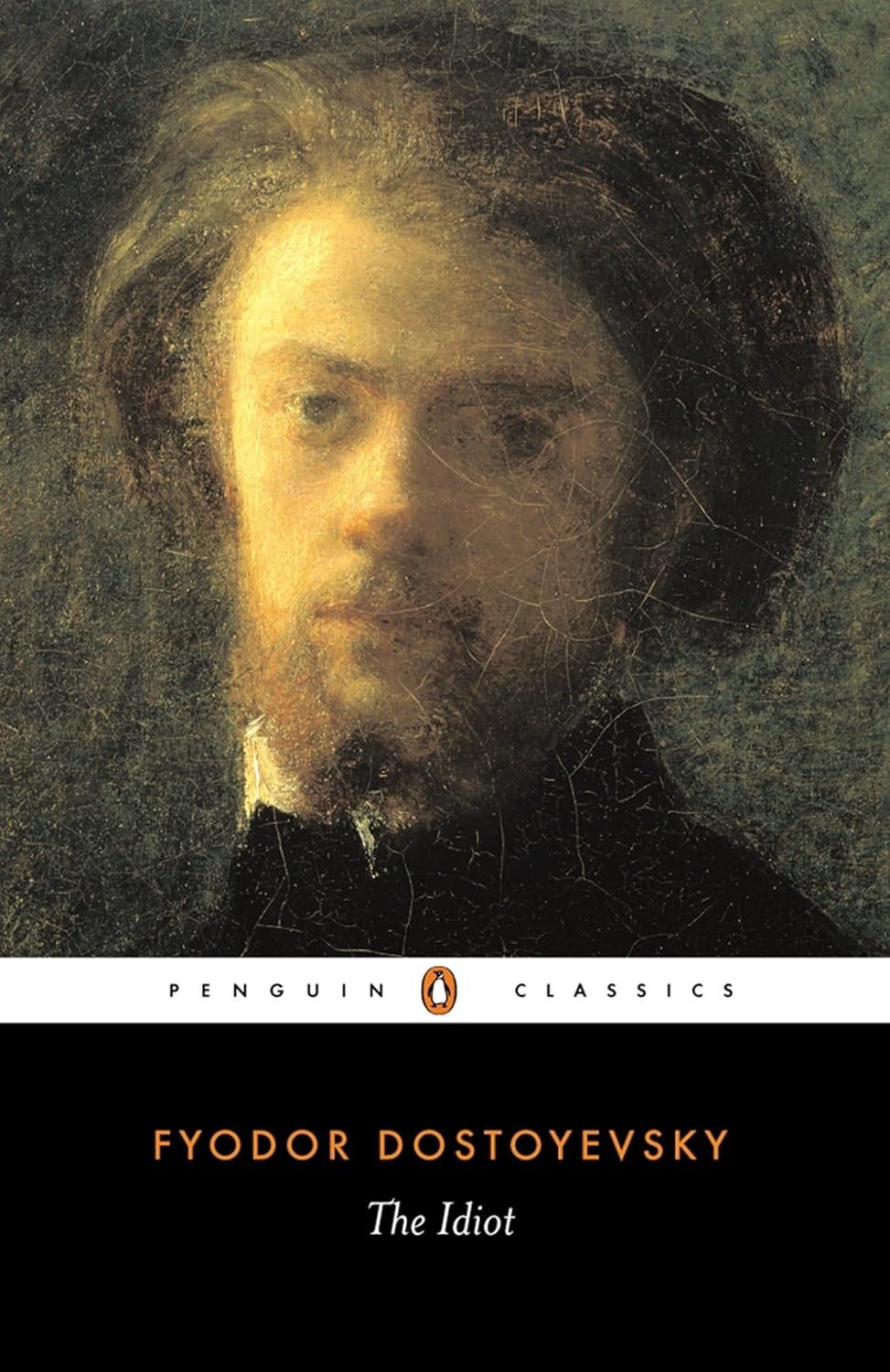
#1 — The Idiot — trans. David McDuff (1993)
- Readability: High — fluent without sacrificing complexity
- Accuracy: Very good — captures pace and voice
- Tone: Flexible across registers
- Accessibility: Excellent for first-time readers

Gregory's nuanced performance captures the novel's psychological depth, and McDuff's translation preserves Dostoevsky's intricate prose and dark humor.
Listen on Audible →Which translation is right for you?
- Choose McDuff if you are reading The Idiot for the first time and want the most tonally complete and readable version.
- Choose Myers if you have already read the novel and want to feel more of the Russian texture or maximum fidelity to the original.
- Choose Carlisle if you are on a budget or curious about how an earlier generation of readers encountered this book.
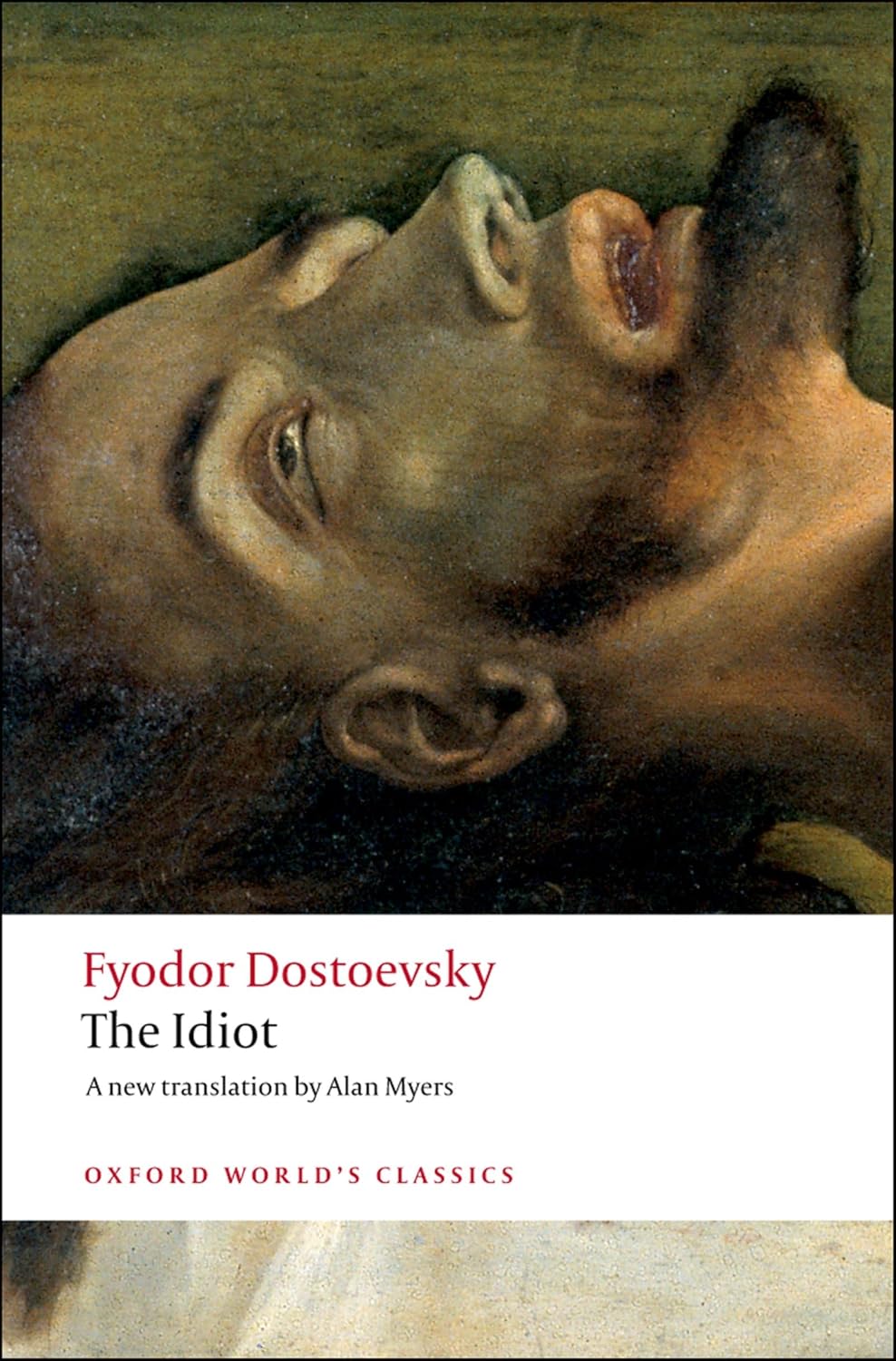
#2 — The Idiot — trans. Alan Myers (1992)
- Readability: Moderate — more literal
- Accuracy: Excellent — closest to Russian rhythms
- Tone: Scholarly and precise
- Accessibility: Best as second reading
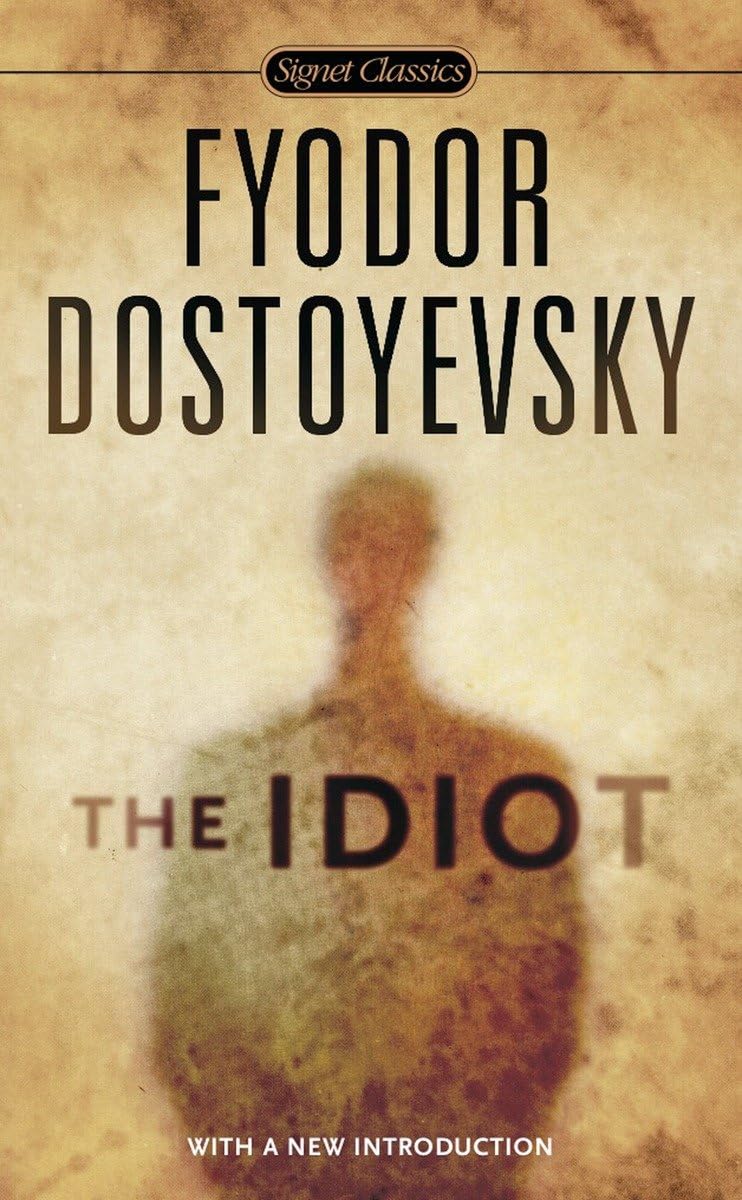
#3 — The Idiot — trans. Henry and Olga Carlisle (1969)
- Readability: Moderate — mid-century style
- Accuracy: Good — smoothed for comfort
- Tone: Elegant but dated
- Accessibility: Budget-friendly historic option
About the Translators
David McDuff is a Scottish translator whose Penguin Classics editions of Dostoevsky's major works — including The Idiot, The Brothers Karamazov, and Crime and Punishment — have reached enormous audiences and have been the standard English versions for a generation. His 1993 Idiot has been the most widely read and commonly assigned version in anglophone universities for thirty years.
Alan Myers (1936–2009) was a British scholar and translator of Russian literature. His 1992 Oxford World's Classics Idiot takes a more literal approach than McDuff, staying closer to the rhythms and constructions of Dostoevsky's Russian. Myers also translated Chekhov and Sologub; his work is consistently valued by readers who want to feel the texture of the Russian original without being able to read it.
Henry and Olga Carlisle produced their 1969 Signet Classics translation at a time when McDuff and Myers did not yet exist and the main alternative was Constance Garnett's 1913 version. Henry Carlisle was a novelist; Olga Carlisle was a translator and memoirist, the granddaughter of the Russian writer Leonid Andreyev. Their version dominated the American paperback market for a generation.
Themes
Dostoevsky's central question in The Idiot is also his most direct: can a genuinely good person survive in the actual world? Myshkin arrives in St. Petersburg from years in a Swiss sanatorium, naive and transparent and incapable of calculating his own interests, and the novel tracks what happens when such a person encounters a society built on money, social positioning, and erotic competition. The answer is devastating — not because the world is evil but because goodness, as Dostoevsky understands it, cannot function strategically. Myshkin cannot protect himself because protection requires the kinds of calculations he doesn't make.
The two women — Nastasya Filipovna and Aglaya — are not rivals in a conventional love triangle. They represent two different claims on Myshkin's compassion, and his inability to choose between them is the novel's dramatic engine. Nastasya has been kept and used by Totsky since childhood and cannot believe she deserves redemption — she seeks destruction as punishment. Aglaya is proud and brilliant and falls for Myshkin precisely because he sees her without the social calculations everyone else brings. Myshkin's pity for Nastasya and his love for Aglaya become indistinguishable in his own mind, with catastrophic results for all three.
Dostoevsky himself was epileptic, and he wrote about the aura before a seizure with something approaching reverence — a moment of total clarity that precedes collapse. Myshkin's epilepsy is not incidental to his character but part of it: a kind of access to pure experience that costs him normal functioning. The novel raises without resolving whether his goodness and his illness are connected — whether the man who experiences the world without armor is the same man who cannot survive it.
Key Characters
Prince Lev Myshkin — The protagonist, returned from years of treatment for epilepsy in Switzerland. He has never learned the social codes that protect people from each other; his honesty reads as idiocy to those who cannot imagine not having defenses. His defining quality is the ability to see people without judgment — which makes him uniquely capable of compassion and uniquely unable to survive.
Nastasya Filipovna Barashkova — The novel's most tragic figure: beautiful, brilliant, and damaged by years of being kept by Totsky from childhood. She cannot believe she deserves redemption and moves toward destruction with terrible deliberateness. Her relationship with Myshkin — pity and spiritual recognition — and with Rogozhin — erotic compulsion and doom — is one of Dostoevsky's most concentrated portraits of self-destruction.
Parfyon Rogozhin — The merchant's son obsessed with Nastasya. Passionate, dark, capable of great tenderness and great violence. He and Myshkin exchange crosses and call each other brother; he later nearly kills Myshkin in the street. Their relationship is one of Dostoevsky's most disturbing: mutual recognition between a man who feels everything and one who cannot protect himself from his own feelings.
Aglaya Epanchin — The youngest and most brilliant of the three Epanchin daughters. She falls for Myshkin in a way she doesn't fully understand — perhaps because he is the only person who doesn't want something from her. Her pride and genuine intelligence make her refusal of the socially approved match entirely comprehensible.
Lukyan Lebedev — A low-ranking official who attaches himself to Myshkin and provides the novel's darkest comedy. He is simultaneously grotesque and morally serious — a figure through whom Dostoevsky channels satirical commentary on the novel's action while keeping Myshkin at an appropriate distance from irony.
Recommended Sources
Slavic and East European Journal — The flagship peer-reviewed publication of the American Association of Teachers of Slavic and East European Languages (AATSEEL). Regularly publishes translation criticism and Dostoevsky scholarship. Available through JSTOR.
Slavic Review — Published by Cambridge University Press on behalf of the Association for Slavic, East European, and Eurasian Studies. One of the two leading English-language journals in Russian literary and cultural studies, with extensive coverage of Dostoevsky and translation reception.
Dostoevsky Studies — The journal of the International Dostoevsky Society, published annually and dedicated entirely to Dostoevsky scholarship across all major languages. The most specialized peer-reviewed venue for close work on Dostoevsky's texts and translation history.
Which translation is right for you?
Choose McDuff if you're reading The Idiot for the first time — it's the most tonally complete version and has been the standard for thirty years. Choose Myers if you've already read the novel and want to feel more of the Russian texture, or if you're reading Dostoevsky comparatively and want maximum fidelity to the original. The Carlisle translation is worth having if you're on a budget or curious about how an earlier generation of readers encountered this book.
Frequently Asked Questions
What is The Idiot about?
The Idiot follows Prince Myshkin, a man whose innocence and honesty are perceived as idiocy by society. Returning to Russia from a Swiss sanatorium, he navigates a world of social intrigue and moral complexity, ultimately questioning whether a truly good person can survive in a corrupt world.
Is The Idiot hard to read?
The Idiot can be challenging due to its philosophical depth and complex characters. McDuff's translation is recommended for its readability, while Myers offers a more literal approach for those interested in the original Russian texture.
Which The Idiot translation is best?
The David McDuff translation is this guide's primary recommendation. It is the most complete and the most tonally flexible version currently in wide print.
McDuff vs Myers — which should I choose?
Choose McDuff if you're reading The Idiot for the first time — it's the most tonally complete version. Choose Myers if you've already read the novel and want to feel more of the Russian texture or maximum fidelity to the original.
Which translation is easiest to read?
McDuff's Penguin Classics translation is distinguished by its readability without sacrificing complexity, making it the easiest to read for most readers.
Which translation is most accurate?
Alan Myers's Oxford World's Classics translation takes a more literal approach, staying closer to the rhythms and constructions of Dostoevsky's Russian.
Is the Carlisle translation still worth reading?
The Carlisle Signet remains a viable and historic choice for readers on a budget or those curious about how an earlier generation encountered the book.
This guide is based on reading all 3 translations and reviewing scholarly commentary. Last reviewed: June 2026.
As an Amazon Associate, I earn from qualifying purchases.
Looking for another classic? Browse all our translation guides →
Exploring more Dostoevsky? See our guide to the best Brothers Karamazov translation.
For another major novel, compare the best Crime and Punishment translations including Pevear & Volokhonsky and Oliver Ready.
Readers of The Idiot often continue with our Demons translation guide covering Pevear & Volokhonsky and Maguire.
Also by Dostoevsky, our Notes from Underground translation guide compares Pevear & Volokhonsky, Katz, and Wilks.