Demons: What It's About & Best Translation
Also known as The Possessed and The Devils — Dostoevsky's most politically savage novel
As an Amazon Associate, we earn from qualifying purchases.
Demons is a political and philosophical novel by Dostoevsky, exploring the destructive power of radical ideologies. It follows a group of revolutionaries in a Russian town, focusing on their moral and existential struggles.
Translation Comparison at a Glance
| Translation | Readability | Accuracy | Tone | Best For |
|---|---|---|---|---|
| Pevear & Volokhonsky (1994) | High | Excellent | Preserves stylistic range | First reading, university study |
| Maguire (2008) | Very high | Very good | Clean and direct | Readers new to Dostoevsky |
| Garnett (1913) | High | Fair | Victorian gravity | Historical interest only |
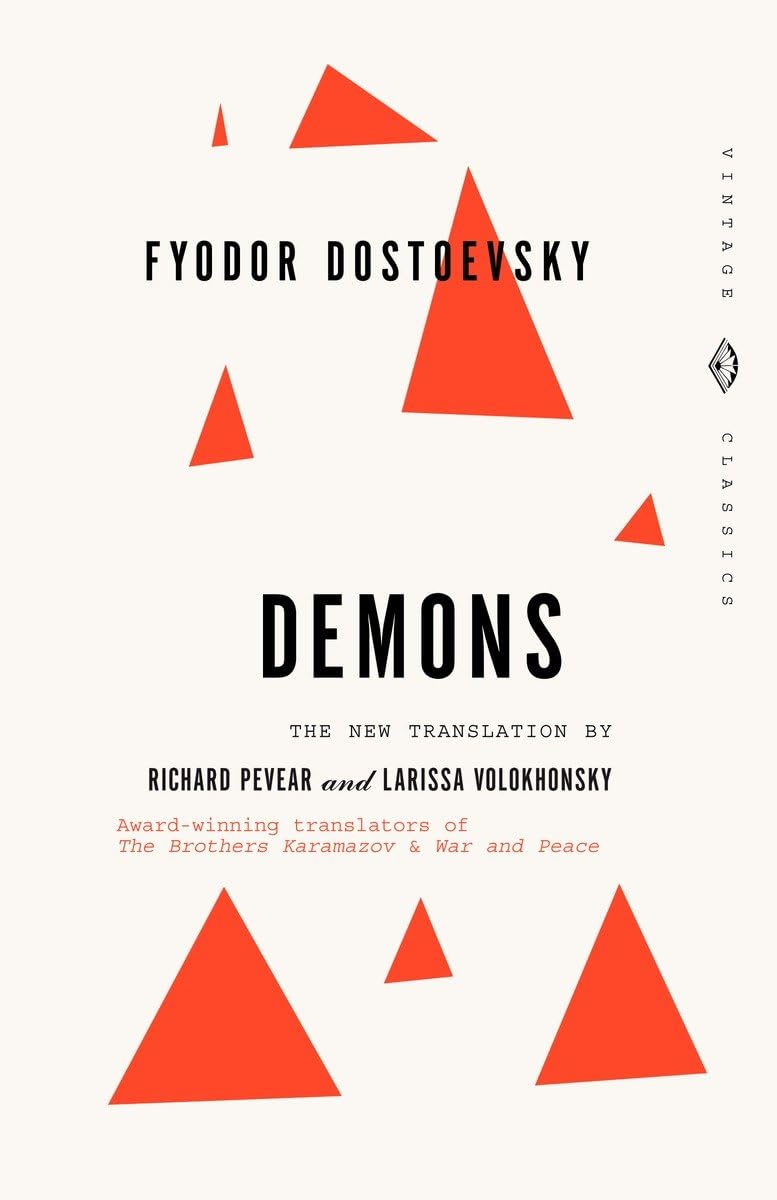
#1 — Demons: A Novel in Three Parts — trans. Richard Pevear & Larissa Volokhonsky (1994)
- Readability: High — restores full stylistic range without sacrificing clarity.
- Accuracy: Excellent — preserves syntactic variety and includes Stavrogin's Confession.
- Tone: Sharp political satire balanced with quiet psychological devastation.
- Accessibility: Ideal for first-time readers and academic study.
Which translation is right for you?
- Choose Pevear & Volokhonsky if you want the standard modern version that restores full tonal range and Stavrogin's Confession.
- Choose Maguire if you prefer fluid prose and detailed scholarly notes on the historical context.
- Choose Garnett if you are interested in the historical translation tradition (but pair it with a modern edition).
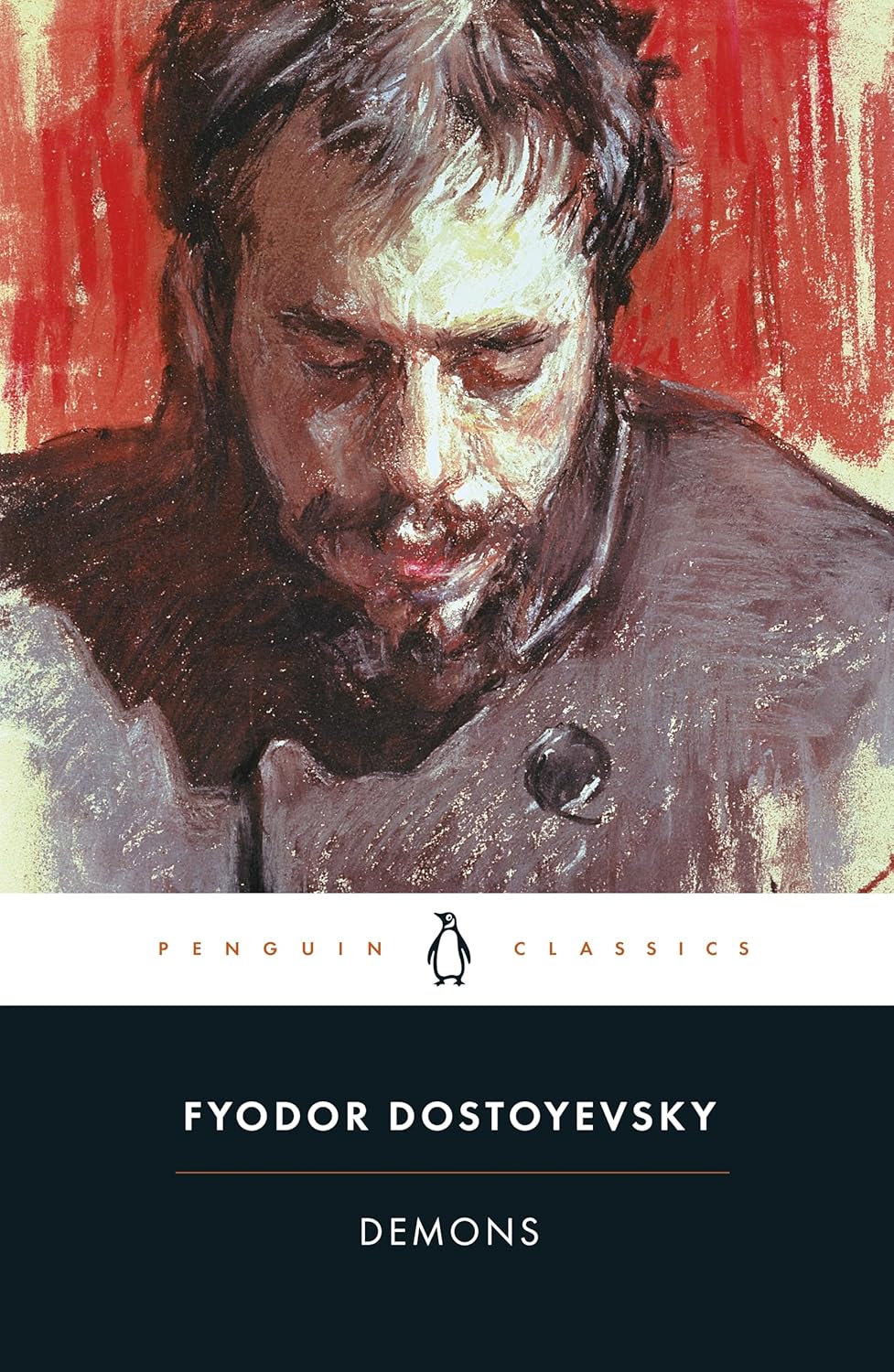
#2 — Demons — trans. Robert Maguire (2008)
- Readability: Very high — clean, direct prose that moves quickly.
- Accuracy: Very good — includes Stavrogin's Confession with strong notes.
- Tone: Literary and scholarly without sacrificing momentum.
- Accessibility: Especially welcoming for readers new to Dostoevsky.
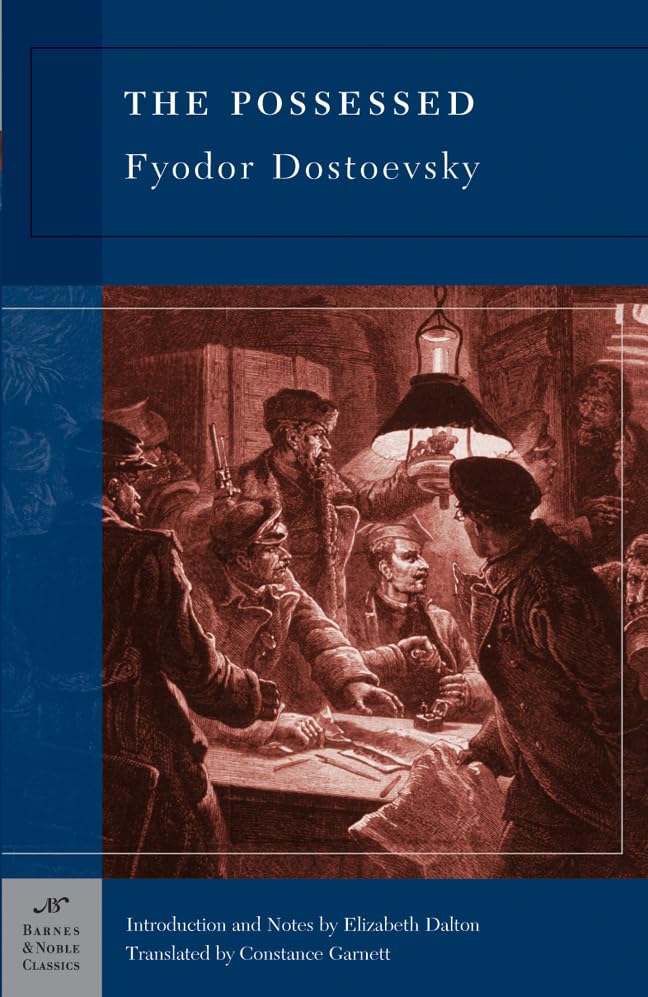
#3 — The Possessed — trans. Constance Garnett (1913)
- Readability: High — remarkably fluent Victorian prose.
- Accuracy: Fair — smooths Dostoevsky's stylistic eccentricities.
- Tone: Grave and period-appropriate but normalised.
- Accessibility: Useful only alongside a modern translation.
About the Translators
Richard Pevear & Larissa Volokhonsky published their Demons in 1994, between their Brothers Karamazov (1990) and Crime and Punishment (1992). By this point their method — Volokhonsky's literal draft shaped by Pevear into English that preserves the roughness of the original — had established itself as the dominant approach to modern Dostoevsky translation, and their Demons became the standard English version almost immediately. The Vintage Classics edition is the most widely read and taught.
Robert Maguire (1930–2005) was Professor of Russian Literature at Columbia University and one of the leading American scholars of Dostoevsky and Russian modernism. His critical writing — particularly on Gogol and on the relationship between Russian literature and Russian cultural history — is essential reading. His 2008 Penguin Classics translation of Demons was completed before his death and edited posthumously by Ronald Meyer; it reflects decades of scholarly engagement with the novel and stands as Maguire's most substantial contribution to Dostoevsky in translation.
Constance Garnett (1861–1946) published her translation as The Possessed in 1913. She translated the bulk of the nineteenth-century Russian literary canon almost single-handedly, and her Dostoevsky shaped generations of anglophone writers including Hemingway, Faulkner, and Virginia Woolf. Her choice of title — The Possessed, from the novel's epigraph about demons entering swine — reflects the spiritual reading of Dostoevsky that dominated English reception through most of the twentieth century.
Themes
Demons is Dostoevsky's diagnosis of how a generation of idealists becomes capable of murder. The Nechaev affair — the 1869 killing of the student Ivanov by a revolutionary cell whose leader argued that political ends justified any means — gave Dostoevsky his plot and his central question: what happens to people when they surrender their moral judgment to an ideology? The novel's answer is in its title: ideas do not merely influence people; they possess them. The demons of the epigraph (from Luke: demons leave a man and enter swine) are the revolutionary convictions that have entered a generation of young Russians and are driving them toward destruction.
The novel's true center is not Pyotr Verkhovensky, who drives the plot, but Nikolai Stavrogin, who does almost nothing. Stavrogin is a man of extraordinary gifts and absolute moral emptiness — he has tried faith, political radicalism, debauchery, and self-destruction, and felt nothing. Others fill his emptiness with their own convictions and are destroyed by it. The suppressed "Stavrogin's Confession" chapter — cut from the original serialization and restored in modern editions — reveals the full extent of what he has done and remains one of the most disturbing passages in all of Russian literature.
Dostoevsky wrote Demons as political satire and it has been read as prophecy ever since. The revolutionary cell, the leader who manipulates true believers for his own purposes, the willingness to murder a member to bind the others through shared guilt — these were drawn from historical fact in 1872 and have remained recognizable across every subsequent century. Camus called it the most important novel about political nihilism ever written. The Soviet Union banned it.
Key Characters
Nikolai Stavrogin — The novel's spiritual center: a man of extraordinary magnetism and total inner emptiness. He inspires absolute conviction in everyone around him — revolutionaries, religious pilgrims, women who love him — without feeling anything himself. His passivity is not weakness but a moral void, and the novel argues that such voids are among the most dangerous things in the world, because others project their own convictions into them and are destroyed.
Pyotr Verkhovensky — The revolutionary cell's organizer and manipulator. He has no ideology of his own — only method. He uses Stavrogin's charisma as the movement's mythic center while doing all the actual work of conspiracy, deception, and murder. Dostoevsky modeled him directly on Sergei Nechaev, and the portrait has been recognized as accurate ever since.
Stepan Verkhovensky — Pyotr's father and the novel's comic-tragic conscience. A liberal intellectual of the 1840s generation: well-meaning, self-aggrandizing, dependent on the patronage of the aristocratic Varvara Stavrogina. He represents the idealism that, Dostoevsky argues, inadvertently produced the nihilism of the next generation. His deathbed journey at the novel's end is one of its most unexpected and moving passages.
Kirillov — A revolutionary who has reasoned himself into the conviction that God does not exist, that the fear of death is the only thing keeping man enslaved, and that therefore he must commit suicide to demonstrate human freedom — not from despair but as a logical proof. One of Dostoevsky's most haunting philosophical portraits: a man whose ideas are internally consistent and lead directly to his death.
Shatov — A member of the cell who has become a religious convert and nationalist. His murder — organized by Pyotr specifically to bind the cell members through shared guilt — is the novel's darkest act and its clearest argument about what happens to moral conviction in the service of ideology.
Recommended Sources
Slavic and East European Journal — The flagship peer-reviewed publication of the American Association of Teachers of Slavic and East European Languages (AATSEEL). Regularly publishes translation criticism and Dostoevsky scholarship. Available through JSTOR.
Slavic Review — Published by Cambridge University Press on behalf of the Association for Slavic, East European, and Eurasian Studies. One of the two leading English-language journals in Russian literary and cultural studies, with extensive coverage of Dostoevsky and translation reception.
Dostoevsky Studies — The journal of the International Dostoevsky Society, published annually and dedicated entirely to Dostoevsky scholarship across all major languages. The most specialized peer-reviewed venue for close work on Dostoevsky's texts and translation history.
Which translation is right for you?
Choose Pevear and Volokhonsky for a first reading — it captures the novel's full tonal range, from broad political comedy to quiet psychological devastation, and it restores "Stavrogin's Confession." Choose Maguire if you find P&V's style stiff or want scholarly footnotes that place the novel in its historical context; his is the most readable alternative and also includes the confession chapter. The Garnett is for readers who want to understand the tradition — but given that it omits "Stavrogin's Confession" entirely, it should not be a reader's only version of this novel.
Frequently Asked Questions
What is Demons about?
Demons is a political and philosophical novel by Dostoevsky, exploring the destructive power of radical ideologies. It follows a group of revolutionaries in a Russian town, focusing on their moral and existential struggles.
Is Demons hard to read?
Demons can be challenging due to its complex themes and dense prose. The Pevear & Volokhonsky translation offers precision, while Maguire's version is more readable for newcomers.
Which Demons translation is best?
The Pevear and Volokhonsky translation is the most widely used modern English version and the sharpest in capturing the novel's political and psychological intensity.
Pevear & Volokhonsky vs Maguire — which should I choose?
Choose Pevear & Volokhonsky for precision and tonal range; choose Maguire for fluid, readable prose and strong scholarly notes.
Which translation is easiest to read?
Robert Maguire's translation prioritises clean, direct prose that moves quickly through the novel's dense political scheming.
Which translation is most accurate?
Pevear and Volokhonsky restore the novel's full stylistic range and include the essential Stavrogin's Confession chapter.
Why does the Garnett translation omit Stavrogin's Confession?
Garnett's 1913 version follows the censored serialization and does not include the chapter that P&V and Maguire both restore.
This guide is based on reading all three translations and reviewing scholarly commentary. Last reviewed: June 2026.
As an Amazon Associate, I earn from qualifying purchases.
Looking for another classic? Browse all our translation guides →
Reading more Dostoevsky? See our guide to the best Brothers Karamazov translation.
For another major novel, our Crime and Punishment translation guide compares Pevear & Volokhonsky against Ready and McDuff.
Also exploring Dostoevsky's shorter works? Check our Idiot translation guide for McDuff, Myers, and Carlisle.
Don't miss our comparison of the best Notes from Underground translations including P&V and Katz.