Notes from Underground: What It's About & Best Translation
Dostoevsky's foundational monologue — three translators, three registers
As an Amazon Associate, we earn from qualifying purchases.
Notes from Underground is a novel by Fyodor Dostoevsky that explores the thoughts and feelings of a retired civil servant living in St. Petersburg. The protagonist, known as the Underground Man, is a complex character who grapples with feelings of alienation and self-loathing, offering a critique of rationalism and exploring themes of free will and human nature.
Translation Comparison at a Glance
| Translation | Readability | Accuracy | Tone | Best For |
|---|---|---|---|---|
| Pevear & Volokhonsky (2009) | High | Very good | Rapid, parenthetical, neurotic | Closest to Russian rhythms |
| Katz (2021) | High | Excellent | Clear, scholarly, annotated | Students and context |
| Wilks (2009) | Very high | Good | Direct, caustic, idiomatic | Accessible reading |
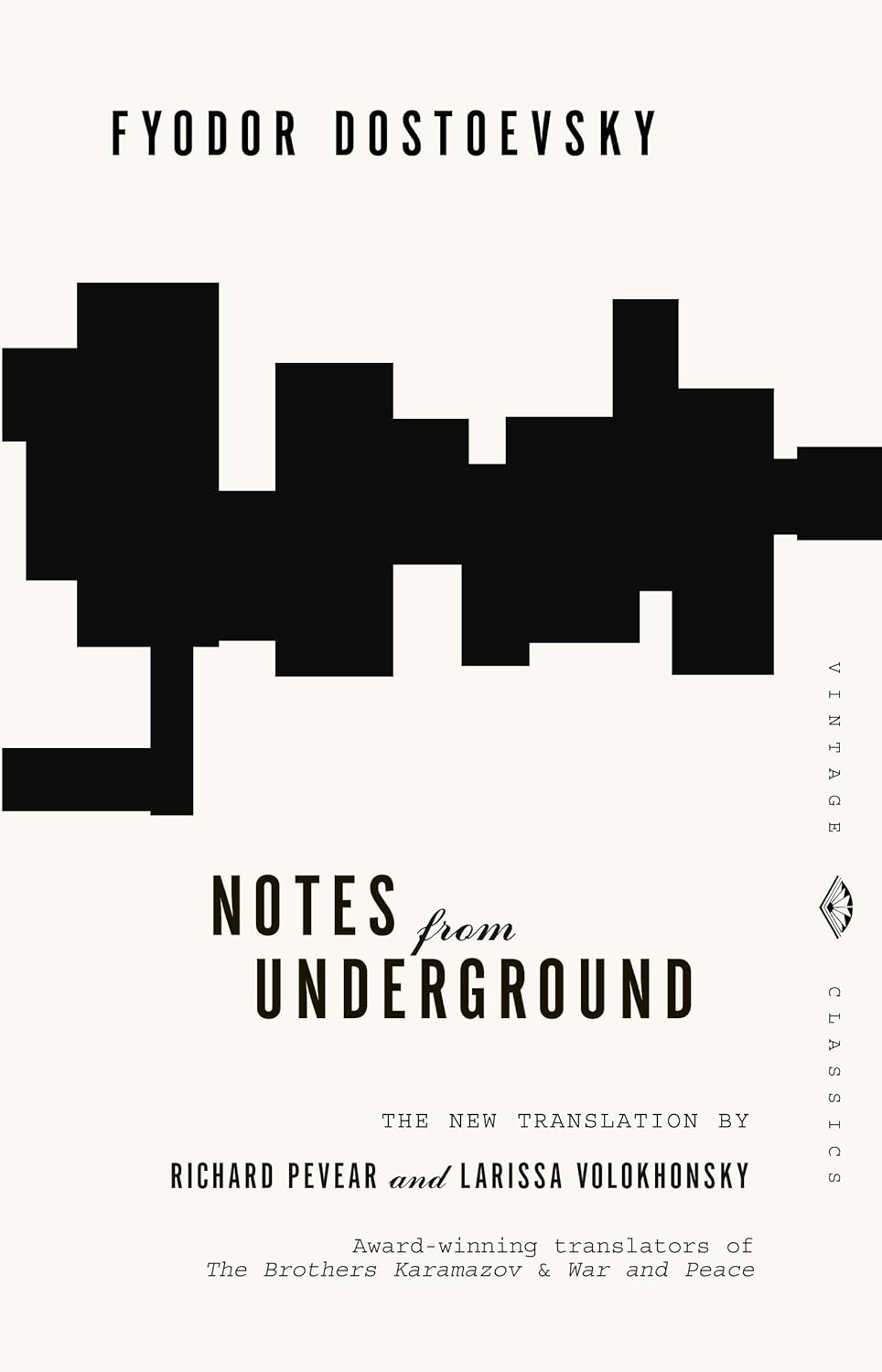
#1 — Notes from Underground — trans. Richard Pevear & Larissa Volokhonsky (2009)
- Readability: High — rapid and self-interrupting
- Accuracy: Very good — close to Russian rhythms
- Tone: Neurotic, parenthetical, pressured
- Accessibility: Good for general readers

George Guidall's nuanced narration captures the psychological depth and existential angst of Dostoevsky's protagonist, complemented by the acclaimed Pevear & Volokhonsky translation, which preserves the text's philosophical intensity and stylistic complexity.
Listen on Audible →Which translation is right for you?
- Choose Pevear & Volokhonsky if you want the reading experience closest to the Russian original — the italics, the dashes, and the self-interrupting rhythms preserved.
- Choose Katz if you're a student or first-time reader who wants the philosophical arguments annotated with historical context.
- Choose Wilks if you want the most direct and accessible prose, or if you're reading it alongside The Double in the same volume.
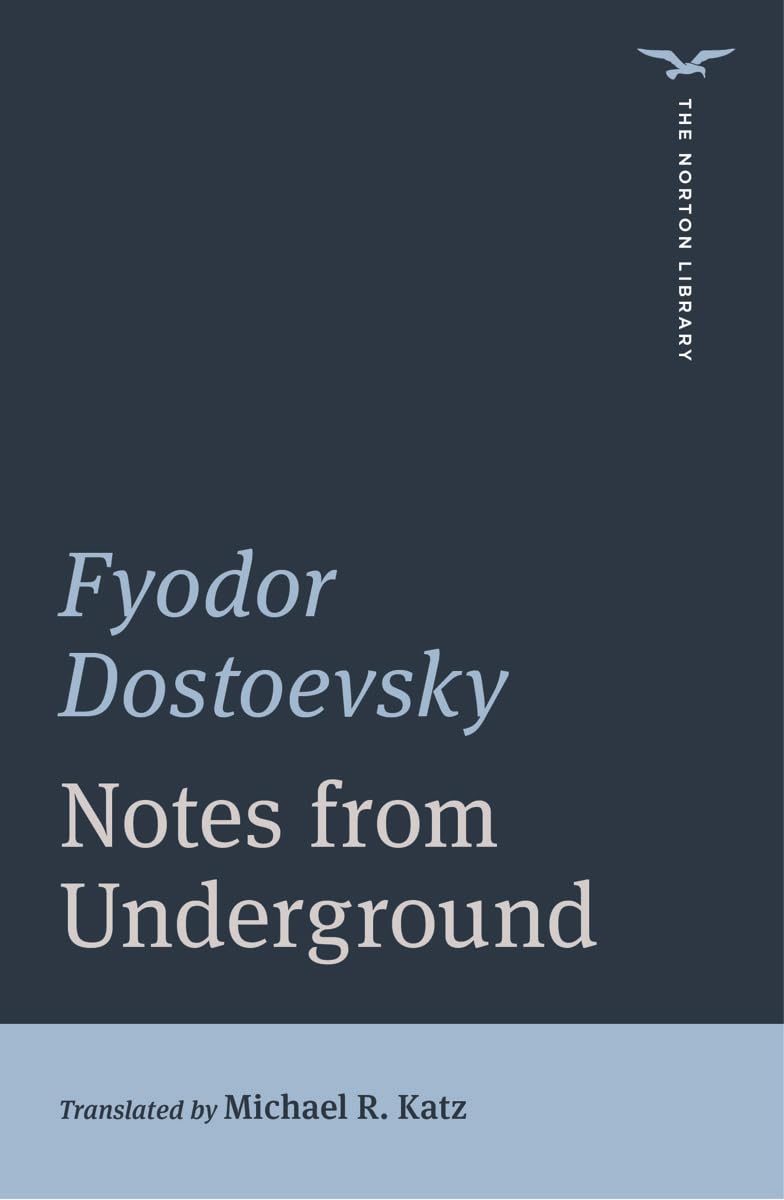
#2 — Notes from Underground — trans. Michael R. Katz (2021)
- Readability: High — clear and annotated
- Accuracy: Excellent — philosophical arguments sharp
- Tone: Scholarly, contextual, precise
- Accessibility: Best for students
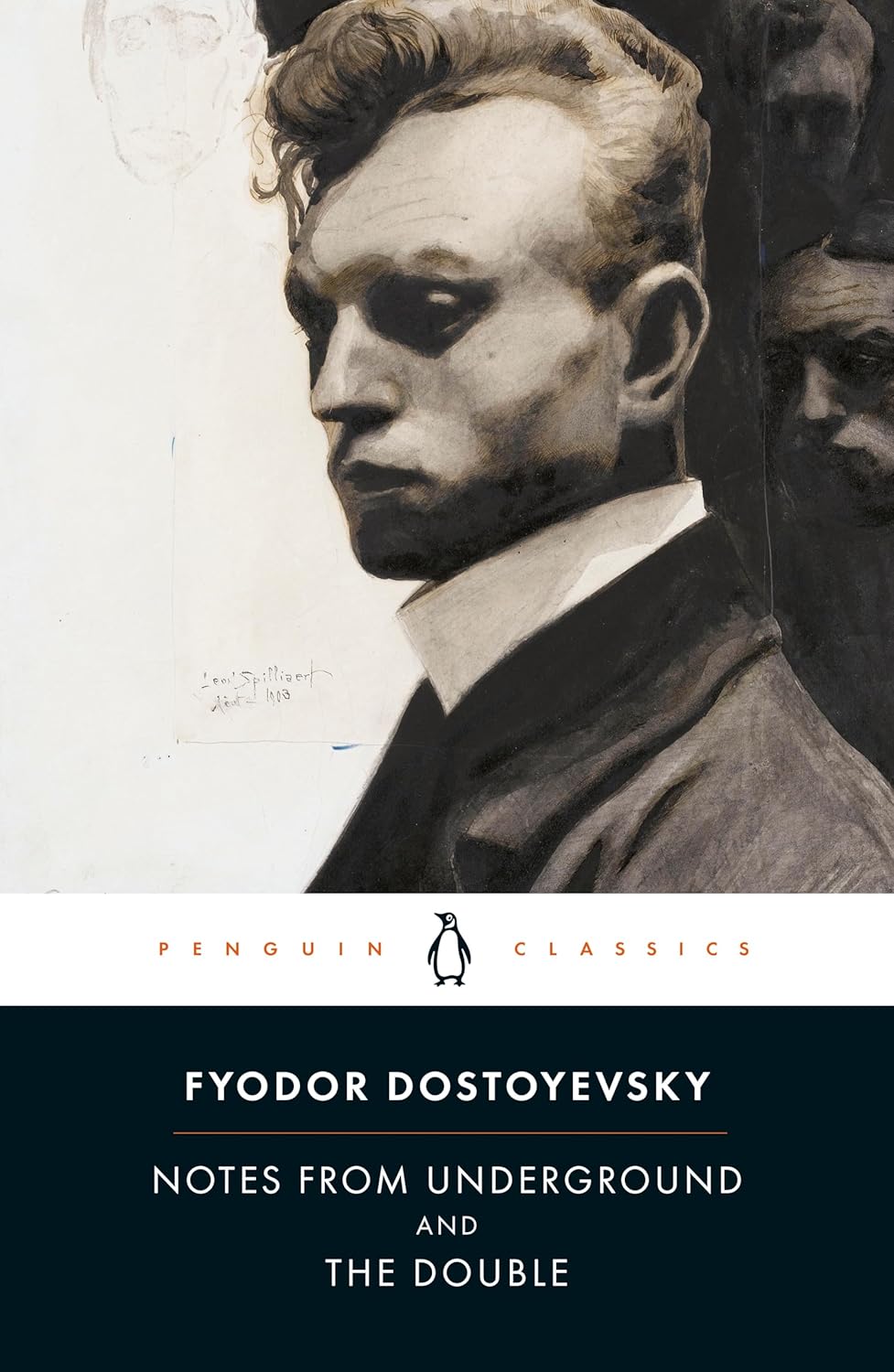
#3 — Notes from Underground and The Double — trans. Ronald Wilks (2009)
- Readability: Very high — direct and fast
- Accuracy: Good — idiomatic and clear
- Tone: Caustic, blunt, recognizable
- Accessibility: Excellent for first readers
About the Translators
Richard Pevear & Larissa Volokhonsky published their Notes from Underground in 2009, paired with The Double in the same Vintage Classics volume. Their Underground Man is rapid, parenthetical, and self-interrupting, with the italics and dashes of the Russian original preserved throughout — a voice that mimics the pressure of thought pushing through syntax.
Michael R. Katz is a professor of Russian literature who has translated Turgenev, Chernyshevsky, and other Russian prose for Norton and other presses. His 2021 Norton Library edition was designed for classroom use, with particular emphasis on making Dostoevsky's philosophical context clear — especially the Underground Man's attacks on Chernyshevsky's rationalist utopia, which require familiarity with What Is to Be Done? (1863) that most readers no longer have.
Ronald Wilks translated widely for Penguin Classics across several decades, including Turgenev's Fathers and Sons, Gorky's My Childhood, and multiple volumes of Chekhov. His Notes from Underground is paired in the Penguin edition with Jessie Coulson's translation of The Double. His approach is more conventionally idiomatic than P&V; the Underground Man in his version is caustic and recognizable without the slight foreignness of the Pevear/Volokhonsky method.
Themes
The Underground Man is a new kind of literary character: the first whose primary problem is that he thinks too much. Before Dostoevsky, fictional suffering had external causes — poverty, injustice, loss. The Underground Man suffers from his own consciousness. He understands every dimension of his humiliation with total clarity and changes nothing. This is what Nietzsche recognized when he called Dostoevsky the only psychologist who had ever taught him anything, and what made the novella so influential on the century it preceded.
Part I is a sustained assault on the idea — associated with Chernyshevsky's What Is to Be Done? (1863) — that once people understand what is good for them, they will choose it rationally. The Underground Man's counter-argument: people don't simply want what is good for them. They want to want. They want freedom, including the freedom to choose badly. The Crystal Palace of rational utopia is intolerable not because it is cruel but because it leaves no room for human caprice. This argument — that human nature resists rationalization — is one of the most important in modern European thought, and it is made here first.
The encounter with Liza in Part II is the novella's moral test. The Underground Man delivers a genuine sermon about redemption to a young prostitute — and then, when she believes him and comes to him, punishes her for it with deliberate cruelty. He does this not out of sadism but as a defense against the possibility of real connection, which terrifies him more than humiliation does. Dostoevsky's argument: the philosophical positions of Part I are not merely intellectual. They are the rationalizations of a man who cannot love, and ideas alone cannot make a person act decently.
Key Characters
The Underground Man — Forty years old, retired civil servant, living alone in a Petersburg apartment. He is the novella's narrator, protagonist, and sole focus. His intelligence is genuine and his self-knowledge is total — which is what makes his inability to change his behavior so devastating. He writes the text retrospectively, trying to understand himself, and the act of writing changes nothing.
Liza — The young prostitute the Underground Man encounters at a brothel and tries, with genuine emotion, to save with a speech about the possibilities of redemption. When she takes the speech seriously and comes to him, he humiliates her. She is the only character in the novella who shows uncalculated goodness — which may be why she is the only one the Underground Man feels compelled to destroy. Her appearance is brief; her role in the moral argument is central.
The schoolmates — Former acquaintances whose dinner the Underground Man crashes in one of Russian literature's most mortifying set pieces. He sits for hours, unable to leave despite being clearly unwanted, consumed by humiliation and unable to stop making it worse. He knows exactly what is happening. The scene is the narrative embodiment of the philosophical argument Part I has been making about the relationship between consciousness and action.
Recommended Sources
Slavic and East European Journal — The flagship peer-reviewed publication of the American Association of Teachers of Slavic and East European Languages (AATSEEL). Regularly publishes translation criticism and Dostoevsky scholarship. Available through JSTOR.
Slavic Review — Published by Cambridge University Press on behalf of the Association for Slavic, East European, and Eurasian Studies. One of the two leading English-language journals in Russian literary and cultural studies, with extensive coverage of Dostoevsky and translation reception.
Dostoevsky Studies — The journal of the International Dostoevsky Society, published annually and dedicated entirely to Dostoevsky scholarship across all major languages. The most specialized peer-reviewed venue for close work on Dostoevsky's texts and translation history.
Which translation is right for you?
Choose Pevear and Volokhonsky if you want the reading experience closest to the Russian original — the italics, the dashes, and the self-interrupting rhythms are all preserved, and the Underground Man's voice arrives with its full neurotic pressure. Choose Katz if you're a student or first-time reader who wants the philosophical arguments annotated: the Underground Man's attacks on Chernyshevsky's Crystal Palace require historical context that most readers no longer have, and the Norton edition provides it. Choose Wilks if you want the most direct and accessible prose, or if you're reading it alongside The Double in the same Penguin volume.
Frequently Asked Questions
What is Notes from Underground about?
Notes from Underground is a novel by Fyodor Dostoevsky that explores the thoughts and feelings of a retired civil servant living in St. Petersburg. The protagonist, known as the Underground Man, is a complex character who grapples with feelings of alienation and self-loathing, offering a critique of rationalism and exploring themes of free will and human nature.
Is Notes from Underground hard to read?
Notes from Underground can be challenging due to its philosophical depth and the protagonist's complex psychology. The Pevear & Volokhonsky translation captures the original's intensity, while Wilks offers a more accessible prose style.
Which Notes from Underground translation is best?
Pevear & Volokhonsky is the best overall for most readers because it preserves the rapid, self-interrupting rhythms and neurotic pressure of Dostoevsky's original Russian.
Pevear & Volokhonsky vs Katz — which should I choose?
Choose Pevear & Volokhonsky for the closest reading experience to the Russian; choose Katz if you want extensive scholarly notes and philosophical context for classroom use.
Which translation is easiest to read?
Ronald Wilks is the easiest to read, with direct, idiomatic prose that moves quickly and lands with blunt force without foreignizing effects.
Which translation is most accurate?
Michael R. Katz is the most accurate for scholarly purposes, with clear rendering of the philosophical arguments and extensive annotations.
Why does the title Notes from Underground present a translational problem?
Podpol'ye literally means the space beneath floorboards; most translators retain underground for its resonances of subversion, though some have tried cellar or mousehole.
This guide is based on reading all three translations and reviewing scholarly commentary. Last reviewed: June 2026.
As an Amazon Associate, I earn from qualifying purchases.
Looking for another classic? Browse all our translation guides →
Exploring more Dostoevsky? Our Brothers Karamazov translation guide compares Pevear & Volokhonsky against Avsey.
For another essential Dostoevsky novel, see our Crime and Punishment translation guide weighing Pevear against Ready and McDuff.
Readers of Notes from Underground often continue with our Idiot translation guide comparing McDuff, Myers, and Carlisle.
Also by Dostoevsky, our Demons translation guide examines Pevear & Volokhonsky alongside Maguire and Garnett.