Anna Karenina: What It's About & Best Translation
The translation you choose shapes the novel you read
As an Amazon Associate, we earn from qualifying purchases.
Anna Karenina is a novel about the tragic love affair between Anna, a married woman, and Count Vronsky, set against the backdrop of Russian society. It contrasts their doomed relationship with the more stable marriage of Levin and Kitty, exploring themes of love, fidelity, and the constraints of society.
Translation Comparison at a Glance
| Translation | Readability | Accuracy | Tone | Best For |
|---|---|---|---|---|
| Pevear & Volokhonsky (2000) | Moderate | Excellent | Faithful, slightly strange | Most readers, first read, university |
| Bartlett (2014) | High | Very good | Elegant, graceful | Pure reading pleasure |
| Maude (1918) | High | Very good | Stately, direct | Classic authority |
| Schwartz (2014) | Moderate | Excellent | Literal, clunky | Scholarly comparison |
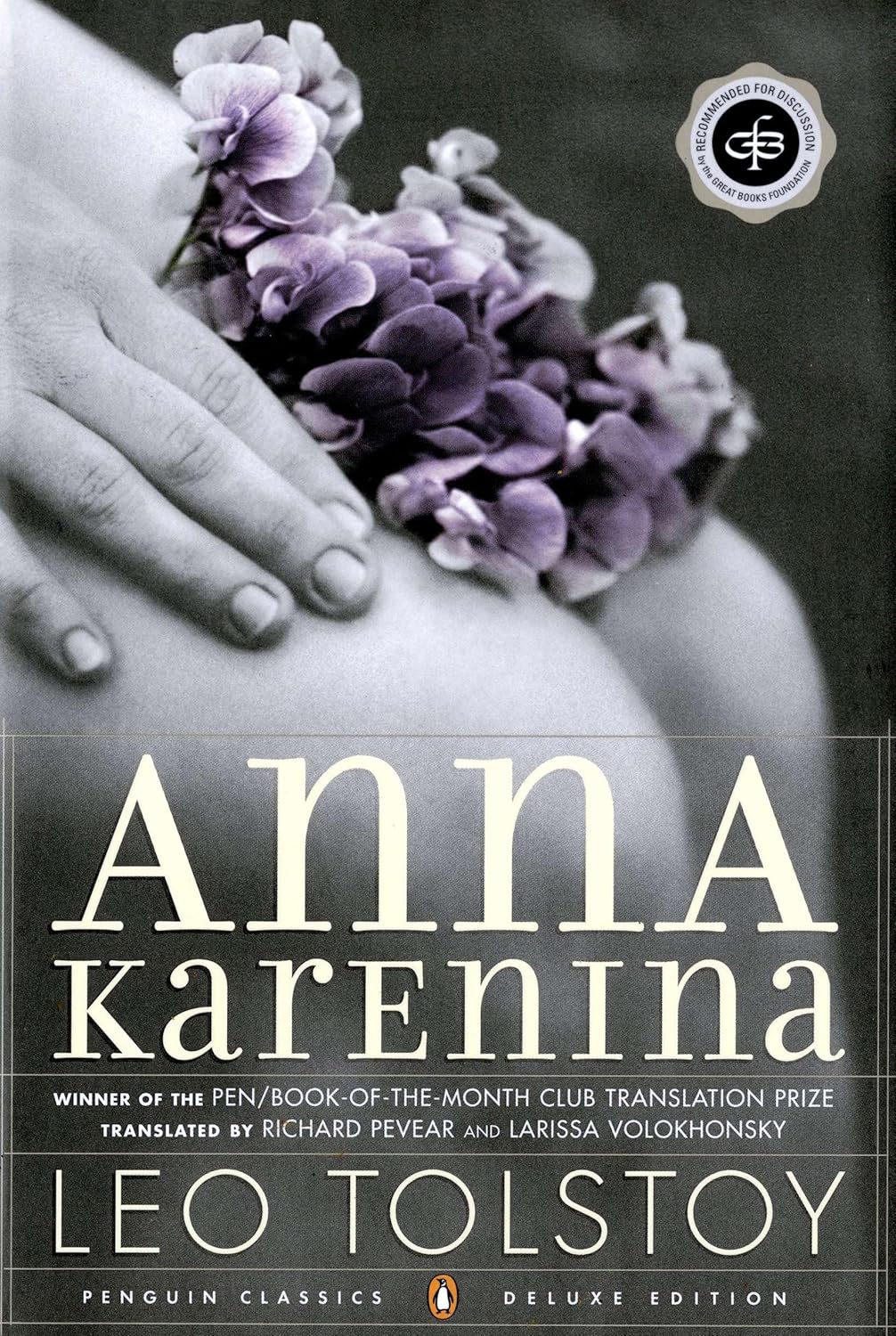
#1 — Anna Karenina — trans. Richard Pevear & Larissa Volokhonsky (2000)
- Readability: Moderate — preserves long sentences and repetitions
- Accuracy: Excellent — closest to Tolstoy's syntax
- Tone: Authentically strange and direct
- Accessibility: High — widely available and commonly taught

Miranda Pleasence's nuanced narration captures the emotional depth and societal tensions of Tolstoy's masterpiece, while the Maude translation remains one of the most respected and accessible versions for English listeners.
Listen on Audible →Which translation is right for you?
- Choose Pevear & Volokhonsky if you want the most faithful rendering of Tolstoy's syntax and rhythms and the version most likely to be discussed in courses or reading groups.
- Choose Bartlett if you prioritize elegant, flowing English prose and reading pleasure, especially in social scenes and dialogue.
- Choose Maude if you want a stately, authoritative classic translation approved by Tolstoy himself.
- Choose Schwartz if you want the most literal modern version for scholarly close reading and comparison.
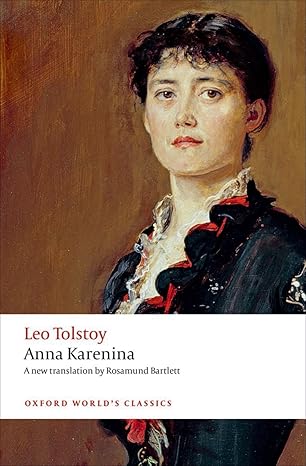
#2 — Anna Karenina — trans. Rosamund Bartlett (2014)
- Readability: High — flows with ease and grace
- Accuracy: Very good — prioritizes English beauty
- Tone: Witty, ironic, elegant
- Accessibility: High — excellent introduction and notes
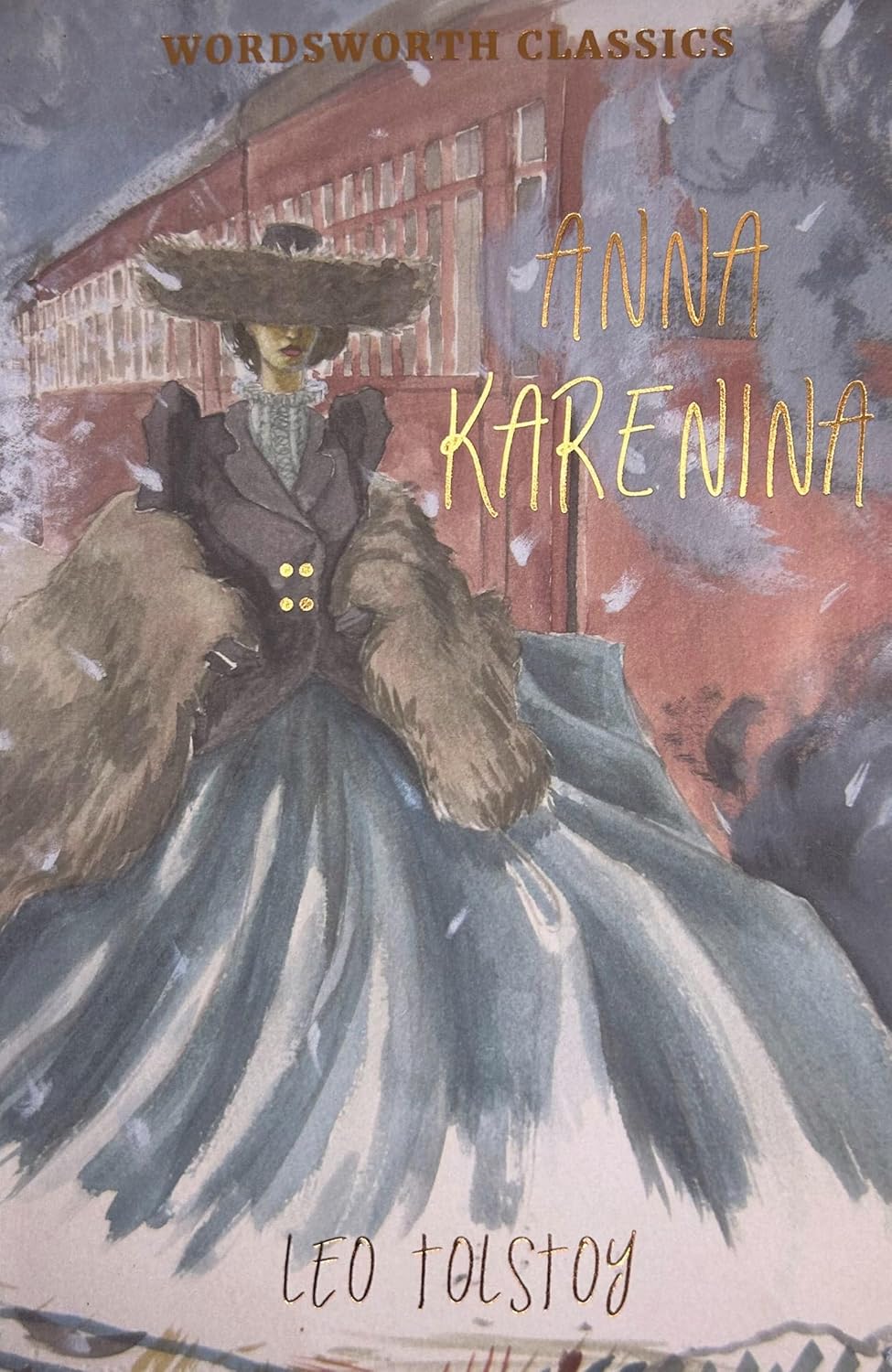
#3 — Anna Karenina — trans. Louise & Aylmer Maude (1918)
- Readability: High — clear and unhurried
- Accuracy: Very good — reflects Tolstoy's direct input
- Tone: Stately, moral, authoritative
- Accessibility: Moderate — older but still widely available

#4 — Anna Karenina — trans. Marian Schwartz (2014)
- Readability: Moderate — embraces clunkiness
- Accuracy: Excellent — most literal modern version
- Tone: Deliberately awkward and precise
- Accessibility: Low — best as a second translation
About the Translators
Richard Pevear & Larissa Volokhonsky published their Anna Karenina in 2000, applying to Tolstoy the same method that had made their Dostoevsky translations definitive: Volokhonsky's literal draft shaped into English prose by Pevear. The result won the PEN/Book-of-the-Month Club Translation Prize. Oprah's Book Club selection in 2004 made it the dominant popular version and the one most likely to be found in bookshops today. Their critics argue that the method, which preserves Russian syntax at the cost of English naturalness, suits Dostoevsky's jagged prose better than Tolstoy's more controlled style.
Rosamund Bartlett is a British scholar specializing in Russian music and literature whose 2010 biography of Tolstoy was widely praised for its depth and readability. Her 2014 Oxford World's Classics Anna Karenina reflects that immersion: it is the most elegant modern English version, prioritizing the flow and beauty of Tolstoy's prose without sacrificing fidelity. Bartlett has also written extensively on Chekhov and on the relationship between Russian literature and Russian music.
Louise & Aylmer Maude were an English couple who lived in Russia for many years, became personal friends of Tolstoy, wrote his biography, and translated his major works with his active involvement and approval during his lifetime — a relationship no other translators have had with any major Russian writer. Tolstoy wrote a preface for their collected works. Their Anna Karenina (1918) reflects that intimacy: a directness and clarity that comes from translators who knew both the author and his world firsthand.
Marian Schwartz is an American translator who has worked extensively with Russian literature for Yale University Press, Stanford University Press, and others. Her 2014 Anna Karenina for Yale is the most literal modern version — she deliberately preserves Tolstoy's repetitions and awkward constructions on the principled grounds that these are features, not flaws: that Tolstoy's clunkiness is intentional and part of what he is doing.
Themes
Anna Karenina runs two plots simultaneously and arranges them as a moral counterpoint. Anna and Vronsky's story ends in destruction; Levin and Kitty's ends in a kind of earned, provisional peace. Tolstoy never states the comparison explicitly — but the novel is structured so that readers draw it themselves. Whether the contrast constitutes a judgment (Anna's transgression brings its punishment) or a tragedy (a social order that cannot accommodate female desire destroys her) is a question the novel refuses to settle, and different translations can make the same text yield different answers depending on how they render Tolstoy's narrative voice.
The Moscow and St. Petersburg society surrounding Anna is not background. It is the mechanism that kills her. Tolstoy renders it with extraordinary precision: who accepts whose invitations, who speaks to whom at the theater, how quickly ruin spreads through social networks, the exact moment when a woman is no longer received. Anna's tragedy is partly that she takes these rules seriously enough to be destroyed by them, while Vronsky — who feels them less acutely — survives. The novel is one of the great accounts of how social systems enforce themselves through individual participation.
Levin's half of the novel is a sustained inquiry into how to live. He tries farming, love, marriage, faith, and the question of what work means — and the novel follows each attempt with the same seriousness it brings to Anna's story. Tolstoy considered Levin the novel's real center, and many readers who return to Anna Karenina find the Levin plot growing larger with each reading, as Anna's story — though more dramatic — begins to feel like the illustration and Levin's like the argument.
Key Characters
Anna Karenina — A married woman of St. Petersburg society who falls in love with Count Vronsky at a Moscow train station. She is one of the great characters in European fiction: beautiful, intelligent, fully alive, and ultimately unable to survive the contradictions her society places on women who want too much. Tolstoy famously grew to dislike her as he wrote the novel — a fact that is either visible in the text or entirely invisible, depending on who you ask.
Alexei Vronsky — The cavalry officer Anna falls for. He is not a villain: he genuinely loves Anna, gives up his career for her, and tries sincerely to make their life together work. But he is also a man of his world in ways he cannot quite transcend, and his incomprehension of what Anna needs becomes the novel's quiet catastrophe. He survives the story in a way Anna does not, and Tolstoy is precise about why.
Konstantin Levin — The landowner who loves Kitty and who is, in a different kind of novel, the unambiguous hero. His struggles with farming, faith, marriage, and the meaning of work give the novel its philosophical weight. Widely read as autobiographical — Levin's spiritual crisis in the late chapters closely mirrors Tolstoy's own in the years after Anna Karenina was published.
Kitty Shcherbatskaya — Levin's eventual wife. She begins the novel as the girl who chooses Vronsky over Levin and is humiliated when he pursues Anna instead. Her arc — from a girl navigating social expectation to a woman who has built something real — is the novel's quieter and more hopeful counter-example.
Alexei Karenin — Anna's husband: a high-ranking government official, initially presented as cold and bureaucratic. The novel's most surprising character. In its most unexpected passage, Karenin becomes capable of a genuine, humiliating generosity — a capacity for forgiveness that neither Anna nor Vronsky can handle. He is a man whose inner life is larger than anyone around him suspects.
Stiva Oblonsky — Anna's brother, whose infidelity opens the novel. One of the great minor characters in fiction: charming, selfish, fundamentally decent, and congenitally incapable of not causing damage. He loves everyone and is loyal to no one. He also survives everything, which is part of Tolstoy's point.
Recommended Sources
Slavic and East European Journal — The flagship peer-reviewed publication of the American Association of Teachers of Slavic and East European Languages (AATSEEL). Regularly publishes translation criticism and Tolstoy scholarship, including comparative reviews of new editions as they appear. Available through JSTOR.
Tolstoy Studies Journal — Published annually by the North American Tolstoy Society, it is the most specialized English-language venue for Tolstoy scholarship, covering his fiction, his philosophical and religious writings, and the history of his reception and translation into other languages.
Slavic Review — Published by Cambridge University Press on behalf of the Association for Slavic, East European, and Eurasian Studies. One of the two leading English-language journals in Russian literary and cultural studies, with a long history of Tolstoy criticism including translation comparison and reception studies.
Frequently Asked Questions
What is Anna Karenina about?
Anna Karenina is a novel about the tragic love affair between Anna, a married woman, and Count Vronsky, set against the backdrop of Russian society. It contrasts their doomed relationship with the more stable marriage of Levin and Kitty, exploring themes of love, fidelity, and the constraints of society.
Is Anna Karenina hard to read?
Anna Karenina can be challenging due to its complex characters and social commentary. The Pevear & Volokhonsky translation is faithful to Tolstoy's style, while Bartlett offers a more readable prose. The Maude translation is clear and authoritative, and Schwartz is best for scholarly readers.
Which Anna Karenina translation is best?
The Pevear and Volokhonsky translation is the most widely read modern version and this guide's primary recommendation for most readers. It won the PEN/Book-of-the-Month Club Translation Prize and is the version most likely to be taught in university courses or found in bookshops.
Pevear & Volokhonsky vs Bartlett — which should I choose?
Choose Pevear & Volokhonsky for fidelity to Tolstoy's syntax and rhythms; choose Bartlett if you prioritize elegant, flowing English prose and reading pleasure, especially in social scenes and dialogue.
Which translation is easiest to read?
Bartlett's Oxford translation reads with the greatest ease and grace, especially in social scenes and dialogue where Tolstoy's wit and irony come through sharply.
Which translation is most accurate?
Pevear and Volokhonsky preserve Tolstoy's syntax most faithfully; Schwartz is the most literal modern version for close scholarly reading.
Is the Maude translation still worth reading?
Yes — the Maudes were personal friends of Tolstoy and produced a stately, authoritative version with his approval that many readers still prefer for its clarity.
This guide is based on reading all 4 translations and reviewing scholarly commentary. Last reviewed: June 2026.
As an Amazon Associate, I earn from qualifying purchases.
Looking for another classic? Browse all our translation guides →
For more Tolstoy, see our guide to the best War and Peace translation.
Also reading Russian classics? Compare the best Brothers Karamazov translation editions.
Pevear & Volokhonsky fans should check our Crime and Punishment translation guide.
Another essential Russian novel: our Master and Margarita translation guide compares P&V against Ginsburg.
Or explore the best Dead Souls translation with P&V, English, and Guerney.