Dead Souls: What It's About & Best Translation
Gogol called it a poem — a con man travels provincial Russia buying dead serfs, and everything goes sideways
As an Amazon Associate, we earn from qualifying purchases.
Dead Souls follows the journey of Chichikov, a con man who travels through provincial Russia buying the rights to deceased serfs. His scheme reveals the moral and social decay of the society he encounters.
Translation Comparison at a Glance
| Translation | Readability | Accuracy | Tone | Best For |
|---|---|---|---|---|
| Pevear & Volokhonsky (1996) | High | Excellent | Strange, rhetorical, unsettling | First-time readers, stylistic fidelity |
| Christopher English (2008) | Very high | Very good | Clear, scholarly, measured | Academic readers, annotation needs |
| Guerney/Fusso (1996) | High | Good | Vivid, comic, energetic | Readers seeking Nabokov-approved flair |
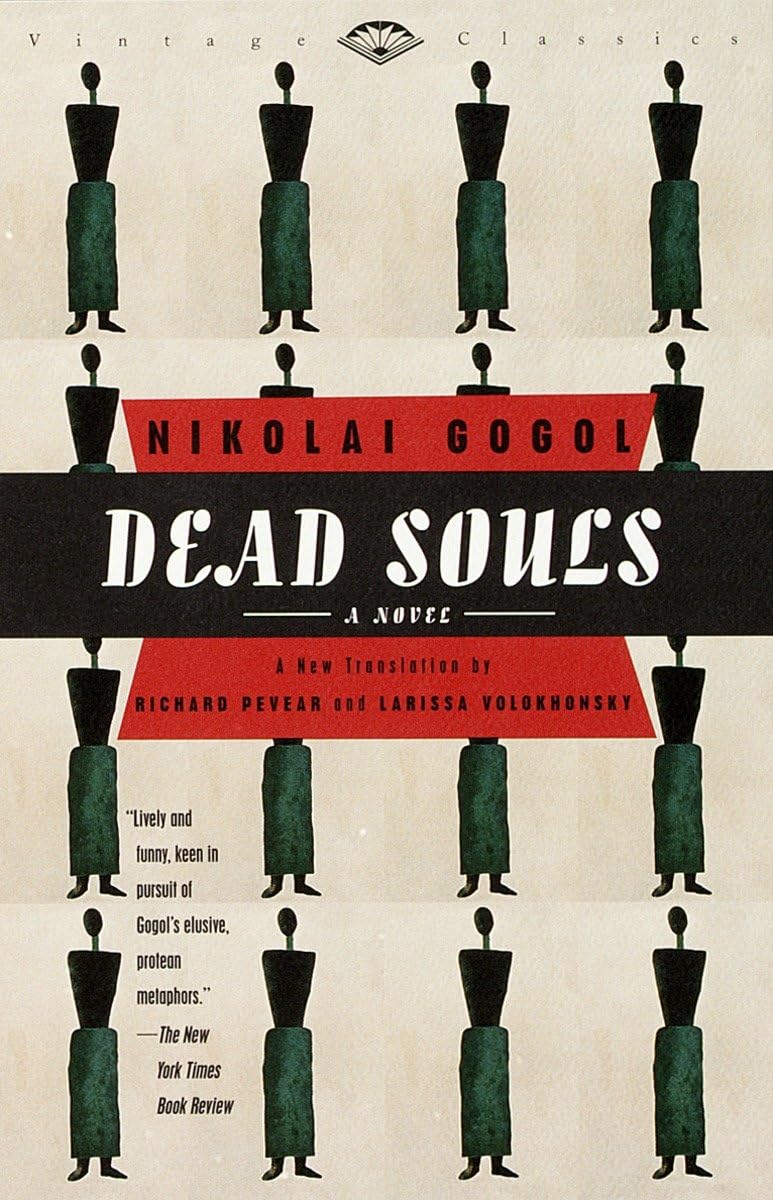
#1 — Dead Souls — trans. Richard Pevear & Larissa Volokhonsky (1996)
- Readability: High — preserves run-on similes and rhetorical excesses without flattening.
- Accuracy: Excellent — keeps syntactic peculiarities and tonal strangeness intact.
- Tone: Strange, anarchic, and unsettling rather than normalised.
- Accessibility: Ideal first choice for most readers; widely taught.

Boulton's rich, expressive narration captures Gogol's satirical tone and vivid characters, while Guerney's translation preserves the novel's humor and depth.
Listen on Audible →Which translation is right for you?
- Choose Pevear & Volokhonsky if you want the version that best preserves the deliberate strangeness, run-on similes, and tonal edge of Gogol's prose.
- Choose Christopher English if you want scholarly apparatus, historical notes, and a consistently fluent reading experience.
- Choose Guerney/Fusso if you value idiomatic comic energy and Nabokov's endorsement of its vivid, inventive style.
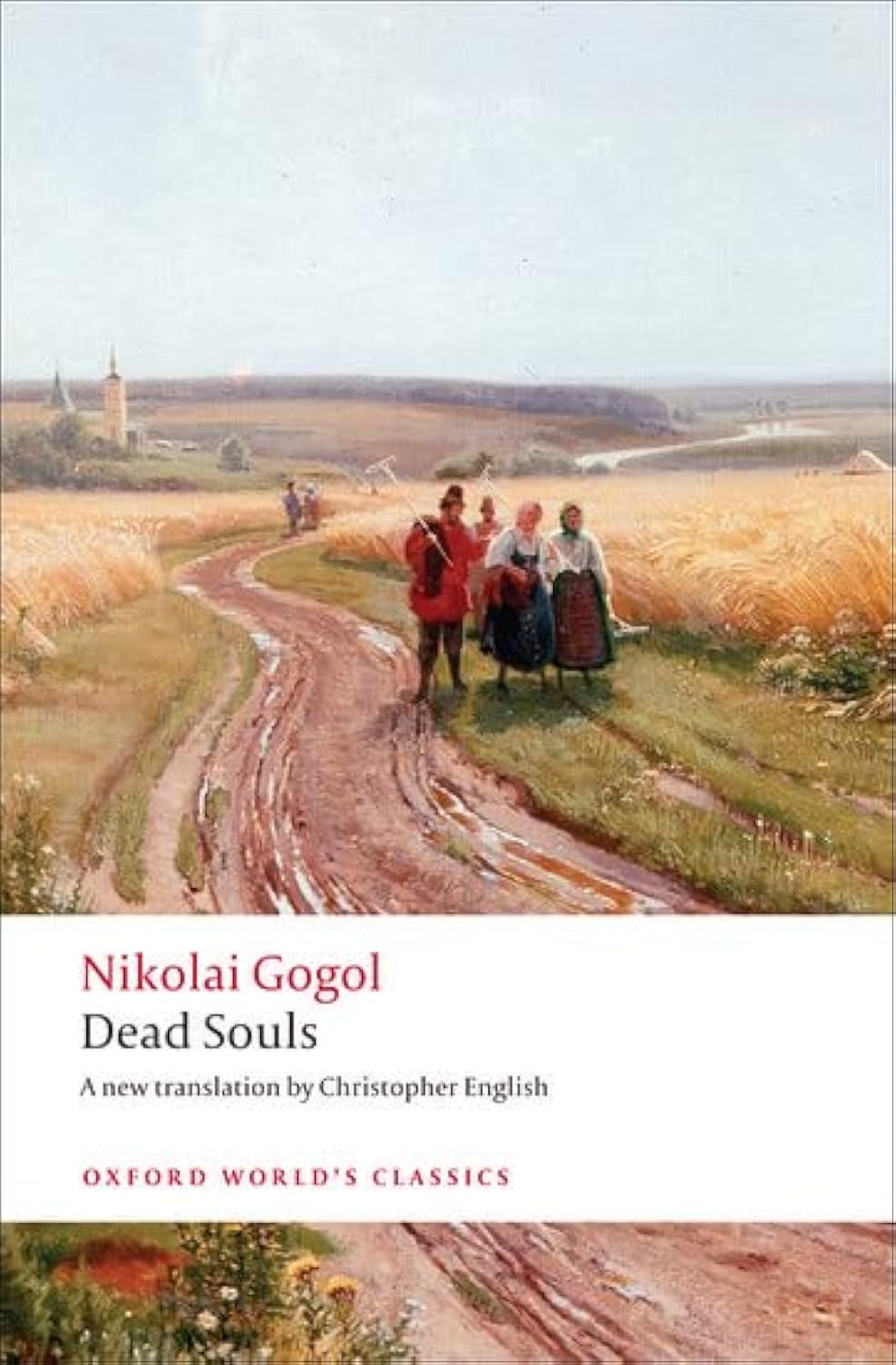
#2 — Dead Souls: A Poem — trans. Christopher English (2008)
- Readability: Very high — consistently fluent in the conventional sense.
- Accuracy: Very good — careful and precise with strong annotation.
- Tone: Clear, measured, and foregrounds generic strangeness.
- Accessibility: Best when readers want historical context and notes.
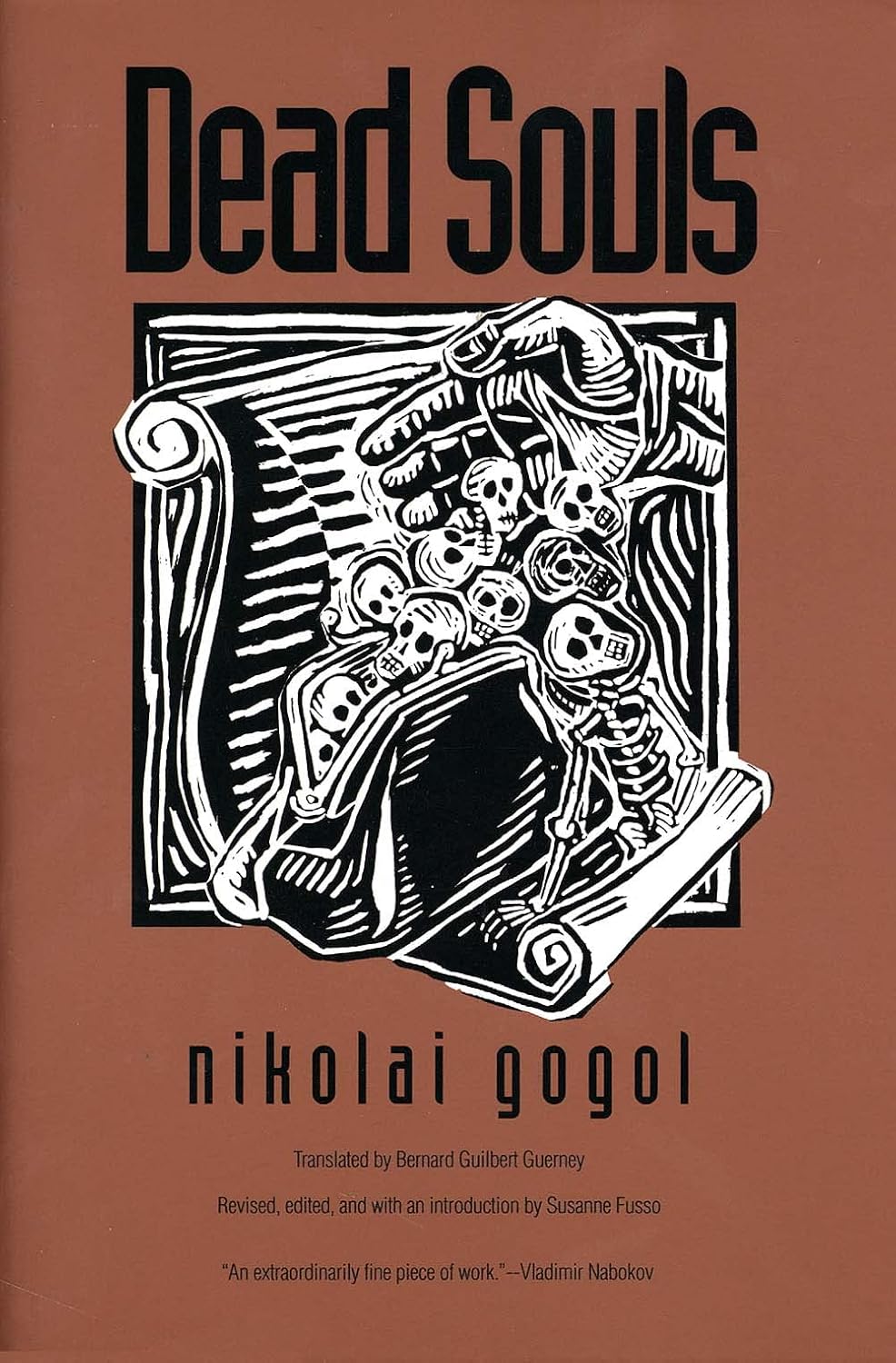
#3 — Dead Souls — trans. Bernard Guilbert Guerney, rev. Susanne Fusso (1996)
- Readability: High — vivid and inventive with strong comic drive.
- Accuracy: Good — revised by Fusso while keeping Guerney's spirit.
- Tone: Anarchic, energetic, and exceptionally comic.
- Accessibility: Excellent for readers who want Nabokov-endorsed flair.
About the Translators
Richard Pevear & Larissa Volokhonsky (1996, Vintage Classics): P&V approached Gogol's prose differently from their Dostoevsky and Tolstoy work — the challenge is not psychological depth or moral weight but deliberate strangeness, a comedy that proceeds at the edge of surrealism. Their Dead Souls is notable for preserving the run-on similes, the narrator's rhetorical excesses, and the moments where the comedy tips into something unsettling, rather than rationalizing them into standard literary English.
Christopher English (2008, Oxford World's Classics): British scholar whose translation retains Gogol's subtitle "A Poem" and foregrounds the book's formal strangeness. More cautious than P&V, producing a consistently readable and well-annotated text well suited to readers who want historical and cultural reference support alongside the novel.
Bernard Guilbert Guerney (1894–1979) & Susanne Fusso (1996, Yale University Press): Guerney was an American translator who worked across Russian and other European literatures; his Dead Souls, first published in 1942, was praised by Nabokov as "an extraordinarily fine piece of work." Fusso, a Gogol scholar at Wesleyan, revised and edited the translation for Yale University Press in 1996, correcting errors and modernising the text while preserving Guerney's comic energy.
Themes
The gallery of Russian types as the novel's real subject. Chichikov visits five landowners — Manilov, Korobochka, Nozdrev, Sobakevich, Plyushkin — and each is a study in a different variety of human vacancy. Manilov is sentimental nothingness; Korobochka is suspicious smallness; Nozdrev is anarchic emptiness; Sobakevich is aggressive materialism; Plyushkin is hoarding as death-in-life. Together they form Gogol's portrait of provincial Russia and, by extension, of a certain range of human possibility. The satirical machinery is Dickensian in scope and Kafkaesque in effect. Gogol insists that Chichikov is the hero — the least empty person in the book — but does not intend this as a compliment.
The narrator as character. Gogol's narrator is one of the most intrusive in world literature: he addresses the reader directly, apologises for the lowness of his subject matter, defends himself against imaginary critics, digresses into lyric meditations on Russia's destiny, and then steps back into the story. This is not a convention of Gogol's era — it is his most characteristic technique, a way of exposing the gap between Russia's actual condition and the mythologies it tells itself. The translator's ability to handle these tonal shifts determines how much of Gogol survives.
The unfinished form as meaning. Gogol destroyed the manuscript of the second volume nine days before his death in 1852. What survives is Part One — a vision of Russian vice without the promised redemption that was supposed to follow. Many readers argue this is the truest form of the novel, since Gogol could not write the redemption because he could not imagine it. The book we have is a masterpiece. The book it was supposed to be is unknowable.
Key Characters
Pavel Ivanovich Chichikov — the con man, smooth and adaptable, capable of assuming exactly the social coloring each situation requires. His scheme is never completed; his past is revealed only in the novel's final chapters. He is not a villain in the conventional sense — he is more like a void that takes the shape of whatever surrounds it, which makes him simultaneously comic and unsettling.
Manilov — the first landowner Chichikov visits: a man of pure, vague, empty sentiment who smiles constantly and accomplishes nothing. His name has entered the Russian language as manilovshchina — Manilovism — for precisely this quality of pleasant, purposeless futility.
Plyushkin — the last landowner, and the novel's most devastating portrait. Excessive economy has descended into something approaching decomposition: the house rots, the serfs starve, and Plyushkin himself can no longer be identified by gender from his clothing. Gogol pauses to give him a backstory — which only makes the ruin more terrible.
Nozdrev — the anarchic, compulsive gambler and liar; the most comic of the landowners and the most dangerous. A man without inner restraint of any kind, who disrupts the scheme not out of malice but out of sheer uncontainable energy.
Recommended Sources
For further academic reading on Gogol and Dead Souls:
- The Slavic and East European Journal (SEEJ) — the flagship journal of AATSEEL; extensive Gogol criticism across several decades.
- Slavic Review (Cambridge University Press) — covers the literary, cultural, and historical contexts essential for understanding Gogol's Russia.
- Russian Literature (Elsevier) — the main international journal for Gogol scholarship, including comparative studies placing his work in European literary context.
Which translation is right for you?
Choose P&V for a first reading — their version best preserves the deliberate strangeness of Gogol's prose, and their translation of the famous troika passage at the end of Part One is exceptional. Choose English if you want scholarly apparatus and annotation alongside the text — his Oxford edition is the most useful for a reader who wants help with historical and cultural references. Choose Guerney/Fusso if you value idiomatic comic energy and the endorsement of Nabokov; his translation catches Gogol's comedy with unusual flair.
Frequently Asked Questions
What is Dead Souls about?
Dead Souls follows the journey of Chichikov, a con man who travels through provincial Russia buying the rights to deceased serfs. His scheme reveals the moral and social decay of the society he encounters.
Is Dead Souls hard to read?
Dead Souls can be challenging due to its satirical tone and complex prose. The Pevear & Volokhonsky translation preserves this complexity, while the Christopher English version offers a more accessible read with scholarly notes.
Which Dead Souls translation is best?
The Pevear and Volokhonsky translation is this guide's primary recommendation. It is the most widely available modern version and the one that best preserves the texture of Gogol's prose.
Pevear & Volokhonsky vs Christopher English — which should I choose?
Choose P&V for a first reading — their version best preserves the deliberate strangeness of Gogol's prose. Choose English if you want scholarly apparatus and annotation alongside the text.
Which translation is easiest to read?
Christopher English's Oxford edition is more consistently readable in the conventional sense and well suited to a reader who wants a fluent text alongside scholarly apparatus.
Which translation is most accurate?
Pevear and Volokhonsky preserve the idiom, the syntactic peculiarities, and the tonal strangeness of the original rather than normalising them into standard English literary prose.
Is the Guerney/Fusso translation still worth reading?
Yes — Bernard Guilbert Guerney's translation was praised by Nabokov as an extraordinarily fine piece of work and catches Gogol's comedy with unusual flair.
This guide is based on reading all three translations and reviewing scholarly commentary. Last reviewed: June 2026.
As an Amazon Associate, I earn from qualifying purchases.
Looking for another classic? Browse all our translation guides →
Still with Gogol? See our guide to the best Gogol stories translation.
For more Pevear & Volokhonsky, our Brothers Karamazov translation guide is essential.
Another Russian masterpiece: compare the best Crime and Punishment translations.
Or try Tolstoy with our War and Peace translation guide.
Don't miss our Idiot translation comparison for more Dostoevsky.