The Master and Margarita: What It's About & Best Translation
The devil visits Soviet Moscow, and chaos — divine and otherwise — ensues
As an Amazon Associate, we earn from qualifying purchases.
The Master and Margarita is a novel set in Soviet Moscow, where the devil, Woland, visits and causes chaos. It intertwines a story of Pontius Pilate and a love story between the Master, a writer, and Margarita, his devoted lover.
Translation Comparison at a Glance
| Translation | Readability | Accuracy | Tone | Best For |
|---|---|---|---|---|
| Pevear & Volokhonsky (2016) | High | Excellent | Full tonal range | First-time readers |
| Ginsburg (1967) | High | Good | Energetic, readable | Historical interest |
| Burgin & O'Connor (1995) | Moderate | Excellent | Scholarly, precise | Academic study |
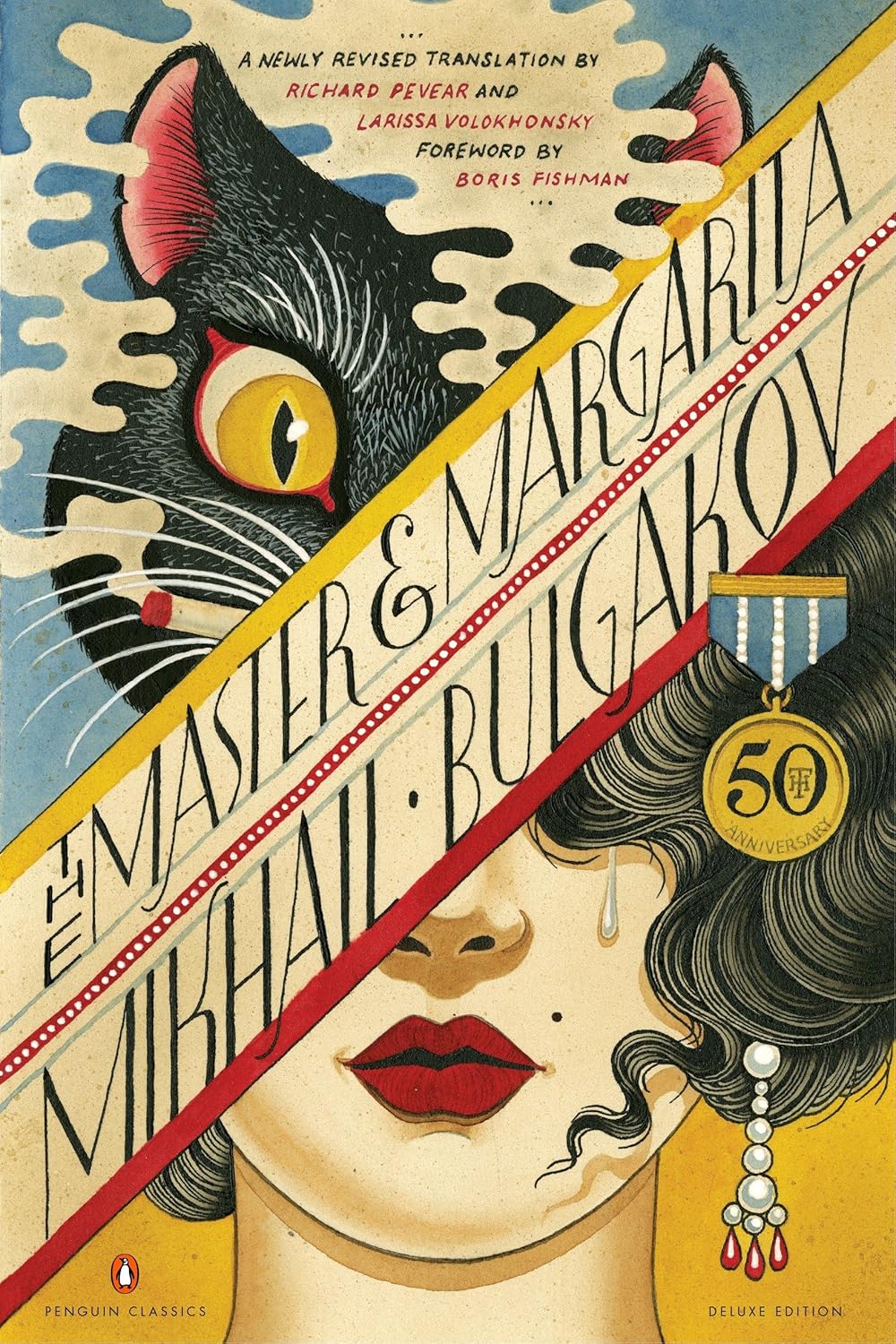
#1 — The Master and Margarita — trans. Richard Pevear & Larissa Volokhonsky (2016)
- Readability: Captures sardonic comedy, biblical gravity, and lyric intensity with sustained control.
- Accuracy: Works from the authoritative complete Russian text.
- Tone: Full range from Moscow satire to Pilate chapters.
- Accessibility: Beautifully designed Penguin Deluxe Edition with useful foreword.

Rhind-Tutt's dynamic narration captures the novel's satirical and mystical tones, while Burgin and O'Connor's translation preserves Bulgakov's original intent and humor.
Listen on Audible →Which translation is right for you?
- Choose Pevear & Volokhonsky if you want the most complete, accurate, and widely used modern version for a first reading.
- Choose Ginsburg if you are interested in the historically important first English edition, while noting its abridged textual basis.
- Choose Burgin & O'Connor if you are reading academically or want the scholarly notes and Proffer afterword.
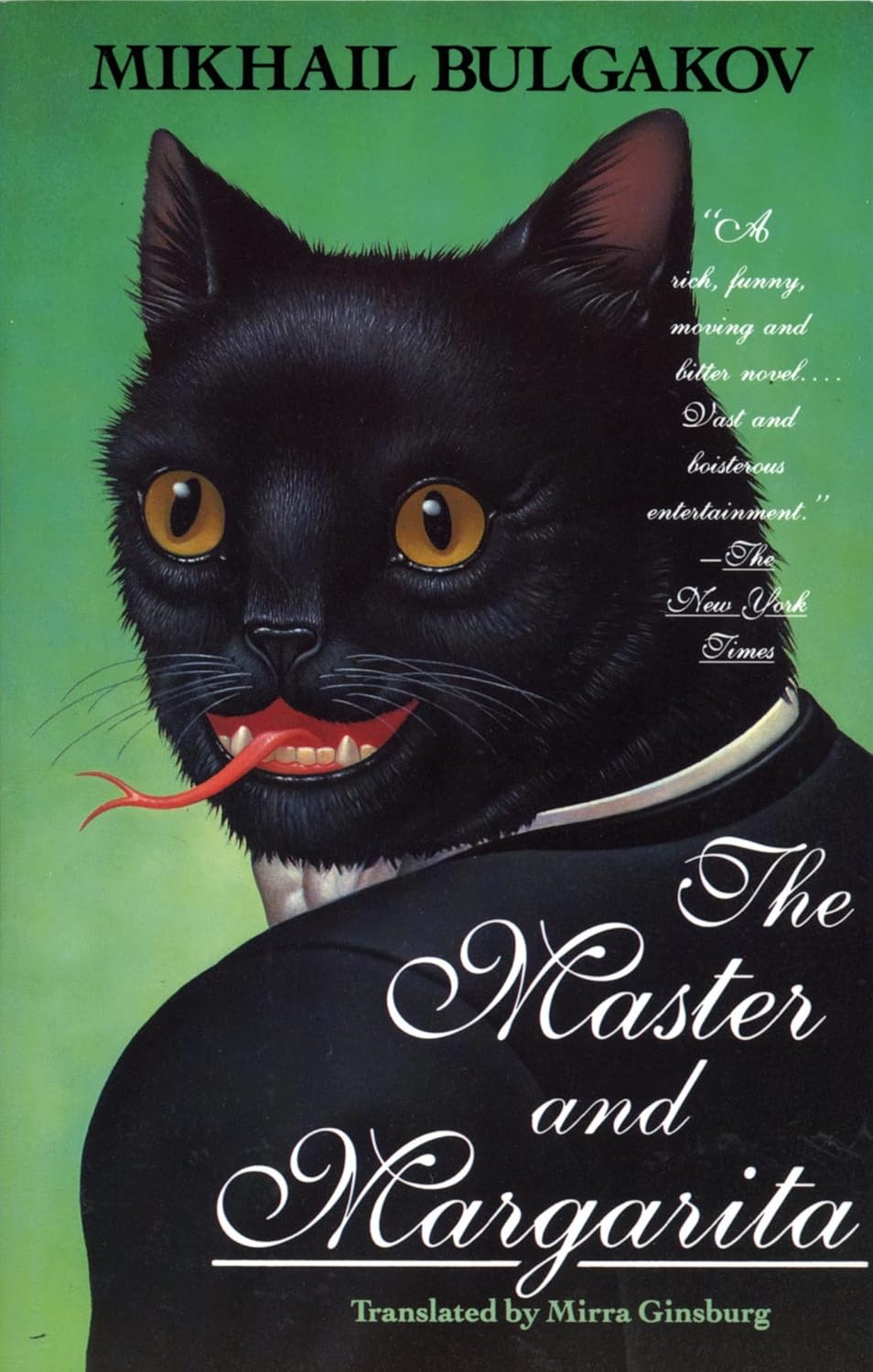
#2 — The Master and Margarita — trans. Mirra Ginsburg (1967)
- Readability: Genuine energy and readability that introduced a generation.
- Accuracy: Based on the abridged Soviet journal text missing roughly one-sixth.
- Tone: Pioneering and historically influential.
- Accessibility: Widely available but incomplete.
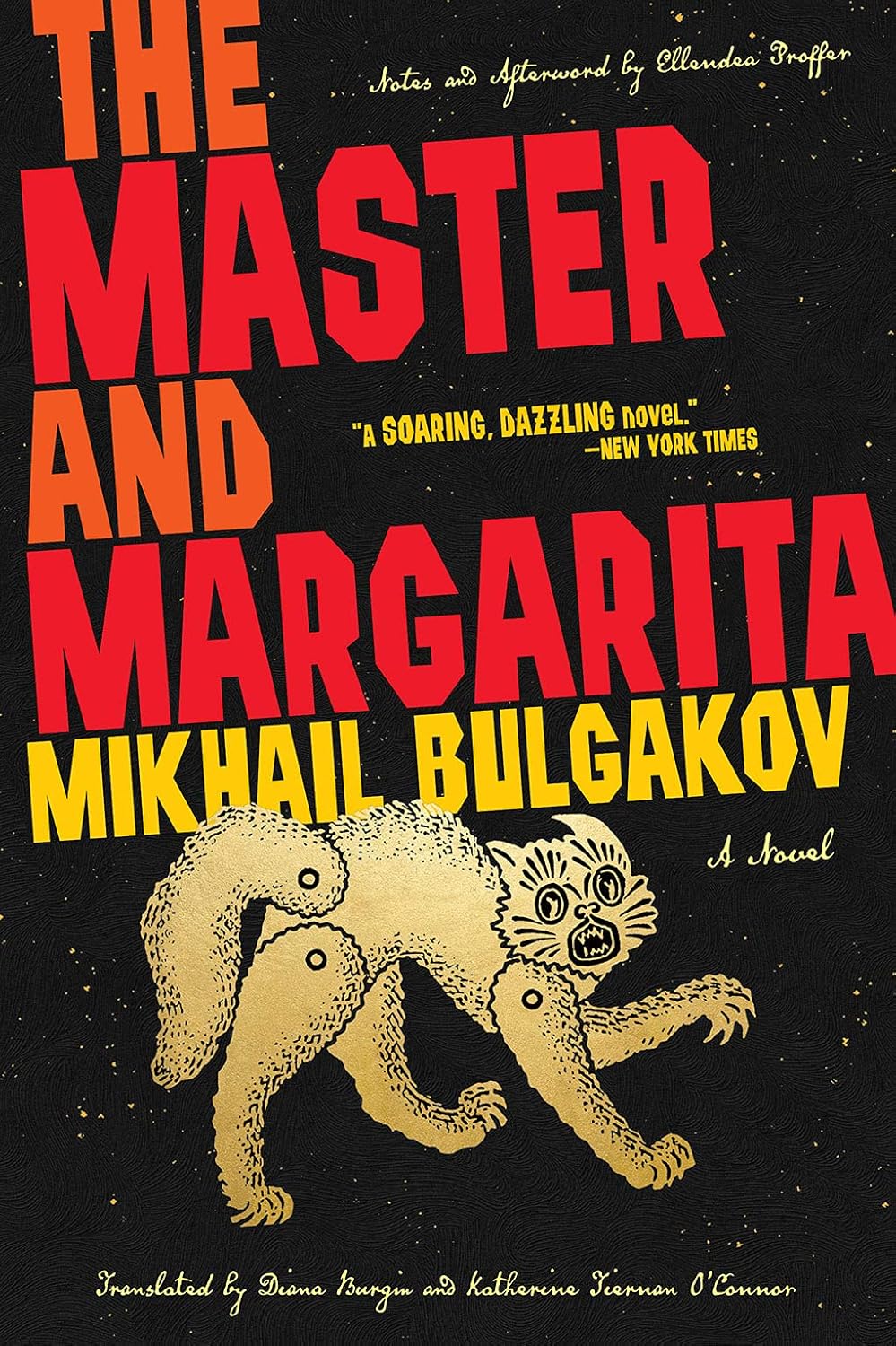
#3 — The Master and Margarita — trans. Diana Burgin & Katherine Tiernan O'Connor (1995)
- Readability: Prioritises accuracy and interpretive transparency.
- Accuracy: Works from the authoritative complete Russian text with scholarly apparatus.
- Tone: Academic and precise.
- Accessibility: Includes Proffer afterword on composition and censorship.
About the Translators
Richard Pevear & Larissa Volokhonsky (2016, Penguin Classics Deluxe): P&V's first major venture into Soviet-era fiction. Bulgakov presented different challenges from the nineteenth-century novels they usually translate — the satirical comedy of the Moscow chapters, the supernatural register, the weaving of a biblical retelling with a modern farce — and their translation handles the tonal variety with sustained control.
Mirra Ginsburg (1909–2000, 1967, Grove Press): Russian-born American translator and one of the most important translators of Russian and Eastern European literature in the postwar decades. Her translations of Zamyatin's We and Babel's Red Cavalry are considered classics; her 1967 Master and Margarita was her major Bulgakov work. She translated from the abridged Soviet journal text (Moskva, 1966–67), which accounts for the roughly one-sixth of the novel absent from her version.
Diana Burgin & Katherine Tiernan O'Connor (1995, Ardis): American scholars working from the authoritative complete Russian text. Ardis — the University of Michigan press — was throughout the Soviet period the primary academic publisher of Russian literature in the West. Ellendea Proffer, the press's co-founder and a major Bulgakov scholar, contributed the afterword explaining the novel's composition, censorship history, and long road to publication.
Themes
Pontius Pilate's cowardice as the novel's moral center. The Pilate chapters are not frame or ornament — they are the philosophical core, returned to obsessively across the narrative. Bulgakov's Yeshua is a wandering philosopher whose single teaching is that all people are fundamentally good and that cowardice is the only genuine sin. Pilate knows this, is overwhelmed by it, and signs the execution order anyway — the political calculation defeats the moral one. His punishment is not death but endless return to the moment of his failure. Bulgakov regarded this — the brilliant man, the clear moral situation, the wrong choice made for self-preservation — as the paradigm of Soviet intellectual life.
The devil as revealer, not tempter. Woland and his retinue do not corrupt anyone in the novel; they expose. The Muscovites who encounter them are undone by the corruption that was already present — the greed, the denunciations, the willingness to sacrifice colleagues for an apartment upgrade. Bulgakov's Satan is a diagnostician. What he reveals about Soviet society is not what he has introduced but what he has found.
The creative act as the only resistance. The Master has written a novel about Pontius Pilate and been destroyed by the literary establishment for it; he burned the manuscript rather than submit to the censors. Margarita's devotion — her willingness to make a pact with Woland, to serve as Queen at Satan's ball, to subordinate everything to the Master's survival — is the novel's love story in its deepest form. Bulgakov wrote The Master and Margarita knowing he would never see it published. It is a novel about a writer who cannot publish his novel, written by a writer who could not publish this one.
Key Characters
Woland — the devil, arriving in Moscow as a professor of black magic. Cultivated, precise, curious, entirely beyond morality in the ordinary sense. He is present to observe and reveal. His retinue includes Behemoth (a giant talking cat with a taste for vodka and chess), Koroviev/Fagot (a sardonic translator), and Hella (a female vampire).
The Master — a writer who has composed a novel about Pontius Pilate, been broken by the Soviet literary establishment for it, and wound up in a psychiatric clinic. His name is never given; he is defined entirely by his work and by Margarita. He is not heroic in any conventional sense — he has already surrendered — but the novel insists his work was right.
Margarita — the Master's lover, who makes a pact with Woland to save him. She becomes Queen at Satan's Great Ball — one of the novel's great set pieces — and her willingness to act, to endure, and to subordinate herself entirely to the rescue of the Master's life and work is Bulgakov's portrait of redemptive love at its most unconditional.
Pontius Pilate — the governor of Judea who hears Yeshua's teaching, believes it, and orders his execution anyway. His punishment — not death but endless return to the moonlit balcony and the conversation he ended — is the novel's most theologically charged invention.
Ivan Bezdomny — a Soviet poet who witnesses Woland's arrival and a literary editor's death on the first pages of the novel, is committed to the psychiatric clinic where he meets the Master, and becomes the novel's secular witness: the one tasked with carrying the memory of events he was not supposed to survive.
Recommended Sources
For further academic reading on Bulgakov and The Master and Margarita:
- The Slavic and East European Journal (SEEJ) — the flagship journal of AATSEEL; regular coverage of Bulgakov and Soviet-era prose across several decades.
- Russian Literature (Elsevier) — international peer-reviewed journal covering all periods and areas; the main venue for Bulgakov scholarship in English outside SEEJ.
- Slavic Review (Cambridge University Press) — covers literary history alongside political and cultural history; essential context for Bulgakov's Soviet environment and the novel's long suppression.
Which translation is right for you?
Choose P&V for a first reading — it is the most complete, the most accurate, and the most widely used modern version. Choose Burgin/O'Connor if you are reading academically or want the Proffer afterword on the composition and censorship history; the scholarly apparatus is the best available in English. The Ginsburg, while historically important and genuinely readable, translates an abridged text; read it with that caveat in mind, ideally alongside a complete version rather than instead of one.
Frequently Asked Questions
What is The Master and Margarita about?
The Master and Margarita is a novel set in Soviet Moscow, where the devil, Woland, visits and causes chaos. It intertwines a story of Pontius Pilate and a love story between the Master, a writer, and Margarita, his devoted lover.
Is The Master and Margarita hard to read?
The novel can be challenging due to its satirical and philosophical layers. Pevear & Volokhonsky's translation is comprehensive, while Ginsburg's is more readable but abridged.
Which The Master and Margarita translation is best?
The Pevear and Volokhonsky translation is the most complete, most accurate, and most widely read modern English version.
Pevear & Volokhonsky vs Ginsburg — which should I choose?
Choose P&V for the complete authoritative text and tonal range; Ginsburg is historically important but translates an abridged Soviet journal version missing roughly a sixth of the novel.
Which translation is easiest to read?
Ginsburg's 1967 version has genuine energy and readability, though it is based on a censored abridged text.
Which translation is most accurate?
Pevear & Volokhonsky and Burgin & O'Connor both work from the complete Russian text; Burgin & O'Connor add scholarly notes useful for close study.
Why does the textual basis matter for The Master and Margarita translations?
Early English translations like Ginsburg's used the censored 1966–67 Soviet journal text; later versions restore the full novel Bulgakov completed in 1940.
This guide is based on reading all 3 translations and reviewing scholarly commentary. Last reviewed: June 2026.
As an Amazon Associate, I earn from qualifying purchases.
Looking for another classic? Browse all our translation guides →
Readers of Bulgakov often enjoy our guide to the best Doctor Zhivago translations, also featuring Pevear & Volokhonsky.
For more Russian classics in modern translations, see our comparison of the best Crime and Punishment translations.
Another sweeping Soviet-era novel, our Life and Fate translation guide covers Robert Chandler's definitive edition.
If you're exploring early Soviet satire, don't miss our guide to the best We translations by Zamyatin.
For Tolstoy in the same Pevear & Volokhonsky style, try our War and Peace translation guide.