Doctor Zhivago: What It's About & Best Translation
Pasternak's Nobel Prize novel — a poet's account of Russia swept away by revolution, and an act of colossal literary courage
As an Amazon Associate, we earn from qualifying purchases.
Doctor Zhivago is a sweeping epic set against the backdrop of the Russian Revolution and the subsequent Civil War. It follows Yuri Zhivago, a physician and poet, as he navigates the upheaval of his personal and professional life, exploring themes of love, loss, and the impact of historical change on individual lives.
Translation Comparison at a Glance
| Translation | Readability | Accuracy | Tone | Best For |
|---|---|---|---|---|
| Pevear & Volokhonsky (2010) | Moderate | Excellent | Literary, layered, associative | Scholarly reading and depth |
| Hayward & Harari (1958) | High | Good | Elegant, fluent, idiomatic | First-time readers and narrative sweep |
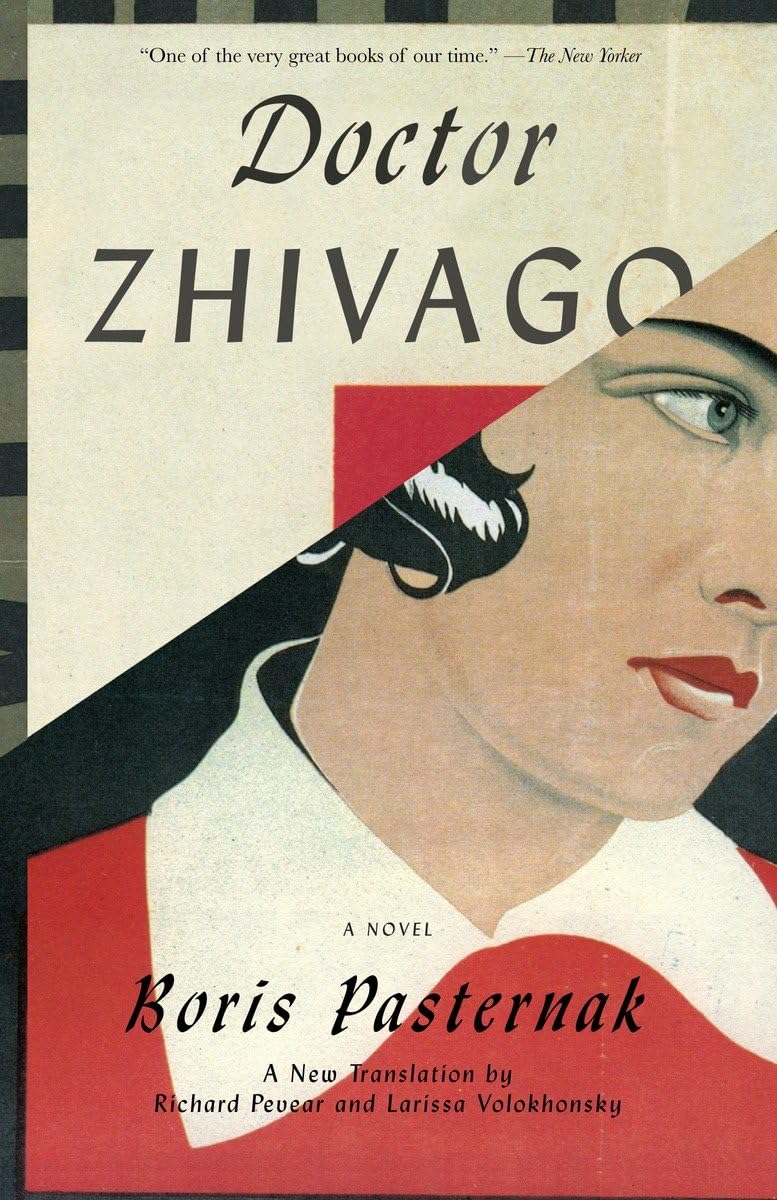
#1 — Doctor Zhivago — trans. Richard Pevear & Larissa Volokhonsky (2010)
- Readability: Demanding, preserves syntactic complexity
- Accuracy: Excellent, maximum fidelity to the Russian
- Tone: Literary, layered, associative richness
- Accessibility: Best for readers seeking depth and context

Juliet Stevenson's nuanced narration captures the emotional depth of Pasternak's epic, while the Pevear and Volokhonsky translation is widely regarded as the most faithful to the original Russian text.
Listen on Audible →Which translation is right for you?
- Choose Pevear & Volokhonsky if you want maximum fidelity to Pasternak's syntactic complexity and poetic layering.
- Choose Hayward & Harari if you prefer fluent, idiomatic English and the most immediately gripping narrative flow.
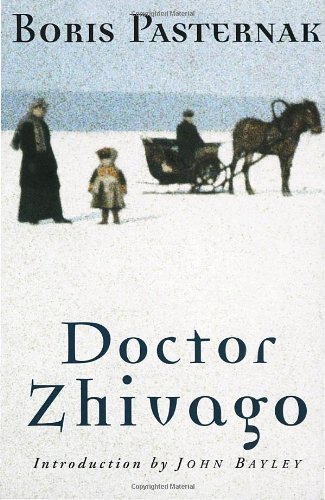
#2 — Doctor Zhivago — trans. Max Hayward & Manya Harari (1958)
- Readability: Fluent and highly accessible
- Accuracy: Good, but less faithful to syntax
- Tone: Elegant, idiomatic, narrative-driven
- Accessibility: Ideal for first-time readers
About the Translators
Richard Pevear & Larissa Volokhonsky (2010, Vintage International): Their first translation of a twentieth-century Russian novel. Pasternak's prose presents different challenges from the nineteenth-century work they usually translate — it is a poet's prose, denser and more layered, with an associative richness that earlier translations often smoothed out. Their literal method suits it well, restoring the syntactic complexity that the Hayward/Harari version regularly irons into more idiomatic English.
Max Hayward (1924–1979) & Manya Harari (1905–1969) (1958, Vintage International): Hayward was a leading scholar of Russian literature at Oxford and one of the most important translators and critics of the postwar period; Harari was a publisher and translator with a deep knowledge of Russian. Together they produced the first English translation within months of receiving a smuggled typescript — a feat of speed under extraordinary pressure. Their version shaped the world's reception of the novel for half a century and was the source David Lean used when making the 1965 film.
Themes
The novel as argument against revolutionary teleology. Zhivago is not a counterrevolutionary — he is a man who cannot subordinate his individual experience to any historical program. The revolution demands that personal life be sacrificed to collective goals; Zhivago's life is the argument that individual experience — love, grief, the particular beauty of a winter morning — is not secondary to history but is history, at its most real. This is the novel's deepest heresy from the Soviet perspective, and the reason no degree of revision could make it publishable.
The poems as resolution. The Zhivago poems at the novel's end are not appendices — they are its resolution. Zhivago is a physician who aspires to be a poet; what he achieves in the poems is what he cannot achieve in his life. The poems are in a different register from the prose — older, more archaic, more religious — and they suggest that what endures of a life is not its events but its capacity to perceive and record. Translators who handle the poems separately from the prose (some editions give them to a different translator) lose the argument Pasternak is making about their relationship to the narrative.
War as the dismantling of a world. The First World War and the Civil War remake Russia in the novel, and Zhivago's passage through both — as a doctor, as a prisoner of the partisans, as a man trying to reach Lara across a collapsing country — is a journey through the annihilation of the world that formed him. He survives but is not the same person who entered. The novel's elegiac quality is inseparable from this: it is mourning a Russia, and a way of life, that did not survive the century.
Key Characters
Yuri Zhivago — the physician-poet whose consciousness the novel inhabits. He is passive in ways some readers find frustrating and Pasternak intends as a specific quality of the Russian intelligentsia — the man of perception who cannot be an actor in history. His love for Lara is the novel's emotional center; his poems are its artistic testament.
Lara Antipova — the woman Zhivago loves across the decades of upheaval. She is defined by survival — she endures revolution, civil war, occupation, and loss with a practical tenacity Zhivago lacks. Their love is sustained by long separations and overwhelmed by history; they find and lose each other several times before the novel's end.
Tonya Gromeko — Zhivago's wife, the woman he was formed with and whom he abandons for Lara. She is presented with considerable sympathy — more than the novel's romantic framework might seem to require. Her letters from exile are among the novel's most affecting passages.
Strelnikov / Pavel Antipov — Lara's husband, a revolutionary commissar who has suppressed all personal feeling in the service of historical necessity. He is Zhivago's opposite: the man who chose history over self, with consequences the novel regards as equally tragic.
Komarovsky — Lara's seducer and manipulator, who recurs throughout the novel as an embodiment of the corrupt pre-revolutionary world. He is the novel's clearest villain, and also, paradoxically, the person most capable of navigating the new one.
Recommended Sources
For further academic reading on Pasternak and Doctor Zhivago:
- The Slavic and East European Journal (SEEJ) — the flagship journal of AATSEEL; extensive coverage of Pasternak's poetry and prose across several decades.
- Slavic Review (Cambridge University Press) — essential for understanding the political and cultural history surrounding the novel's suppression and Nobel Prize controversy.
- Russian Literature (Elsevier) — the main international journal for scholarship on Pasternak; includes comparative studies of his poetry and prose.
Which translation is right for you?
Choose P&V for accuracy — their version is closer to Pasternak's actual prose, preserving its density and its poet's syntax, and it is the current scholarly reference. Choose Hayward/Harari if you are primarily interested in the love story and the historical sweep, and want the most immediately readable version; their translation has carried readers for sixty years, and its fluency is a genuine virtue. Both include the Zhivago poems at the novel's end.
Frequently Asked Questions
What is Doctor Zhivago about?
Doctor Zhivago is a sweeping epic set against the backdrop of the Russian Revolution and the subsequent Civil War. It follows Yuri Zhivago, a physician and poet, as he navigates the upheaval of his personal and professional life, exploring themes of love, loss, and the impact of historical change on individual lives.
Is Doctor Zhivago hard to read?
Doctor Zhivago can be challenging due to its dense prose and historical context. The Pevear & Volokhonsky translation maintains the original's complexity, while the Hayward & Harari version offers a more fluent, accessible read.
Which Doctor Zhivago translation is best?
Pevear & Volokhonsky's 2010 translation is the best overall for most readers because it preserves Pasternak's dense, poetic syntax and is the current scholarly standard.
Pevear & Volokhonsky vs Hayward & Harari — which should I choose?
Choose Pevear & Volokhonsky for maximum fidelity to the original prose; choose Hayward & Harari if you want the most fluent, immediately readable version that shaped the novel's English reception for decades.
Which translation is easiest to read?
The Hayward & Harari translation is easiest to read because it favors idiomatic English and narrative flow over strict syntactic fidelity.
Which translation is most accurate?
Pevear & Volokhonsky is the most accurate because it maintains Pasternak's layered, associative prose without smoothing it into more conventional English.
Do both translations include the Zhivago poems?
Yes, both the Pevear & Volokhonsky and Hayward & Harari translations include the full set of Zhivago poems at the end of the novel.
This guide is based on reading the two translations and reviewing scholarly commentary. Last reviewed: June 2026.
As an Amazon Associate, I earn from qualifying purchases.
Looking for another classic? Browse all our translation guides →
For another major Russian novel in the same Pevear & Volokhonsky style, see our guide to the best War and Peace translation.
Readers of Pasternak often enjoy Tolstoy — compare the top Anna Karenina translation options here.
If you're exploring Dostoevsky next, our Brothers Karamazov translation guide is the natural follow-up.
For a different twentieth-century Russian masterpiece, try our comparison of the best Master and Margarita translations.