We: What It's About & Best Translation
Zamyatin's foundational dystopia — Shayevich's HarperCollins versus Brown's Penguin Classics
As an Amazon Associate, we earn from qualifying purchases.
We is set in a dystopian future where a totalitarian state controls every aspect of life. The story follows D-503, an engineer whose life is disrupted by emotions and rebellion.
Translation Comparison at a Glance
| Translation | Readability | Accuracy | Tone | Best For |
|---|---|---|---|---|
| Shayevich (2021) | High | Very good | Raw, immediate, urgent | First-time readers |
| Brown (1993) | Moderate | Excellent | Formal, detached, scholarly | Academic study and context |
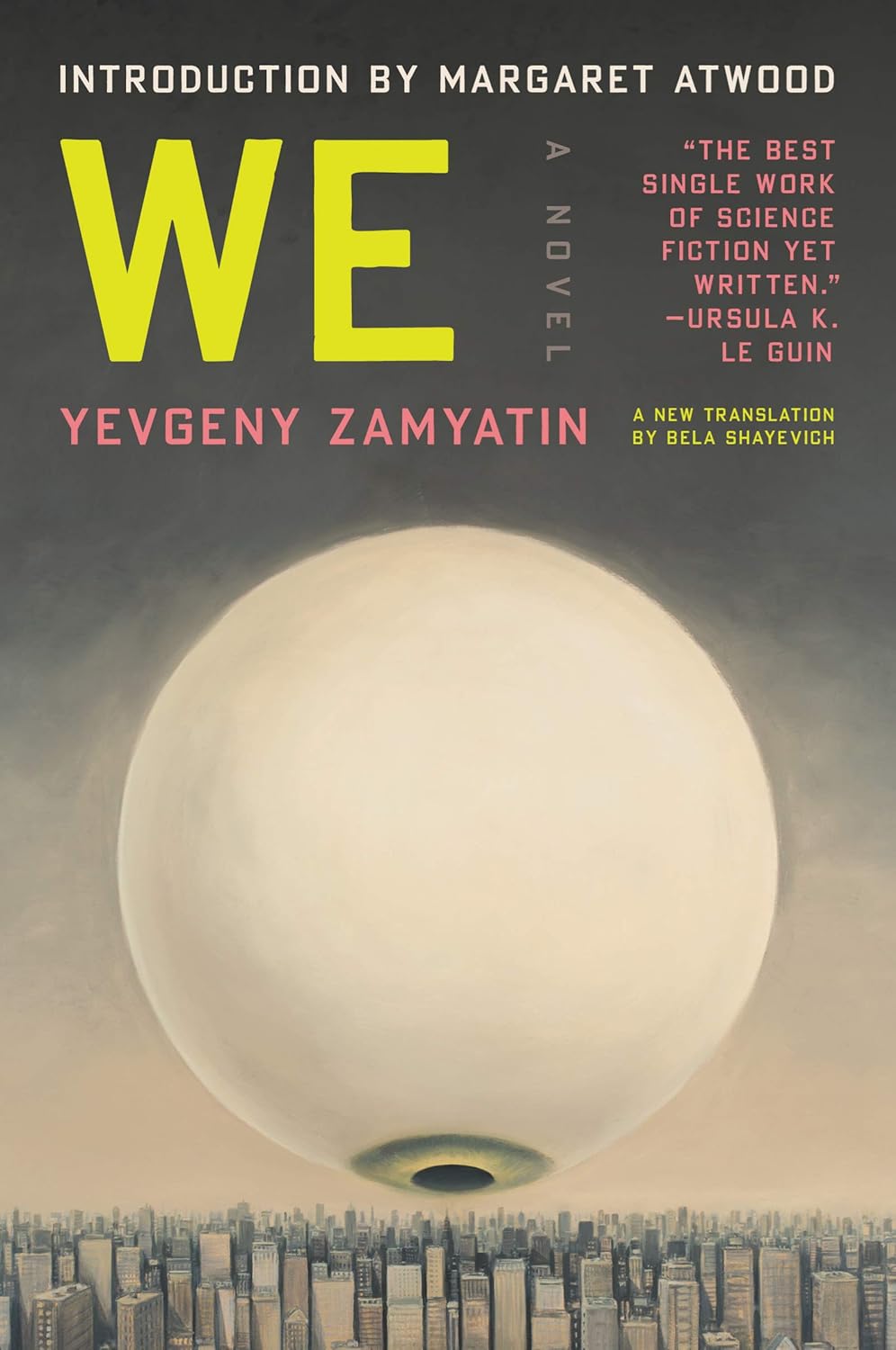
#1 — We — trans. Bela Shayevich (2021)
- Readability: High — energetic and psychologically immediate prose.
- Accuracy: Very good — captures Zamyatin's raw edge.
- Tone: Contemporary and urgent, with a raw psychological presence.
- Accessibility: Excellent for first-time readers.
Which translation is right for you?
- Choose Shayevich if you want a contemporary, energetic, and psychologically immediate reading experience for a first encounter with the novel.
- Choose Brown if you prefer scholarly context, extensive notes, and a more formal, measured literary tone.
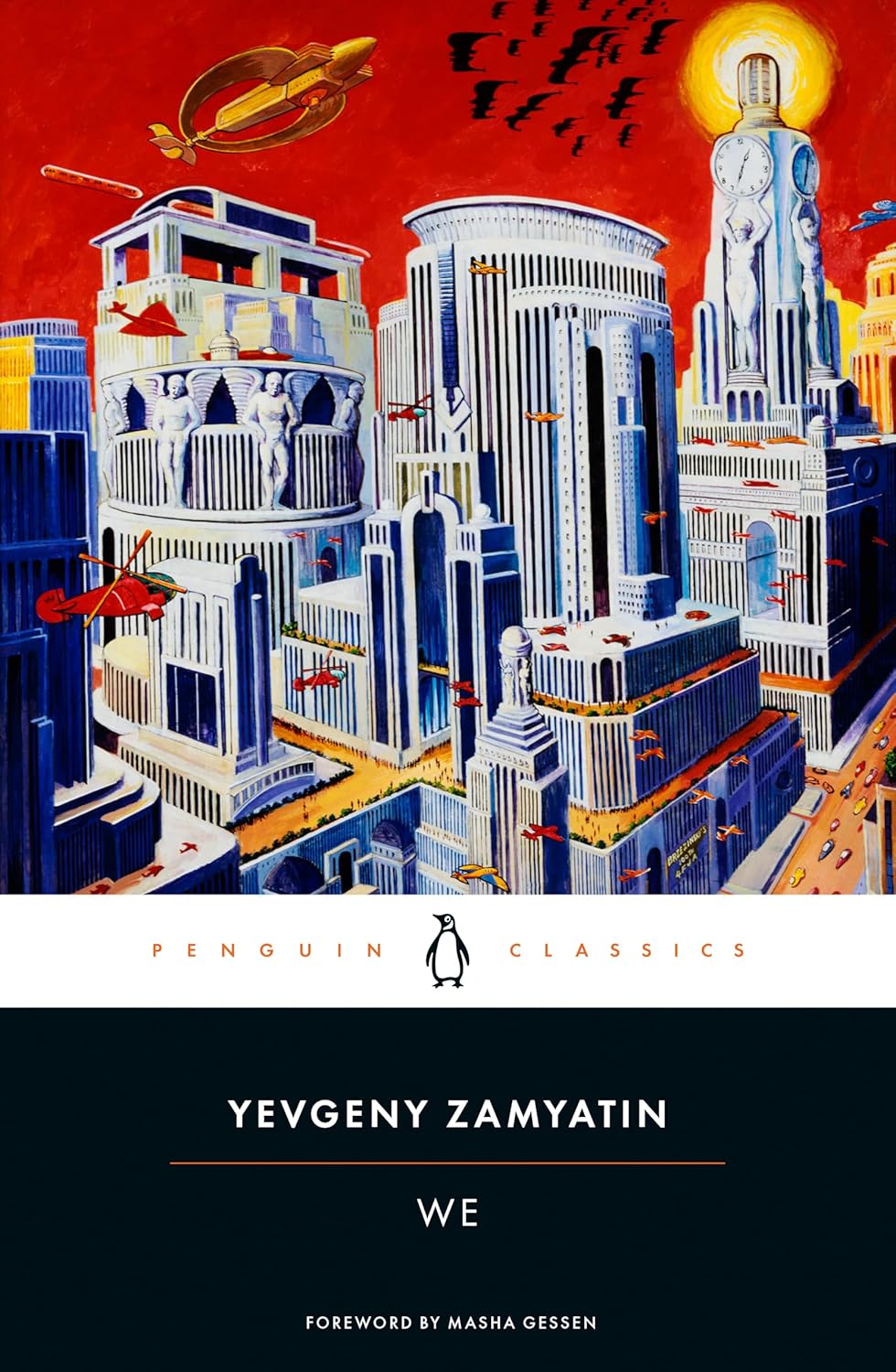
#2 — We — trans. Clarence Brown (1993)
- Readability: Moderate — more formal and measured.
- Accuracy: Excellent — precise and scholarly.
- Tone: Ironic detachment with an official, bureaucratic register.
- Accessibility: Best with the provided scholarly apparatus.
About the Translators
Bela Shayevich (2021, HarperCollins): Translator and artist whose other work includes fiction by Hernan Diaz. Her We is the most contemporary English rendering of Zamyatin, with a psychological immediacy that makes D-503's voice feel urgent and present; Jeff VanderMeer (Annihilation) contributes the introduction, situating the novel in the speculative fiction tradition.
Clarence Brown (1929–2013, 1993, Penguin Classics): Professor of Comparative Literature at Princeton and a major scholar of Russian Modernism, particularly Osip Mandelstam — he wrote the definitive Mandelstam biography and co-translated the poems with W.S. Merwin. His We is accompanied by a substantial scholarly introduction tracing the novel's composition, suppression, and direct influence on Orwell and Huxley — the best short account of the novel's place in literary history available in English.
Themes
The war against subjectivity. The One State has abolished not freedom as such but the capacity to want anything not prescribed by the state. D-503's diary is the record of what happens when this capacity — suppressed so thoroughly he doesn't know it exists — begins to reassert itself. The medical language he uses to describe his own feelings is the novel's central irony: falling in love is diagnosed as illness, imagination as disease, individual desire as a symptom requiring surgical cure. Zamyatin understood, before the vocabulary existed, that totalitarianism does not merely prohibit certain acts but attempts to restructure the inner life itself.
Transparency as control. The One State's defining architectural and social feature is glass — buildings are glass, schedules are public, privacy does not exist. Zamyatin understood, before the concept had been theorised, that surveillance is not only a mechanism of punishment but a mechanism of self-regulation: people who know they are watched begin to watch themselves. D-503 is his own most vigilant censor; the diary he writes as propaganda becomes the instrument of his own undoing.
The mathematics of freedom. D-503 is a mathematician and engineer whose worldview rests on the conviction that the universe is rational and that rational systems produce human happiness. I-330's attraction is precisely that she represents the irrational — she cannot be derived, predicted, or solved. The novel's argument is that freedom is mathematically equivalent to infinity: neither can be tolerated by a system that requires complete predictability. D-503's collapse is the proof.
Key Characters
D-503 — the narrator-engineer building the spaceship INTEGRAL, designed to export the One State's values to the universe. His mathematical orderliness is his identity and his cage. The novel is his diary, which he begins as a propaganda exercise and which becomes the record of his own disintegration.
I-330 — the woman who disrupts D-503's mathematics. She is part of an underground resistance; she smokes, drinks alcohol, wears old clothes — all forbidden — and she understands exactly what she is doing and why. She is the most fully realised female character in the dystopian tradition.
O-90 — D-503's assigned sexual partner under the state's prescription system. She is warm, conventional, and in love with him in a simple way he cannot fully reciprocate. Her illegal request drives one of the novel's most quietly devastating subplots.
The Benefactor — the One State's supreme ruler, who appears rarely but whose presence pervades everything. He is the ultimate expression of the system's logic: the calculator-ruler who has eliminated his own subjectivity entirely in order to govern without error.
Recommended Sources
For further academic reading on Zamyatin and We:
- The Slavic and East European Journal (SEEJ) — the flagship journal of AATSEEL; covers Zamyatin's fiction and its place in the early Soviet literary context.
- Slavic Review (Cambridge University Press) — essential for understanding the political environment in which Zamyatin wrote and was suppressed.
- Russian Literature (Elsevier) — the main international journal for Zamyatin scholarship, including comparative studies of We alongside Orwell's 1984 and Huxley's Brave New World.
Which translation is right for you?
Choose Shayevich for a first reading — her 2021 HarperCollins translation is the most contemporary and psychologically immediate version, and makes D-503's voice feel urgent and present. Choose Brown if you want the Penguin Classics scholarly apparatus — his introduction is the best short account of the novel's influence on Orwell and Huxley available in English — or if you prefer a translation that emphasises D-503's official, bureaucratic register more consistently.
Frequently Asked Questions
What is We about?
We is set in a dystopian future where a totalitarian state controls every aspect of life. The story follows D-503, an engineer whose life is disrupted by emotions and rebellion.
Is We hard to read?
We can be challenging due to its themes and style. Shayevich's translation is more accessible for modern readers, while Brown's offers a more formal tone.
Which We translation is best?
Bela Shayevich's 2021 HarperCollins translation is the best starting point for most readers.
Shayevich vs Brown — which should I choose?
Choose Shayevich for a contemporary, psychologically immediate reading experience; choose Brown for scholarly context and a more formal tone.
Which translation is easiest to read?
Shayevich's version is the most readable and energetic for first-time readers.
Which translation is most accurate?
Brown's Penguin Classics edition is widely regarded for its measured accuracy and scholarly apparatus.
Why has We had such a major influence on later dystopian fiction?
Orwell, Huxley, Vonnegut, and Atwood have all acknowledged its foundational role in the political dystopia tradition.
This guide is based on reading the two translations and reviewing scholarly commentary. Last reviewed: June 2026.
As an Amazon Associate, I earn from qualifying purchases.
Looking for another classic? Browse all our translation guides →
Readers drawn to Soviet-era dystopias should also see our guide to the best Master and Margarita translations.
For another landmark of twentieth-century Russian prose, compare the editions in our Doctor Zhivago translation guide.
Vasily Grossman's suppressed epic receives the same treatment in our Life and Fate translation guide.
If you're exploring classic political dystopias, don't miss our comparison of the best Darkness at Noon translations.