My Brilliant Friend: What It's About & Best Translation
Elena Ferrante's Neapolitan Novels — and the translator who brought them to the English-speaking world
As an Amazon Associate, we earn from qualifying purchases.
My Brilliant Friend is the first book in Elena Ferrante's Neapolitan Novels, following the complex friendship between Elena and Lila from childhood in a poor Naples neighborhood to adulthood. It explores themes of female friendship, class struggle, and personal growth.
Translation Comparison at a Glance
| Translation | Readability | Accuracy | Tone | Best For |
|---|---|---|---|---|
| Goldstein (2012) | High | Excellent | Conversational yet layered | Every reader; the standard text |
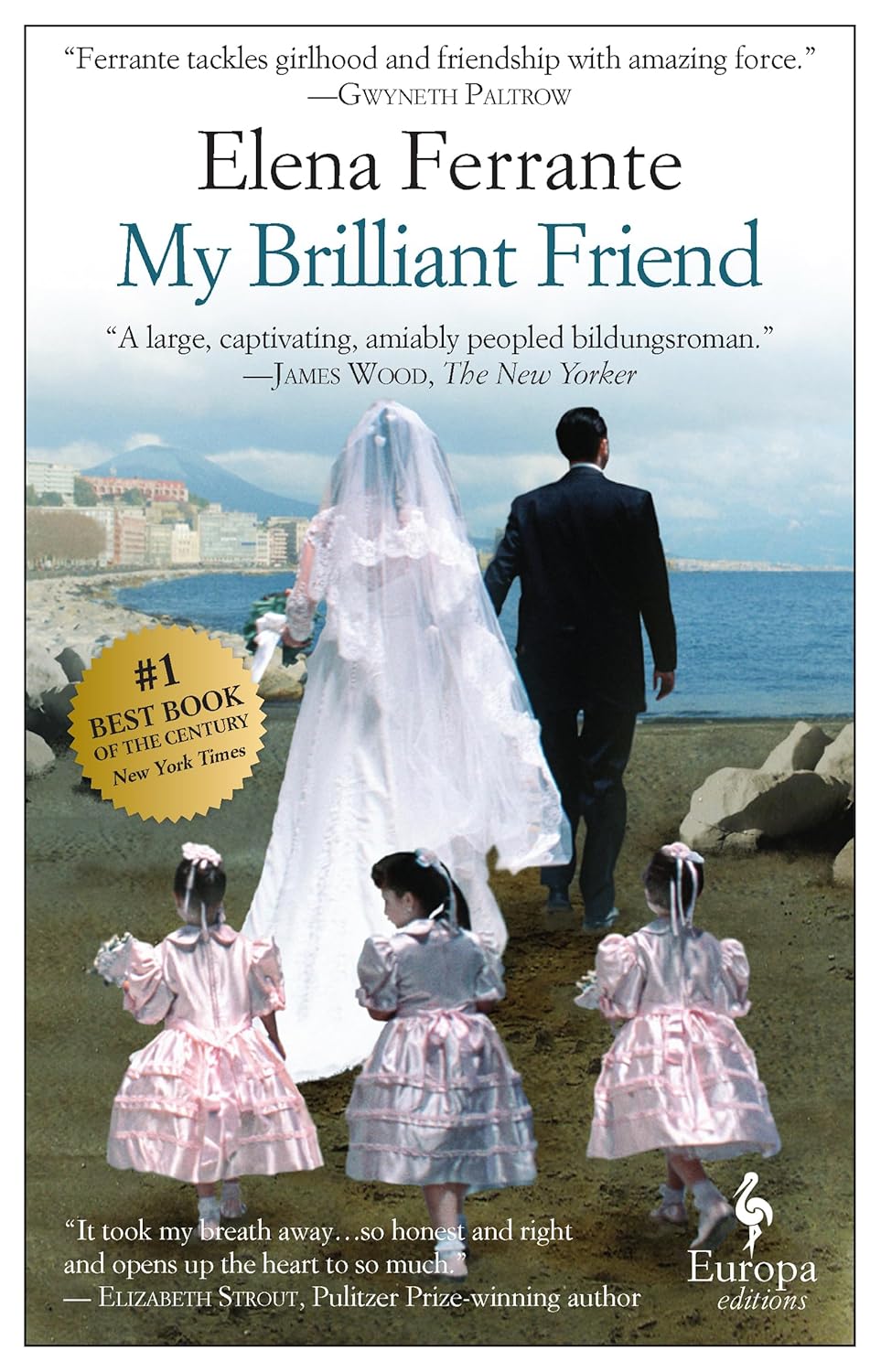
#1 — My Brilliant Friend — trans. Ann Goldstein (2012)
- Readability: Conversational yet layered, preserving confessional urgency.
- Accuracy: Subtle handling of Naples dialect and social registers.
- Tone: Intimate, frank, and psychologically obsessive.
- Accessibility: The only English edition; ideal starting point.

Hillary Huber's nuanced narration captures the emotional depth and Neapolitan cadence of Elena Ferrante's prose, while Goldstein's translation preserves the raw authenticity of the original Italian.
Listen on Audible →Which translation is right for you?
- Choose Goldstein if you want the definitive, only available English text that captures Ferrante's intimate, urgent voice.
About the Translator
Ann Goldstein (b. 1949, 2012–2015, Europa Editions): American editor and translator; former head of copy at The New Yorker; she translated all four volumes of the Neapolitan Novels as well as Ferrante's earlier fiction, including The Days of Abandonment and Troubling Love. Her other translations include works by Primo Levi, Pier Paolo Pasolini, and Alessandro Baricco. Her work on the Neapolitan Novels is considered one of the landmark achievements of Italian-English literary translation of the twenty-first century.
Themes
Female friendship as the novel's primary subject. The relationship between Elena and Lila is more complex, more consuming, and more central to both women's development than any of their romantic or familial relationships. Ferrante depicts friendship as something close to the defining relationship of a life — a bond of mutual obsession, admiration, rivalry, and love that shapes each woman's sense of herself and of what is possible for her. The "brilliant friend" of the title is deliberately ambiguous: each woman is the other's brilliant friend.
Naples and the violence of class. The novel is set in a fictional neighbourhood in Naples in the 1950s, and the social geography is inseparable from the characters' psychology. Poverty, local violence, and the rigid structures of neighbourhood life — the organised crime, the limited possibilities, the fate of women who do not find a way out — are not background but constitutive conditions. Elena's eventual escape through education and Lila's more brilliant, more constrained existence in the neighbourhood define the tetralogy's central contrast.
Brilliance and its discontents. Lila Cerullo is explicitly identified as the more brilliant of the two: a girl of extraordinary intelligence whose circumstances deny her access to the education and institutions that could channel that intelligence. Her brilliance finds other outlets — extreme perceptual sensitivity, total commitment to whatever she engages, and a quality Ferrante calls smarginatura (dissolving margins), a terrifying breakdown of boundaries that is simultaneously a symptom and a form of perception. Elena's brilliance is real but conventional; it is Lila's that the novel most obsessively examines.
Key Characters
Elena Greco (Lenù) — the narrator; a girl of intelligence and ambition who escapes the neighbourhood through education, eventually becoming a published novelist. The tetralogy is framed as the narration of an old woman whose friend has disappeared without trace, and whose writing is simultaneously an act of mourning and an attempt to possess what she could never fully have.
Lila Cerullo — the brilliant friend; a girl of ferocious intelligence who teaches herself Greek and Latin in secret and produces, in her early teens, a complete draft of a novel. Her father refuses to let her continue at school after primary level; she is absorbed into neighbourhood life, marriage, and factory work. Her transformations across the four novels are the tetralogy's central mystery.
Stefano Carracci — the son of a neighbourhood grocer who becomes wealthy and courts Lila; their marriage is one of the novel's pivotal events, a scene of violation that sets the course of both women's subsequent lives.
Nino Sarratore — the son of the neighbourhood poet; a young man of political conviction and personal unreliability who becomes centrally important to both Elena and Lila across the course of the tetralogy.
Recommended Sources
For further academic reading on Ferrante and the Neapolitan Novels:
- Modern Fiction Studies (Johns Hopkins University Press) — the leading journal for academic work on contemporary fiction; extensive coverage of Ferrante since the novels' English publication.
- Italica (American Association of Teachers of Italian) — the primary English-language journal for Italian literary studies; essential for Ferrante in the context of Italian literary history and the question of the author's identity.
- Feminist Review (SAGE) — key venue for readings of the Neapolitan Novels as feminist fiction and their contribution to the literary representation of female friendship.
There is only one English translation of the Neapolitan Novels. Ann Goldstein's Europa Editions text — made in close engagement with Ferrante's Italian and with the pseudonymous author's direct involvement in the publishing process — is the translation, and for all practical purposes it is indistinguishable from "the novel" in English. The question is not which translation to read but which of the four volumes to read next, and the answer is all of them.
Frequently Asked Questions
What is My Brilliant Friend about?
My Brilliant Friend is the first book in Elena Ferrante's Neapolitan Novels, following the complex friendship between Elena and Lila from childhood in a poor Naples neighborhood to adulthood. It explores themes of female friendship, class struggle, and personal growth.
Is My Brilliant Friend hard to read?
The novel's rich narrative and emotional depth can be challenging, but Ann Goldstein's translation makes it accessible with its conversational yet layered prose.
Which My Brilliant Friend translation is best?
Ann Goldstein's translation is the only English edition and the definitive one that launched the Neapolitan Novels' international success.
Ann Goldstein vs any alternative — which should I choose?
There is no alternative. Goldstein translated the entire sequence; her intimate, urgent rendering of Ferrante's voice is the standard English text.
Which translation is easiest to read?
Goldstein's prose is conversational yet layered, preserving the novel's confessional urgency without sacrificing control.
Which translation is most accurate?
Goldstein worked closely with the pseudonymous author; her handling of Naples dialect and social registers is consistently subtle and faithful.
Is there any other English translation of the Neapolitan Novels?
No. Ann Goldstein's Europa Editions text is the sole English translation of all four volumes.
This guide is based on reading the translation and reviewing scholarly commentary. Last reviewed: June 2026.
As an Amazon Associate, I earn from qualifying purchases.
Looking for another classic? Browse all our translation guides →
Italian literature fans should also see our guide to the best Invisible Cities translation.
For another landmark Italian novel, read our Name of the Rose translation guide.
Explore more modern Italian fiction with our Leopard translation comparison.
If you enjoyed Ferrante's literary phenomenon, try our One Hundred Years of Solitude translation guide.