One Hundred Years of Solitude: What It's About & Best Translation
The novel that defined magical realism — and the translation its author called better than his own original
As an Amazon Associate, we earn from qualifying purchases.
One Hundred Years of Solitude chronicles the rise and fall of the Buendía family in the fictional town of Macondo. It explores themes of solitude, magical realism, and the cyclical nature of history.
Translation Comparison at a Glance
| Translation | Readability | Accuracy | Tone | Best For |
|---|---|---|---|---|
| Rabassa (1970) | High | Excellent | Elevated yet plain, dreamy and precise | Every reader; the definitive edition |
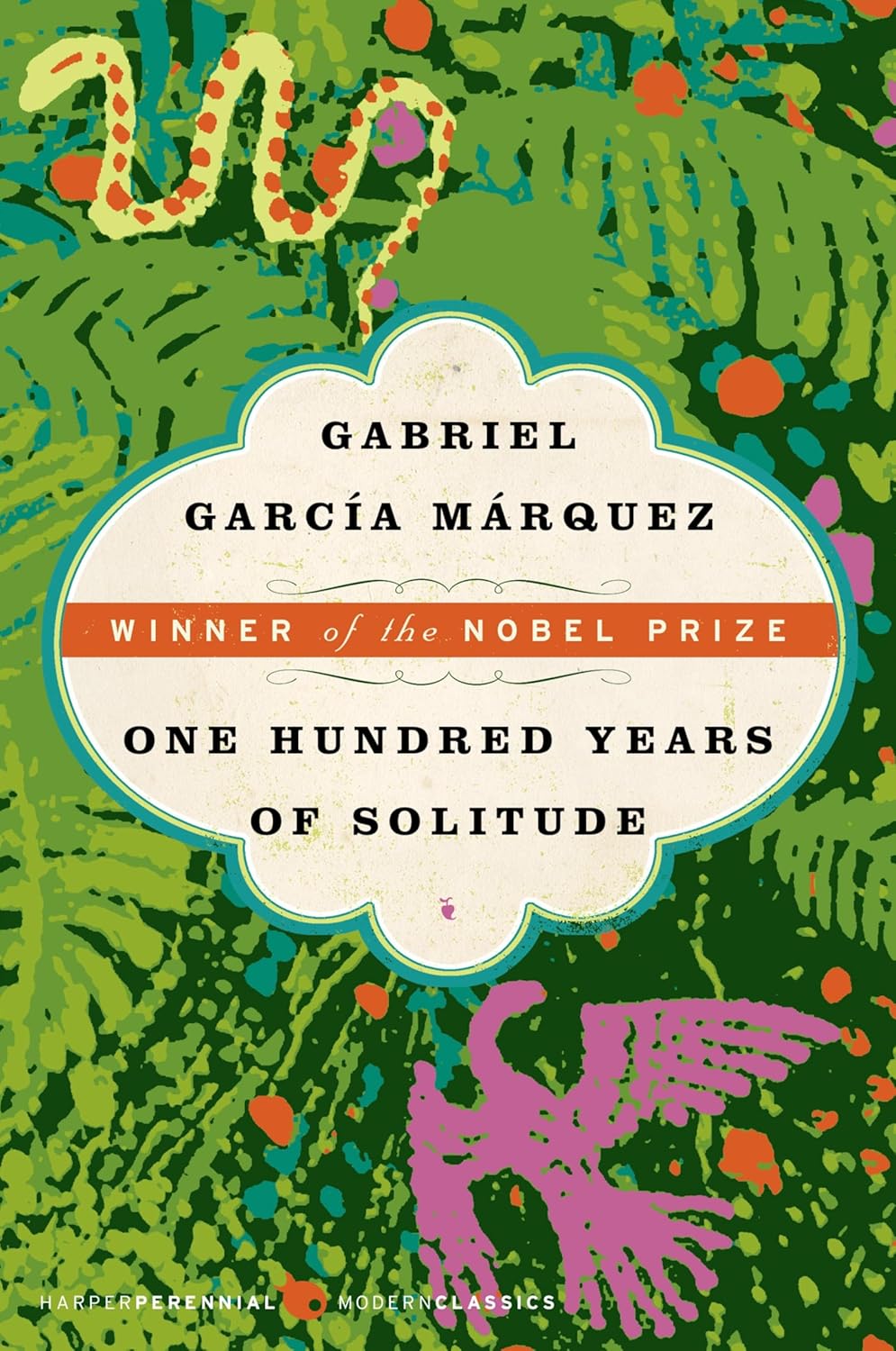
#1 — One Hundred Years of Solitude — trans. Gregory Rabassa (1970)
- Readability: Simultaneously elevated and plain, archaic and immediate.
- Accuracy: Captures oral cadences and vallenato tradition rather than literal wording.
- Tone: Matter-of-fact calm that renders the miraculous ordinary.
- Accessibility: The standard edition for all readers, including newcomers via the Netflix series.
Which translation is right for you?
- Choose Rabassa if you want the only English translation, a version the author himself preferred, and the definitive rendering of magical realism.
About the Translator
Gregory Rabassa (1922–2016): Professor of Romance Languages and Comparative Literature at Queens College, CUNY. His other translations include Julio Cortázar's Hopscotch (for which he won the National Book Award in translation), José Lezama Lima's Paradiso, and Jorge Amado's Gabriela, Clove and Cinnamon. He is widely considered the greatest translator of Latin American literature into English of the twentieth century, and his work on One Hundred Years of Solitude is the achievement by which all other translations from Spanish are measured.
Themes
Magical realism as the natural register of Colombian reality. One Hundred Years of Solitude gave the term "magical realism" its canonical example: a narrative in which the miraculous and the ordinary coexist without hierarchical distinction. The insomnia plague that strips all memory from Macondo, the yellow butterflies that appear whenever Mauricio Babilonia is near, Remedios the Beauty's bodily ascension into heaven while folding sheets — these are narrated in the same calm, matter-of-fact tone as the weather or the cooking. The magic is not in opposition to the real; it is the novel's definition of reality in the Colombian Caribbean tradition.
History as cyclical catastrophe. The Buendía family repeats itself through seven generations: the same names recur, the same characteristics re-emerge, the same patterns of isolation and longing play out. The political history — the wars between Liberals and Conservatives, the banana company massacre, the violence that never produces justice — is similarly circular. History does not progress in Macondo; it accumulates and repeats, until the final revelation that everything in the novel was prophesied and is now over.
Solitude as condition and sentence. Every major character in the novel is essentially alone — cut off from each other by pride, by incest, by the particular isolation of the Buendía temperament. Colonel Aureliano Buendía fights thirty-two civil wars and loses them all; in old age he makes gold fish in his workshop, melts them down, and makes them again. The final pages reveal that the family was fated from the beginning to be a race condemned to one hundred years of solitude — and that races condemned to solitude do not get a second chance on earth.
Key Characters
José Arcadio Buendía — the family patriarch, founder of Macondo; a man of enormous curiosity and energy who is eventually driven mad by his obsessive study of alchemy and tied to a chestnut tree. He dies alone, speaking to the ghost of the man he killed in a duel before founding the town.
Úrsula Iguarán — his wife; the family's center of gravity across more than a century. She outlives most of her descendants, and her practical energy is the opposite of her husband's metaphysical restlessness. She is the novel's true protagonist, though she is often underestimated in readings that focus on the men.
Colonel Aureliano Buendía — the second son, who fights thirty-two civil wars, fathers seventeen sons named Aureliano by seventeen different women, and ends his life alone in his workshop. He is the novel's most haunting figure: a man who achieves everything and feels nothing.
Fernanda del Carpio — the rigidly Catholic wife of Aureliano Segundo; her cold, provincial formalism is the novel's most mercilessly comic portrait of a particular class of Colombian womanhood.
Remedios the Beauty — the most beautiful woman in the world, who ascends bodily into heaven while folding laundry. She is entirely real and entirely impossible; the novel offers both without choosing between them.
Recommended Sources
For further academic reading on García Márquez and One Hundred Years of Solitude:
- Latin American Literary Review (Pittsburgh) — the primary English-language journal for Latin American fiction; central venue for García Márquez scholarship.
- Hispanic Review (University of Pennsylvania) — essential for placing One Hundred Years in the context of the Spanish-language literary tradition and the Boom generation.
- PMLA (Modern Language Association) — key venue for comparative and theoretical readings of magical realism and its relationship to world literary modernism.
Which translation is right for you?
There is only one English translation — Rabassa's 1970 version — and the question answers itself. Read Rabassa. His translation is so authoritative that García Márquez famously said he preferred it to his own Spanish original, meaning that Rabassa found English words that did what the Spanish words were trying to do, rather than what they literally said. The Harper Perennial Modern Classics paperback is the standard edition.
Frequently Asked Questions
What is One Hundred Years of Solitude about?
One Hundred Years of Solitude chronicles the rise and fall of the Buendía family in the fictional town of Macondo. It explores themes of solitude, magical realism, and the cyclical nature of history.
Is One Hundred Years of Solitude hard to read?
The novel's complex narrative and magical realism can be challenging, but Rabassa's translation is praised for its readability, capturing the spirit of the original while making it accessible to English readers.
Which One Hundred Years of Solitude translation is best?
Gregory Rabassa's 1970 translation is the only English edition and is considered a masterpiece in its own right; García Márquez himself said he preferred it to his original Spanish.
Rabassa vs any other translator — which should I choose?
There is no other full English translation. Rabassa's version is universally regarded as definitive and was praised by the author himself for capturing the spirit rather than the literal wording.
Which translation is easiest to read?
Rabassa's translation is both elevated and plain, archaic and immediate, making the miraculous and the tragic equally accessible in a matter-of-fact tone.
Which translation is most accurate?
Rabassa captured the oral cadences of the Colombian Caribbean coast and the vallenato tradition rather than literal wording, which is why García Márquez preferred the English version.
What makes Rabassa's translation of One Hundred Years of Solitude unique?
It is the only English translation, won universal acclaim upon publication, and prompted the author to declare it superior to his own Spanish original.
This guide is based on reading the translation and reviewing scholarly commentary. Last reviewed: June 2026.
As an Amazon Associate, I earn from qualifying purchases.
Looking for another classic? Browse all our translation guides →
Same author? See our guide to the best Love in the Time of Cholera translation.
For another landmark of Latin American literature, explore our 2666 translation guide.
Interested in the Spanish-language tradition? Read our comparison of the best Don Quixote translations.
Discover more magical realism roots with our Pedro Páramo translation guide.
For Argentine Spanish masters, see our guide to the best Borges in English.