Pedro Páramo: What It's About & Best Translation
Rulfo's ghost novel of a ruined Mexican town — the book García Márquez read before writing One Hundred Years of Solitude
As an Amazon Associate, we earn from qualifying purchases.
Pedro Páramo follows Juan Preciado as he visits the ghost town of Comala to find his father, Pedro Páramo. The novel explores themes of death, power, and unfulfilled promises in a haunting narrative.
Translation Comparison at a Glance
| Translation | Readability | Accuracy | Tone | Best For |
|---|---|---|---|---|
| Peden (2002) | High | Very good | Spare and faithful | First-time readers |
| Weatherford (2023) | High | Excellent | Contemporary clarity | Comparison and scholarship |
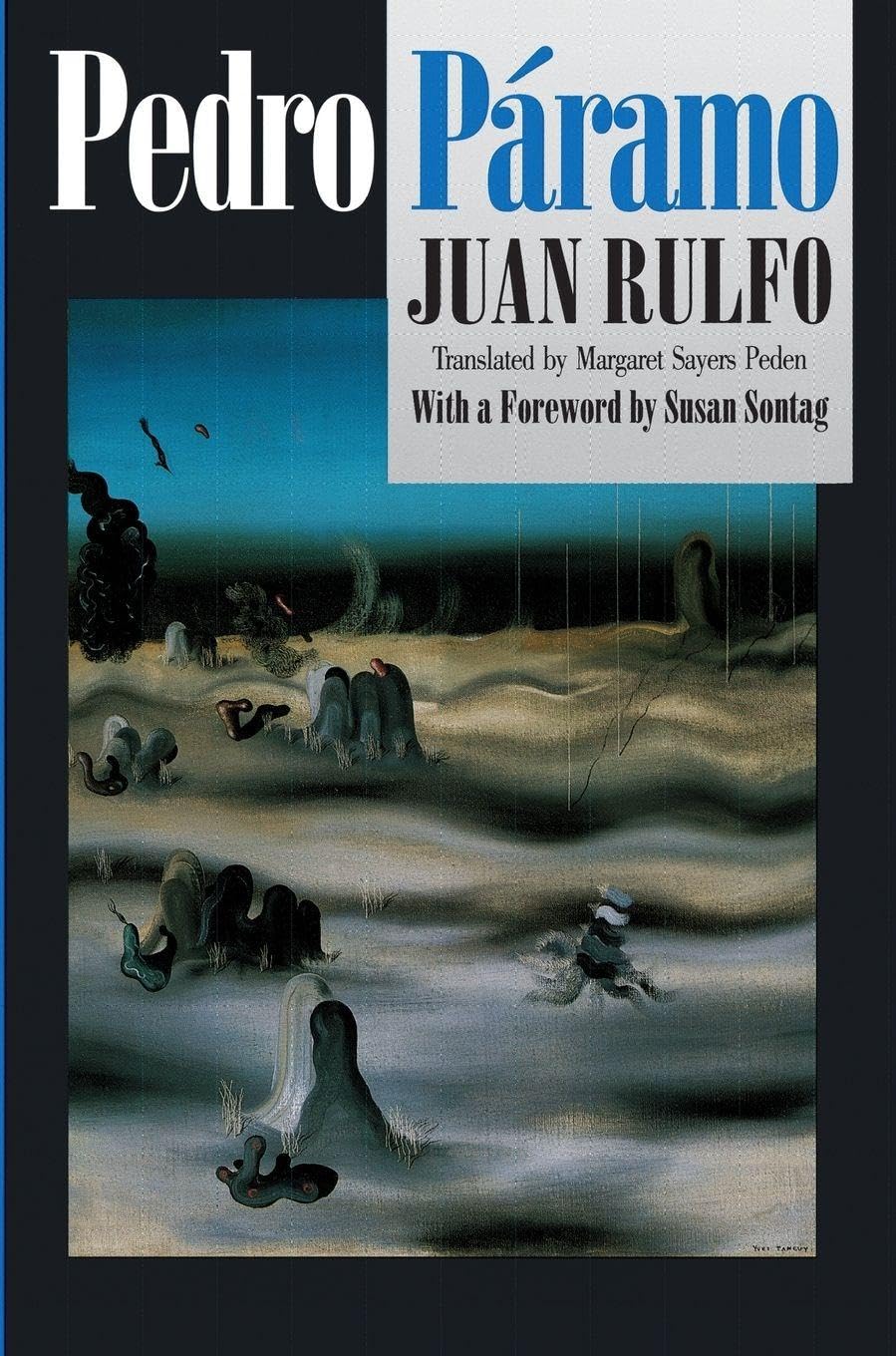
#1 — Pedro Páramo — trans. Margaret Sayers Peden (2002)
- Readability: Captures deliberate flatness without feeling thin.
- Accuracy: Deeply attuned to Rulfo's sparseness and compressed silence.
- Tone: Faithful to the novel's dreamlike, silent quality.
- Accessibility: Ideal entry point with Sontag's superb introduction.
Which translation is right for you?
- Choose Peden if you want the established standard with Susan Sontag's excellent foreword for a first reading.
- Choose Weatherford if you want the most recent translation and García Márquez's introduction.
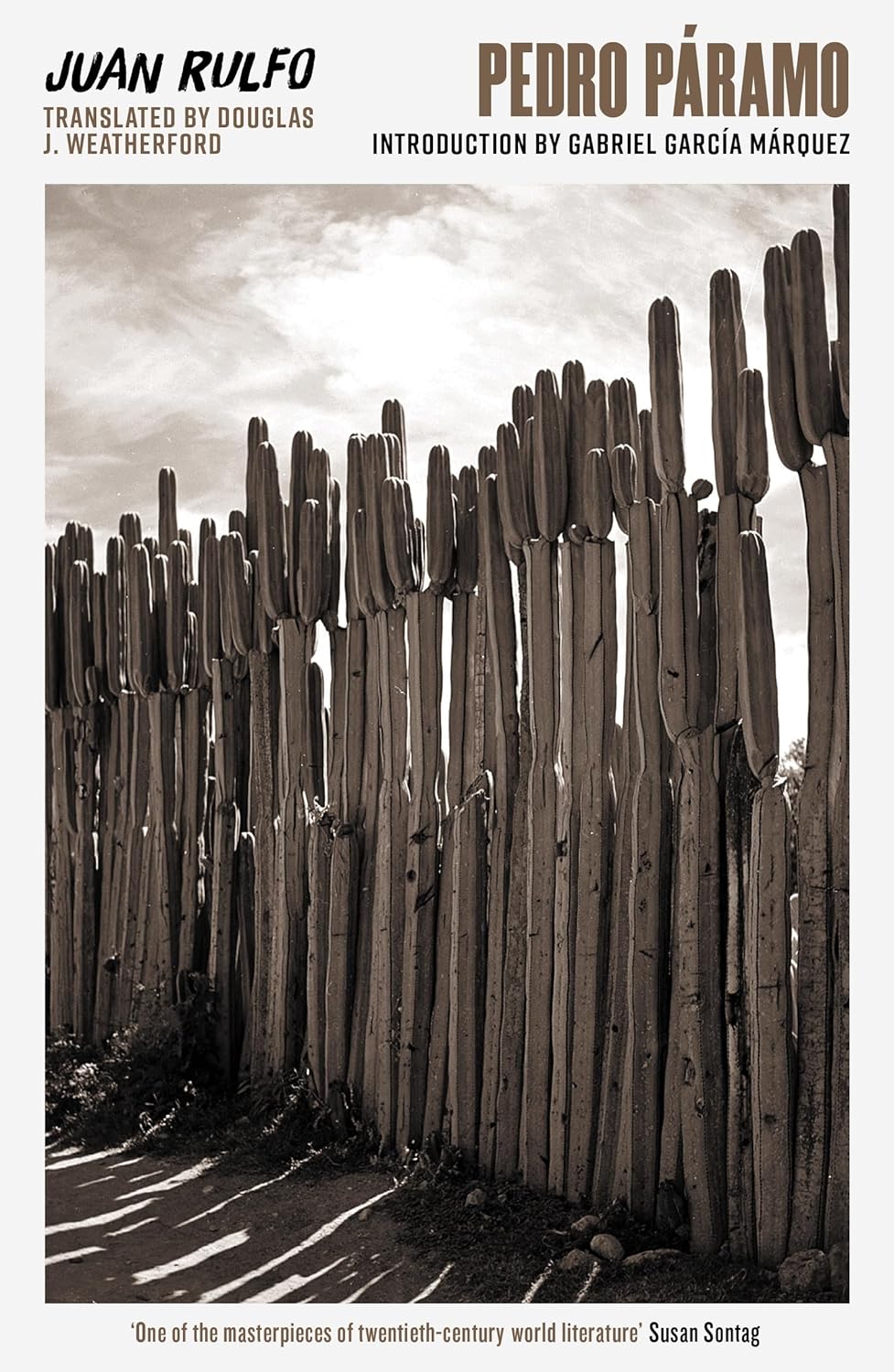
#2 — Pedro Páramo — trans. Douglas J. Weatherford (2023)
- Readability: Marginally more contemporary in feel.
- Accuracy: Benefits from recent scholarship on Rulfo's manuscripts.
- Tone: Cleaner in places with fresh textual intimacy.
- Accessibility: Strong choice for readers seeking a new perspective.
About the Translators
Margaret Sayers Peden (2002, Grove Press): One of the most prolific translators of Latin American literature; her other translations include Borges, Isabel Allende, and Carlos Fuentes. Her Grove Press Pedro Páramo includes a foreword by Susan Sontag and has been the standard English text for over twenty years.
Douglas J. Weatherford (2023, Serpent's Tail): Rulfo scholar who spent decades working on the author's manuscripts and correspondence; his 2023 translation includes an introduction by Gabriel García Márquez and benefits from scholarship on Rulfo's working methods unavailable to Peden.
Themes
The dead speaking as formal principle. Pedro Páramo is not a novel with a ghost story in it — it is a ghost story that has the structure of a novel. Juan Preciado arrives in Comala seeking his father and is speaking, the reader gradually realizes, from beyond his own death. The village's population consists entirely of the dead; voices rise from graves without explanation; the distinction between the living and the dead dissolves completely. Rulfo did not signal this with genre conventions — he simply wrote it as the novel's natural grammar.
Comala as Mexico's colonial wound. Pedro Páramo is a cacique — a landowner whose political and economic power in the village is total and arbitrary. His ruination of Comala is inseparable from the novel's historical argument: the landscape of rural Mexico in the early twentieth century is one of abandoned promises and destroyed communities, the wreckage left by men whose power was never checked. The Revolution had come and gone and left nothing behind. Comala is what remains.
Love as destruction. Pedro Páramo's obsession with Susana San Juan is the novel's central emotional event and its deepest irony: he achieves everything — wealth, power, control of the village — and none of it matters to him without Susana. When she dies, he lets Comala die with her. His love is real and catastrophic, and the novel refuses to redeem it.
Key Characters
Juan Preciado — the narrator, who arrives in Comala to find his father and gradually discovers, without any dramatic announcement, that he is dead and has been speaking from his grave in the churchyard beside a woman named Dorotea.
Pedro Páramo — the absent center of the novel. We see him in fragments, through memories, through the damage he has done. His power over Comala was total; his love for Susana San Juan was his only vulnerability; his grief at her death was his final act of destruction.
Susana San Juan — the woman Pedro Páramo loved and finally achieved. By the time he finds her again she is mad, or perhaps simply unreachable, living entirely in an inner world that no one else can enter. Her death destroys him and, through him, Comala.
Abundio — the mule driver who guides Juan Preciado to Comala at the novel's opening. He is also Pedro Páramo's son — one of many. His reappearance at the end, having killed his wife in a drunken moment, and his murder of Pedro Páramo, closes the circle without resolving anything.
Recommended Sources
For further academic reading on Rulfo and Pedro Páramo:
- Latin American Literary Review (Pittsburgh) — the primary English-language journal for Latin American fiction; central venue for Rulfo scholarship.
- Hispanic Review (University of Pennsylvania) — essential for placing Pedro Páramo in the context of Spanish-language literary modernism.
- MLN (Johns Hopkins) — covers Rulfo in the broader context of world literature and comparative modernism.
Which translation is right for you?
Choose Peden for a first reading — her Grove Press translation has the authority of twenty years of use and Susan Sontag's foreword is one of the best short accounts of what the novel does and why it matters. Choose Weatherford if you want the most recent English version and García Márquez's introduction about how the novel changed his life as a writer. Both are serious translations of a very short book; reading both in comparison is straightforward given its length.
Frequently Asked Questions
What is Pedro Páramo about?
Pedro Páramo follows Juan Preciado as he visits the ghost town of Comala to find his father, Pedro Páramo. The novel explores themes of death, power, and unfulfilled promises in a haunting narrative.
Is Pedro Páramo hard to read?
Pedro Páramo can be challenging due to its non-linear narrative and ghostly elements. Peden's translation is recommended for its accessibility, while Weatherford offers a fresh scholarly perspective.
Which Pedro Páramo translation is best?
Margaret Sayers Peden's Grove Press translation is the primary recommendation for most readers due to its long track record and Susan Sontag's superb foreword.
Peden vs Weatherford — which should I choose?
Choose Peden for a first reading with authoritative context; choose Weatherford for the most recent English version and García Márquez's introduction.
Which translation is easiest to read?
Peden's version captures Rulfo's deliberate flatness without feeling thin and remains the most accessible standard text.
Which translation is most accurate?
Weatherford's 2023 translation benefits from more recent scholarship on Rulfo's manuscripts and working methods.
Should I read both Peden and Weatherford translations of Pedro Páramo?
Yes — the novel is very short, and comparing the two reveals subtle differences in rhythm and contemporary feel.
This guide is based on reading the two translations and reviewing scholarly commentary. Last reviewed: June 2026.
As an Amazon Associate, I earn from qualifying purchases.
Looking for another classic? Browse all our translation guides →
García Márquez called Pedro Páramo the book that taught him how to write — read our guide to the best One Hundred Years of Solitude translation.
For more García Márquez, see our comparison of the best Love in the Time of Cholera translations.
Another landmark of Latin American fiction is our guide to the best 2666 translation.
Explore the broader tradition with our guide to the best Borges collections in English.
Or return to the Spanish-language canon with our recommendations for the best Don Quixote translations.