Ficciones: What It's About & Best Translation
The two great collections — Hurley's complete Penguin versus the landmark Labyrinths anthology
As an Amazon Associate, we earn from qualifying purchases.
Ficciones is a collection of short stories by Jorge Luis Borges that explores complex themes such as infinity, labyrinths, and the nature of reality. The stories often blur the line between fiction and philosophy, inviting readers into a world of intellectual puzzles and metaphysical inquiries.
Translation Comparison at a Glance
| Translation | Readability | Accuracy | Tone | Best For |
|---|---|---|---|---|
| Hurley (1998) | High | Excellent | Precise and fluent | Complete reading and study |
| Labyrinths (1962) | Moderate | Good | Historic and varied | Understanding Borges's reception |
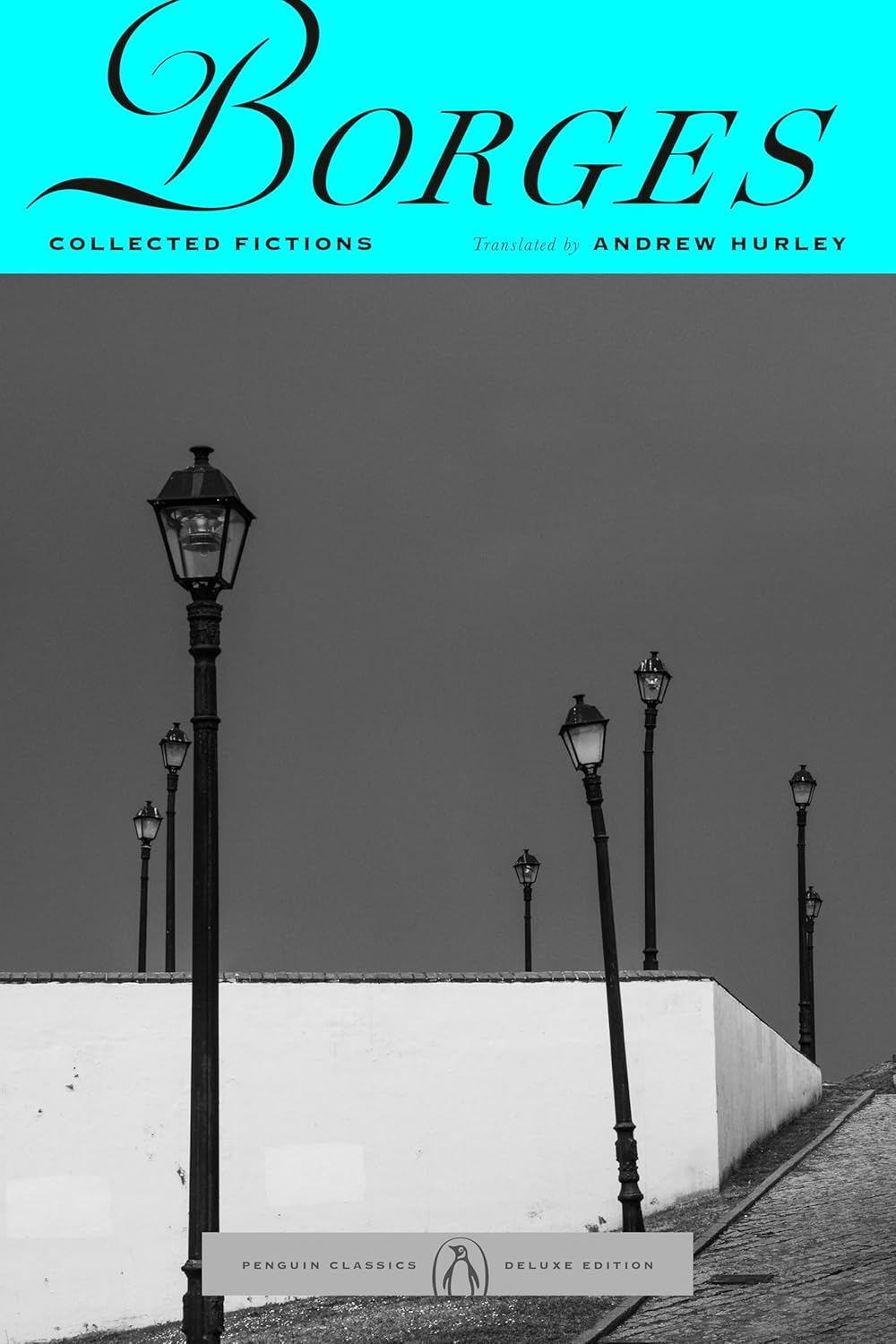
#1 — Collected Fictions — trans. Andrew Hurley (1998)
- Readability: Intellectual fluency and precision; formal games come through cleanly.
- Accuracy: Excellent consistency of terminology across the entire body of work.
- Tone: Scholarly yet accessible, with the translator's role clearly acknowledged.
- Accessibility: Best entry point for readers wanting everything in one volume.
Which translation is right for you?
- Choose Hurley if you want the complete fiction in one consistent scholarly volume.
- Choose Labyrinths if you want the historic anthology that first introduced Borges to English readers.
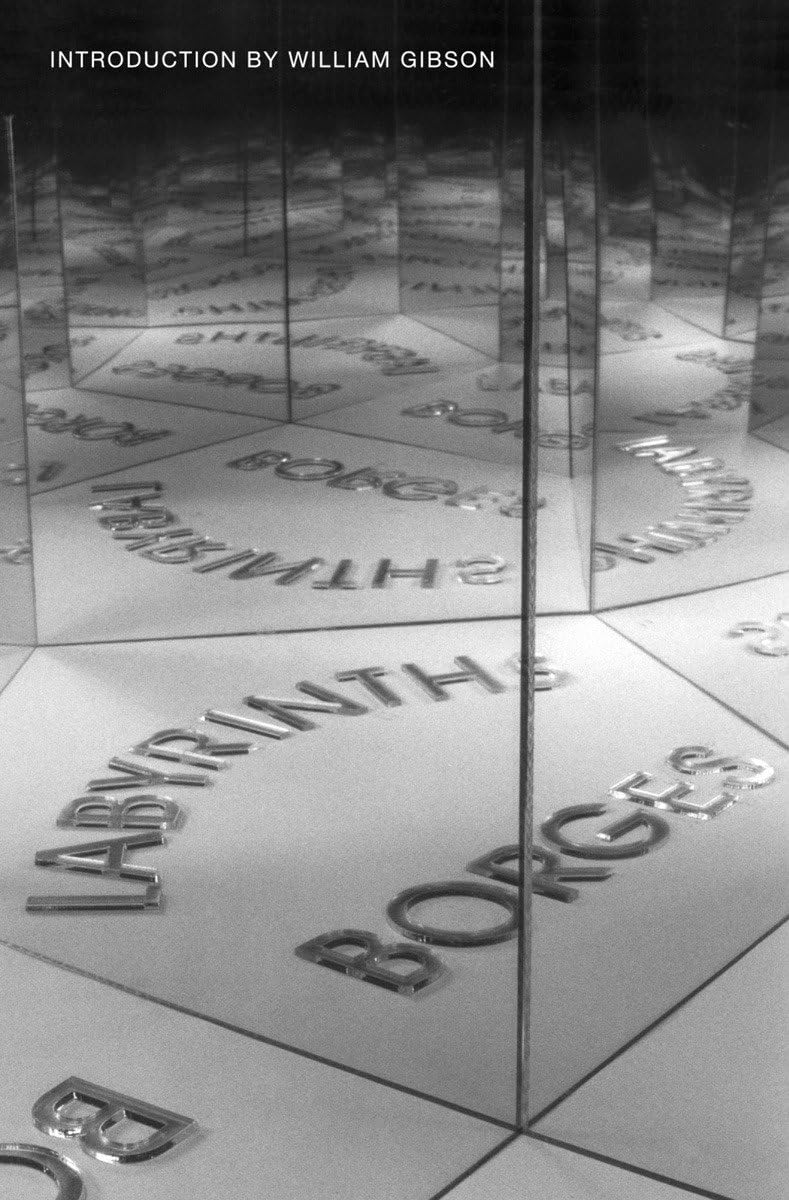
#2 — Labyrinths — ed. Donald A. Yates & James E. Irby (1962)
- Readability: Varied team translations that established Borges's voice in English.
- Accuracy: Good; historically influential though less uniform than Hurley.
- Tone: Landmark anthology with strong critical framing.
- Accessibility: Ideal for readers seeking the edition that shaped Borges's international reputation.
About the Translators
Andrew Hurley (b. 1945, 1998, Penguin Classics): American translator; Professor of English at the University of Puerto Rico; his other translations include the complete works of Reinaldo Arenas, novels by Manuel Puig, and works of other Latin American writers. His Translator's Note in the Collected Fictions — an unusually frank account of his priorities, compromises, and methods — is itself required reading for anyone interested in the problems of translating Borges. His approach prioritises precision and consistency of terminology across the entire body of fiction: since the same images and concepts recur throughout Borges's work, the decisions made in one story must be consistent with decisions made in another.
Donald A. Yates (1929–2018) and James E. Irby (editors, 1962, New Directions): Yates was Professor of Spanish and Portuguese at Michigan State University; Irby was Professor of Spanish at Princeton. The individual stories in Labyrinths were translated by a team that includes Alastair Reid, Anthony Kerrigan, Harriet de Onís, and others; Reid's translations of specific stories have been particularly admired as literary achievements in their own right. The volume also included a selection of critical essays on Borges that did much to shape his initial reception in anglophone intellectual culture.
A note on Norman Thomas di Giovanni: in the late 1960s and early 1970s, Borges collaborated with di Giovanni on a series of translations — working sentence by sentence, with Borges approving each decision — and those versions appeared in The New Yorker and in several anthologies. When the Borges estate reached a new agreement with Penguin in the 1990s, the Hurley translations replaced di Giovanni's in most editions, and a royalties dispute has kept di Giovanni's translations out of print in most markets. Some readers who know both versions regard the di Giovanni translations as superior for having had Borges's own input; others find Hurley's more consistent and more scholarly. The debate has not settled.
Themes
The library and the labyrinth as world. Borges's two most persistent metaphors — the infinite library and the labyrinth — are different images of the same underlying intuition: that the universe is a structure of meanings that human beings are condemned to navigate without a map and without a guarantee that the map, if found, would be legible. The Library of Babel contains all possible books; Tlön is a world constructed entirely from idealist philosophy; the Garden of Forking Paths is a novel in which every possibility simultaneously occurs. Each story extends this intuition into a new domain and discovers new implications.
Time, repetition, and the double. Borges is obsessed with the problem of time: with the moment that recurs, with the person who discovers that they are someone they have always been, with the author who rewrites an already existing work and produces something entirely new. Pierre Menard authors the Quixote word-for-word three hundred years after Cervantes and produces a different text. The man in "The Garden of Forking Paths" discovers that his ancestor's novel is identical to the universe. These stories are not puzzles to be solved but images of the philosophical vertigo that comes from thinking seriously about identity, repetition, and time.
The Argentine tradition and the relationship to European literature. Borges was a writer deeply formed by European literature — Chesterton, Stevenson, Poe, Kafka, Schopenhauer, Dante — who spent his life in Buenos Aires and who thought carefully about what it meant to be a writer in a tradition that was both peripheral to the European canon and free from its weight. His essay "The Argentine Writer and Tradition" argues that Argentine writers can claim all of Western culture without the anxiety of influence that affects writers at the centre — precisely because they are outsiders. His fiction is the practice of this claim.
Key Characters
Borges himself — appears as narrator and character in several stories; the relationship between the author Jorge Luis Borges, the character "Borges," and the narrator "I" is itself a recurring subject of the fiction. The story "Borges and I" is the most direct treatment of this theme: the public Borges who publishes, who accumulates a reputation, who is remembered, and the private Borges who lives and experiences — and the impossibility of knowing which is real.
Pierre Menard — the fictional French symbolist poet who devoted years to rewriting Don Quixote word-for-word without copying it — producing, by working as a seventeenth-century Spanish Catholic rather than as a twentieth-century Frenchman, a text identical in words but entirely different in meaning. He is the most famous character in Borges, and his story is the sharpest single illustration of Borges's ideas about authorship, reading, and time.
Herbert Quain, Ts'ui Pên, and the other inventor-figures — Borges populates his fiction with characters who construct labyrinths, encyclopaedias, infinite texts, and impossible structures; each story's inventor-figure is a version of Borges himself, and each impossible construction is a thought experiment about the nature of narrative, time, or knowledge.
Death and its messengers — in many stories, a character discovers that they are about to die, or have already died, or that their entire life has been a preparation for a single moment; death functions in Borges's fiction as the frame that gives meaning to the labyrinth, the horizon that makes the garden of forking paths comprehensible.
Recommended Sources
For further academic reading on Borges:
- Variaciones Borges (University of Pittsburgh / Aarhus University) — the primary international journal devoted entirely to Borges scholarship; essential for current research on all aspects of the fiction, poetry, and essays.
- Latin American Literary Review (Pittsburgh) — the primary English-language journal for Latin American literature; key for Borges in the context of the wider Latin American tradition he both belonged to and defined.
- MLN: Modern Language Notes (Johns Hopkins) — important for comparative readings of Borges alongside Kafka, Calvino, Pynchon, and the writers most influenced by him.
Which translation is right for you?
Choose Hurley's Collected Fictions (Penguin Classics Deluxe) if you want to read all of Borges's fiction in one volume — it is the only complete collection in English, its consistency across the complete body of work is a significant scholarly achievement, and it is the standard edition in contemporary academic use. Choose Labyrinths (New Directions) if you want the anthology that made Borges an international figure — the introduction by André Maurois, the selection from both Ficciones and El Aleph, and the William Gibson introduction in the current edition combine to give you both the fiction and the history of its reception. The two are best used together.
Frequently Asked Questions
What is Ficciones about?
Ficciones is a collection of short stories by Jorge Luis Borges that explores complex themes such as infinity, labyrinths, and the nature of reality. The stories often blur the line between fiction and philosophy, inviting readers into a world of intellectual puzzles and metaphysical inquiries.
Is Ficciones hard to read?
Ficciones can be challenging due to its philosophical depth and intricate narrative structures. Hurley's translation offers clarity and precision, making it more accessible, while Labyrinths provides a historic perspective.
Which Borges translation is best?
Andrew Hurley's Collected Fictions is the best overall choice as the only complete collection of Borges's short fiction in English and the standard scholarly edition today.
Hurley vs Labyrinths — which should I choose?
Choose Hurley's Collected Fictions for the complete fiction in one consistent volume; choose Labyrinths for the historic anthology that introduced Borges to English readers and shaped his international reputation.
Which translation is easiest to read?
Hurley's Collected Fictions reads with intellectual fluency and precision, making the philosophical puzzles accessible without the translation calling attention to itself.
Which translation is most accurate?
Hurley's translations are the most accurate for scholarly use due to their consistency of terminology across the entire body of Borges's fiction.
What happened to the di Giovanni translations of Borges?
Norman Thomas di Giovanni's versions, approved sentence-by-sentence by Borges, were displaced by Hurley's Penguin edition in the 1990s; they remain out of print in most markets due to a royalties dispute.
This guide is based on reading both translations and reviewing scholarly commentary. Last reviewed: June 2026.
As an Amazon Associate, I earn from qualifying purchases.
Looking for another classic? Browse all our translation guides →
Borges's fiction constantly circles back to the best Don Quixote translation, so our guide comparing Grossman, Rutherford, and Raffel is essential reading.
For more Latin American masterpieces, see our comparison of the best One Hundred Years of Solitude translation by Gregory Rabassa.
Another cornerstone of the Latin American tradition is our guide to Love in the Time of Cholera translations featuring Edith Grossman.
Explore the novel that helped launch magical realism with our Pedro Páramo translation guide comparing Peden and Weatherford.