Love in the Time of Cholera: What It's About & Best Translation
García Márquez's great love novel — and Edith Grossman's translation from the Spanish
As an Amazon Associate, we earn from qualifying purchases.
Love in the Time of Cholera is a novel about the enduring power of love and the passage of time. It follows the story of Florentino Ariza and Fermina Daza, whose youthful romance is thwarted, leading Florentino to wait over fifty years to declare his love again.
Translation Comparison at a Glance
| Translation | Readability | Accuracy | Tone | Best For |
|---|---|---|---|---|
| Grossman (1988) | High | Excellent | Rhythmic, tropical, faithful | Definitive reading experience |
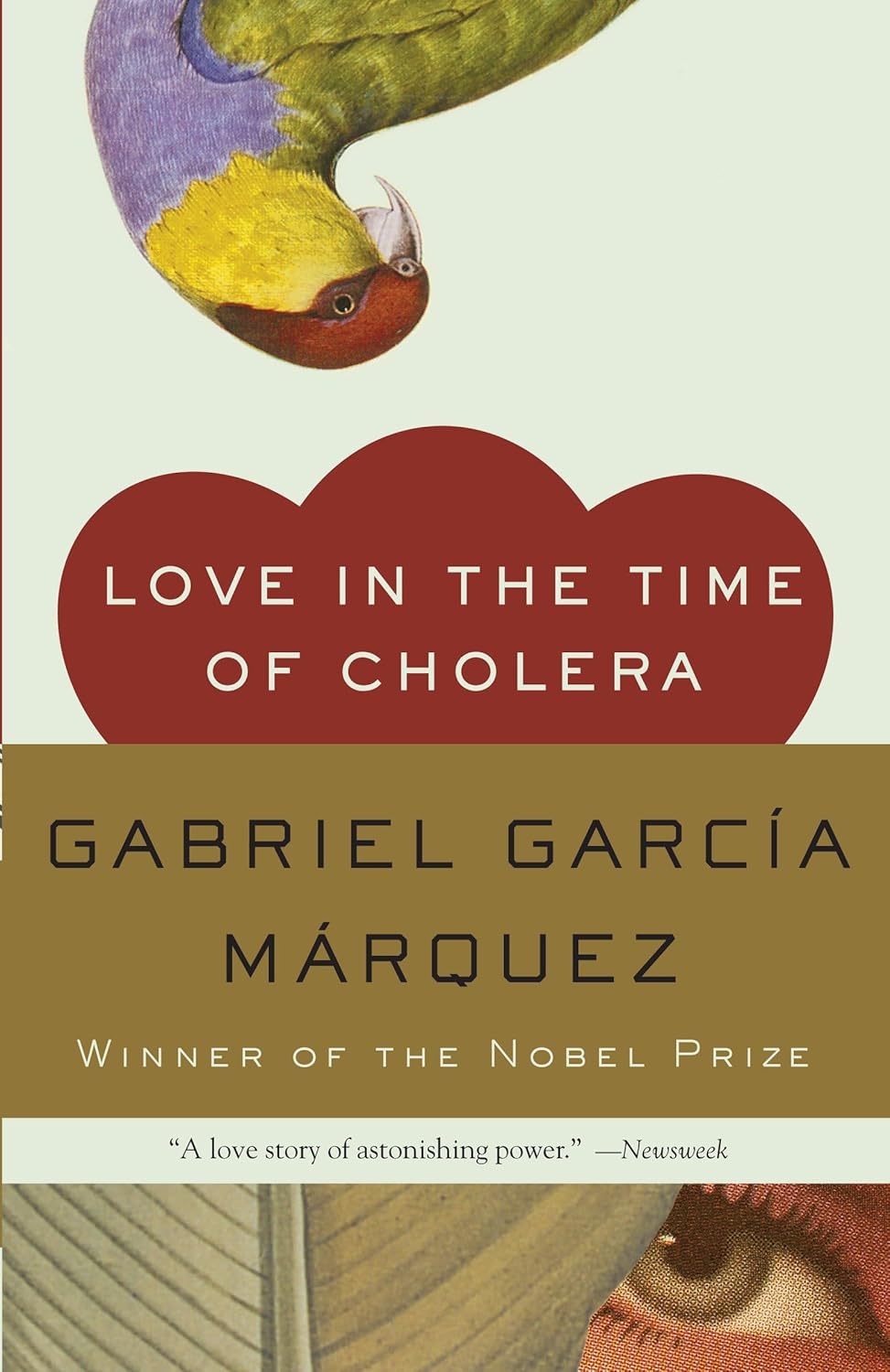
#1 — Love in the Time of Cholera — trans. Edith Grossman (1988)
- Readability: Renders long sentences with rhythmic authority that preserves tropical density without losing the reader.
- Accuracy: Reviewed and approved by García Márquez himself.
- Tone: Maintains the Caribbean music and accumulating clauses of the original.
- Accessibility: The standard edition most readers will encounter.

Armando Durán's rich, emotive narration perfectly captures the lyrical prose and romantic melancholy of García Márquez's masterpiece, while Grossman's acclaimed translation preserves the novel's poetic beauty.
Listen on Audible →Which translation is right for you?
- Choose Grossman if you want the sole authorised English translation that preserves the rhythmic density of García Márquez's Caribbean prose.
About the Translator
Edith Grossman (b. 1936, 1988, Vintage International): American translator and scholar; widely considered the pre-eminent living translator of Spanish-language literature into English. Her other translations include Cervantes's Don Quixote (2003), García Márquez's The General in His Labyrinth, The Autumn of the Patriarch, and Memories of My Melancholy Whores; as well as major novels by Mario Vargas Llosa, Álvaro Mutis, and Mayra Montero. She received the PEN/Ralph Manheim Medal for Translation in 2006. García Márquez, who read English fluently, reviewed and approved her translation of Love in the Time of Cholera and pronounced himself satisfied — a judgement that carries weight given how closely he monitored his international reception.
Themes
Love as patience and obsession. Florentino Ariza waits fifty-one years, nine months, and four days for Fermina Daza — keeping count. His patience is not passive; it is active, purposeful, and sustained across hundreds of other relationships, each of which he understands as a preparation for or a sublimation of his central obsession. The novel asks whether this is romantic fidelity or pathological fixation, and it refuses to decide: both readings are available, and García Márquez presents Florentino's persistence with simultaneous admiration and something close to horror.
Time, the body, and the indignity of aging. The novel is, among other things, a profound meditation on what happens to desire and love as the body ages. Don Juvenal Urbino's old age — his fear of heights, his pet parrot, the absurdity of his death — frames the novel's central love story. Florentino and Fermina's late reunion, on a river boat in their seventies, is the novel's most daring gambit: a love story between old people, with old bodies, and the question of whether love in old age is the same thing as love in youth or a different phenomenon entirely.
Cholera and the Caribbean city as social world. The unnamed port city (based on Cartagena de Indias) is the novel's social stage, and its epidemic history — the waves of cholera that periodically devastate the population — is the frame that gives the love story its particular atmosphere. The novel's famous final image, the river boat flying the cholera flag to keep the world at bay while Florentino and Fermina are finally together, is one of literature's most poignant conflations of disease and desire.
Key Characters
Florentino Ariza — the protagonist; a young telegraph operator who falls desperately in love with Fermina at seventeen and who devotes the next half-century to waiting for her, sublimating his obsession through hundreds of relationships with other women while keeping each encounter recorded in a ledger. He is simultaneously the novel's most romantic and most morally disturbing figure.
Fermina Daza — the woman Florentino loves; the daughter of a self-made merchant, educated beyond her class, briefly infatuated with Florentino in youth and then thoroughly cured of it, who builds a successful life as the wife of Dr. Urbino and a figure of the city's social elite. Her trajectory — from adolescent romantic to practical, unsentimental woman of the world — is the novel's most fully realised arc.
Dr. Juvenal Urbino — the distinguished physician who marries Fermina and whose death at the novel's opening, falling from a ladder while trying to retrieve his pet parrot, frames the story. He is the representative of European rationalism and public responsibility; his life is long, honourable, and in certain respects a failure of the heart.
Lorenzo Daza — Fermina's father; the ambitious, controlling, ultimately pathetic man who drives his daughter's adolescent love affair and then destroys it when it threatens his social plans. His subsequent career as Florentino's ally — once Fermina is safely married and Lorenzo is old — is one of the novel's black jokes.
Recommended Sources
For further academic reading on García Márquez and Love in the Time of Cholera:
- Latin American Literary Review (Pittsburgh) — the primary English-language journal for Latin American literature; essential for García Márquez scholarship and the novel in its Colombian and Caribbean context.
- Hispanic Review (University of Pennsylvania) — the leading American journal for Spanish and Latin American literary studies; key venue for readings of the novel in relation to García Márquez's earlier magical realist fiction.
- Revista de Estudios Hispánicos (Washington University) — important for the Caribbean literary tradition and the historical and social world the novel depicts.
There is only one English translation of Love in the Time of Cholera. Edith Grossman's Vintage International text — authorised by García Márquez and carrying his public approval — is the translation through which the novel reached its global English-speaking audience. The Vintage International paperback, with its distinctive green-parrot-and-red-heart cover, is the standard edition and the one to buy.
Frequently Asked Questions
What is Love in the Time of Cholera about?
Love in the Time of Cholera is a novel about the enduring power of love and the passage of time. It follows the story of Florentino Ariza and Fermina Daza, whose youthful romance is thwarted, leading Florentino to wait over fifty years to declare his love again.
Is Love in the Time of Cholera hard to read?
The novel's rich, descriptive prose can be challenging, but Edith Grossman's translation captures the lyrical beauty of García Márquez's writing, making it accessible to most readers.
Which Love in the Time of Cholera translation is best?
Edith Grossman's 1988 translation is the only English edition and the one authorised by García Márquez himself.
Grossman vs any other — which should I choose?
There is no competing English translation; Grossman's is the sole authorised text and remains the standard edition.
Which translation is easiest to read?
Grossman's version renders García Márquez's long, winding sentences with rhythmic authority that preserves the tropical density without losing the reader.
Which translation is most accurate?
Grossman's translation was reviewed and approved by García Márquez, who pronounced himself satisfied with the result.
Why has no new English translation appeared since 1988?
García Márquez's approval of Grossman's work and the absence of any competing edition have kept her translation as the definitive English text.
This guide is based on reading the translation and reviewing scholarly commentary. Last reviewed: June 2026.
As an Amazon Associate, I earn from qualifying purchases.
Looking for another classic? Browse all our translation guides →
García Márquez's masterpiece is covered in our One Hundred Years of Solitude translation guide.
For another landmark of Latin American fiction, see our Pedro Páramo translation guide.
Spanish-language classics are also surveyed in our Don Quixote translation guide.
Modern Latin American epics receive the same treatment in our 2666 translation guide.