Kokoro: What It's About & Best Translation
Sōseki's masterwork of guilt and solitude — McClellan's classic translation versus McKinney's modern Penguin Classics version
As an Amazon Associate, we earn from qualifying purchases.
Kokoro explores themes of guilt, solitude, and the complexities of human relationships. It follows a young man's friendship with an older mentor, Sensei, who harbors a dark secret that profoundly affects both their lives.
Translation Comparison at a Glance
| Translation | Readability | Accuracy | Tone | Best For |
|---|---|---|---|---|
| McKinney (2010) | High | Very good | Precise and restrained | First-time readers |
| McClellan (1957) | Moderate | Excellent | Formal and measured | Academic study |
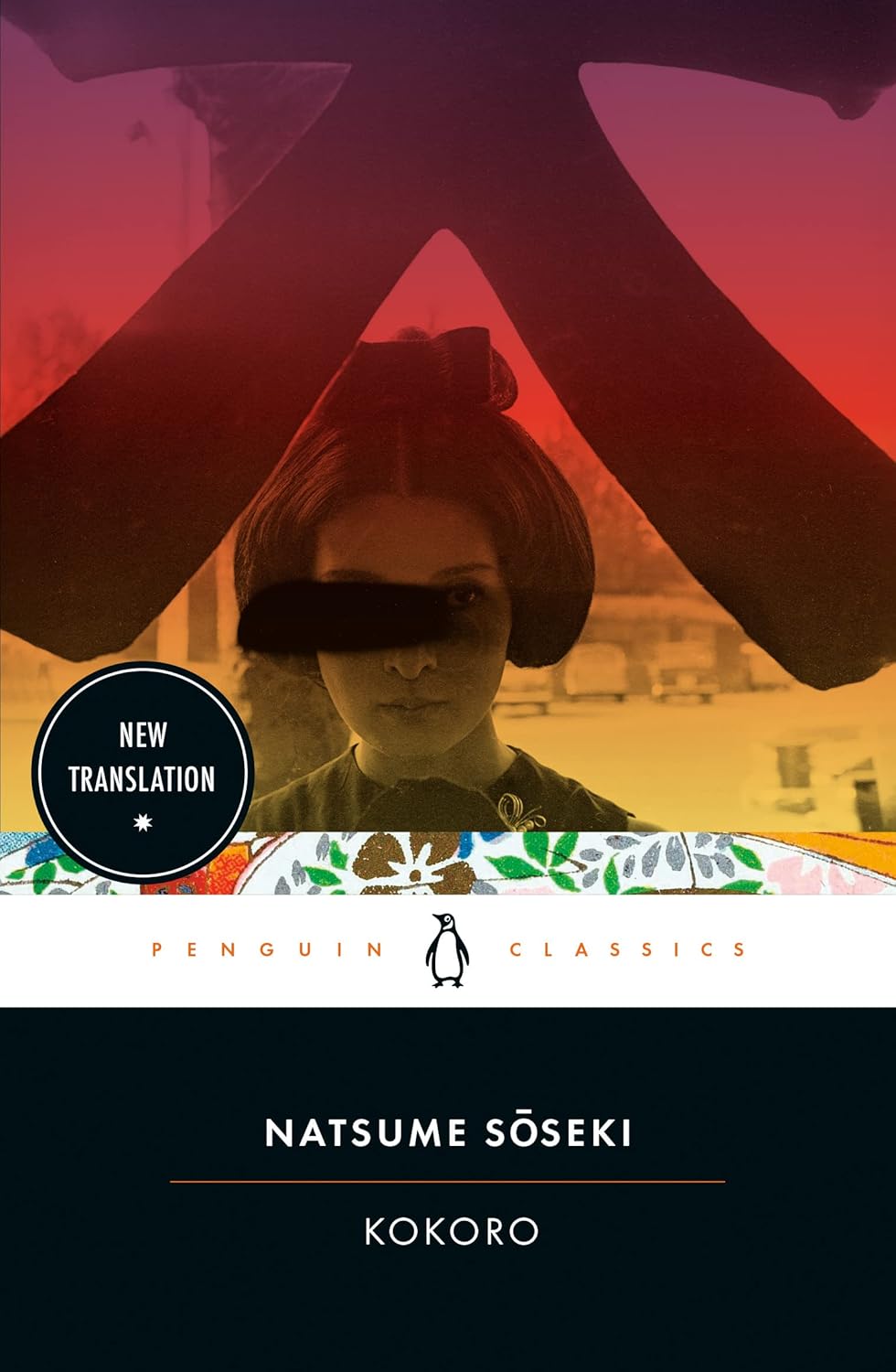
#1 — Kokoro — trans. Meredith McKinney (2010)
- Readability: Contemporary and precise, with clear, flowing prose.
- Accuracy: Very good fidelity to Sōseki's understated style.
- Tone: Restrained and clinical, matching the novel's emotional calm.
- Accessibility: Excellent for first-time readers with helpful introduction.
Which translation is right for you?
- Choose McKinney if you want a precise, contemporary first reading with an excellent introduction.
- Choose McClellan if you prefer the formal Meiji-era register and scholarly foreword for academic study.
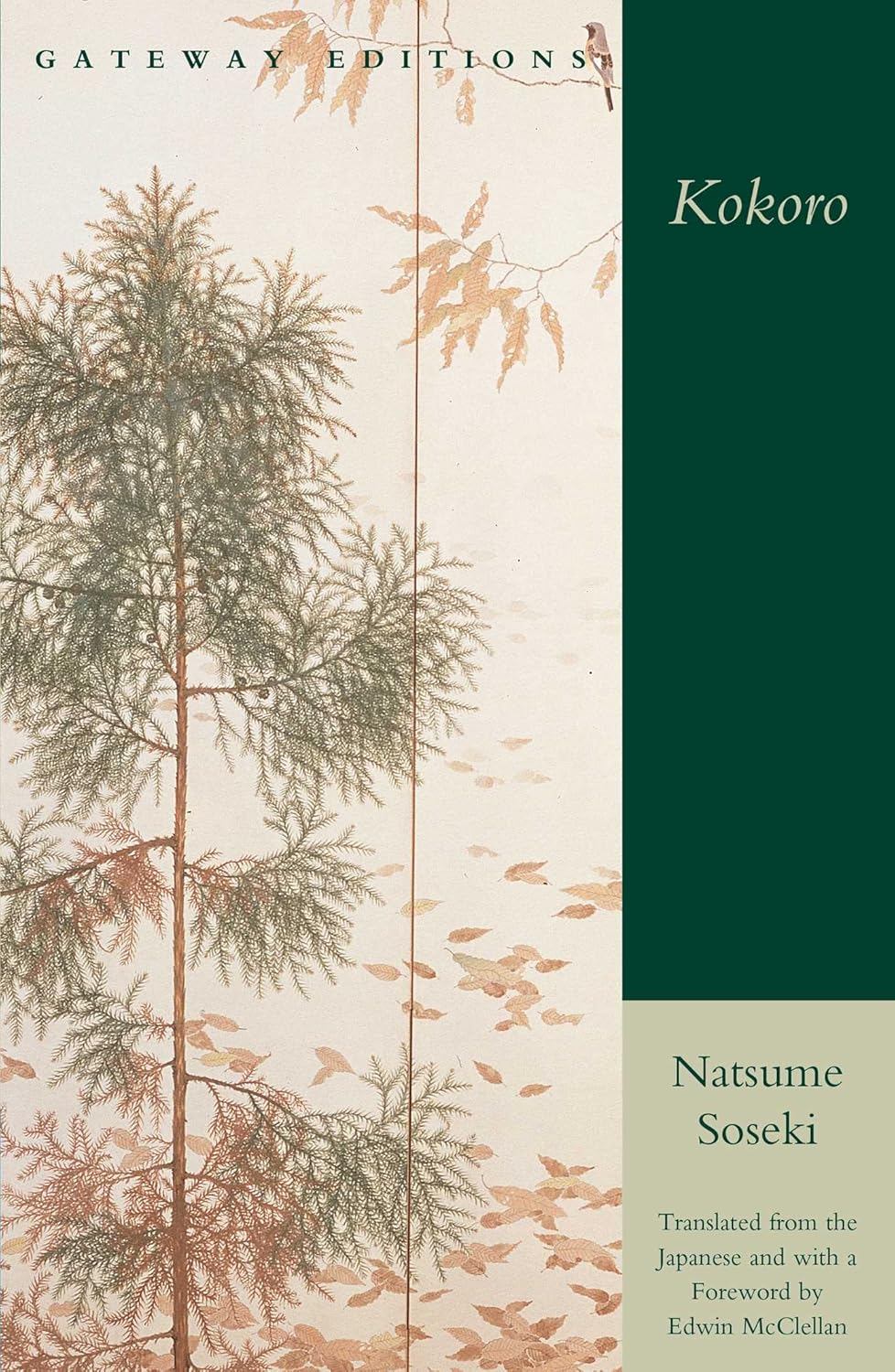
#2 — Kokoro — trans. Edwin McClellan (1957)
- Readability: Slightly formal but still very readable.
- Accuracy: Excellent, preserving Meiji-era gravity.
- Tone: Measured and formal, suited to the historical setting.
- Accessibility: Strong for academic readers familiar with period style.
About the Translators
Meredith McKinney (2010, Penguin Classics): Australian scholar of Japanese literature who has lived in Japan for decades; her other translations include Sei Shōnagon's The Pillow Book and Kamo no Chōmei's Hōjōki for Penguin Classics. Her 2010 Kokoro emphasises the precision and restraint of Sōseki's prose — its deliberate understatement, its revelation of character through small gestures — and is the version most recommended for contemporary readers coming to the novel for the first time.
Edwin McClellan (1925–2009, 1957, Gateway Editions): British-born; Professor of Japanese Literature at Yale for several decades; author of Two Japanese Novelists: Sōseki and Tōson (1969), still a standard study of the period. His 1957 translation introduced Kokoro to the English-speaking world and remained the standard version for fifty years; his measured, formal English register — appropriate for Sōseki's Meiji-era gravity — and his scholarly foreword make the Gateway Editions volume still essential for readers approaching the novel academically.
Themes
Guilt and the impossibility of absolution. Sensei's secret — that he took the woman his closest friend loved, and that his friend died by suicide — is a guilt that cannot be confessed, apologised for, or absolved by any social or religious mechanism available to him. He has tried isolation; he has tried marriage; he has tried the company of the young narrator. Nothing reaches the source. Sōseki presents guilt not as a problem to be solved but as a permanent condition that shapes a personality entirely, with the same unsparing precision he applied to his portraits of neurasthenia and intellectual self-doubt in his earlier novels.
The Meiji generation and individualism's failure. Sensei's death by suicide coincides with the death of Emperor Meiji and the ritual junshi of General Nogi, and Sōseki presents this as more than coincidence. The generation that came of age under Meiji — that was formed by the collision between traditional Japanese values of loyalty and self-abnegation and the Western individualism the Meiji reforms imported — found itself stranded between systems. Sensei cannot live according to the old codes of loyalty (which he has violated) and cannot find sufficient reason to live according to the new codes of individual fulfilment (which seem, to him, hollow).
Loneliness and the impossibility of full knowledge of another person. The novel's structure — the narrator devotedly studying a man who withholds his secret until a letter delivered after his death — is Sōseki's formal embodiment of his theme: we can be close to another person for years and remain ignorant of the thing that determines who they are. The narrator never fully knows Sensei; the reader, given the letter, knows more than the narrator but is not thereby given access to Sensei's interiority in any complete way.
Key Characters
Sensei — the older man whose gravity and reticence attract the narrator's devoted attention; a figure of intelligence and apparent moral authority who carries a secret that has made ordinary social life impossible for him. He is addressed only by the title — "Sensei," teacher — throughout the novel; his actual name is not given.
The narrator — a young student, unnamed, who meets Sensei at a seaside resort and is drawn into a friendship that will structure his understanding of himself and the world. His devotion to Sensei at the expense of his dying father — rushing back to Tokyo when he receives Sensei's letter — is the novel's most morally uncomfortable moment.
Shizu — Sensei's wife; the woman both Sensei and K. loved; she has lived with Sensei's withdrawal for decades without knowing its cause. Her ignorance of her husband's secret is protected by Sensei's silence and perpetuated by his letter, which he instructs the narrator to read after Shizu's own death.
K. — Sensei's dead friend; present in the novel entirely through Sensei's account of him. A young man of serious spiritual aspiration — who wished to "advance along the path" in a quasi-religious sense — who killed himself after confessing his love for Shizu and being told by Sensei (who loved her too) to renounce. Whether he died of love, of betrayal, or of a broader nihilism the novel leaves open.
Recommended Sources
For further academic reading on Sōseki and Kokoro:
- Journal of Japanese Studies (Society for Japanese Studies) — the primary English-language academic journal for Japanese literature and culture; essential for Sōseki scholarship and the Meiji intellectual context.
- Monumenta Nipponica (Sophia University, Tokyo) — the leading English-language journal for classical and modern Japanese studies; key for Kokoro's place in the longer tradition of Japanese prose fiction.
- Japan Forum (Taylor & Francis) — important for Sōseki's relationship to Western modernism and the Meiji-era encounter between Japanese and European intellectual traditions.
Which translation is right for you?
Choose McKinney (Penguin Classics) for a first reading — her translation is the most precise and contemporary, her introduction provides the historical context needed for non-specialist readers, and the Penguin paperback is the most widely available edition. Choose McClellan (Gateway Editions) for the scholarly experience — his formal register suits the Meiji atmosphere, his foreword remains an essential guide to Sōseki's world, and his version is the one most discussed in older academic criticism.
Frequently Asked Questions
What is Kokoro about?
Kokoro explores themes of guilt, solitude, and the complexities of human relationships. It follows a young man's friendship with an older mentor, Sensei, who harbors a dark secret that profoundly affects both their lives.
Is Kokoro hard to read?
Kokoro can be challenging due to its introspective themes and historical context. McKinney's translation offers contemporary clarity, while McClellan's version retains the formal tone of the original.
Which Kokoro translation is best?
Meredith McKinney's 2010 Penguin Classics edition is the best starting point for most readers due to its precision, contemporary clarity, and excellent introduction.
McKinney vs McClellan — which should I choose?
Choose McKinney for a first reading; her version is more precise and accessible. Choose McClellan if you want the scholarly, formal register that suits the Meiji-era atmosphere and older academic criticism.
Which translation is easiest to read?
McKinney's 2010 translation is the easiest to read, with contemporary precision and restraint that makes Sōseki's understated prose immediately engaging.
Which translation is most accurate?
McClellan's 1957 version is often regarded as the most faithful to the formal, measured tone of Sōseki's original Meiji-era Japanese.
Why has the title Kokoro never been translated into English?
The word kokoro encompasses heart, mind, spirit, and inner life simultaneously; no single English term captures its full weight, so both translators left it untranslated as Sōseki did.
This guide is based on reading both translations and reviewing scholarly commentary. Last reviewed: June 2026.
As an Amazon Associate, I earn from qualifying purchases.
Looking for another classic? Browse all our translation guides →
Another essential Japanese novel, our Snow Country translation guide examines Seidensticker's definitive rendering of Kawabata.
For more modern Japanese fiction, see our Wind-Up Bird Chronicle translation guide on Jay Rubin's Murakami edition.
Explore Akutagawa's stories with our Rashomon translation guide comparing Rubin and the classic Kojima edition.
Our Norwegian Wood translation guide covers the sole English version of Murakami's early masterpiece.