Snow Country: What It's About & Best Translation
Kawabata's haunting lyrical novel — and the indispensable Seidensticker translation
As an Amazon Associate, we earn from qualifying purchases.
Snow Country follows Shimamura, a Tokyo dilettante, who visits a remote hot-spring town and becomes entangled with a geisha named Komako. The novel explores themes of beauty, impermanence, and emotional detachment.
Translation Comparison at a Glance
| Translation | Readability | Accuracy | Tone | Best For |
|---|---|---|---|---|
| Seidensticker (1956) | High | Excellent | Precise, restrained, image-driven | Scholarly and general readers |
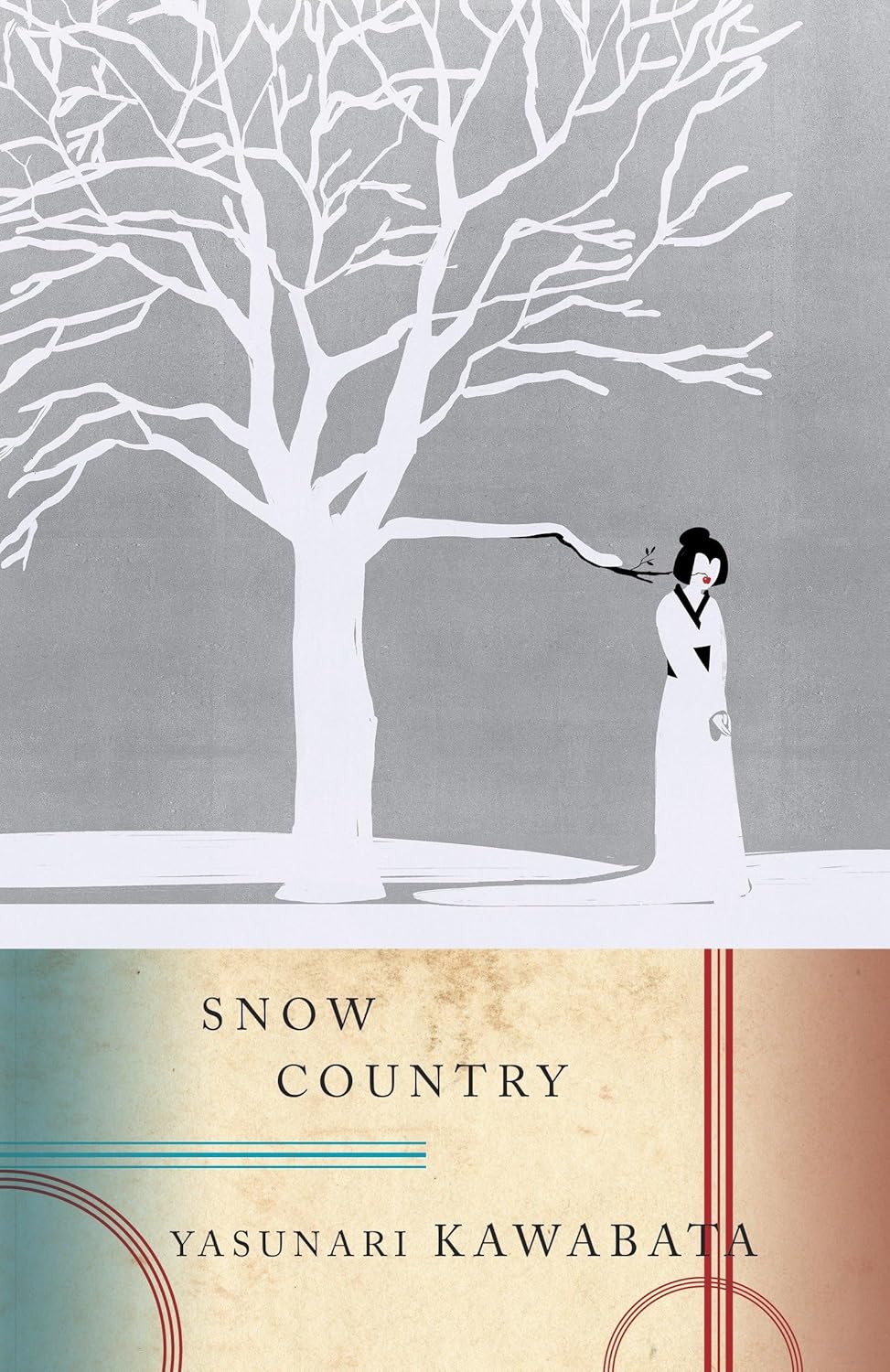
#1 — Snow Country — trans. Edward G. Seidensticker (1956)
- Readability: Clear, controlled prose that preserves Kawabata's haiku-like compression.
- Accuracy: Produced from fifty years of immersion in Japanese literary culture.
- Tone: Weighted without heaviness, emotionally restrained yet vivid.
- Accessibility: The standard edition for both general readers and scholars.
Which translation is right for you?
- Choose Seidensticker if you want the definitive, widely available English translation that has introduced generations of readers to Kawabata's masterpiece.
About the Translator
Edward G. Seidensticker (1921–2007, 1956, Vintage International / Knopf): the pre-eminent American translator of twentieth-century Japanese literature; his other translations include Kawabata's The Sound of Waves, The Old Capital, and The Master of Go; he also produced the 1976 translation of The Tale of Genji. He studied Japanese in the US military during the war and became the decisive voice in bringing modern Japanese literature to English; his translations were instrumental in securing the Nobel Prize for Kawabata in 1968. His Snow Country, first published in 1956, is both a landmark of Japanese fiction in English and widely considered one of the finest translations of a Japanese novel into any Western language.
Themes
Mono no aware in the snow country. Kawabata wrote Snow Country across the years 1935–1947, and its pervading mood — a beauty inseparable from sadness, a pleasure inseparable from the consciousness of its impermanence — is among the purest expressions of mono no aware in modern fiction. The snow country itself — the mountain region on the Sea of Japan coast, buried in deep snow for months each year and isolated from the world below — becomes the novel's primary symbol: a world set apart from ordinary time, beautiful and sterile, where nothing truly changes and nothing truly persists.
Shimamura's aesthetic detachment and its cost. Shimamura is a dilettante: a wealthy Tokyo man who has written about Western ballet without ever seeing it performed, who pursues aesthetic experience with a passive precision that prevents him from engaging with the people around him as full human beings. His attraction to Komako — genuine, but one he can never act on with full commitment — is the novel's central relationship, and the frustration it produces is the novel's emotional substance. Kawabata does not judge Shimamura for his detachment; he simply shows, with extraordinary economy, what it costs.
Komako's circumscribed life and her vitality within it. In some respects the novel's most fully realised presence, Komako is a geisha in a hot-spring resort who has devoted herself to the shamisen with a seriousness that exceeds what her situation seems to require. She keeps meticulous diaries; she practises with painful dedication; she loves Shimamura with a completeness he cannot reciprocate. Her vitality — her combination of warmth, directness, and frustrated intelligence — is in ironic contrast to the sterility of her situation and to Shimamura's detachment.
Key Characters
Shimamura — the Tokyo dilettante; a man of leisure and aesthetic sensibility who travels to the snow country to visit Komako; passive, observant, genuinely moved by beauty but incapable of the human commitment that beauty might otherwise motivate. His observation of everything — Komako, Yoko, the landscape — is the novel's perspective, and the novel is partly about what is lost when everything is observed rather than experienced.
Komako — the geisha of the snow country; the novel's emotional centre; a woman who has committed to her art and to Shimamura with an intensity that exceeds the circumscribed life available to her. Her final appearance — drunk, in the aftermath of the film hall fire — is the novel's most indelible image.
Yoko — the mysterious young woman who appears at the beginning, caring for a sick young man on the train, and who recurs throughout the novel with an enigmatic quality that Shimamura observes but cannot explain. Her death in the fire at the end — she falls from the burning building, and the Milky Way seems to flow down into Shimamura as he watches — is the novel's final image and brings together all of its themes: beauty, impermanence, the waste of vitality.
Recommended Sources
For further academic reading on Kawabata and Snow Country:
- Journal of Japanese Studies (Society for Japanese Studies) — the primary English-language journal for Japanese literature; essential for Kawabata scholarship and his place in the modern Japanese literary tradition.
- Monumenta Nipponica (Sophia University, Tokyo) — key for Snow Country in the context of Japanese aesthetic thought and the concept of mono no aware as a literary principle.
- Japan Forum (Taylor & Francis) — important for Kawabata's relationship to Western modernism; his Nobel lecture, "Japan, the Beautiful, and Myself" (1968), is an essential companion text.
There is only one widely available English translation of Snow Country. Edward Seidensticker's 1956 Vintage International rendering introduced the novel to English-language readers and remains, seven decades later, the standard text in both scholarly and general use. It is one of the outstanding works of literary translation of the twentieth century.
Frequently Asked Questions
What is Snow Country about?
Snow Country follows Shimamura, a Tokyo dilettante, who visits a remote hot-spring town and becomes entangled with a geisha named Komako. The novel explores themes of beauty, impermanence, and emotional detachment.
Is Snow Country hard to read?
Snow Country can be challenging due to its subtle emotional depth and cultural context. Seidensticker's translation is praised for its clarity, making it accessible to English readers.
Which Snow Country translation is best?
Edward Seidensticker's 1956 translation is the only widely available English edition and remains the definitive version.
Seidensticker vs any other — which should I choose?
There are no competing widely available translations; Seidensticker's version has been the unchallenged standard for nearly seventy years.
Which translation is easiest to read?
Seidensticker's rendering is the only option in English and is widely praised for its clarity and control.
Which translation is most accurate?
Seidensticker's translation is considered the most accurate and authoritative, produced from decades of immersion in Japanese literary culture.
Is there any other English translation of Snow Country worth considering?
No other widely available English translation exists; Seidensticker's 1956 version introduced the novel to English readers and has never been supplanted.
This guide is based on reading the translation and reviewing scholarly commentary. Last reviewed: June 2026.
As an Amazon Associate, I earn from qualifying purchases.
Looking for another classic? Browse all our translation guides →
Readers drawn to Kawabata often start with our guide to the best Kokoro translation by Natsume Sōseki.
For another landmark of modern Japanese fiction, see our comparison of the best Rashomon translations by Akutagawa.
Seidensticker also produced the definitive English Tale of Genji translation guide — essential context for Kawabata's place in the tradition.
If you're exploring postwar Japanese novels, our Norwegian Wood translation guide covers Murakami's breakthrough work.
Another Murakami masterpiece worth comparing is covered in our Wind-Up Bird Chronicle translation guide.