The Wind-Up Bird Chronicle: What It's About & Best Translation
Murakami's most ambitious novel — and the choices Jay Rubin made in bringing it across
As an Amazon Associate, we earn from qualifying purchases.
The Wind-Up Bird Chronicle follows Toru Okada, an unemployed man whose search for his missing wife leads him into a surreal journey through Tokyo's underbelly, uncovering secrets of Japan's wartime past.
Translation Comparison at a Glance
| Translation | Readability | Accuracy | Tone | Best For |
|---|---|---|---|---|
| Jay Rubin (1997) | High | Excellent | Plain, quietly strange | Definitive English reading |
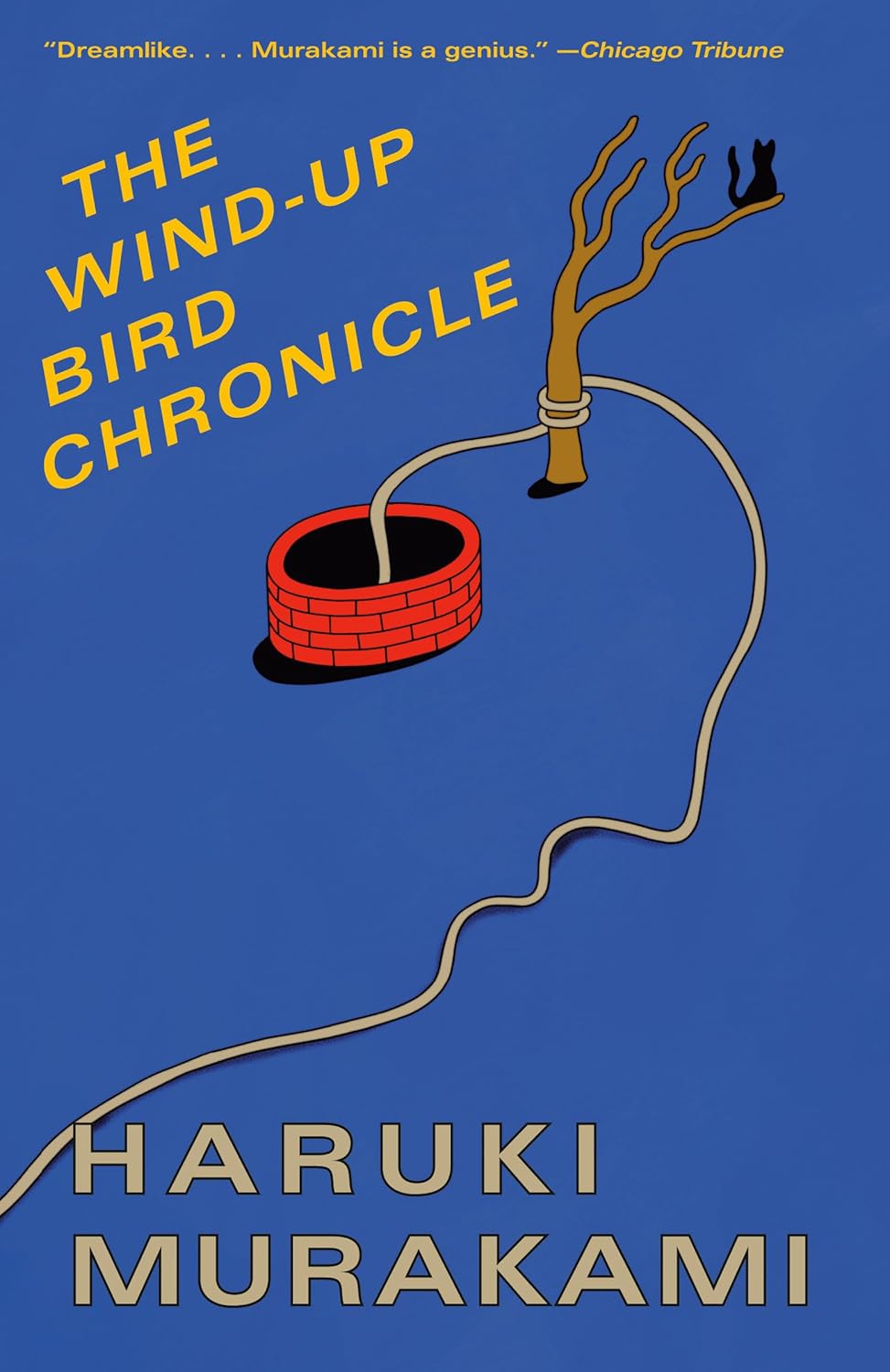
#1 — The Wind-Up Bird Chronicle — trans. Jay Rubin (1997)
- Readability: Sustains Murakami's flat colloquial surface and sudden visionary intensity.
- Accuracy: Authorised by Murakami with structural cuts he approved.
- Tone: Mundane and ironic in domestic passages, spare and controlled in war sequences.
- Accessibility: The sole English text; no alternative versions exist.

Degas's nuanced performance captures the surreal and haunting atmosphere of Murakami's novel, while Rubin's translation preserves the original's lyrical quality and depth.
Listen on Audible →Which translation is right for you?
- Choose Rubin if you want the only authorised English edition that stands on its own terms with Murakami's approval.
About the Translator
Jay Rubin (b. 1941, 1997, Vintage International): Professor Emeritus of Japanese Literature at Harvard; author of Haruki Murakami and the Music of Words (2002); translator of Norwegian Wood, Kafka on the Shore, and many other Murakami titles. His translation of The Wind-Up Bird Chronicle is the most structurally complex of his Murakami collaborations: in consultation with Murakami and the American publisher, he cut substantial material from the third Japanese volume — most notably extended passages concerning a character named Nutmeg Akasaka — to produce an English novel that is shorter than the Japanese original but stands entirely on its own terms. Murakami approved these decisions, and Rubin has been open about what was removed and why.
Themes
Japan's buried wartime past. The most distinctive element of The Wind-Up Bird Chronicle among Murakami's novels is its sustained engagement with the history of Japanese military atrocities in Manchuria and Mongolia during the Second World War. The Manchurian sequences — Lieutenant Mamiya's account of the well in the Mongolian desert, the execution of Yamamoto — are rendered in a spare, controlled prose quite unlike the novel's contemporary sections, and they insist that the violent past is not past: it recurs in the present in ways that ordinary consciousness cannot process.
The ordinary and the uncanny. The novel's formal signature is its movement between domestic ordinariness — Toru cooking pasta, listening to records, making coffee — and a reality that is gradually revealed to be layered with something else entirely. The dry well in the abandoned alley next door becomes the site of experiences that are simultaneously literally happening and allegorically true. Murakami places this double register at the centre of the novel's method, and Rubin's translation sustains it with great skill.
Loss and the search for the missing. The plot is initiated by the disappearance of Toru's cat, and deepens with the disappearance of his wife Kumiko — who does not simply leave but vanishes into a labyrinth of alternative identities and corporate manipulation that Toru cannot fully understand or navigate. His search for Kumiko is both a literal narrative and an allegory for the attempt to understand what one has lost, and whether the person one thought one knew actually existed in the form one believed.
Key Characters
Toru Okada — the protagonist; a thirty-year-old unemployed man of quiet temperament and unusual passivity who is gradually drawn into a series of mysteries he cannot control or fully understand. His ordinariness is the novel's formal premise: the extraordinary things that happen to him are grounded in the most mundane domestic life.
Kumiko Okada — Toru's wife; absent from most of the novel after her disappearance in the early chapters; her letters and her eventual reappearance reveal a history and a set of connections Toru had not known about.
May Kasahara — the teenage girl from next door who speaks to Toru over the garden fence, sits with him at the bottom of the well, and writes him long letters from the wig factory in the mountains where she eventually goes to work. She is one of the novel's most alive characters and the one whose relationship with Toru is most fully sympathetic.
Lieutenant Mamiya — the old war veteran whose account of his experiences in Manchuria and Mongolia in 1939 provides the novel's historical core; his story of the well in the Mongolian desert, and of what he witnessed there, is the novel's most disturbing sustained passage.
Nutmeg and Cinnamon Akasaka — a mother and son who operate a mysterious healing practice; Nutmeg's wartime backstory — substantially cut in Rubin's translation — was the third Japanese volume's major subplot. In the English version they remain important but somewhat cryptic figures.
Recommended Sources
For further academic reading on Murakami and The Wind-Up Bird Chronicle:
- Journal of Japanese Studies (Society for Japanese Studies) — the primary English-language academic journal for Japanese literature; essential for Murakami scholarship and the historical context of the Manchurian sequences.
- Japan Forum (Taylor & Francis) — key for Murakami in the context of Japanese popular culture and the global reception of Japanese literary fiction.
- positions: asia critique (Duke University Press) — the leading journal for critical Asian studies; essential for the historical dimensions of the Manchurian material and Murakami's engagement with Japanese wartime memory.
There is only one English translation of The Wind-Up Bird Chronicle. Jay Rubin's Vintage International text — made with Murakami's active collaboration, including editorial decisions about what to cut from the Japanese original — is the English novel, and there is no alternative version. Readers who want to encounter the material Rubin and Murakami removed will find that it has not been published in English; the Japanese original remains the only complete text.
Frequently Asked Questions
What is The Wind-Up Bird Chronicle about?
The Wind-Up Bird Chronicle follows Toru Okada, an unemployed man whose search for his missing wife leads him into a surreal journey through Tokyo's underbelly, uncovering secrets of Japan's wartime past.
Is The Wind-Up Bird Chronicle hard to read?
The novel's complex narrative and surreal elements can be challenging, but Jay Rubin's translation is praised for its clarity and readability, making it accessible for most readers.
Which The Wind-Up Bird Chronicle translation is best?
Jay Rubin's 1997 translation is the only English edition and remains definitive.
Jay Rubin vs other translators — which should I choose?
There are no other English translations; Rubin's is the sole authorised version.
Which translation is easiest to read?
Rubin's version sustains Murakami's flat, colloquial surface and sudden visionary intensity with great clarity.
Which translation is most accurate?
Rubin's translation is authorised by Murakami and preserves the novel's double register between domestic ordinariness and uncanny intensity.
Why is the English edition shorter than the Japanese original?
Rubin and Murakami cut substantial third-volume material, including extended Nutmeg Akasaka passages, to create a coherent English novel.
This guide is based on reading the translation and reviewing scholarly commentary. Last reviewed: June 2026.
As an Amazon Associate, I earn from qualifying purchases.
Looking for another classic? Browse all our translation guides →
Jay Rubin also translated our guide to Norwegian Wood translations, the other essential Murakami novel in English.
For more modern Japanese fiction, see our comparison of the best Snow Country translations by Kawabata.
Readers of Murakami often explore earlier Japanese masters — start with our guide to the best Kokoro translations.
Another landmark of Japanese short fiction is our guide to the best Rashomon translations by Akutagawa.