Rashomon: What It's About & Best Translation
Rashomon and the great short fiction — Rubin's Penguin Deluxe versus the classic Tuttle Kojima
As an Amazon Associate, we earn from qualifying purchases.
Rashomon is a story about a servant who, after losing his job, takes shelter under the Rashomon gate. He grapples with moral dilemmas as he encounters a hag stealing hair from corpses, leading to a disturbing decision.
Translation Comparison at a Glance
| Translation | Readability | Accuracy | Tone | Best For |
|---|---|---|---|---|
| Rubin (2006) | High | Very good | Modern and precise | First-time readers, courses |
| Kojima (1952) | Moderate | Good | Formal, elevated | Translation history |
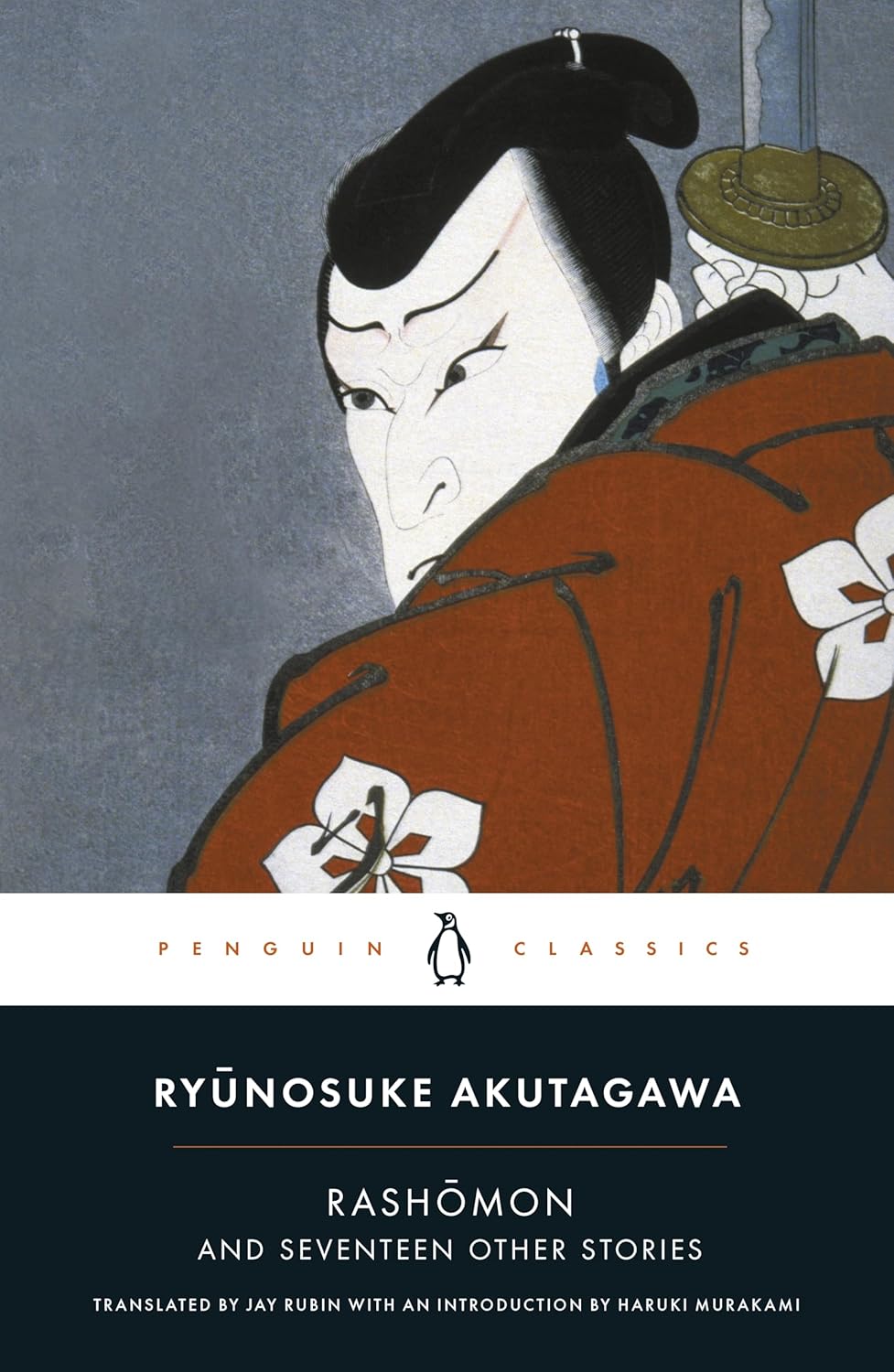
#1 — Rashomon and Seventeen Other Stories — trans. Jay Rubin (2006)
- Readability: Modern and precise, reads like contemporary short fiction.
- Accuracy: Very good; preserves dark irony and formal control.
- Tone: Contemporary master of the short story.
- Accessibility: Excellent for first-time readers and university courses.
Which translation is right for you?
- Choose Rubin if you want the modern, precise, widely taught edition that reads like contemporary short fiction.
- Choose Kojima if you are interested in translation history or prefer the formal mid-century literary register.
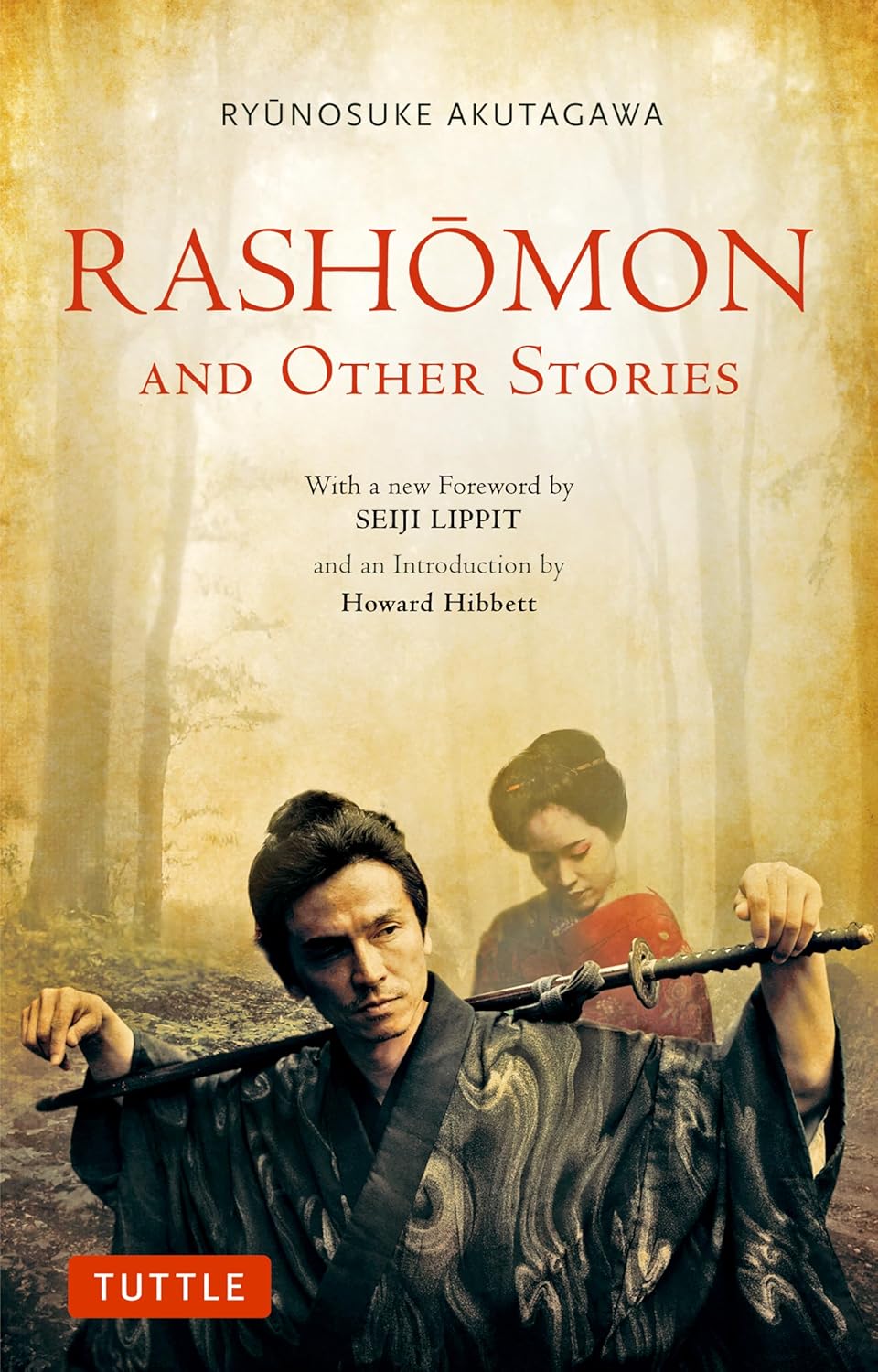
#2 — Rashomon and Other Stories — trans. Takashi Kojima (1952)
- Readability: Formal elegance with a slightly elevated register.
- Accuracy: Good; belongs to an older translation tradition.
- Tone: Deliberate literary dignity suited to Meiji settings.
- Accessibility: Best for readers interested in translation history.
About the Translators
Jay Rubin (Penguin Classics Deluxe Edition, 2006): The leading American translator of Japanese literature, responsible for the definitive English versions of Haruki Murakami's novels — including Norwegian Wood, The Wind-Up Bird Chronicle, and Kafka on the Shore — as well as a major critical biography, Haruki Murakami and the Music of Words. Rubin's approach to Akutagawa is characteristically modern and precise: his translations read like the work of a contemporary master of the short story, which Akutagawa was, with the dark irony and formal control intact. The Penguin Deluxe edition's introduction by Murakami — who regards Akutagawa as one of his most decisive influences — is itself an important critical document.
Takashi Kojima (Tuttle Classics, 1952): A Japanese scholar whose translation was for several decades the primary English-language introduction to Akutagawa's fiction. Kojima's prose belongs to an older tradition of Japanese-English literary translation that favoured formal elegance and a slightly elevated register — his version reads with a deliberate literary dignity that some readers find appropriate to Akutagawa's Meiji-era settings. Howard Hibbett's preface (himself a distinguished translator of Japanese literature) situates the stories in their historical context.
Themes
The impossibility of objective truth. "In a Grove" — the story that gave Kurosawa his film's philosophical substance — presents the death of a samurai through seven contradictory witnesses, none of whose accounts can be reconciled. The term "Rashomon effect" has entered multiple languages through this story: the structural impossibility of establishing a single agreed account of a past event involving multiple human witnesses.
Self-knowledge and its limits. Akutagawa's obsessive concern is whether any person can know their own motives with certainty. His characters regularly discover — or deny — that what they thought they were doing and what they were doing are not the same thing. This gap between self-understanding and self-interest is the engine of his moral psychology.
The aesthetic of horror. Akutagawa finds beauty in disturbing things — the art of the decadent, the beauty of the horrible — in a tradition that draws on Baudelaire, Poe, and Japanese aesthetic categories like mono no aware (the pathos of things). "Hell Screen," in which a painter witnesses the burning alive of his daughter to complete his masterpiece, is the most extreme expression of this tendency.
Historical setting as psychological displacement. Akutagawa's Meiji-era and classical-period settings are not nostalgic but strategic: by locating his stories in the past, he can explore psychological extremity at one remove from the contemporary realism that would otherwise constrain him.
Key Characters
The old servant (Rashomon) — a man who has lost his job and seeks shelter under the Rashomon gate; he debates with himself what moral compromise survival requires; his final action — the story's reversal — is swift, disturbing, and perfectly logical within the world Akutagawa has constructed.
The hag under the gate — pulling hair from corpses to make a wig; her justification of her theft — the dead woman whose hair she takes sold snake meat as fish — transforms the servant's moral calculus and the story's final meaning.
The woodcutter, the priest, Tajomaru, the samurai's wife, the samurai's ghost (In a Grove) — the seven witnesses whose accounts of the same death cannot be reconciled; each account is internally consistent and each is self-serving in ways the speaker may or may not recognise. Together they constitute one of the most elegant demonstrations in fiction of the impossibility of objective testimony.
Yoshihide (Hell Screen) — the painter whose single-minded devotion to his art leads him to witness the burning alive of the person he loves most in order to paint what he sees; the story's most disturbing figure, and its most philosophically serious inquiry into the ethics of aestheticism.
Recommended Sources
For further reading on Akutagawa and his stories:
- Monumenta Nipponica (Sophia University, Tokyo) — the premier English-language journal for Japanese literature and culture; the essential venue for current scholarship on Akutagawa.
- Donald Keene, Dawn to the West: Japanese Literature of the Modern Era (Columbia, 1984) — the definitive history of modern Japanese literature in English; Keene's treatment of Akutagawa situates him precisely in the literary culture of Meiji and Taisho Japan.
- Haruki Murakami's introduction to the Penguin Classics Deluxe Edition — the most accessible recent critical account of Akutagawa's importance, by one of the writers who has inherited his tradition most consciously.
Rubin's Penguin Classics Deluxe Edition is the translation to start with — the most modern, the most carefully selected, and the most widely used in university courses. Kojima's Tuttle edition is worth reading for readers interested in the translation history, or who prefer the more formal register of mid-century Japanese-English translation practice. Together they offer a sense of how Akutagawa has sounded in English at two very different moments in the history of literary translation.
Frequently Asked Questions
What is Rashomon about?
Rashomon is a story about a servant who, after losing his job, takes shelter under the Rashomon gate. He grapples with moral dilemmas as he encounters a hag stealing hair from corpses, leading to a disturbing decision.
Is Rashomon hard to read?
Rashomon's themes are complex, but Rubin's translation offers a modern, accessible prose style, while Kojima's version presents a more formal, mid-century literary register.
Which Rashomon translation is best?
Jay Rubin's Penguin Classics Deluxe edition is the translation to start with — the most modern, the most carefully selected, and the most widely used in university courses.
Rubin vs Kojima — which should I choose?
Choose Rubin for a contemporary, precise reading that preserves Akutagawa's dark irony and formal control. Choose Kojima for the classic mid-century formal register and translation history.
Which translation is easiest to read?
Rubin's modern prose reads like a contemporary master of the short story with none of the stiffness that sometimes afflicts older translations of Meiji-era prose.
Which translation is most accurate?
Both are respected, but Rubin's is the most precise modern rendering while Kojima offers a deliberately elevated literary dignity appropriate to the Meiji-era settings.
How does the Kurosawa film relate to the original stories?
Kurosawa's Rashomon is almost entirely based on "In a Grove" with the Rashomon gate as a framing device; the film introduced Akutagawa to Western audiences and popularized the "Rashomon effect."
This guide is based on reading the translations and reviewing scholarly commentary. Last reviewed: June 2026.
As an Amazon Associate, I earn from qualifying purchases.
Looking for another classic? Browse all our translation guides →
Readers drawn to Akutagawa often enjoy our guide to the best Kokoro translation by Natsume Sōseki.
For more modern Japanese fiction, see our comparison of Norwegian Wood translations by Haruki Murakami.
Explore another Murakami masterpiece in our guide to the best Wind-Up Bird Chronicle translation.
Discover Kawabata's haunting prose with our recommendations for the best Snow Country translation.