The Radetzky March: What It's About & Best Translation
Roth's elegy for the Habsburg Empire — and the indispensable Hofmann translation
As an Amazon Associate, we earn from qualifying purchases.
The Radetzky March follows the Trotta family across three generations, depicting the decline of the Austro-Hungarian Empire. It explores themes of duty, identity, and melancholy against the backdrop of historical change.
Translation Comparison at a Glance
| Translation | Readability | Accuracy | Tone | Best For |
|---|---|---|---|---|
| Hofmann (2002) | High | Excellent | Measured, elegiac, formal | Definitive modern reading |
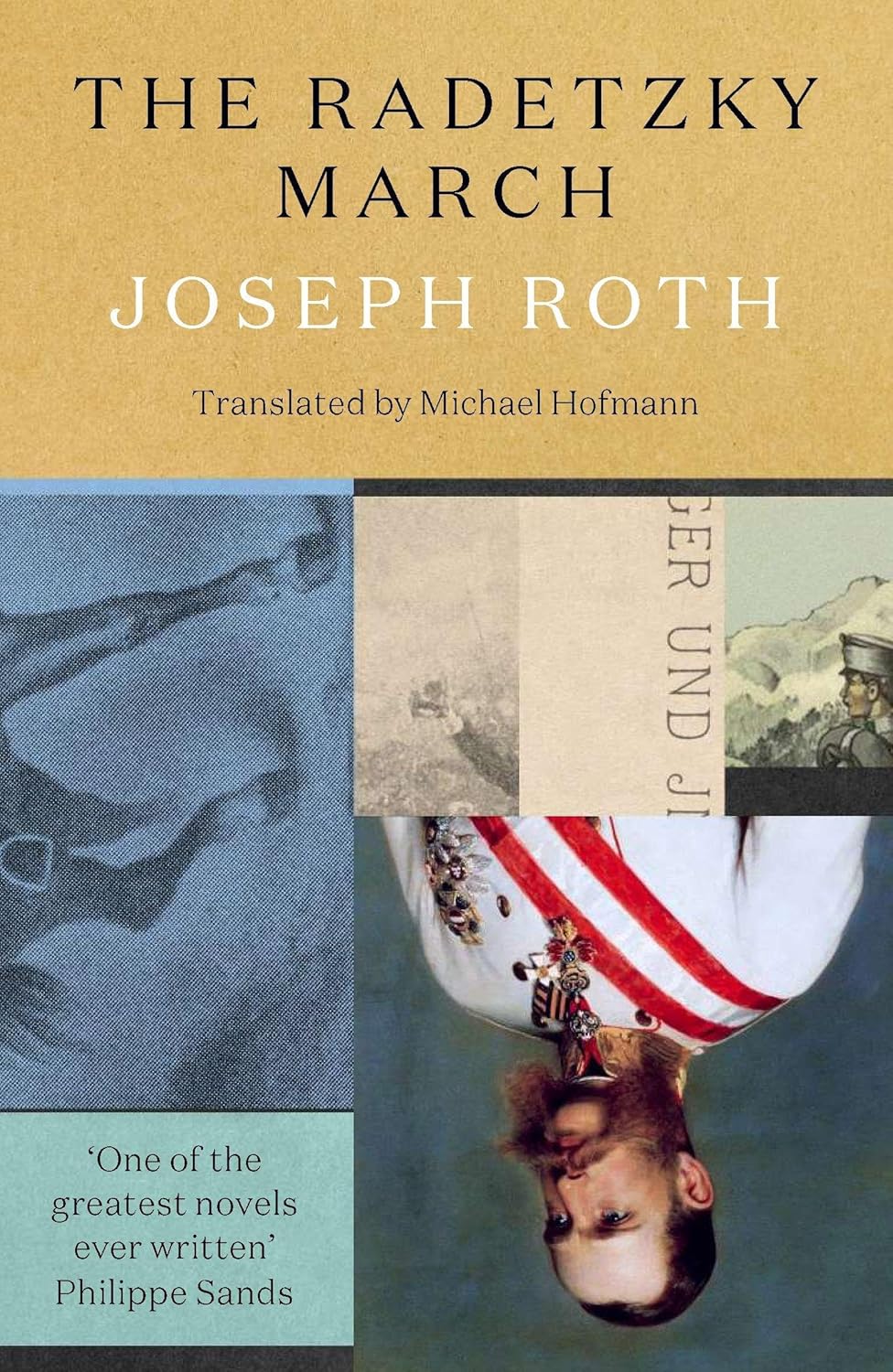
#1 — The Radetzky March — trans. Michael Hofmann (2002)
- Readability: High — makes the novel accessible while preserving its formal register.
- Accuracy: Excellent — catches the cadences and weight of ceremony in Roth's prose.
- Tone: Measured, slightly archaic, elegiac.
- Accessibility: Excellent for first-time readers of Roth.

George Guidall's masterful narration captures the melancholic tone and historical depth of Roth's masterpiece, while Hofmann's translation preserves the novel's lyrical elegance.
Listen on Audible →Which translation is right for you?
- Choose Hofmann if you want the definitive modern translation that captures Roth's elegiac music and formal restraint.
About the Translator
Michael Hofmann (Granta Books, 2002): The pre-eminent translator of German-language literature into English working today, with translations of Kafka, Brecht, Döblin, Fallada, Bernhard, Kleist, and many others, as well as being a significant poet in his own right. Hofmann has described his relationship with German as that of a native speaker who writes in English — he grew up bilingual in both countries — and this inside knowledge gives his translations a quality of natural authority that more scholarly translators rarely achieve. His collection of essays and reviews, Where Have You Been? (Faber, 2014), includes some of the finest critical writing on Roth available in English. His translation of The Radetzky March has been universally received as definitive — the translation that finally makes Roth's music audible to English readers.
Themes
The decline of the Habsburg Empire. The novel traces three generations of the Trotta family from the Battle of Solferino (1859) to the outbreak of World War I, and the arc of that trajectory is the arc of the Empire itself — from confidence and purpose through bureaucratic rigidity to a melancholy that can no longer identify what it has lost or why it matters. Roth knew the Empire from the inside, having grown up in Galicia, and his grief for it is not nostalgic in a simple sense but philosophically grounded: it was a structure that made possible a kind of identity — multiethnic, legally rather than ethnically defined — that the national states that replaced it immediately foreclosed.
Mythologisation and its costs. The founding act of the Trotta dynasty — the grandfather's saving of the young Emperor at Solferino — was real, but within a generation it had been transformed into a patriotic icon, painted and taught in schools and stripped of the messy human reality of the original moment. The grandfather's horror at this transformation is the novel's founding insight: that history falsifies whatever it decides to celebrate.
Melancholy as a condition of the age. Carl Joseph's existential malaise — his inability to want anything, his sense that everything around him is a copy of something more authentic that no longer exists — is both personal and historical. He carries his grandfather's portrait everywhere and lives in the shadow of a heroism he cannot replicate and does not understand.
The Emperor as figure of pathos. Franz Joseph appears several times in the novel, always as an aged man who has outlasted his own world — a figure of genuine tragedy, not of grandeur. His relationship with Carl Joseph — two people who recognise in each other a shared melancholy without being able to speak it — is one of the novel's most quietly devastating sequences.
Key Characters
Carl Joseph von Trotta — the novel's central figure; third generation of the family; cavalry officer; carries the portrait of the Hero of Solferino wherever he goes and lives in its shadow; his slow dissolution is the novel's emotional centre.
The District Captain — Carl Joseph's father; correct, formal, devoted to the Emperor, incapable of expressing emotion; sits every evening with a French novel he cannot read and a report he cannot concentrate on; one of the most complex and finally moving figures in twentieth-century European fiction.
The Emperor Franz Joseph — appears at intervals throughout the novel, always aged, always slightly bewildered by the present; his longevity has outlasted the world he once governed, and his relationship with the passing of time — which he perceives but cannot stop — is the novel's largest tragedy.
Lieutenant Trotta (The Hero of Solferino) — Carl Joseph's grandfather; present only in the portrait and in the myth; his horror at being mythologised — his insistence that what he did was simple and not heroic and not anyone's lesson — is the novel's founding irony, and it echoes through every generation.
Recommended Sources
For further reading on Roth and The Radetzky March:
- Michael Hofmann, Where Have You Been? (Faber, 2014) — includes Hofmann's own critical essays on Roth; some of the finest short critical writing on Roth available in English, by the man who knows the German best.
- Claudio Magris, Danube (1986; translated by Patrick Creagh) — the great meditation on Habsburg culture and its literary legacy; essential context for understanding what Roth was mourning and why.
- Austrian Studies (Maney Publishing) — the primary English-language journal for Austrian literature and culture; the relevant venue for academic treatment of Roth within his Austro-Hungarian context.
Frequently Asked Questions
What is The Radetzky March about?
The Radetzky March follows the Trotta family across three generations, depicting the decline of the Austro-Hungarian Empire. It explores themes of duty, identity, and melancholy against the backdrop of historical change.
Is The Radetzky March hard to read?
The Radetzky March can be challenging due to its formal style and historical context, but Hofmann's translation makes it more accessible while preserving its elegiac tone.
Which The Radetzky March translation is best?
Michael Hofmann's 2002 translation is the definitive English edition and the only version worth reading.
Hofmann vs older translations — which should I choose?
Hofmann's version is universally acclaimed as definitive; older translations fail to capture Roth's measured, elegiac music.
Which translation is easiest to read?
Hofmann's translation makes the novel accessible while preserving its formal, slightly archaic register.
Which translation is most accurate?
Hofmann's translation is the most accurate, catching the cadences and weight of ceremony in Roth's original prose.
Why has Hofmann's 2002 translation become the standard for The Radetzky March?
Hofmann understands Roth's prose from the inside and renders its elegiac music audible to English readers for the first time.
This guide is based on reading the translation and reviewing scholarly commentary. Last reviewed: June 2026.
Hofmann's Granta translation is the only version of The Radetzky March worth reading in English. It captures Roth's music — the measured, slightly formal, elegiac prose that makes you feel the passing of time and the weight of ceremony even in scenes that are apparently small — in a way that no other translator has managed. The Granta paperback is in print and readily available.
As an Amazon Associate, I earn from qualifying purchases.
Looking for another classic? Browse all our translation guides →
Thomas Mann's great family saga is covered in our Buddenbrooks translation guide.
For more of Mann's work, see our comparison of the best Magic Mountain translations.
Another essential German novel, The Tin Drum translation guide recommends Breon Mitchell's edition.
If you're exploring Austrian and German-language classics, our Trial translation guide compares the best Kafka editions.