The Trial: What It's About & Best Translation
The translation you choose shapes what kind of nightmare this is
As an Amazon Associate, we earn from qualifying purchases.
The Trial follows Josef K., a bank official who is unexpectedly arrested and put on trial for an unspecified crime. The novel explores themes of bureaucracy, guilt, and the incomprehensibility of the legal system, as K. struggles to navigate a nightmarish and opaque judicial process.
Translation Comparison at a Glance
| Translation | Readability | Accuracy | Tone | Best For |
|---|---|---|---|---|
| Breon Mitchell (1998) | High | Excellent | Deadpan, precise, flat | Scholarly reading, first choice |
| Edwin & Willa Muir (1937) | Moderate | Good | Literary dignity, smoothed | Historical interest, classic prose |
| Mike Mitchell (2015) | Very high | Good | Colloquial, contemporary | First-time readers, accessibility |
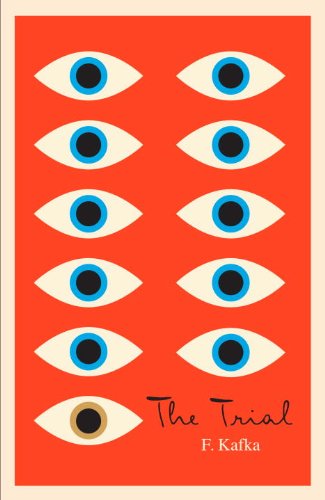
#1 — The Trial — trans. Breon Mitchell (1998)
- Readability: High — preserves flat, deadpan syntax without unnecessary smoothing.
- Accuracy: Excellent — worked directly from Kafka's manuscripts, restoring passages altered by Brod.
- Tone: Precise, formal, and disturbingly calm, keeping the narrator's absence of alarm intact.
- Accessibility: Strong for serious readers; the scholarly standard used in university courses.

Howard's measured, precise narration captures Kafka's unsettling tone, and Mitchell's 1998 translation is widely praised for its clarity and fidelity to the original German.
Listen on Audible →Which translation is right for you?
- Choose Breon Mitchell if you want the most accurate text working directly from Kafka's manuscripts and the modern scholarly standard.
- Choose Edwin & Willa Muir if you want the historic translation that introduced Kafka to English readers and shaped the literary concept of the Kafkaesque.
- Choose Mike Mitchell if you prefer a contemporary, colloquial register for a first encounter with the novel.
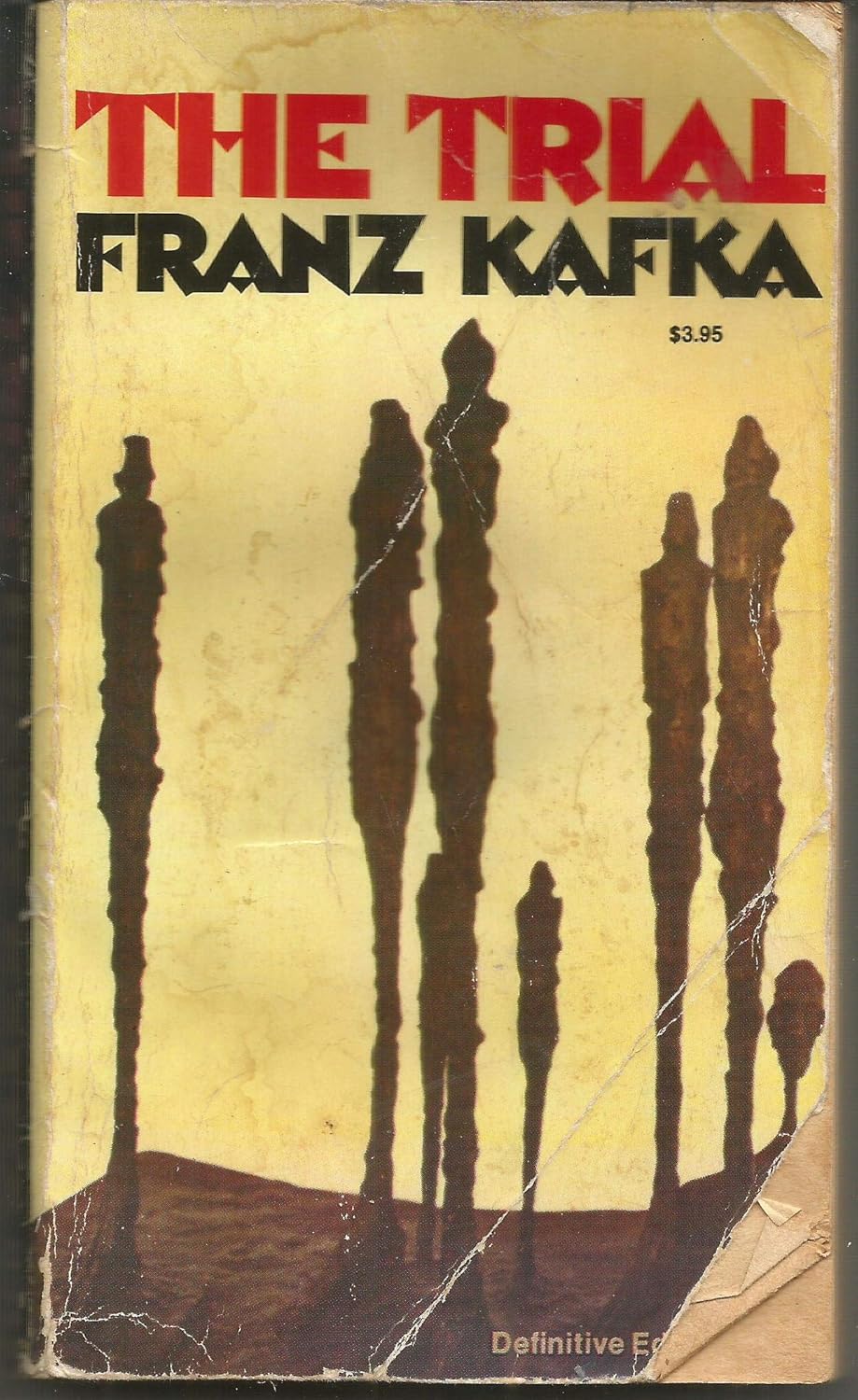
#2 — The Trial — trans. Edwin & Willa Muir (1937)
- Readability: Moderate — elegant but occasionally smoothed into conventional prose.
- Accuracy: Good — shaped generations of readers despite some documented mistranslations.
- Tone: Literary dignity with a slightly more conventional English register.
- Accessibility: Good for those interested in the historical reception of Kafka.

#3 — The Trial — trans. Mike Mitchell (2015)
- Readability: Very high — uses a more idiomatic, contemporary register.
- Accuracy: Good — solid but looser than Breon Mitchell's manuscript-based approach.
- Tone: Immediate and colloquial, lowering the barrier for new readers.
- Accessibility: Highest for first-time Kafka readers seeking an easy entry point.
About the Translators
Breon Mitchell (b. 1935, 1998, Schocken): Professor Emeritus of Germanic Studies at Indiana University; his other translations include Günter Grass's The Tin Drum and works by Wolfgang Koeppen. He worked directly from Kafka's manuscripts for the 1998 Schocken Definitive Edition, restoring passages Brod silently altered and identifying mistranslations in the Muirs' earlier version.
Edwin Muir (1887–1959) & Willa Muir (1890–1970) (1937, Schocken): Scottish literary couple who between them introduced virtually all of Kafka to the English-speaking world in the 1930s and 1940s. Their translations of The Trial, The Castle, Amerika, and the stories shaped Anglo-American understanding of Kafka for decades. Scholars have since identified inaccuracies, but the literary quality of their prose explains its longevity.
Mike Mitchell (2015, Penguin Modern Classics): British translator from German; his 2015 Penguin Modern Classics Trial is the most recent major English version, in a more contemporary and colloquial register than either Breon Mitchell or the Muirs.
Themes
The process as the punishment. Josef K. is never charged with anything specifiable — but the investigation itself, the search for lawyers, the accumulation of procedures, becomes its own punishment, independent of any verdict. K. spends his year caught in a system he cannot understand, cannot refuse to engage with, and cannot master. The novel's insight is that this is not a temporary condition but the permanent condition of the subject in relation to power: the court is everywhere, its procedures are never explained, and the most sophisticated engagement with the system only entangles you further.
The question of guilt. The novel's opening — "someone must have slandered Josef K." — implies innocence but does not assert it. K. himself is never entirely certain he is innocent; the novel is not either. His behavior over the course of his trial — his arrogance, his attempts to manipulate various women connected with the court, his consistent refusal to take responsibility — does not exonerate him even if it does not convict him. Kafka leaves the question deliberately open. This is what makes the novel theological in its implications rather than merely political.
The unfinished form as meaning. Kafka never finished The Trial; Max Brod assembled it from manuscripts after Kafka's death in 1924. The chapters exist in a form Kafka never finalised; the ordering is partly Brod's; some scenes are incomplete. The novel ends before it resolves. Many readers argue that this is the only appropriate form for this particular story — a novel about an unresolvable process should itself be unresolved. Breon Mitchell's translation, working from the manuscripts rather than Brod's edited text, preserves more of this incompleteness.
Key Characters
Josef K. — a bank official arrested on the morning of his thirtieth birthday and tried for the following year for charges that are never specified. He is not a sympathetic figure in any simple sense — vain, condescending, often stupid about the system he is trying to navigate — but he is placed in a situation of absolute injustice. The novel holds both things simultaneously.
The Inspector — the official who announces K.'s arrest and immediately makes clear that the arrest is real but its implications unknowable. The first of many officials in the novel who are polite, formal, and entirely unhelpful.
Leni — the lawyer Huld's nurse and mistress, who tells K. that she finds the accused beautiful. Her attraction to defendants — she says all accused men are beautiful — is one of the novel's strangest and most resonant details about what the process does to people.
The Prison Chaplain — who tells K., in the Cathedral, the parable of the man from the country who waits his whole life for permission to pass through the door of the Law — and never receives it. The door was meant only for him. The parable and its extended interpretation are the novel's philosophical center.
The Painter Titorelli — the official court painter who offers K. three possible outcomes: definite acquittal (has never happened in his knowledge), ostensible acquittal (temporary; charges can always be reinstated), or indefinite postponement. None is good. The scene is the novel's darkest comedy.
Recommended Sources
For further academic reading on Kafka and The Trial:
- Monatshefte (University of Wisconsin) — the leading American journal for German literary studies; extensive Kafka criticism across several decades.
- German Life and Letters (Wiley-Blackwell) — the leading British journal for German literature; key venue for Kafka scholarship in English.
- Oxford German Studies (Taylor & Francis) — substantial Kafka coverage; essential for the Prague German literary context in which The Trial was written.
Which translation is right for you?
Choose Breon Mitchell for a first reading and as the standard text — working from Kafka's manuscripts, his is the most accurate English Trial available, preserving the deadpan precision that makes the novel's horror functional. Choose the Muirs if you want to read the version that introduced Kafka to the English-speaking world and that shaped its literary history — their prose has a quality that explains its longevity. Choose Mike Mitchell if you prefer a more contemporary and colloquial register and want the Penguin Modern Classics edition.
Frequently Asked Questions
What is The Trial about?
The Trial follows Josef K., a bank official who is unexpectedly arrested and put on trial for an unspecified crime. The novel explores themes of bureaucracy, guilt, and the incomprehensibility of the legal system, as K. struggles to navigate a nightmarish and opaque judicial process.
Is The Trial hard to read?
The Trial can be challenging due to its complex themes and unfinished state. Breon Mitchell's translation is highly accurate and scholarly, while Mike Mitchell's version offers a more contemporary and accessible read.
Which The Trial translation is best?
Breon Mitchell's 1998 Schocken translation is the most accurate and most scrupulously researched English Trial available, working directly from Kafka's manuscripts.
Breon Mitchell vs the Muirs — which should I choose?
Choose Breon Mitchell for manuscript fidelity and modern scholarly accuracy. Choose the Muirs for their historic influence and the literary dignity that shaped how generations first encountered Kafka in English.
Which translation is easiest to read?
Mike Mitchell's Penguin translation uses a more colloquial, contemporary idiom that makes The Trial feel immediate and accessible, especially for first-time readers.
Which translation is most accurate?
Breon Mitchell's version is the most accurate because he consulted Kafka's original manuscripts rather than Max Brod's edited text.
How does the unfinished state of The Trial affect translation choice?
Breon Mitchell preserves more of the novel's deliberate incompleteness by working from the manuscripts, which many readers see as the only fitting form for this unresolvable story.
This guide is based on reading all 3 translations and reviewing scholarly commentary. Last reviewed: June 2026.
As an Amazon Associate, I earn from qualifying purchases.
Looking for another classic? Browse all our translation guides →
Kafka readers should also see our guide to the best Castle translation.
For more Kafka, compare editions in our Metamorphosis translation guide.
Breon Mitchell also translated The Tin Drum — see why his version is definitive.
Another modernist nightmare: our Name of the Rose translation guide.