Metamorphosis: What It's About & Best Translation
The translation you choose starts with a single word
As an Amazon Associate, we earn from qualifying purchases.
The Metamorphosis is about Gregor Samsa, a traveling salesman who wakes up one morning to find himself transformed into a monstrous insect. The story explores themes of alienation and the impact of this transformation on his family.
Translation Comparison at a Glance
| Translation | Readability | Accuracy | Tone | Best For |
|---|---|---|---|---|
| Bernofsky (2014) | High | Excellent | Precise, deadpan, faithful to Kafka's formality | First reading, general readers |
| Corngold (1972) | Moderate | Excellent | Scholarly, philosophically attentive | Academic study, annotations |
| Hofmann (2007) | Very high | Good | Idiomatic, contemporary, paced | First encounter, multi-story volume |
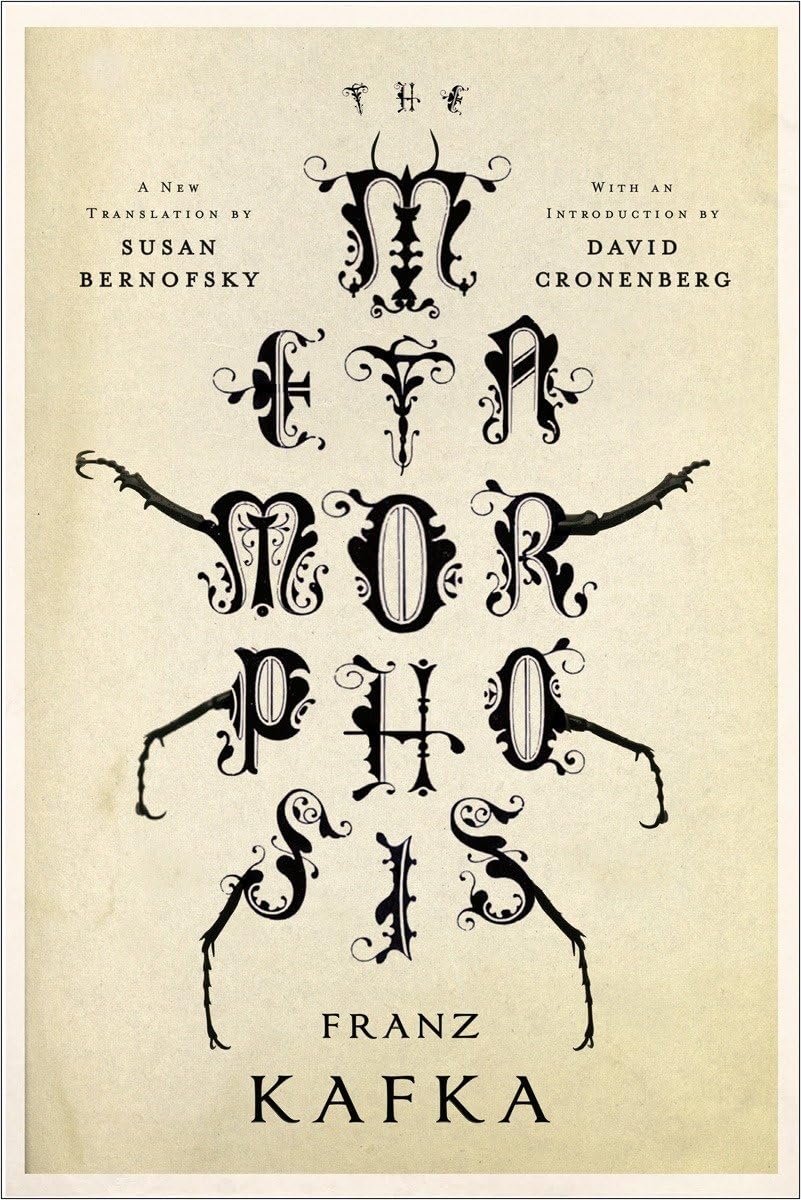
#1 — The Metamorphosis — trans. Susan Bernofsky (2014)
- Readability: High — preserves deadpan rhythm and deliberate vagueness
- Accuracy: Excellent — honours Kafka's precise, formal register
- Tone: Precise, slightly formal, unalarmed by the horror
- Accessibility: Excellent for first-time readers

Cumberbatch's nuanced delivery captures Kafka's existential tone perfectly, and Corngold's translation is widely regarded as the most faithful to the original German text.
Listen on Audible →Which translation is right for you?
- Choose Bernofsky if you want the most carefully considered modern English Metamorphosis that preserves Kafka's deliberate vagueness and deadpan rhythm.
- Choose Corngold if you are reading in an academic context and need the most thorough annotations available.
- Choose Hofmann if you want The Metamorphosis alongside other key Kafka stories in one Penguin volume and prefer a more idiomatic contemporary register.
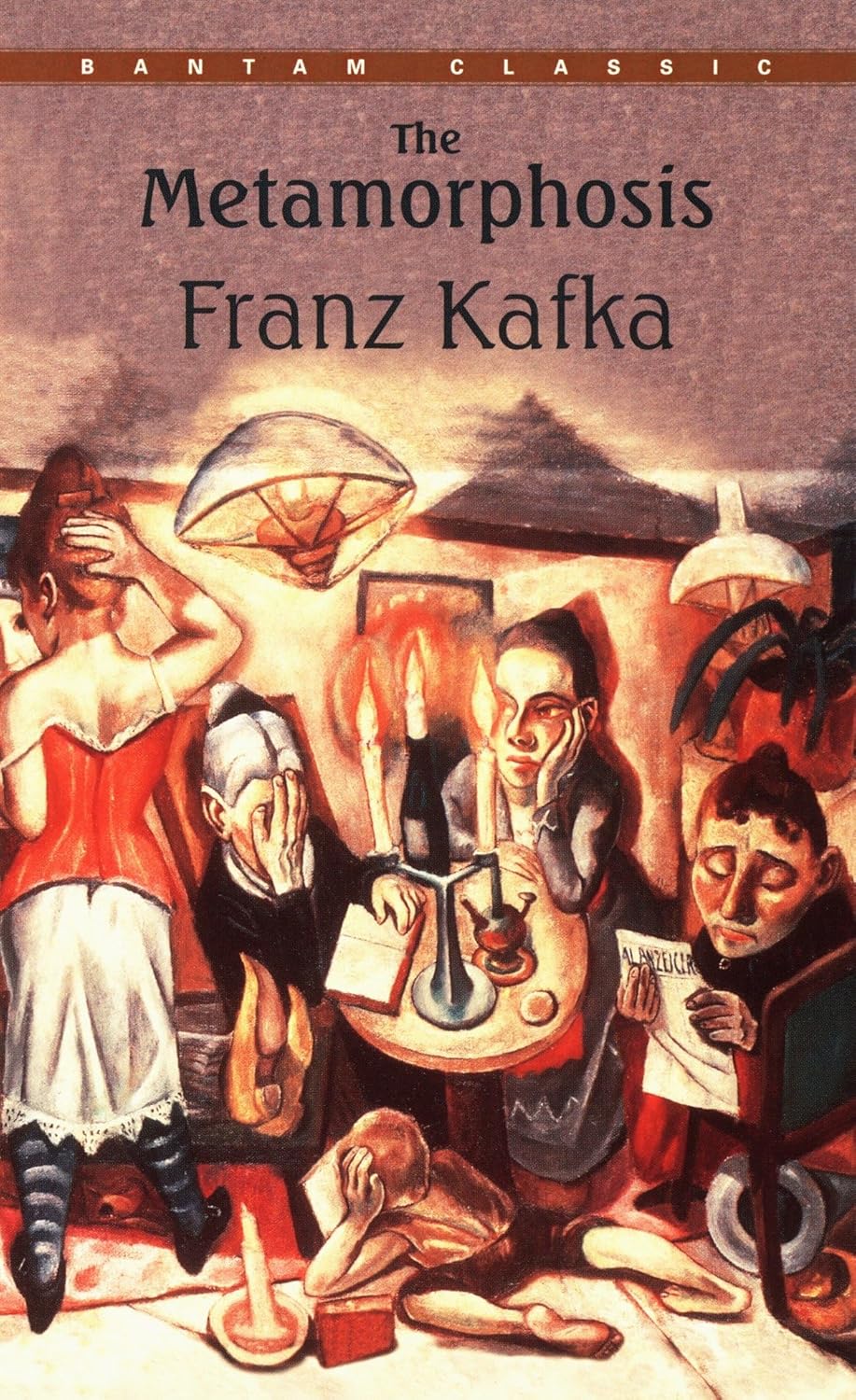
#2 — The Metamorphosis — trans. Stanley Corngold (1972)
- Readability: Moderate — precise but denser scholarly prose
- Accuracy: Excellent — deeply engaged with manuscripts and philosophy
- Tone: Faithful, philosophically weighted
- Accessibility: Best with annotations for study
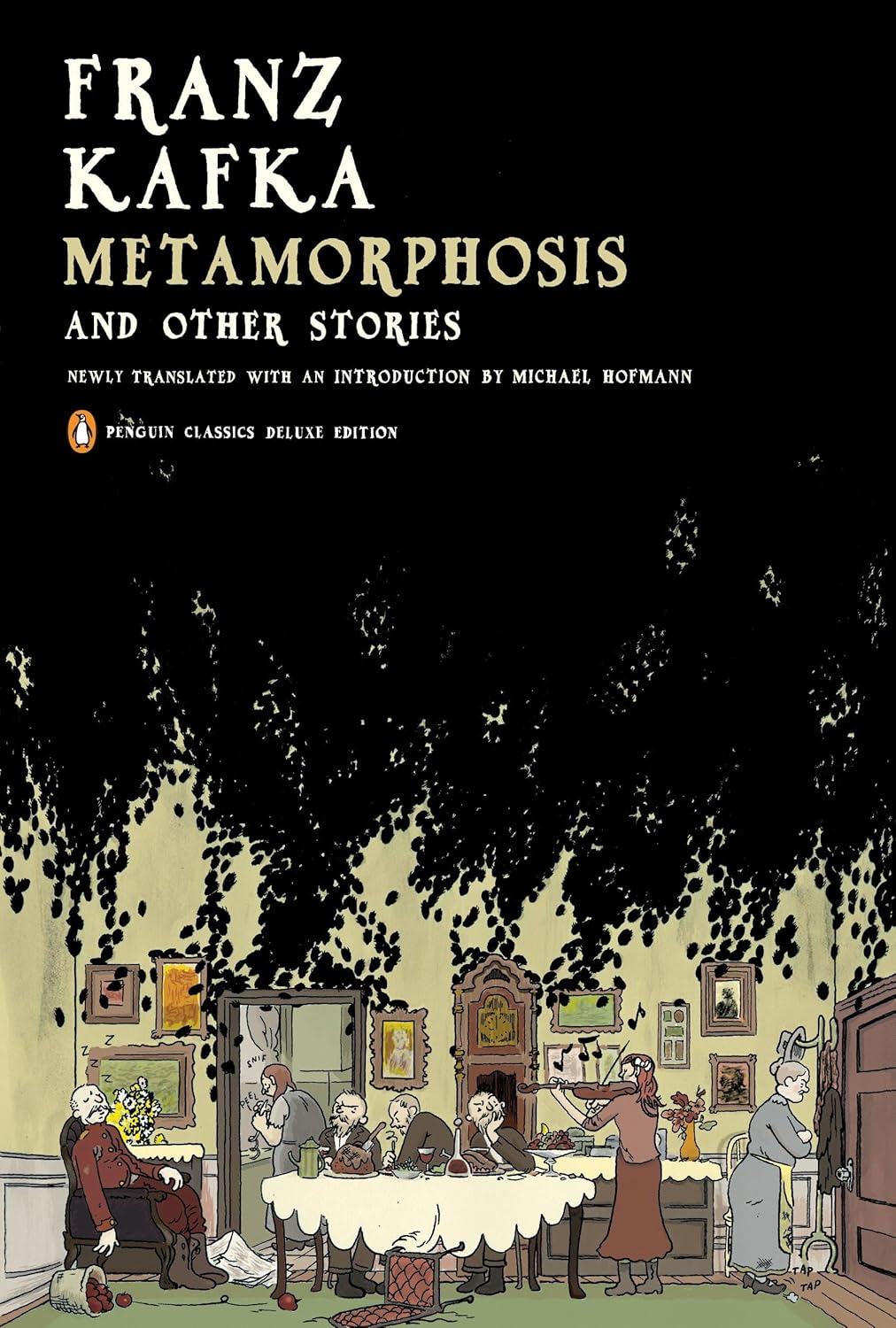
#3 — The Metamorphosis — trans. Michael Hofmann (2007)
- Readability: Very high — contemporary and paced
- Accuracy: Good — more idiomatic than strictly literal
- Tone: Loose, accessible, modern
- Accessibility: Excellent entry point for new readers
About the Translators
Susan Bernofsky (b. 1963, 2014, Norton Critical Edition): Professor of Literary Translation at Columbia; her translations include Robert Walser, Hermann Hesse, and other major German-language writers. Her 2014 Metamorphosis is accompanied by her own essay explaining the translation decisions — the most transparent account of how to approach Kafka in English currently available.
Stanley Corngold (b. 1934, 1972, Bantam Classics): Professor Emeritus at Princeton; spent his career on Kafka's German text, its manuscripts, and its critical reception. Author of The Commentators' Despair: The Interpretation of Kafka's Metamorphosis; also translated Kafka's letters and diaries. His 1972 translation was the scholarly standard for four decades.
Michael Hofmann (b. 1957, 2007, Penguin Modern Classics): British poet and translator; one of the most prolific translators of German literature working today, with translations including Joseph Roth, Alfred Döblin, and numerous Kafka works. His Penguin volume collects The Metamorphosis alongside other key Kafka stories.
Themes
The family as the horror. Gregor's transformation is not the story's horror — the family's response to it is. In the early days they care for him with difficulty; as his presence becomes inconvenient they begin to regard him as an obstacle. His father throws an apple at him that lodges in his back and rots there. His sister Grete — who loved him most — eventually says he must go. The story is about what people do to someone they love once that person becomes a burden, and it arrives at an answer without flinching.
Work, money, and the body. Gregor's first thought on waking as a vermin is that he has missed his train. His second is his work schedule. He has been the family's sole breadwinner, trapped in a job he hates to pay a family debt, and his transformation — which frees him from the obligation to work — also destroys the family's financial security. The story is partly a fantasy about what happens when the person who holds everything together simply stops, and partly a realistic account of how quickly that person becomes unsupportable.
The unresolvable image. Kafka's refusal to specify what Gregor has become is not a failure of imagination but a deliberate formal choice. The moment you picture a specific insect, you have resolved the story's central image — reduced the inexplicable to a manageable category. Kafka holds the image in suspension: something alive, something alien, something that was Gregor and is not Gregor. A translation that resolves the ambiguity (cockroach, beetle, dung-bug) has altered the story's fundamental operation.
Key Characters
Gregor Samsa — traveling salesman, son, brother — and now something else. His consciousness is never fully transformed: he continues to think and feel as Gregor while his body is no longer Gregor's. His death from starvation and the rotting apple wound, in a room progressively stripped of everything that made it his, is the story's most pitiless passage.
Grete Samsa — Gregor's sister, who initially devotes herself to his care and gradually comes to regard him as an obstacle to the family's survival. Her final declaration — "We must try to get rid of it" — is the story's moral turning point. She is not a villain; she is a person with limits. This is more disturbing than villainy would be.
The father — one of Kafka's controlling, periodically explosive patriarch figures. He throws the apple that lodges in Gregor's back. He dresses in his old uniform and reasserts authority as the family's situation forces him back to work. He is the symbol of the norm from which Gregor has catastrophically deviated.
The three lodgers — the middle-class boarders who arrive to supplement the family income and whose reaction to Gregor's appearance — outrage, departure, rent withheld — precipitates the final crisis. Their presence in the apartment, and the family's performance of normality for them, is the story's sharpest social comedy.
Recommended Sources
For further academic reading on Kafka and The Metamorphosis:
- Monatshefte (University of Wisconsin) — the leading American journal for German literary studies; extensive Kafka criticism across several decades.
- German Life and Letters (Wiley-Blackwell) — the leading British journal for German literature; key venue for Kafka scholarship in English.
- The German Quarterly (American Association of Teachers of German) — comprehensive German literary history coverage; essential for placing Kafka in the Prague German literary context.
Which translation is right for you?
Choose Bernofsky for a first reading — her 2014 Norton translation is the most carefully considered modern English Metamorphosis, preserving Kafka's deliberate vagueness ("some sort of monstrous insect") and the flat, unalarmed register that makes the story work as both horror and dark comedy. Choose Corngold if you are reading in an academic context — his annotations are the most thorough available and his translation remains widely assigned in university courses. Choose Hofmann if you want The Metamorphosis alongside other key Kafka stories in one Penguin volume.
Frequently Asked Questions
What is Metamorphosis about?
The Metamorphosis is about Gregor Samsa, a traveling salesman who wakes up one morning to find himself transformed into a monstrous insect. The story explores themes of alienation and the impact of this transformation on his family.
Is Metamorphosis hard to read?
Metamorphosis can be challenging due to its themes and Kafka's style. Bernofsky's translation is recommended for its balance of readability and fidelity, while Hofmann's is more idiomatic and accessible.
Which Metamorphosis translation is best?
The Susan Bernofsky translation is this guide's primary recommendation. It is the most carefully considered modern English Metamorphosis, and more than any other version it honours Kafka's deliberate strangeness without making it strange in the wrong ways.
Bernofsky vs Corngold — which should I choose?
Choose Bernofsky for a first reading — her 2014 Norton translation is the most carefully considered modern English Metamorphosis. Choose Corngold if you are reading in an academic context — his annotations are the most thorough available and his translation remains widely assigned in university courses.
Which translation is easiest to read?
Michael Hofmann's version is notably more idiomatic than either Bernofsky or Corngold — he reaches for contemporary English rather than a register that echoes Kafka's bureaucratic formality, and the result reads with a pace and ease that can make the story more accessible on first encounter.
Which translation is most accurate?
Corngold's 1972 translation reflects a career of deep engagement with the German text, its manuscripts, and its critical reception. His prose is faithful and precise, attentive to the philosophical weight of Kafka's language choices.
Why do translations of The Metamorphosis differ on what Gregor turns into?
Kafka's German word is Ungeziefer — a term meaning something like "vermin" or "unclean animal unfit for sacrifice," with no precise English equivalent. Translators who choose a specific creature — beetle, cockroach, dung-bug — resolve an ambiguity Kafka went out of his way to preserve.
This guide is based on reading all 3 translations and reviewing scholarly commentary. Last reviewed: June 2026.
As an Amazon Associate, I earn from qualifying purchases.
Looking for another classic? Browse all our translation guides →
Kafka readers should also see our guide to the best Castle translation.
Compare editions in our Trial translation guide.
For more German literature, explore our Magic Mountain translation guide.
Thomas Mann fans will want our Death in Venice translation guide.