The Castle: What It's About & Best Translation
Kafka's unfinished masterwork — and the modern translation that replaced a century of English readings
As an Amazon Associate, we earn from qualifying purchases.
The Castle follows K., a land surveyor, who arrives in a village governed by a mysterious bureaucracy centered in a castle. His attempts to gain access to the castle are met with endless obstacles, reflecting themes of alienation and the absurdity of bureaucratic systems.
Translation Comparison at a Glance
| Translation | Readability | Accuracy | Tone | Best For |
|---|---|---|---|---|
| Harman (1998) | Moderate | Excellent | Faithful to Kafka's winding syntax | Most readers today |
| Muir (1930) | High | Good | More simplified and accessible | Historical interest |
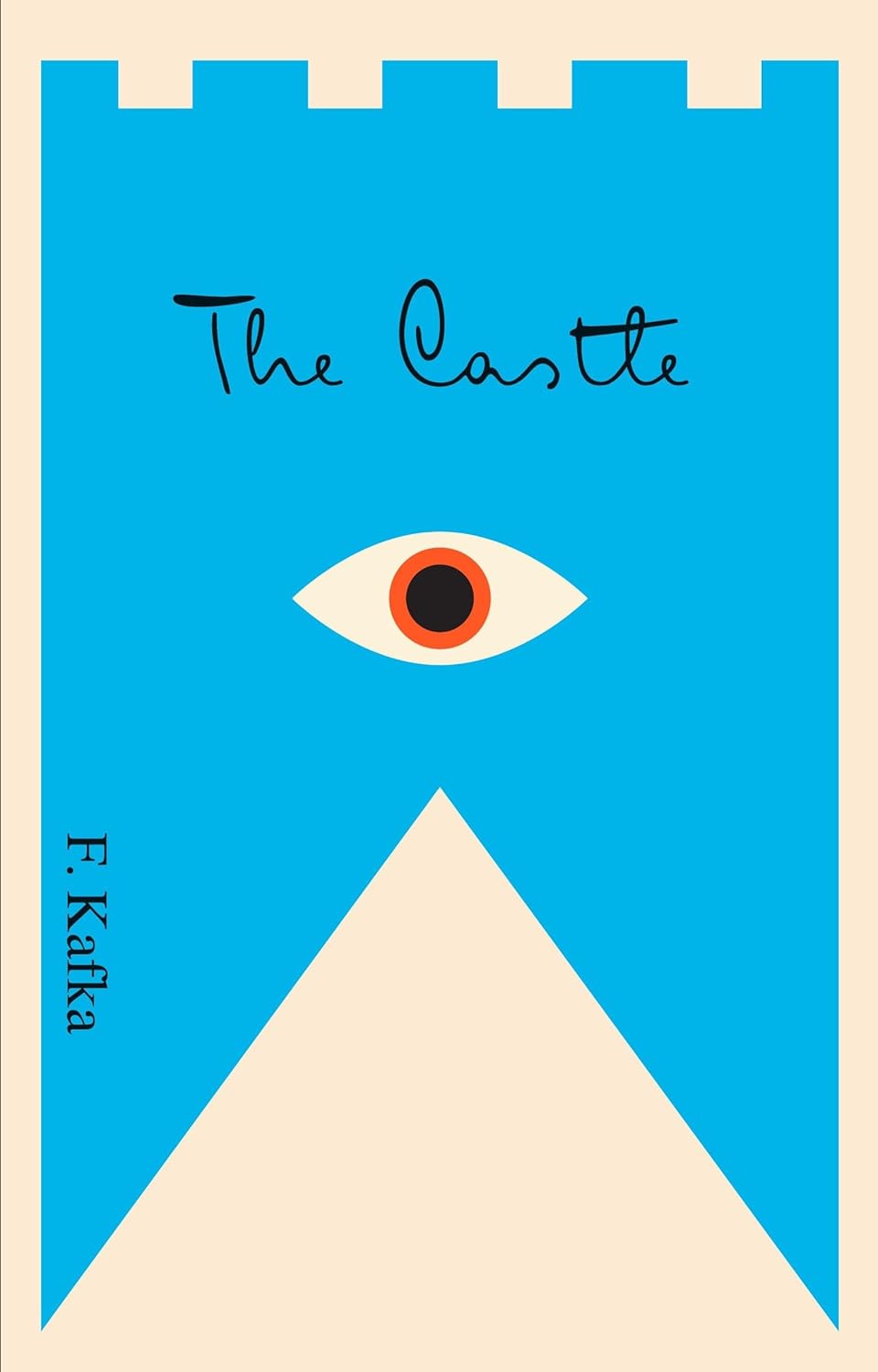
#1 — The Castle — trans. Mark Harman (1998)
- Readability: Slightly more demanding due to preserved long sentences
- Accuracy: Excellent — based on the critical edition
- Tone: Faithful to Kafka's characteristic syntax
- Accessibility: Best for serious readers seeking the authentic text
Which translation is right for you?
- Choose Harman if you want the most accurate modern translation based on the corrected critical edition.
- Choose Muir if you are interested in the historical version that shaped early English reception of Kafka.
About the Translators
Mark Harman (1998, Schocken Books): Professor of German at Franklin & Marshall College; a Kafka scholar who based his translation on the critical edition of the German text established by Malcolm Pasley, which corrected errors introduced into the first published version and restored passages Max Brod had adjusted. His translation won approval from scholars and critics as the most faithful modern rendering and is the current standard.
Willa Muir (1890–1970) and Edwin Muir (1887–1959, 1930, Secker & Warburg): Scottish couple who were Kafka's first English translators, responsible for The Castle, The Trial, and Amerika. Edwin Muir was also a significant poet and critic; Willa Muir was a translator and novelist who did most of the actual translation work in their collaborations. Their versions established the tone through which anglophone readers first encountered Kafka and remain historically important texts even as scholarship has documented their inaccuracies and interpretive adjustments.
Themes
Bureaucracy and the impossibility of appeal. The Castle is a perfect bureaucratic system: it has officials, procedures, messengers, files, and a chain of authority — but none of these can be navigated to produce a result. Every request generates more requests; every clarification requires further clarification; every official refers K. to another official. The system is not designed to obstruct; it simply has no mechanism for resolution. K.'s attempts to reach the Castle are the most sustained fictional portrait of bureaucratic obstruction in literary history.
The village's accommodation to incomprehensibility. The villagers who have lived under the Castle's authority for generations have developed a relationship to it that K., as an outsider, cannot understand: a mixture of reverence, resignation, and elaborate interpretation of whatever signals the Castle sends. They are not deceived or oppressed; they have simply adapted. Their adaptation is both a survival strategy and a form of complicity, and K.'s refusal to adapt is simultaneously admirable and futile.
K. as figure for the impossibility of belonging. K. claims to be a land surveyor hired by the Castle. The Castle neither confirms nor denies this. He cannot leave because he has committed to staying; he cannot stay legitimately because he cannot establish his legitimacy. The novel's unfinished state — it breaks off mid-sentence — is in this respect formally appropriate: K.'s situation is one that admits no resolution except the one Kafka reportedly described to Brod: K. was to have died of exhaustion, receiving in his final moments a provisional permission to remain.
Key Characters
K. — the protagonist; a land surveyor (or someone claiming to be one) who arrives in a snowbound village seeking to reach the Castle that hired him; never named beyond the initial, he is the most deliberately generic of Kafka's protagonists — an everyman whose situation anyone might occupy.
Frieda — the barmaid at the Herrenhof inn who has been the mistress of Klamm, the Castle official who is K.'s primary point of contact (and whom K. never meets). Her relationship with K. is the novel's central love story, complicated by the question of whether K. wants her or wants her connection to Klamm.
Barnabas — the young messenger who serves as K.'s contact with the Castle; his family's disgrace — his sister Amalia refused an official's sexual demand — has exiled them from the village's social life. His reliability as a messenger is radically uncertain.
Amalia and Olga — Barnabas's sisters; Amalia's refusal and its consequences constitute the novel's most explicit account of how the Castle's power actually operates — not through force but through the withdrawal of acknowledgement.
Recommended Sources
For further academic reading on Kafka and The Castle:
- The Kafka Project (University of California, San Diego) — the primary online resource for Kafka studies, with texts, scholarship, and manuscript information; essential for understanding the textual history of The Castle.
- German Life and Letters (Wiley-Blackwell) — key for Kafka in his biographical and cultural context — Prague, the German-Jewish literary tradition, the Habsburg bureaucracy.
- Comparative Literature (Duke University Press) — essential for readings of Kafka in relation to world literature and the question of his place in the modernist tradition.
The Harman translation (Schocken Books, 1998) is the current standard and the version to read — it is more faithful to Kafka's actual syntax, based on the corrected critical edition of the German text, and restores features of the original that the Muirs had adjusted. The Muir translation (various publishers, 1930) is the historical version through which the novel reached its first anglophone readership; it is still readable and still in print, but Harman is the better choice for readers coming to the novel now.
Frequently Asked Questions
What is The Castle about?
The Castle follows K., a land surveyor, who arrives in a village governed by a mysterious bureaucracy centered in a castle. His attempts to gain access to the castle are met with endless obstacles, reflecting themes of alienation and the absurdity of bureaucratic systems.
Is The Castle hard to read?
The Castle can be challenging due to Kafka's complex syntax and themes. Harman's translation preserves the original's complexity, while Muir's is more accessible but less faithful to Kafka's style.
Which The Castle translation is best?
Mark Harman's 1998 Schocken edition is the best choice for most readers because it is based on the corrected critical edition and preserves Kafka's characteristic syntax.
Harman vs Muir — which should I choose?
Choose Harman for accuracy and fidelity to Kafka's manuscripts. Choose Muir if you are interested in the historical translation that shaped early English reception of Kafka.
Which translation is easiest to read?
The Muir translation is generally considered more immediately readable because it sometimes simplified Kafka's long, winding sentences.
Which translation is most accurate?
Harman's translation is the most accurate; it works from the critical edition that corrected errors and restored passages adjusted by Max Brod.
Should I read the unfinished novel even though Kafka wanted his manuscripts destroyed?
The novel's unfinished state and the question of whether it should have been published are central to its meaning; most readers and scholars consider it essential despite Kafka's instructions to Max Brod.
This guide is based on reading the translation(s) and reviewing scholarly commentary. Last reviewed: June 2026.
As an Amazon Associate, I earn from qualifying purchases.
Looking for another classic? Browse all our translation guides →
Also reading Kafka? See our guide to the best Metamorphosis translation.
For another Kafka novel, our The Trial translation guide compares Breon Mitchell against the Muirs.
Thomas Mann is another pillar of German modernism — read our Death in Venice translation guide.
Or explore our comparison of the best Magic Mountain translations.