Tao Te Ching: What It's About & Best Translation
Laozi's foundational text of Daoism — Lau's Penguin, Le Guin's Shambhala, and Mitchell's Harper
As an Amazon Associate, we earn from qualifying purchases.
The Tao Te Ching is a foundational text of Daoism, exploring themes of balance, harmony, and the nature of the Tao, or 'the Way'. It emphasizes living in accordance with the natural order and the principle of wu wei, or effortless action.
Translation Comparison at a Glance
| Translation | Readability | Accuracy | Tone | Best For |
|---|---|---|---|---|
| Lau (1963) | Moderate | Excellent | Scholarly, precise | Academic study |
| Le Guin (1997) | High | Very good | Poetic, resonant | Literary reading |
| Mitchell (1988) | Very high | Good | Clear, contemporary | First-time readers |
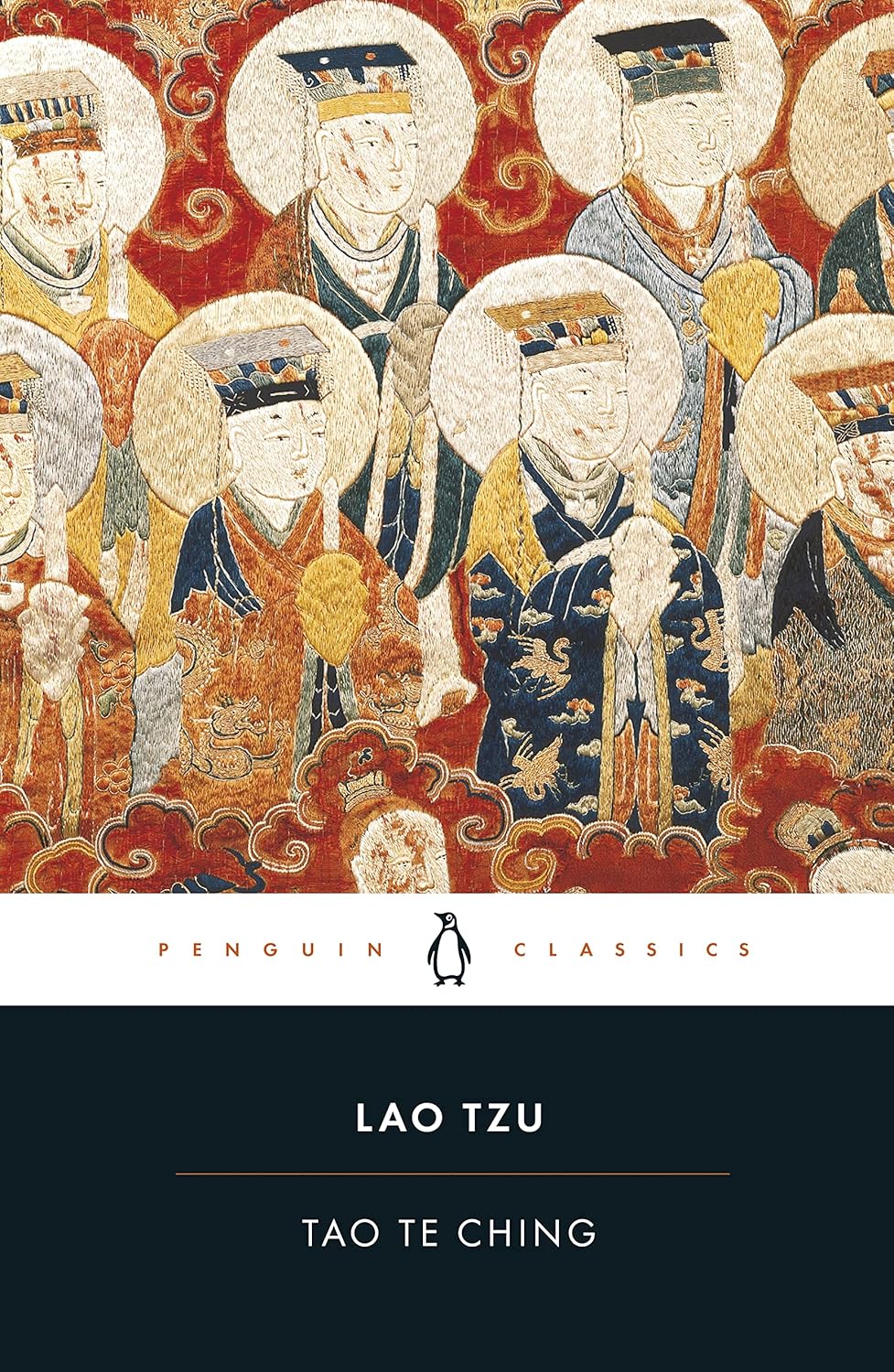
#1 — Tao Te Ching — trans. D.C. Lau (1963)
- Readability: Clear but annotated; dual renderings for ambiguities.
- Accuracy: Highest scholarly standard; scrupulous with the Chinese text.
- Tone: Precise, academic, and carefully balanced.
- Accessibility: Best with some background in Chinese philosophy.

Stephen Mitchell's translation and narration capture the essence of the Tao Te Ching with clarity and poetic grace, making it accessible yet profound for modern listeners.
Listen on Audible →Which translation is right for you?
- Choose Lau if you want the most accurate English rendering and scholarly notes.
- Choose Le Guin if you want the most beautiful and challenging poetic version.
- Choose Mitchell if you want the most immediately accessible introduction.
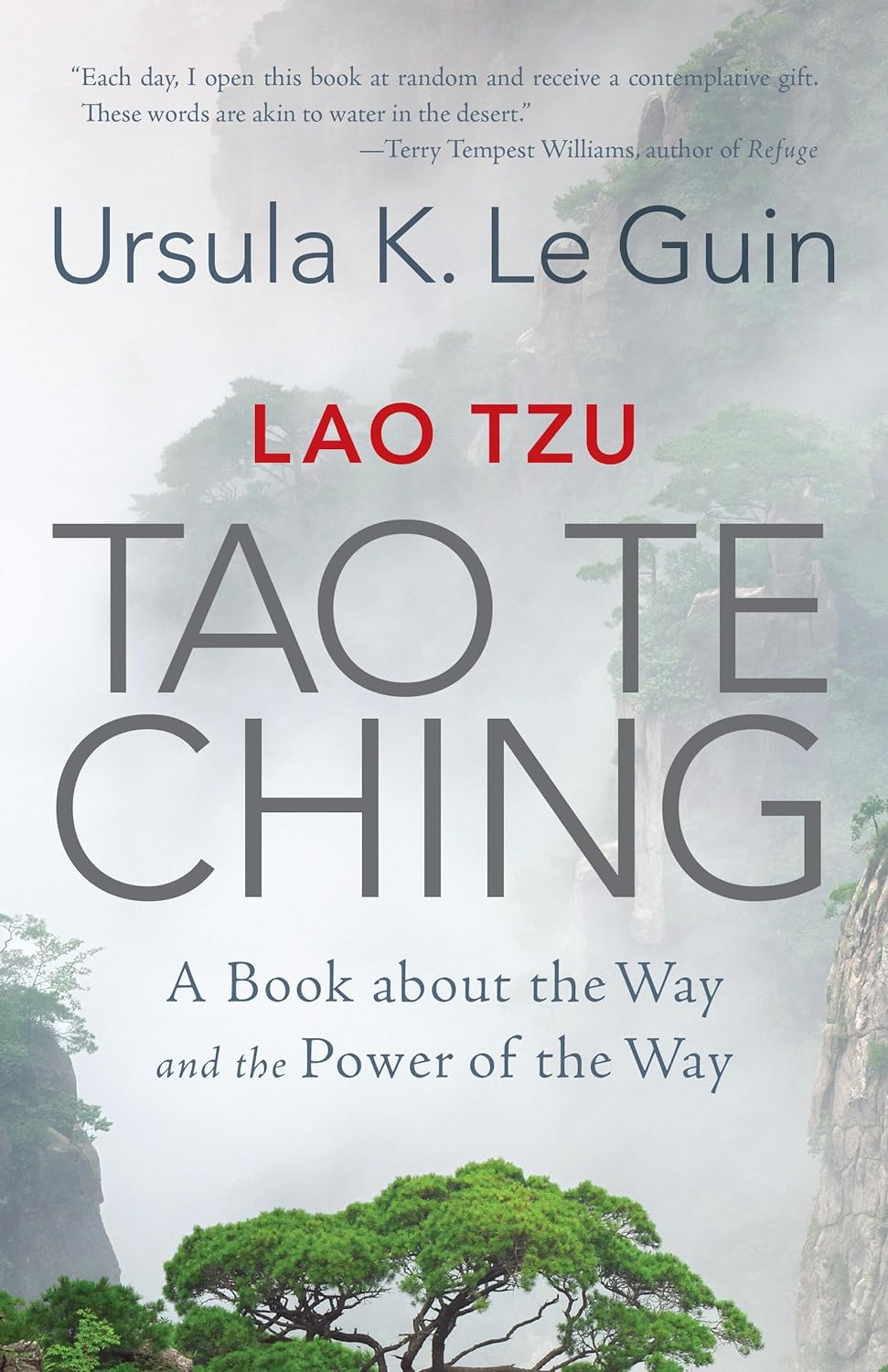
#2 — Lao Tzu: Tao Te Ching — trans. Ursula K. Le Guin (1997)
- Readability: Highly readable as poetry; economical and rhythmic.
- Accuracy: Very good; works from existing translations with scholarly input.
- Tone: Resonant, feminist, and spiritually alive.
- Accessibility: Excellent for readers seeking literary depth.
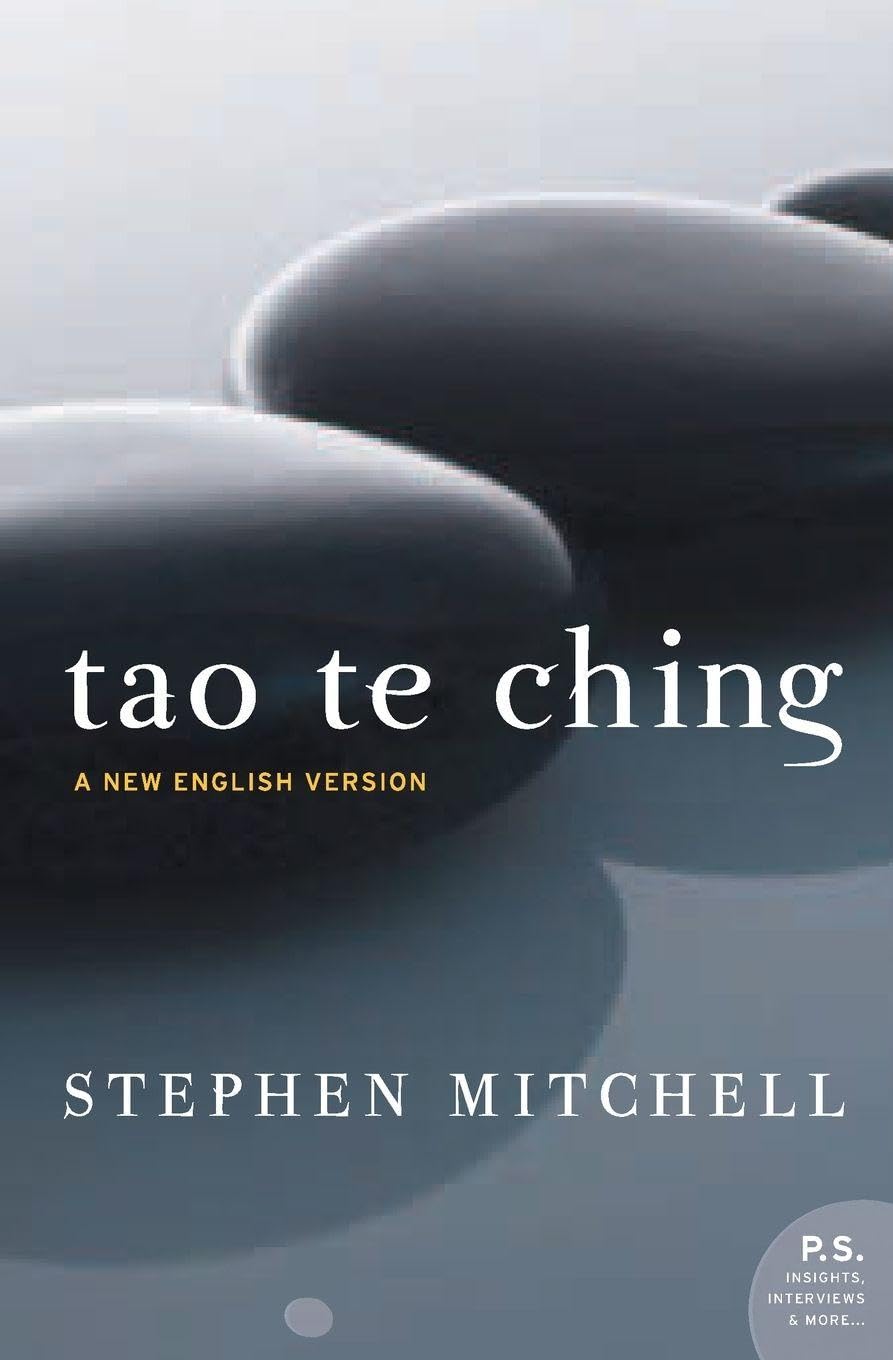
#3 — Tao Te Ching — trans. Stephen Mitchell (1988)
- Readability: Highest; smooth, contemporary prose.
- Accuracy: Good; occasionally interpretive rather than literal.
- Tone: Accessible, spiritual, and flowing.
- Accessibility: Ideal for complete beginners.
About the Translators
D.C. Lau (1921–2010, 1963, Penguin Classics): Professor of Chinese at the School of Oriental and African Studies, University of London; the foremost English-language translator of classical Chinese philosophical texts of the twentieth century; his other Penguin Classics translations include the Analects of Confucius and the Mencius. His approach was always that of the textual scholar: attentive to what the Chinese actually says, careful about the text's deliberate ambiguities (which he typically marks by providing alternative renderings), and rigorous in the introductory apparatus about the problems of dating, authorship, and transmission.
Ursula K. Le Guin (1929–2018, 1997, Shambhala): the author of The Left Hand of Darkness, The Dispossessed, and the Earthsea cycle; a lifelong Daoist whose fiction returns repeatedly to Daoist ideas of balance, mutuality, and attention to the natural world. She worked from existing English translations with the assistance of the scholar J.P. Seaton; her approach was to find the most precise and resonant English for each chapter's essential gesture. Her brief commentaries — frank, irreverent, and feminist in their orientation — challenge standard appropriations of the text by military strategists and hierarchical governance traditions, and restore the importance of the text's images of water, emptiness, the valley, and the female.
Stephen Mitchell (b. 1943, 1988, Harper Perennial): American poet and translator; does not read Chinese and worked from existing versions; his other translations include the Bhagavad Gita, Rilke's Letters to a Young Poet, Homer's Iliad, and the Book of Job. His 1988 Harper Perennial version has been the best-selling English translation for over thirty years — the one that has brought the largest number of readers to the text — and its influence on how the Tao Te Ching is understood in Western popular culture is greater than any other single version.
Themes
The Tao that cannot be named. The text opens with its most famous and most analysed paradox: "The Tao that can be told is not the eternal Tao; the name that can be named is not the eternal name." The Tao — the Way, the fundamental principle underlying all things — is by definition beyond language and beyond any definitive description. The first chapter establishes the productive frustration that runs through all eighty-one: the text is trying to point at something it explicitly acknowledges cannot be pointed at, and every reader who encounters it is left with the question of whether they have understood or merely made contact with the edge of understanding.
Wu wei: effortless action and the paradox of non-doing. The political and ethical sections of the text return repeatedly to the concept of wu wei — usually translated as non-action, non-doing, or effortless action. The sage ruler governs without governing; the wise person acts without forcing; the best intervention is the one that leaves no trace. This is both a guide to practical wisdom (not forcing, not striving, letting things develop according to their own nature) and a cosmological claim (the Tao itself acts in this way, and alignment with it produces the same quality of action).
Water as the Tao's primary image. Of all the images the text uses to suggest the Tao's nature, water is the most persistent: it takes the lowest place; it yields rather than resists; it wears away stone; it nourishes all things without claiming credit. Chapter 78 makes the analogy explicit — "Nothing in the world is as soft and yielding as water, yet nothing is better at overcoming the hard and rigid" — and the broader point runs through the text's treatment of femininity, the valley, the uncarved block, and the empty bowl. All these images point toward the same quality: the productive power of what appears to be passive or empty.
Key Figures
The Sage — the text's central human figure; an ideal type rather than a named individual; the person who has aligned themselves with the Tao and who therefore acts without forcing, leads without dominating, and achieves without claiming achievement. The political sections describe the ideal ruler in these terms; the ethical sections describe the individual sage. The figure recurs throughout the eighty-one chapters as the embodiment of what wu wei looks like in practice.
The Ideal Ruler — a more specific version of the sage in the political chapters; a ruler who governs so naturally that the people believe they accomplished everything themselves. Sections 17 and 18 describe the best ruler as one whose subjects barely know he exists; the worst as one who is hated. This teaching has been read as both a recipe for benevolent paternalism and — in Le Guin's reading — as a genuine vision of minimal governance and maximal freedom.
Water, the valley, and the mother — the text's recurrent non-personal figures; water is the model of the Tao's yielding power; the valley is the model of the Tao's productive emptiness; the "dark female" or "mysterious mother" (chapter 6) is the cosmic principle that gives birth without effort. These figures are not characters but the text's primary symbolic vocabulary, and understanding them is essential for reading each chapter.
Laozi himself — the legendary author; traditionally a sixth-century BCE sage who worked as an archivist in the royal court, wrote the Tao Te Ching at the request of a border guard when leaving China, and then disappeared. Modern scholarship is sceptical of the biography but not of the figure: the text has a coherent voice that reads as the work of a single sensibility, whatever the historical reality of its composition.
Recommended Sources
For further academic reading on the Tao Te Ching and Daoism:
- Philosophy East and West (University of Hawaii Press) — the primary English-language journal for comparative philosophy; essential for the Tao Te Ching in relation to Western philosophical traditions.
- Journal of Chinese Philosophy (Wiley-Blackwell) — the specialist journal for Chinese philosophy; key for debates about the text's meaning, dating, and relationship to the Zhuangzi and other Daoist texts.
- T'oung Pao (Brill, Leiden) — the oldest and most authoritative European journal for Chinese studies; essential for philological and textual scholarship on the Tao Te Ching.
Which translation is right for you?
Choose Lau (Penguin Classics) if you want the most accurate English rendering — his version is the one scholars trust, his notes flag the text's deliberate ambiguities, and his introduction is the best short guide to what the text is and where it came from. Choose Le Guin (Shambhala) if you want the most beautiful and challenging English version — her translation is sentence-for-sentence the finest, her commentaries are irreplaceable, and her Daoist perspective gives her an intuitive understanding of the text that no sinologist quite matches. Choose Mitchell (Harper Perennial) if you want the most immediately accessible version — he is the translator who has brought the most readers to the text, and his version reads with a clarity and flow that makes the Tao Te Ching available to anyone.
Frequently Asked Questions
What is Tao Te Ching about?
The Tao Te Ching is a foundational text of Daoism, exploring themes of balance, harmony, and the nature of the Tao, or 'the Way'. It emphasizes living in accordance with the natural order and the principle of wu wei, or effortless action.
Is Tao Te Ching hard to read?
The Tao Te Ching can be challenging due to its terse and ambiguous style. Lau's translation is precise but scholarly, Le Guin's is poetic, and Mitchell's is the most accessible for newcomers.
Which Tao Te Ching translation is best?
D.C. Lau's Penguin Classics edition is the scholarly benchmark for accuracy and annotation.
Lau vs Le Guin — which should I choose?
Choose Lau for scholarly precision and notes; choose Le Guin for the most beautiful and poetic English rendering.
Which translation is easiest to read?
Stephen Mitchell's version is the most consistently readable and accessible to newcomers.
Which translation is most accurate?
D.C. Lau's translation remains the most scrupulous and academically trusted rendering of the Chinese text.
Why are there so many English translations of the Tao Te Ching?
The text's terse, ambiguous style and resistance to definitive interpretation have led to over three hundred English versions.
This guide is based on reading all three translations and reviewing scholarly commentary. Last reviewed: June 2026.
As an Amazon Associate, I earn from qualifying purchases.
Looking for another classic? Browse all our translation guides →
Readers drawn to ancient wisdom texts often explore our guide to the best Bhagavad Gita translations.
For more classical philosophy, see our comparison of the best Meditations translations.
Plato's foundational dialogues are covered in our Republic translation guide.
Another essential work of philosophical literature is examined in our guide to the best Thus Spoke Zarathustra translations.