Thus Spoke Zarathustra: What It's About & Best Translation
Nietzsche's philosophical poem — Kaufmann, Hollingdale, and del Caro
As an Amazon Associate, we earn from qualifying purchases.
Thus Spoke Zarathustra is a philosophical novel by Friedrich Nietzsche that presents the teachings of the prophet Zarathustra. It explores themes like the death of God, the Übermensch, and eternal recurrence, challenging readers to create their own values.
Translation Comparison at a Glance
| Translation | Readability | Accuracy | Tone | Best For |
|---|---|---|---|---|
| Kaufmann (1954) | High | Very good | Energetic, literary, biblical | Scholarship and first reading |
| Hollingdale (1961) | High | Good | Clear, slightly more literal | Standalone affordable edition |
| del Caro (2006) | Moderate | Excellent | Precise, etymological | Academic philosophy study |
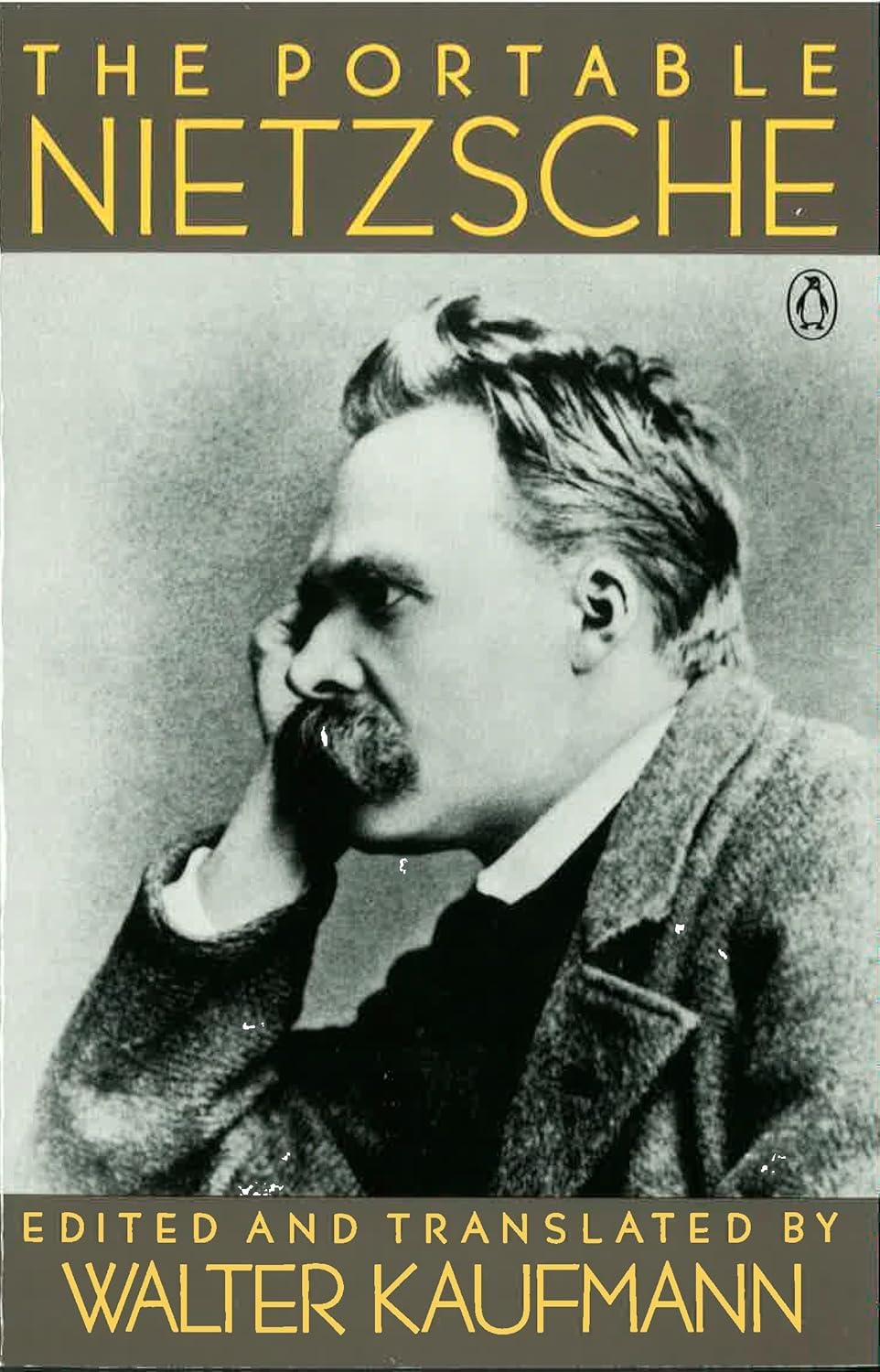
#1 — The Portable Nietzsche — trans. Walter Kaufmann (1954)
- Readability: Energetic and sensitive to literary register
- Accuracy: Highly accurate with strong scholarly notes
- Tone: Biblical echoes, ironic, aphoristic
- Accessibility: Excellent introduction with additional works

Christopher Oxford's narration captures the philosophical depth and poetic rhythm of Nietzsche's work, complemented by Kaufmann's authoritative and widely respected translation.
Listen on Audible →Which translation is right for you?
- Choose Kaufmann if you want the translation that shaped three generations of Nietzsche scholarship and the most efficient context in a single volume.
- Choose Hollingdale if you want a standalone, affordable, slightly more literal reading of Zarathustra alone.
- Choose del Caro if you are approaching the text through academic philosophy and want maximum precision and scholarly apparatus.
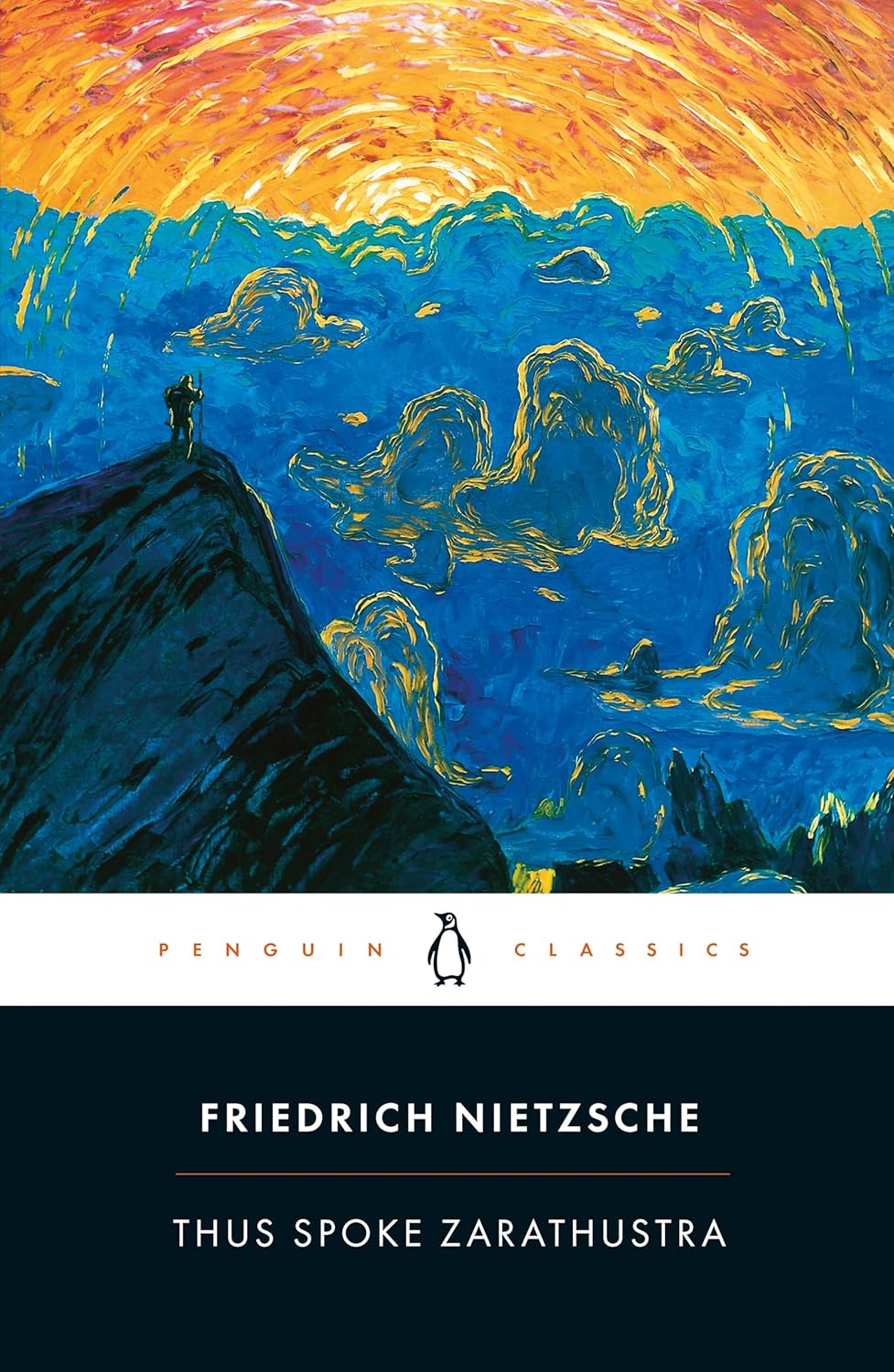
#2 — Thus Spoke Zarathustra — trans. R.J. Hollingdale (1961)
- Readability: Clear and transparent
- Accuracy: Good, slightly more literal
- Tone: Straightforward, less ornate
- Accessibility: Most convenient standalone edition
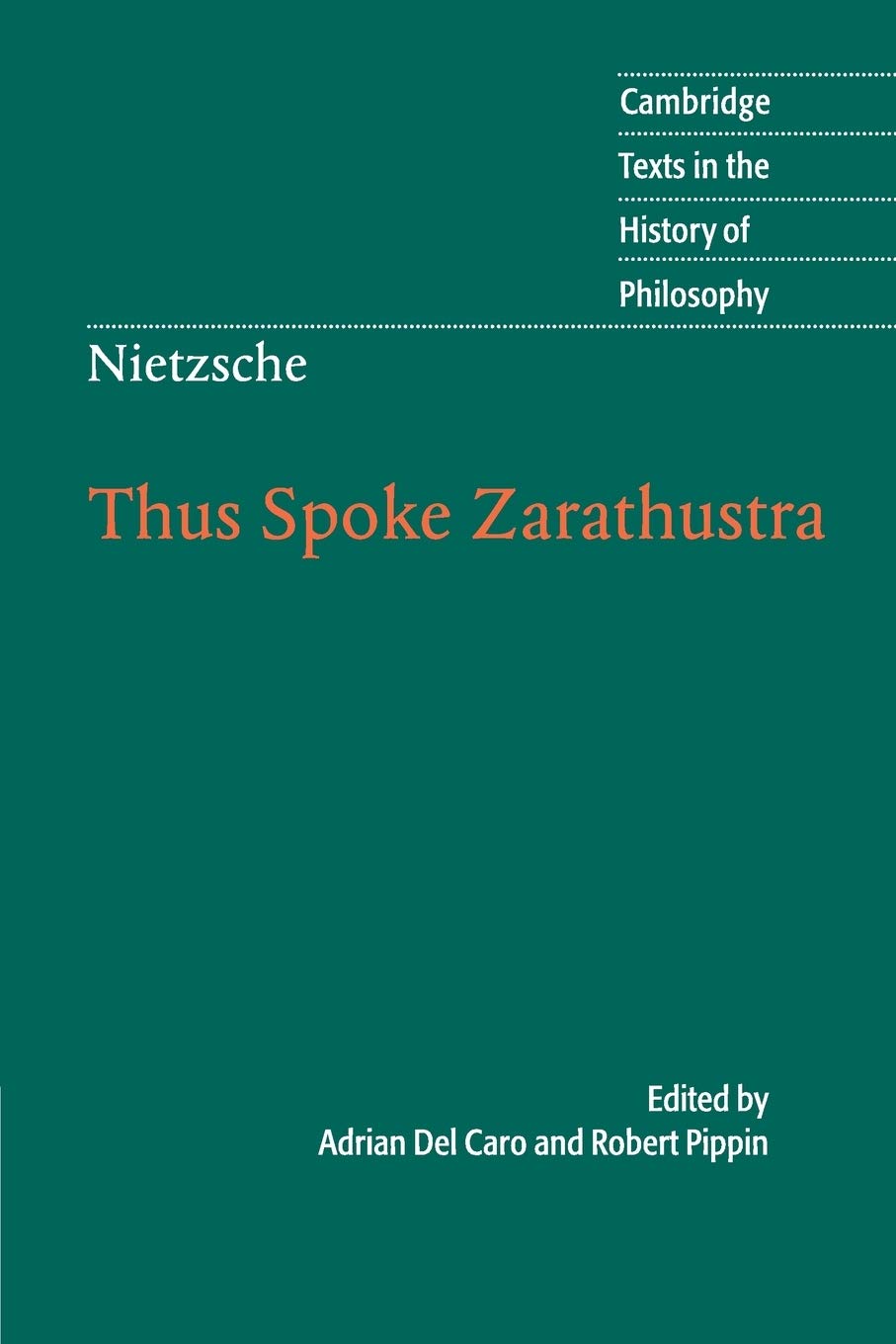
#3 — Thus Spoke Zarathustra — trans. Adrian del Caro (2006)
- Readability: Moderate, precision-focused
- Accuracy: Excellent, etymologically precise
- Tone: Scholarly and systematic
- Accessibility: Best for deeper academic engagement
About the Translators
Walter Kaufmann (1921–1980, 1954, Viking / Penguin): Professor of Philosophy at Princeton; the most important figure in the twentieth-century American reception of Nietzsche; his translations and commentaries of Nietzsche's complete works — produced over three decades — established the scholarly reading of Nietzsche as a humanist and anti-nationalist, directly countering the fascist appropriation of his work in the early twentieth century. His other translations include Hegel's philosophical texts and Goethe's Faust. The Portable Nietzsche that contains his Zarathustra also includes three other major works — Twilight of the Idols, The Antichrist, and Nietzsche contra Wagner — with notes and commentary; it remains the single most useful introduction to Nietzsche in English.
R.J. Hollingdale (1930–2001, 1961, Penguin Classics): British critic, literary journalist, and translator; the leading British Nietzsche translator alongside Kaufmann; his other Penguin Classics translations of Nietzsche include Beyond Good and Evil, Twilight of the Idols, Human, All Too Human, and Ecce Homo; he also wrote major studies of Nietzsche and Schopenhauer. His Zarathustra — the most widely owned standalone English edition — is somewhat more literal than Kaufmann's and produces a slightly less ornate English that some readers find easier to follow philosophically.
Adrian del Caro (b. 1952, 2006, Cambridge University Press): Professor of German at the University of Tennessee; Nietzsche specialist and author of studies of Nietzsche and German poetry; his Cambridge translation is the most systematically attentive to Nietzsche's German of the three, tracking the etymology and resonance of key terms with the precision appropriate to the Cambridge Texts in the History of Philosophy series. The introduction by the Nietzsche scholar Robert Pippin (University of Chicago) is the most philosophically sophisticated available in a single volume.
Themes
The death of God and the crisis of meaning. The announcement that "God is dead" — which Nietzsche had made earlier in The Gay Science — is Zarathustra's starting point. The death of God is not an event but a diagnosis: the cultural and philosophical underpinnings of Western morality and meaning have collapsed, and the institutions that claimed to provide values no longer have credibility. This leaves humanity in a crisis that most people have not yet noticed, and Zarathustra's mission is to prepare them for its full implications — not with nihilism but with a new affirmation.
The Übermensch as self-overcoming. Zarathustra's first speech proposes the Übermensch — the overman or superhuman — not as a specific figure but as a direction: the possibility that humanity might surpass its current values and create new ones. The Übermensch is not a racial or biological type (as the Nazis later attempted to appropriate him) but a figure of creative self-overcoming, the person who has understood that all values are human constructions and who therefore takes responsibility for creating them anew. The concept is consistently misread when taken out of its context in Nietzsche's broader critique of morality.
Eternal recurrence as the hardest thought. The thought of eternal recurrence — that you might be condemned to live your life again and again, exactly as you have lived it, infinitely — is presented by Nietzsche not as a cosmological theory but as a thought experiment: could you affirm your life so completely, love it so fully, that you would will it to recur eternally without change? This is Nietzsche's test for genuine amor fati (love of fate), and it is the hardest thought because it accepts nothing that happened as other than it should have been.
Key Characters
Zarathustra — the prophet who descends from his mountain after ten years of solitude and attempts to share his wisdom with humanity; modelled on but transforming the historical Zoroaster. He is not a straightforward Nietzsche mouthpiece; he makes mistakes, retreats, suffers, and arrives at his greatest ideas imperfectly. Nietzsche's choice of the dialogue and parable form rather than philosophical argument allows Zarathustra to be both a teacher and a character in development.
The tightrope walker — the man who falls and dies at the beginning of the Prologue, while the crowd jeers; Zarathustra's first interlocutor in death; the figure who establishes the book's central image of the human being as a rope stretched between animal and Übermensch, "a rope over an abyss."
The eagle and the serpent — Zarathustra's animals and companions; the eagle as pride, the serpent as wisdom; they accompany him on his journey and serve as commentators and reminders of his teaching. Their appearance and disappearance marks the rhythm of the book's four parts.
The Higher Men — a group who arrive in Zarathustra's cave in Part IV: the Soothsayer, the Two Kings, the Leech-scholar, the Magician, the Last Pope, the Ugliest Man, the Voluntary Beggar, and the Shadow. Each represents a type who has seen through conventional values but has not yet arrived at the affirmation Zarathustra teaches; collectively they are Nietzsche's portrait of the highest human types of his age, and their inadequacy is the book's final diagnosis.
Recommended Sources
For further academic reading on Nietzsche and Thus Spoke Zarathustra:
- Nietzsche-Studien (De Gruyter) — the premier international journal for Nietzsche scholarship; indispensable for the German-language scholarship that establishes the context for any English-language engagement with the text.
- Journal of Nietzsche Studies (Penn State University Press) — the primary English-language journal; key for contemporary readings of Zarathustra's major doctrines and their relationship to nineteenth-century philosophy.
- Philosophy and Literature (Johns Hopkins) — important for Zarathustra as a literary and philosophical hybrid — the reading of Nietzsche as a writer alongside his reading as a philosopher.
Which translation is right for you?
Choose Kaufmann (Portable Nietzsche, Viking/Penguin) for the translation that shaped three generations of Nietzsche scholarship in the English-speaking world — his version is energetic, accurate, and sensitive to the text's literary register, and the additional works in the Portable Nietzsche provide the most efficient context for Zarathustra's ideas. Choose Hollingdale (Penguin Classics) for a standalone reading — his version is the most widely owned, somewhat more literal than Kaufmann's, and the most convenient single-volume format. Choose del Caro (Cambridge) for academic philosophy — his translation is the most precise and the Cambridge apparatus (especially Pippin's introduction) is the most rigorous available.
Frequently Asked Questions
What is Thus Spoke Zarathustra about?
Thus Spoke Zarathustra is a philosophical novel by Friedrich Nietzsche that presents the teachings of the prophet Zarathustra. It explores themes like the death of God, the Übermensch, and eternal recurrence, challenging readers to create their own values.
Is Thus Spoke Zarathustra hard to read?
The book can be challenging due to its philosophical depth and poetic style. Kaufmann's translation is known for its literary quality, while Hollingdale's is more straightforward, and del Caro's is precise, making them suitable for different readers.
Which Thus Spoke Zarathustra translation is best?
Walter Kaufmann's 1954 translation remains the standard reference for serious readers because it is accurate, energetic, and sensitive to the text's literary register.
Kaufmann vs Hollingdale — which should I choose?
Choose Kaufmann for scholarly context and literary elevation; choose Hollingdale for a standalone, slightly more literal and transparent reading in an affordable single volume.
Which translation is easiest to read?
Hollingdale's version is somewhat more literal than Kaufmann's and produces a slightly less ornate English that many readers find easier to follow philosophically.
Which translation is most accurate?
Adrian del Caro's Cambridge edition is the most systematically attentive to Nietzsche's German, tracking etymology and resonance of key terms with scholarly precision.
Is the Kaufmann Portable Nietzsche still worth buying for Zarathustra?
Yes. It remains the single most useful introduction to Nietzsche in English because it includes the complete Zarathustra plus Twilight of the Idols, The Antichrist, and Nietzsche contra Wagner with reliable notes.
This guide is based on reading all three translations and reviewing scholarly commentary. Last reviewed: June 2026.
As an Amazon Associate, I earn from qualifying purchases.
Looking for another classic? Browse all our translation guides →
Kaufmann also produced the definitive English Faust translation guide covering Greenberg, Luke, and Arndt.
For more philosophy in translation, see our Meditations translation guide comparing Hays, Waterfield, and Long.
Readers of Nietzsche often explore Plato next — our Republic translation guide ranks Grube/Reeve, Bloom, and Griffith.
Another foundational philosophical text: our Symposium translation guide compares Waterfield against Nehamas and Woodruff.