The Republic: What It's About & Best Translation
Plato's dialogue on justice and the ideal state — Hackett, Bloom, and Cambridge
As an Amazon Associate, we earn from qualifying purchases.
The Republic is a philosophical dialogue by Plato that explores justice, the ideal state, and the philosopher's role in society. Through Socratic dialogue, it examines the nature of justice in both the individual and the state, proposing a society governed by philosopher-kings.
Translation Comparison at a Glance
| Translation | Readability | Accuracy | Tone | Best For |
|---|---|---|---|---|
| Grube/Reeve (1992) | High | Very good | Clear, consistent academic prose | University courses, argument tracing |
| Bloom (1968) | Moderate | Excellent | Deliberately literal, sometimes strange | Maximum fidelity to Greek |
| Griffith (2000) | Very high | Good | Natural, flowing dialogue | First-time general readers |
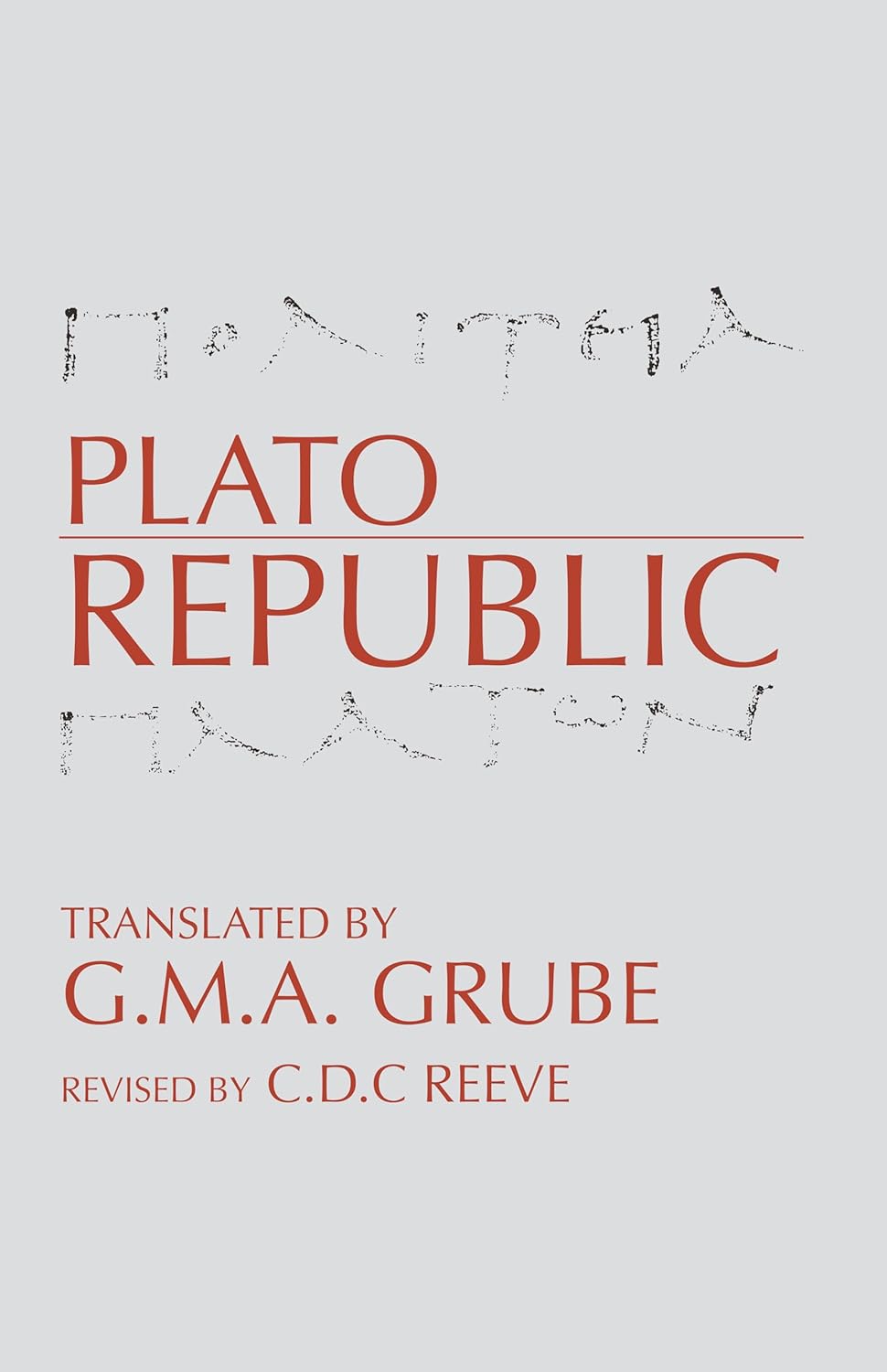
#1 — Republic — trans. G.M.A. Grube, revised C.D.C. Reeve (1992)
- Readability: Clear, fluent academic English suitable for sustained reading.
- Accuracy: Philosophically precise with consistent technical vocabulary.
- Tone: Straightforward and trustworthy for argument analysis.
- Accessibility: Excellent for students; minimal apparatus keeps focus on the text.

Ray Childs' narration captures the philosophical depth and clarity of Plato's work, while Jowett's translation remains a classic, widely respected for its accuracy and readability.
Listen on Audible →Which translation is right for you?
- Choose Grube/Reeve if you are a student or need the standard academic text for close philosophical reading.
- Choose Bloom if you want maximum literal fidelity to Plato's Greek and are willing to accept some awkwardness.
- Choose Griffith if you are a general reader seeking the most accessible modern prose with excellent context.
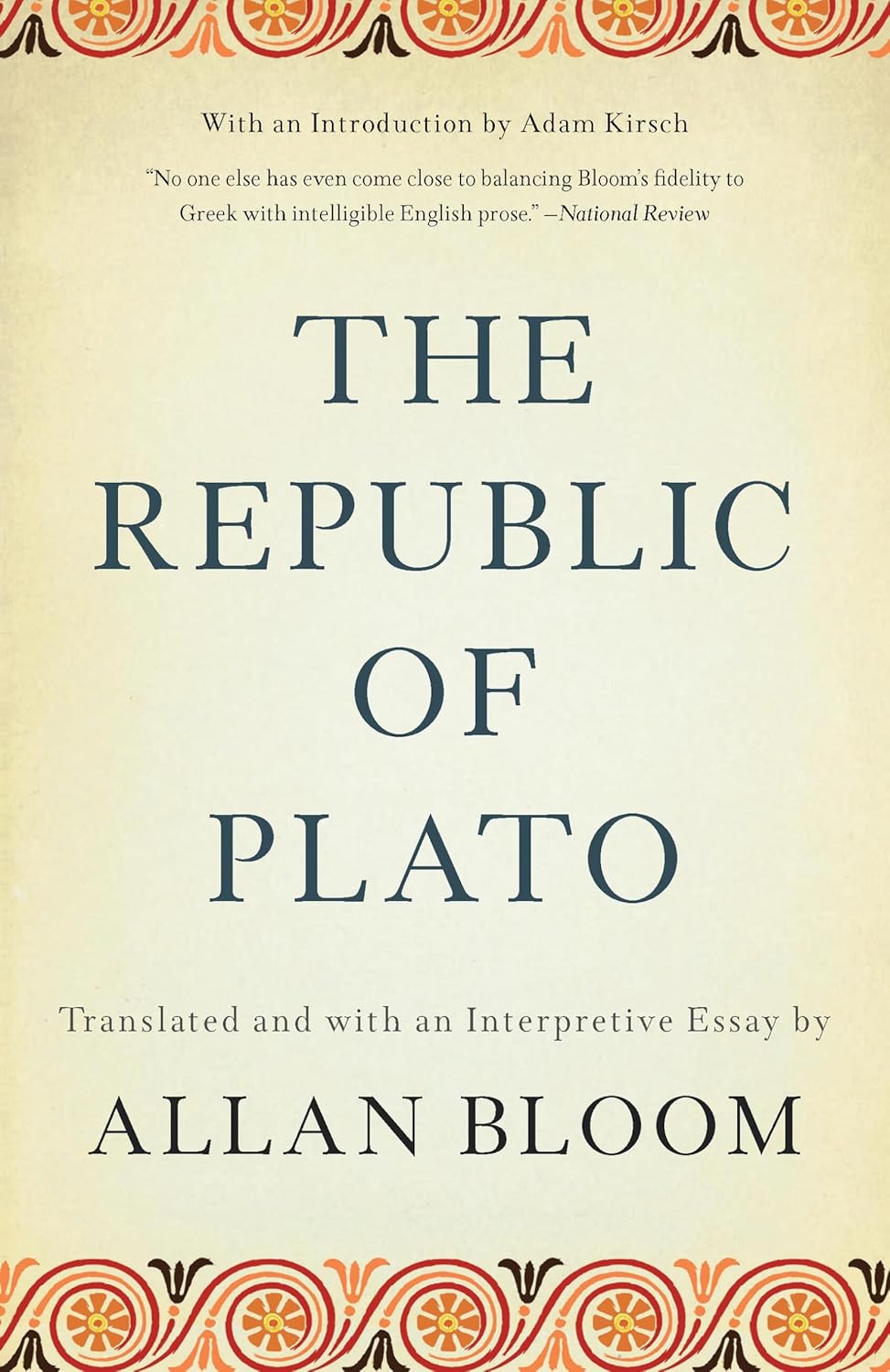
#2 — The Republic of Plato — trans. Allan Bloom (1968)
- Readability: Moderate; deliberately non-fluent to preserve foreignness.
- Accuracy: Exceptional literal fidelity with consistent term rendering.
- Tone: Strangely literal, demanding close attention.
- Accessibility: Best for readers prepared to work through difficulty.
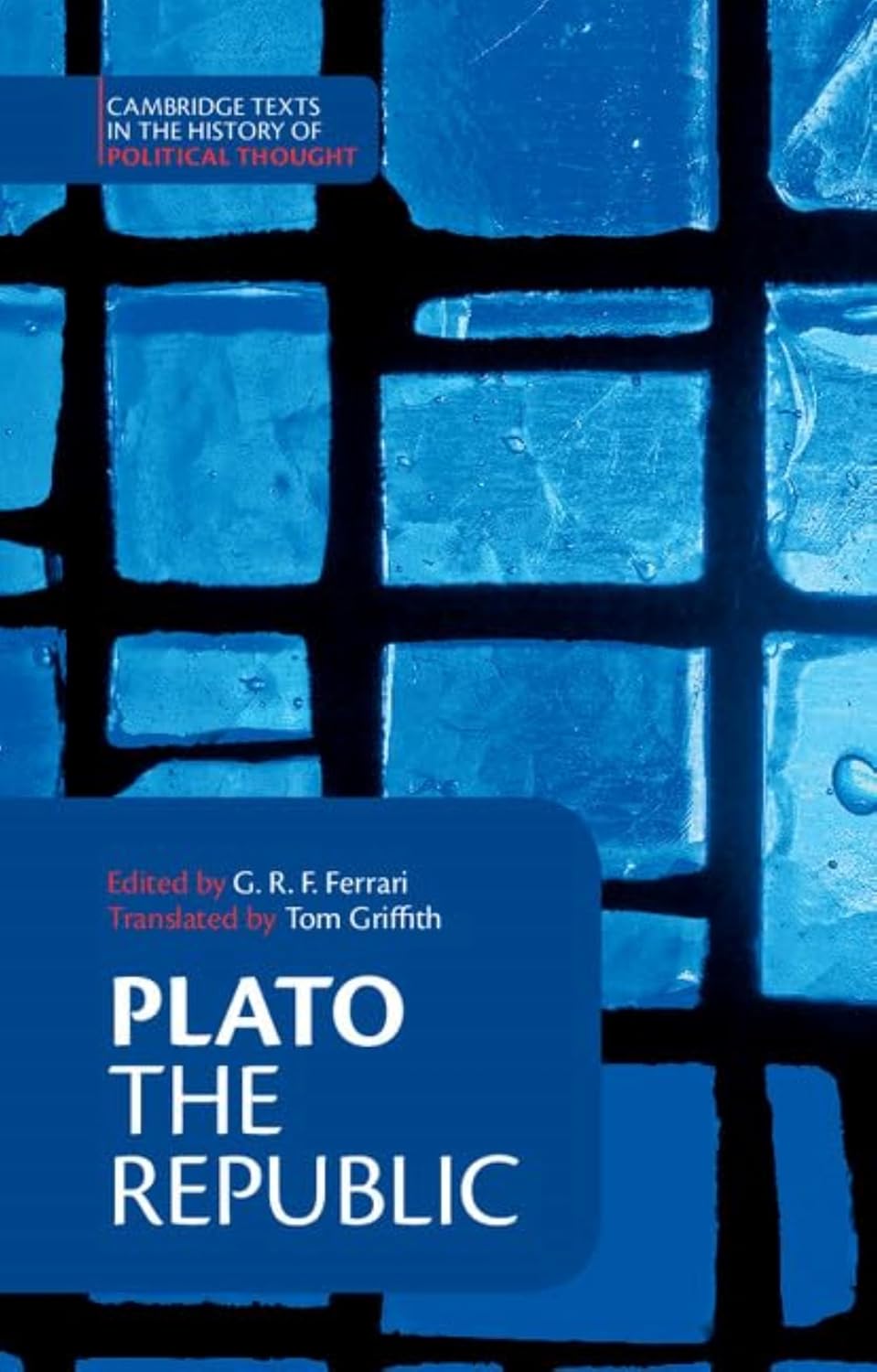
#3 — The Republic — trans. Tom Griffith (2000)
- Readability: Very high; natural, flowing "living English."
- Accuracy: Good scholarly rigour without hyper-literalism.
- Tone: Accessible yet dignified dialogue style.
- Accessibility: Ideal first encounter with excellent context.
About the Translators
G. M. A. Grube (1899–1982) and C. D. C. Reeve (b. 1948, 1992, Hackett): Grube was a classicist at Trinity College, Toronto, whose original translation became the standard Hackett version; Reeve, Professor of Philosophy at the University of North Carolina, substantially revised it in 1992. Together their version is the most widely assigned translation of the Republic in university philosophy and political theory courses throughout the English-speaking world.
Allan Bloom (1930–1992, 1968, Basic Books): philosopher at Cornell and the University of Chicago; student of Leo Strauss; later the author of The Closing of the American Mind (1987). His translation is the most deliberately literal in the major English-language tradition, aimed at preserving the foreignness of Plato's Greek and rendering every key term with maximum consistency. The volume's extended interpretive essay reflects Bloom's Straussian reading of the Republic and represents one of the most sustained and controversial engagements with the text in English.
Tom Griffith (2000, Cambridge University Press): British classicist and translator; his Cambridge edition — with introduction and editorial apparatus by G. R. F. Ferrari of the University of California, Berkeley — has established itself as the preferred translation for readers who want accessibility combined with scholarly rigour. Ferrari's sixty-page introduction is among the best available guides in English to the Republic's argument and dramatic setting.
Themes
Justice in the soul and in the city. Socrates responds to the challenge "what is justice?" by constructing a perfectly just city — on the argument that it will be easier to see justice writ large in a city than small in an individual soul — and then mapping the city's structure onto the structure of the soul. Both are divided into three parts; justice, in both cases, is their proper ordering, with reason in command. This move allows Plato to argue that justice in the individual is identical to psychological health, and that the unjust person is psychically disordered regardless of how much they profit from injustice.
The philosopher-king and the problem of political authority. The perfectly just city requires rule by philosophers — those who have seen the Form of the Good and therefore know what is truly beneficial — and their rule requires, among other things, the abolition of private property and family life for the guardian class, the systematic regulation of art and music, and a "noble lie" told to the citizens about their own origins. The tension between the ideal and its requirements — between the vision of just rule and the deeply illiberal means by which Plato proposes to achieve it — is the text's most enduring problem.
The Allegory of the Cave. Prisoners chained in a cave take the shadows on the wall for reality; one is released into sunlight and discovers the world outside; he returns to report what he has seen, and is disbelieved and threatened. The allegory is Plato's image of the philosopher's situation in the political world, and it is simultaneously an account of philosophical education, a theory of knowledge, and a political argument for why the philosopher must be compelled to return to the cave and govern. It is the single most reproduced philosophical image in the Western tradition.
Key Characters
Socrates — the dialogue's protagonist; the philosopher who claims to know only that he knows nothing, yet constructs a complete political philosophy over ten books of argument. His characteristic method — asking questions, refuting answers, pressing toward a definition that can withstand scrutiny — is the form the entire dialogue takes.
Thrasymachus — the sophist whose challenge opens the dialogue: justice is nothing but the advantage of the stronger. His position is never entirely refuted, and it has seemed to many readers the most honest account of political life in the text. Socrates defeats him in argument; whether the argument is persuasive is the question every reader of the Republic must answer for themselves.
Glaucon — Plato's brother; the dialogue's primary interlocutor; the young man of philosophical ambition who demands that Socrates prove justice is worth choosing for its own sake, not merely for its rewards. His challenge in Book II — the story of the Ring of Gyges — is the Republic's central problem.
Adeimantus — Plato's other brother; joins Glaucon in pressing Socrates to make the case for justice and remains a critical interlocutor throughout.
Recommended Sources
For further academic reading on Plato and the Republic:
- Phronesis (Brill) — the leading international journal for ancient philosophy; essential for textual and interpretive scholarship on Plato.
- Oxford Studies in Ancient Philosophy (Oxford University Press) — the most important annual series for current scholarship on Greek philosophy; essential coverage of the Republic.
- Political Theory (SAGE) — the leading journal for the history of political thought; key for readings of the Republic as political philosophy and its influence on subsequent political theory.
Which translation is right for you?
Choose Grube/Reeve (Hackett) for academic philosophy or political theory — it is the most widely used university translation, philosophically precise, and designed for the kind of close argumentative reading philosophy courses require. Choose Griffith (Cambridge) for a first general reading — his is the most accessible modern version, with Ferrari's introduction providing the best available orientation to the dialogue's argument and dramatic setting. Choose Bloom (Basic Books) for maximum fidelity to Plato's Greek — his literal approach tracks key terms with rigorous consistency, and his extended interpretive essay, however controversial, is one of the most serious engagements with the Republic in English; accept that the English will sometimes feel strained.
Frequently Asked Questions
What is The Republic about?
The Republic is a philosophical dialogue by Plato that explores justice, the ideal state, and the philosopher's role in society. Through Socratic dialogue, it examines the nature of justice in both the individual and the state, proposing a society governed by philosopher-kings.
Is The Republic hard to read?
The Republic can be challenging due to its complex philosophical ideas. Grube/Reeve offers a precise academic translation, Bloom provides literal fidelity, while Griffith's version is the most accessible for general readers.
Which Republic translation is best?
Grube/Reeve (Hackett) is the best overall choice for most readers, especially students, because it is the most widely assigned, philosophically precise, and readable academic translation.
Grube/Reeve vs Bloom vs Griffith — which should I choose?
Choose Grube/Reeve for university courses or close argumentative reading, Bloom for maximum literal fidelity to the Greek, and Griffith for the most accessible modern prose with excellent scholarly context.
Which translation is easiest to read?
Griffith's Cambridge translation is the easiest to read, written in a natural "living English" that sustains the dialogue's argumentative rhythm without awkwardness.
Which translation is most accurate?
Bloom's translation is the most accurate in the literal sense, preserving every key term consistently and refusing to smooth over the foreignness of Plato's Greek.
Why is Grube/Reeve the standard academic translation of the Republic?
It balances philosophical precision with fluent English, tracks technical vocabulary consistently, and is the version most English-speaking students encounter in university philosophy and political theory courses.
This guide is based on reading all 3 translations and reviewing scholarly commentary. Last reviewed: June 2026.
As an Amazon Associate, I earn from qualifying purchases.
Looking for another classic? Browse all our translation guides →
Plato's other great dialogue is covered in our Symposium translation guide.
For more ancient Greek philosophy, see our Meditations translation guide.
Readers of Greek drama should check our Theban Plays translation guide.
Another foundational Greek text is explored in our Iliad translation guide.
Herodotus offers a different window on the ancient world in our Histories translation guide.