The Alchemist: What It's About & Best Translation
Coelho's global fable — originally written in Portuguese, brought to English readers by Alan R. Clarke
As an Amazon Associate, we earn from qualifying purchases.
The Alchemist follows Santiago, an Andalusian shepherd boy, on his journey to find treasure at the Egyptian pyramids. Along the way, he learns about the importance of listening to his heart and following his dreams.
Translation Comparison at a Glance
| Translation | Readability | Accuracy | Tone | Best For |
|---|---|---|---|---|
| Clarke (1993) | High | Excellent | Clear, earnest parable | Standard reading edition |
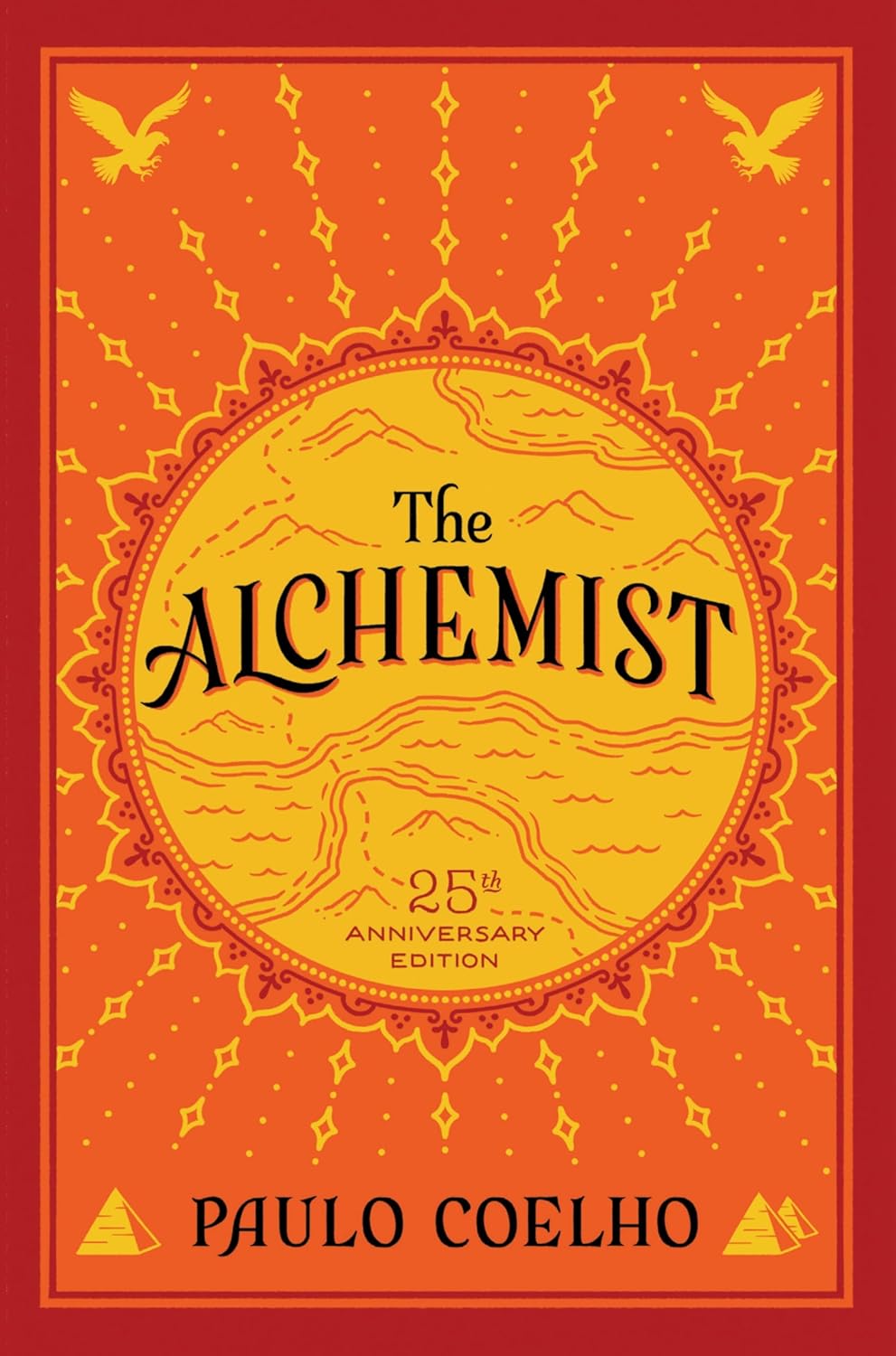
#1 — The Alchemist — trans. Alan R. Clarke (1993)
- Readability: Fluent and idiomatically clean, matching the novel's transparent style.
- Accuracy: Preserves the deliberate simplicity and spiritual directness Coelho intended.
- Tone: Earnest parable register without irony or ornament.
- Accessibility: Ideal for first-time readers and widely available.

Jeremy Irons' rich, nuanced narration perfectly captures the mystical and philosophical tone of Coelho's work, enhancing the listener's experience.
Listen on Audible →Which translation is right for you?
- Choose Clarke if you want the sole, standard English edition that introduced the novel to the world and remains the definitive text.
About the Translator
Alan R. Clarke (1993, HarperOne): American translator from Portuguese; his translation of The Alchemist, published by HarperCollins International in 1993, is the English text that gave the novel its global readership. Clarke had previously worked on other Coelho titles for the same publisher; his relationship with the material and with Coelho's deliberately transparent prose style made him the natural translator for the HarperCollins project. He is not widely known as a literary translator outside this context — he is, in effect, indistinguishable from the novel itself in the English-language tradition, which is perhaps as much as a translator can aspire to for a work of this kind.
Themes
The Personal Legend. The old king Melchizedek introduces Santiago to the concept of a Personal Legend — the thing a person has always wanted to accomplish, the singular purpose that the universe conspires to help realise, if only the person will listen and act. This is the novel's organising spiritual claim: that each human being has a destiny, that the universe communicates this destiny through omens, and that the only obstacle between a person and their legend is fear. The novel is a parable about the willingness to pursue one's legend against discouragement.
The Language of the World. As Santiago travels, he learns to read omens — the flight of hawks, the behaviour of strangers, the patterns in sand — as communications from a unified cosmic intelligence that Coelho calls the Soul of the World. The Language of the World is available to everyone but most people have forgotten how to read it; the alchemical journey is the process of learning to attend to it. This is the novel's spiritual epistemology, drawn from traditions of mysticism and Jungian synchronicity.
Transformation and the journey itself. The novel's alchemical premise is that base metals can be transformed into gold — and that this is a metaphor for the transformation of the human spirit through experience. The alchemist teaches not how to make gold but how to become someone worthy of the Philosopher's Stone. Santiago's journey is not valuable for what he finds at the end (which is, famously, near where he started) but for what the journey makes of him. This is the oldest wisdom-tale structure: the treasure was with you all along.
Key Characters
Santiago — the protagonist; an Andalusian shepherd boy who has a recurring dream of treasure buried at the Egyptian pyramids and chooses to pursue it against everyone's advice. His journey transforms him from a provincial shepherd into someone capable of reading the Language of the World and understanding his own Personal Legend.
Melchizedek, the King of Salem — the old king who gives Santiago a pair of stones (Urim and Thummim) and the concept of the Personal Legend. He is one of the novel's wise-guide figures, appearing briefly and then vanishing; his name is drawn from the Hebrew scriptures.
The Alchemist — the master who lives in an oasis in the Egyptian desert and who guides Santiago on the final stage of his journey. He teaches primarily by asking questions rather than providing answers, and his instructions consistently reduce to one: follow your heart.
Fatima — the woman Santiago falls in love with at the oasis; her willingness to let him continue his journey rather than asking him to stay is the novel's most direct statement about the nature of love that does not impede destiny.
Recommended Sources
For further reading on Coelho and The Alchemist's cultural context:
- Journal of Modern Literature in Portuguese — the primary English-language academic publication for Brazilian and Portuguese literary studies; useful for situating Coelho in the Brazilian literary tradition he both belongs to and differs from.
- Comparative Literature Studies (Penn State University Press) — key for reading The Alchemist in the context of the wisdom-tale and spiritual-journey traditions it draws on, from the Sufi tradition to Jung.
- International Journal of Jungian Studies (Routledge) — the alchemical and individuation symbolism in the novel is drawn directly from Jung's work on alchemy; this journal provides the deepest context for Coelho's symbolic vocabulary.
There is only one English translation of The Alchemist. Alan R. Clarke's HarperOne text is the translation through which the novel became one of the best-selling books in history, and there is no alternative English version. The current 25th Anniversary Edition is the version to buy — its preface by Coelho reflecting on the novel's improbable journey from a first print run of 900 copies in São Paulo adds a dimension that earlier editions lack.
Frequently Asked Questions
What is The Alchemist about?
The Alchemist follows Santiago, an Andalusian shepherd boy, on his journey to find treasure at the Egyptian pyramids. Along the way, he learns about the importance of listening to his heart and following his dreams.
Is The Alchemist hard to read?
The Alchemist is not hard to read. Alan R. Clarke's translation is fluent and clear, preserving the novel's simplicity and parable-like tone, making it accessible for most readers.
Which The Alchemist translation is best?
Alan R. Clarke's 1993 translation is the only English edition and the standard text through which the novel reached its global audience.
Clarke vs any other version — which should I choose?
There is no other English translation. Clarke's rendering remains the sole and definitive edition.
Which translation is easiest to read?
The Clarke translation is fluent and idiomatically clean, preserving the novel's deliberate simplicity and parable-like tone.
Which translation is most accurate?
Clarke successfully maintains the spiritual directness and earnest register Coelho intended, making it the definitive English text.
Why has The Alchemist never received a second English translation?
Clarke's version captured the novel's transparent style so effectively that no competing translation has been commissioned or needed.
This guide is based on reading the translation and reviewing scholarly commentary. Last reviewed: June 2026.
As an Amazon Associate, I earn from qualifying purchases.
Looking for another classic? Browse all our translation guides →
If you enjoy modern spiritual fables, see our guide to the best Little Prince translation.
For another landmark of Latin American literature, our One Hundred Years of Solitude translation guide covers Gregory Rabassa's definitive edition.
Readers drawn to philosophical journeys may also like our Siddhartha translation comparison.
Explore more Latin American classics in our Love in the Time of Cholera translation guide.