Confessions: What It's About & Best Translation
Augustine's autobiography of conversion — the Penguin, the Oxford, and the New City Press
As an Amazon Associate, we earn from qualifying purchases.
Confessions is an autobiographical work by Augustine of Hippo, detailing his sinful youth and conversion to Christianity. It explores themes of faith, repentance, and the search for truth.
Translation Comparison at a Glance
| Translation | Readability | Accuracy | Tone | Best For |
|---|---|---|---|---|
| Pine-Coffin (1961) | High | Good | Elegant and readable | First reading, general audience |
| Chadwick (1991) | Moderate | Excellent | Scholarly and precise | Close reading, scholarship |
| Boulding (1997/2012) | High | Very good | Contemplative and rhythmic | Devotional, spiritual reading |
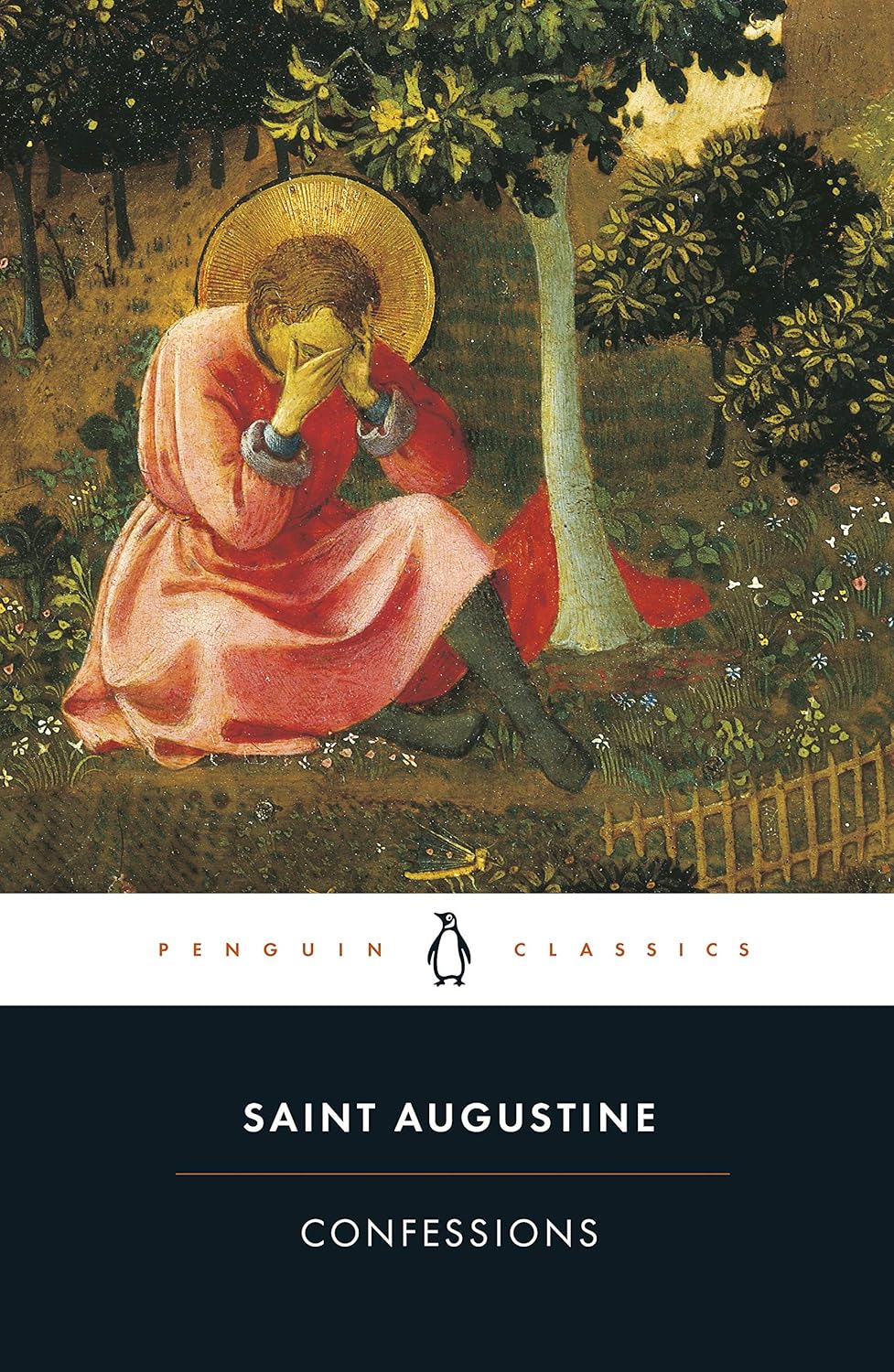
#1 — Confessions — trans. R.S. Pine-Coffin (1961)
- Readability: Elegant and readable without being excessively modernised.
- Accuracy: Good overall; occasionally softens technical theological precision.
- Tone: Captures Augustine's rhetorical rhythms with dignity.
- Accessibility: Excellent for readers without Latin.

Simon Vance's eloquent narration captures the introspective and spiritual depth of Augustine's 'Confessions,' while Pine-Coffin's translation remains a classic for its clarity and fidelity to the original Latin.
Listen on Audible →Which translation is right for you?
- Choose Pine-Coffin if you want the most accessible first reading and the version most likely to be recommended for experiencing the Confessions as a literary whole.
- Choose Chadwick if you want philosophical or theological close reading and the most precise handling of Augustine's technical vocabulary.
- Choose Boulding if you want a devotional or spiritual reading that captures the Confessions as a work of prayer.
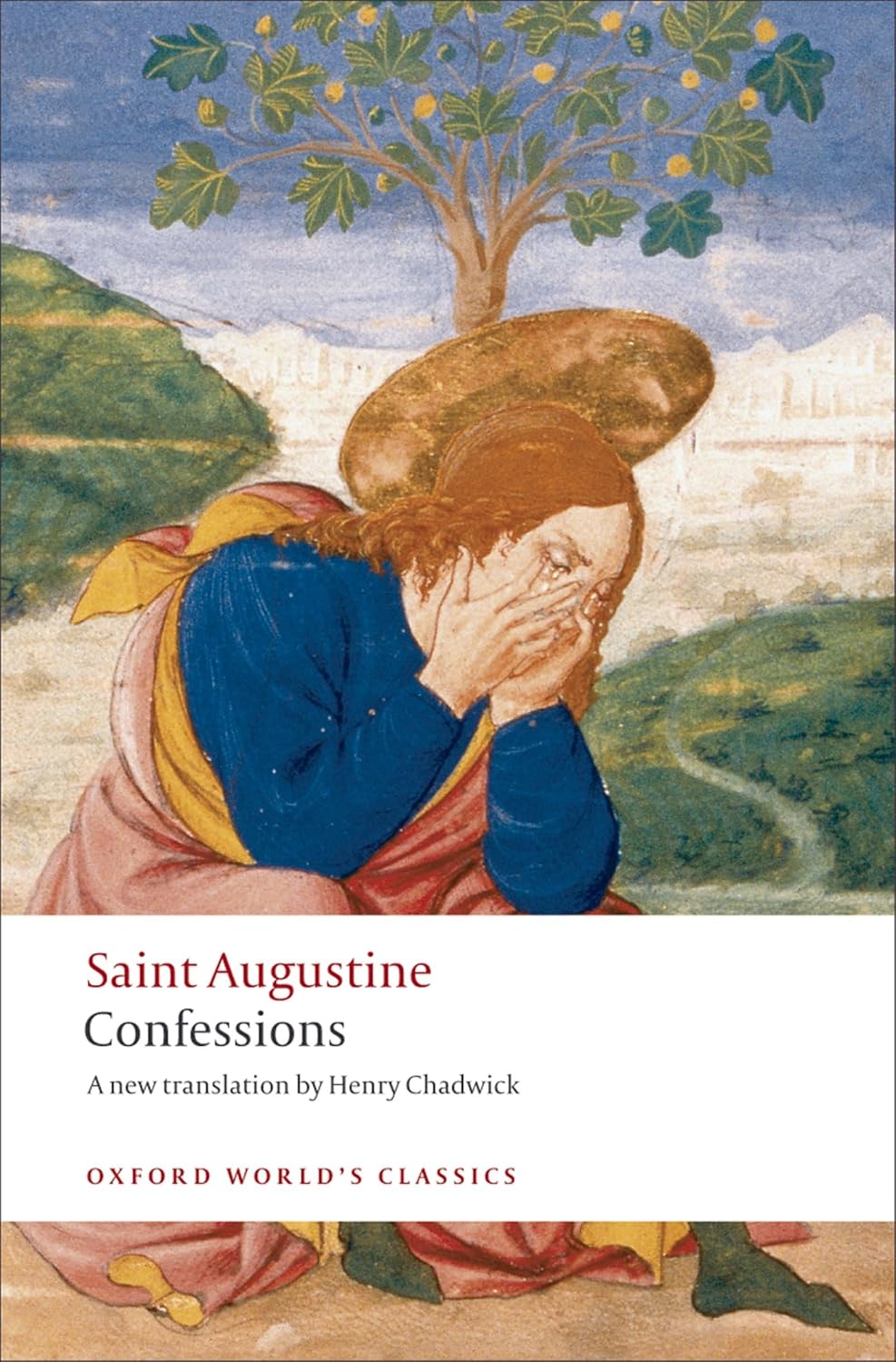
#2 — Confessions — trans. Henry Chadwick (1991)
- Readability: More literal, slightly denser than Pine-Coffin.
- Accuracy: Excellent; tracks technical vocabulary with exceptional care.
- Tone: Scholarly with extensive notes and introduction.
- Accessibility: Best for readers seeking philosophical depth.
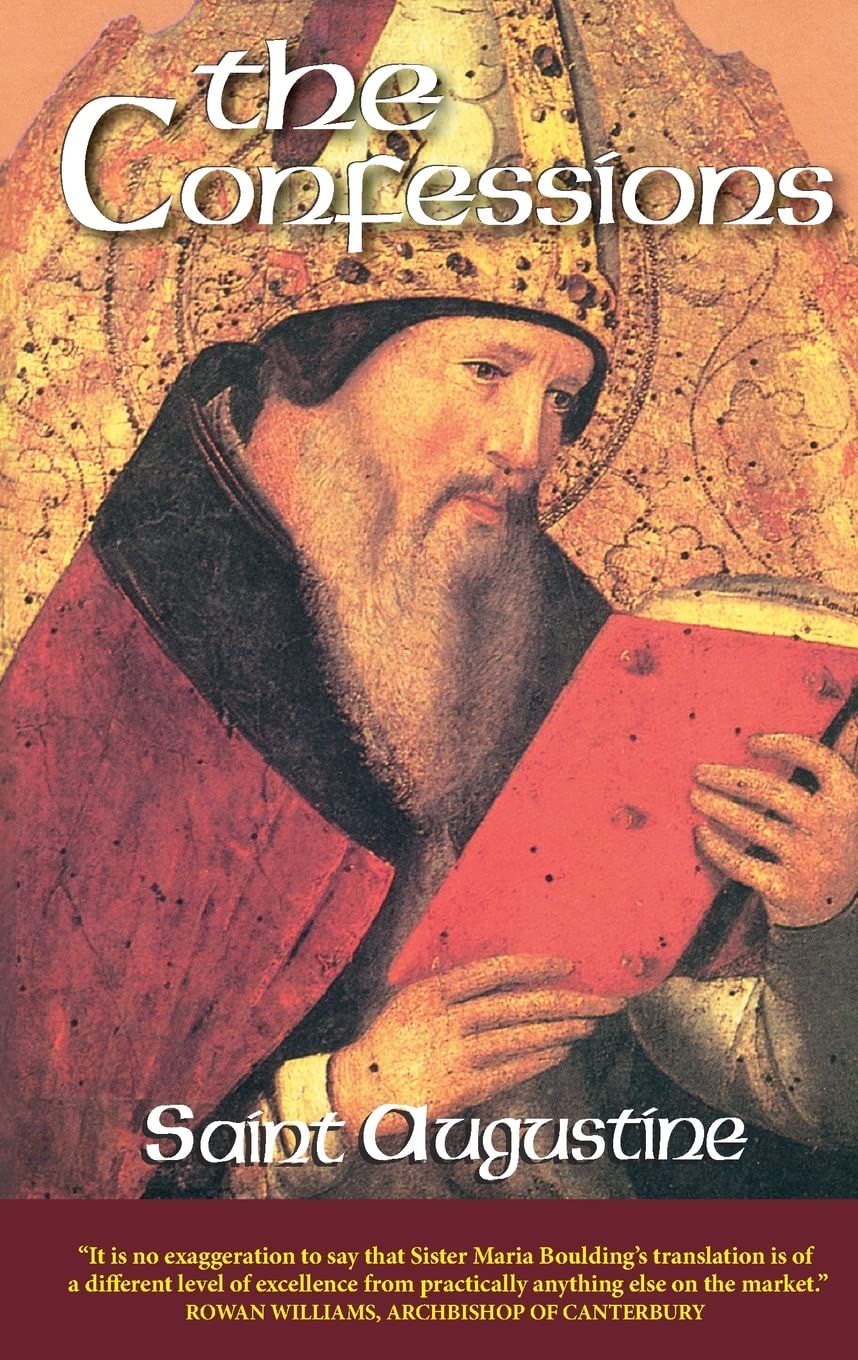
#3 — The Confessions — trans. Maria Boulding (1997, rev. 2012)
- Readability: Rhythmically attentive and theologically precise.
- Accuracy: Very good; captures prayerful register.
- Tone: Contemplative, sensitive to address to God.
- Accessibility: Ideal for spiritual and monastic readers.
About the Translators
R.S. Pine-Coffin (d. 1960s, 1961, Penguin Classics): British classicist; his other translations for Penguin include Gregory the Great's Dialogues. His translation of the Confessions has sold over a million copies and has been the introduction to Augustine for English readers for more than sixty years — a record of influence equalled by few translations of any Latin text. He writes with a clarity and an unhurried dignity that allows Augustine's voice to come through without obstruction.
Henry Chadwick (1920–2008, 1991, Oxford World's Classics): Regius Professor of Divinity at Cambridge; the foremost English-language scholar of early Christianity of the twentieth century; his major works include studies of Origen, Boethius, the early Church, and Augustine's theological development. His translation is the scholarly standard: more literal than Pine-Coffin, scrupulous in its handling of the Neoplatonist and Christian theological vocabulary, and furnished with the most extensive scholarly apparatus of any English translation. His introduction places the Confessions in the intellectual context of late antique philosophy — the Plotinian strand of Neoplatonism that mediated between Augustine and Christianity — with a rigour that no other single-volume introduction matches.
Maria Boulding (1929–2009, 1997, rev. 2012, New City Press): Benedictine nun at Stanbrook Abbey, Worcester; her translation is part of the monumental New City Press complete Works of Saint Augustine; her other translations include Augustine's De Trinitate. She spent years on the Confessions, reading them as a monk reads the Rule: as a living text to be inhabited rather than a historical document to be decoded. The revised 2012 edition incorporates corrections she completed before her death. Within the Catholic theological and monastic tradition, hers is the translation most widely admired.
Themes
Restlessness and rest. The Confessions opens with one of the most famous sentences in all of Latin prose: "You stir man to take pleasure in praising you, because you have made us for yourself, and our heart is restless, until it repose in Thee." This sentence is the programme of the entire work: the movement from restlessness to rest, from the outward turn to the inward, from the dispersion of the young Augustine across rhetoric, philosophy, sex, and ambition, to the concentration of the convert on the single object that can satisfy. Augustine reads his entire past as a deviation from this rest, and the grace of his conversion as its first achievement.
Memory and self-knowledge. Book X — the philosophical centrepiece of the Confessions — is an extended inquiry into what memory is. Augustine uses the question of how God can be found in memory (how can the soul that has not yet found God remember what it is seeking?) to develop a theory of mind that anticipates, in important ways, modern philosophy of consciousness. The question of how the self knows itself — through what faculty, with what degree of reliability — is the deepest question the Confessions ask, and Book X remains one of the most searching treatments of it in Western thought.
Time and eternity. Book XI — one of the greatest philosophical texts of late antiquity — takes as its starting point the first verse of Genesis ("In the beginning God created the heavens and the earth") and asks: what does "in the beginning" mean? What is time? What was God doing before creation? Augustine's answer — that time is a "distension" of the mind, that past and future exist only in the present consciousness that remembers and anticipates — is one of the foundational texts in the philosophy of time.
Key Characters
Augustine himself — the narrator of Books I–IX, the philosopher of Books X–XIII; the restless young student who moves from Thagaste to Carthage to Rome to Milan and back; the reader of Cicero whose ambition for truth proves to be more than philosophy can satisfy; the man whose conversion in the garden in Milan is the hinge of the entire work.
Monica — Augustine's mother; the most vivid human presence in the Confessions; a woman of unsophisticated Christian piety and extraordinary persistent love for her son, whose prayers (she was told by a bishop) could not but be answered. Her death at Ostia, in the fourth book from the end of the narrative, after the vision she and Augustine shared — in which they seemed for a moment to touch eternity — is the most moving scene in the text.
Ambrose of Milan — the bishop who unwittingly converted Augustine by his preaching; admired at a distance; almost inaccessible personally. The passage in which Augustine describes Ambrose reading silently to himself — never moving his lips — is one of the most famous glimpses of a historical individual in late antique literature, and evidence of how rare silent reading was at the time.
Alypius — Augustine's closest friend, who converts with him in the garden and remains his companion through the Confessions; a figure of the same intellectual seriousness and the same susceptibility to the wrong pleasures; his story in Book VI — his relapse into the gladiatorial games — is one of the text's sharpest psychological portraits.
Recommended Sources
For further academic reading on Augustine and the Confessions:
- Augustinian Studies (Villanova University) — the primary English-language journal devoted entirely to Augustine scholarship; essential for the Confessions in its philosophical, theological, and literary dimensions.
- Journal of Early Christian Studies (Johns Hopkins) — the leading journal for patristic scholarship; key for situating Augustine in the wider context of late antique Christianity and Neoplatonism.
- Vigiliae Christianae (Brill) — the oldest and most prestigious journal for early Christian literature; essential for the Confessions' relationship to the literary and philosophical traditions of late antiquity.
Which translation is right for you?
Choose Pine-Coffin (Penguin Classics) for a first reading — his version is the most widely read, the most naturally flowing, and the easiest way to experience the Confessions as a literary whole. Choose Chadwick (Oxford World's Classics) for philosophical or theological close reading — his precision with the technical vocabulary of Neoplatonism and Christian theology makes him indispensable for understanding what Augustine is actually arguing. Choose Boulding (New City Press) for a devotional or spiritual reading — her version is the most sensitive to the Confessions as a work of prayer, and the most beloved within the Catholic monastic tradition.
Frequently Asked Questions
What is Confessions about?
Confessions is an autobiographical work by Augustine of Hippo, detailing his sinful youth and conversion to Christianity. It explores themes of faith, repentance, and the search for truth.
Is Confessions hard to read?
Confessions can be challenging due to its philosophical and theological content. Pine-Coffin's translation is the most accessible, while Chadwick's offers precision for scholarly readers.
Which Confessions translation is best?
Pine-Coffin is the best starting point for most readers: it is the most widely read, naturally flowing, and the easiest way to experience the Confessions as a literary whole.
Pine-Coffin vs Chadwick — which should I choose?
Choose Pine-Coffin for a first reading and Chadwick for philosophical or theological close reading; Chadwick's precision with technical vocabulary makes him indispensable for understanding Augustine's arguments.
Which translation is easiest to read?
Pine-Coffin's Penguin translation is the easiest to read, with elegant, readable prose that captures Augustine's rhetorical rhythms without excessive modernisation.
Which translation is most accurate?
Chadwick's Oxford translation is the most accurate and philosophically precise, tracking Augustine's Neoplatonist and Christian theological vocabulary with exceptional care.
Which Confessions translation is best for devotional reading?
Boulding's New City Press translation is best for devotional or spiritual reading; it is the most sensitive to the Confessions as a work of prayer and most beloved within the Catholic monastic tradition.
This guide is based on reading all 3 translations and reviewing scholarly commentary. Last reviewed: June 2026.
As an Amazon Associate, I earn from qualifying purchases.
Looking for another classic? Browse all our translation guides →
Readers of late antique Latin prose will also want our Aeneid translation guide comparing Ruden, Ferry, and Ahl.
For more classical Latin poetry, see our Metamorphoses translation recommendations for Raeburn and Mandelbaum.
If you're exploring ancient philosophy, our Republic translation guide compares Grube/Reeve, Bloom, and Griffith.
Another reflective classical text worth comparing is our Meditations translation guide for Hays versus Waterfield.
For Christian literary tradition, try our Divine Comedy translation comparison across Kirkpatrick, Mandelbaum, and Sayers.