The Double and The Gambler: What It's About & Best Translation
Two Dostoevsky novellas and their translators
As an Amazon Associate, we earn from qualifying purchases.
The Double explores the psychological breakdown of Golyadkin, a government clerk who encounters his confident doppelgänger. The Gambler delves into the compulsions of Alexei, a tutor obsessed with roulette and a woman named Polina.
Translation Comparison at a Glance
| Translation | Readability | Accuracy | Tone | Best For |
|---|---|---|---|---|
| Pevear & Volokhonsky (2007) | High | Excellent | Staccato, precise, faithful to repetitions | Both novellas, serious readers |
| Coulson (1972) | Very high | Good | Smooth, idiomatic, accessible | The Double only, beginners |
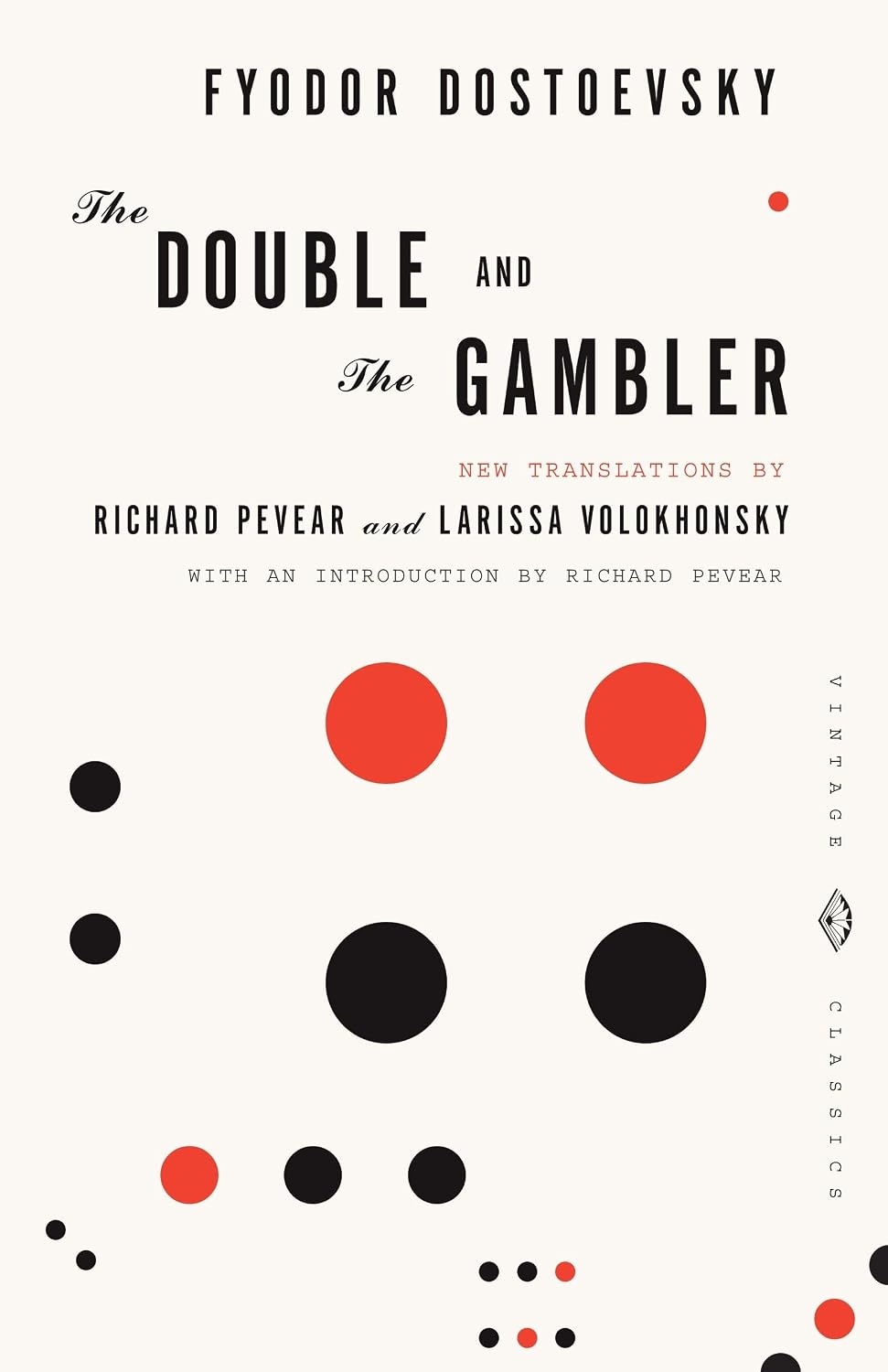
#1 — The Double and The Gambler — trans. Richard Pevear & Larissa Volokhonsky (2007)
- Readability: High — preserves staccato repetitions without sacrificing momentum.
- Accuracy: Excellent — the most rigorous modern rendering of both works.
- Tone: Faithful to Dostoevsky's verbal tics and psychological precision.
- Accessibility: Ideal for first-time readers seeking both novellas together.
Which translation is right for you?
- Choose Pevear & Volokhonsky if you want both novellas together in a single modern translation that preserves Dostoevsky's distinctive style.
- Choose Coulson if you want only The Double and prefer smoother, more idiomatic English prose.
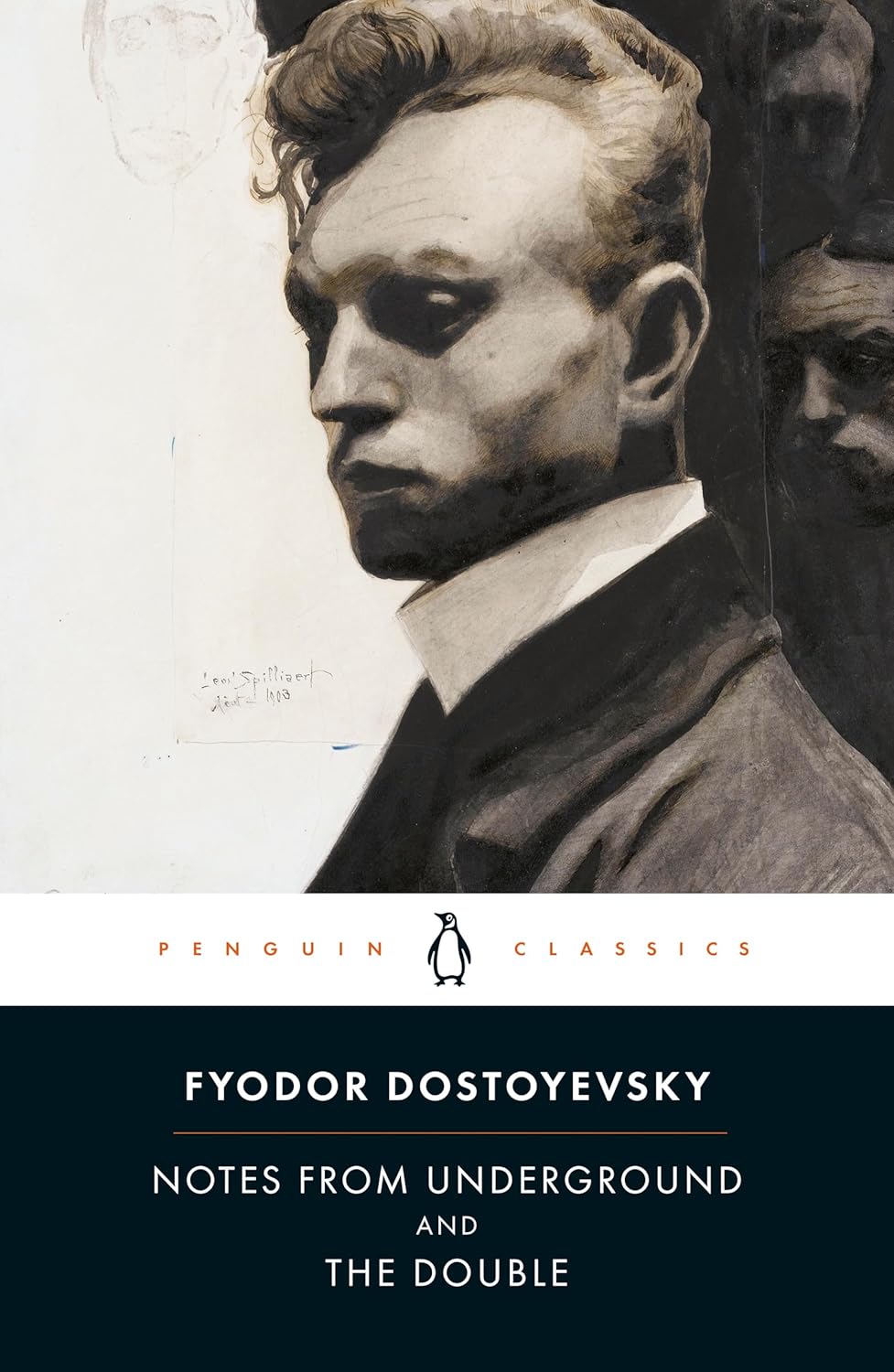
#2 — Notes from Underground and The Double — trans. Jessie Coulson (1972)
- Readability: Very high — smooth and conventionally idiomatic.
- Accuracy: Good — more accessible but loses some Russian strangeness.
- Tone: Cleaner English experience at the cost of literal friction.
- Accessibility: Best for readers wanting The Double paired with Notes from Underground.
About the Translators
Richard Pevear & Larissa Volokhonsky published their Double and Gambler as a paired Vintage Classics volume in 2007. Their Double is particularly notable for preserving the staccato repetitions and verbal tics through which Golyadkin's speech turns in on itself — qualities that earlier translations had smoothed away. Their Gambler maintains the novel's galloping momentum without sacrificing the psychological precision that makes it more than a thriller.
Jessie Coulson (1905–1988) was a British translator of Russian literature who worked extensively for Penguin Classics, translating Dostoevsky, Turgenev, and others across several decades. Her 1972 Double — paired in the Penguin edition with Ronald Wilks's Notes from Underground — is the most widely available older alternative. Her approach is more conventionally idiomatic than P&V; the prose is smooth and accessible at some cost to the Russian strangeness that gives The Double its unsettling quality.
Themes
The Double (1846) is Dostoevsky's most Gogolian work — the shadow of Dead Souls and The Overcoat is everywhere — and also his earliest venture into territory he would later make definitively his own: the collapse of a person under the weight of social performance. Golyadkin's double is not a supernatural horror but a social one — a version of himself that does effortlessly what Golyadkin cannot do at all. The horror is that the double succeeds by behaving exactly the way Golyadkin secretly believes he should behave. The novel is a study in how much of identity is social performance, and what happens to people who cannot perform.
The Gambler (1866) is Dostoevsky's most direct confession: written at speed, from experience, by a man who understood compulsion from the inside. Alexei knows the roulette wheel will ruin him and continues anyway. He knows Polina doesn't love him the way he needs and loves her anyway. The novel is unusual among Dostoevsky's work in being almost entirely about the mechanics of compulsion, without the redemptive religious framework that typically surrounds his suffering. Grandmother's magnificent losses at the table are darkly comic until they become a mirror.
Together, these two novellas establish a pattern that runs through all of Dostoevsky's major fiction: the man who understands his situation perfectly and cannot change his behavior. The Underground Man synthesizes and philosophizes this pattern; Golyadkin and Alexei simply live it. Reading these novellas alongside Notes from Underground reveals how consistently Dostoevsky returned to this one psychological truth, refining it across four decades of fiction.
Key Characters
Yakov Petrovich Golyadkin (The Double) — A minor government official in St. Petersburg: anxious, socially incompetent, consumed by the gap between how he believes he should be treated and how he actually is. When his double appears — socially fluent, liked, advancing in the same office — the story tracks Golyadkin's breakdown with clinical precision and black comedy.
Golyadkin Jr. (The Double) — The double himself: identical to Golyadkin in appearance, opposite in social capacity. He has no psychological interiority the novel shows — he is entirely social surface. His cheerful success in the world Golyadkin cannot navigate is more disturbing than any malice would be, because it implies that Golyadkin's problem is not the world but himself.
Alexei (The Gambler) — The tutor-narrator employed in a Russian general's household in the fictional resort of Roulettenburg. Obsessed with roulette and with Polina, he understands both obsessions analytically and indulges them anyway. One of Dostoevsky's most self-aware self-deceiving characters.
Polina (The Gambler) — The general's stepdaughter, the object of Alexei's passion. She uses his devotion without quite returning it, though her own precarious financial dependence makes her behavior comprehensible if not sympathetic. Her motivations are never fully explained — which is part of the novel's realism.
Grandmother (The Gambler) — A wealthy, imperious, wheelchair-bound old woman who arrives unexpectedly in Roulettenburg and loses a substantial fortune at roulette with terrifying speed and complete equanimity. One of Dostoevsky's great comic characters, and a dark mirror to Alexei's compulsion: what looks like freedom from consequence turns out to be its own kind of possession.
Recommended Sources
Slavic and East European Journal — The flagship peer-reviewed publication of the American Association of Teachers of Slavic and East European Languages (AATSEEL). Regularly publishes translation criticism and Dostoevsky scholarship. Available through JSTOR.
Slavic Review — Published by Cambridge University Press on behalf of the Association for Slavic, East European, and Eurasian Studies. One of the two leading English-language journals in Russian literary and cultural studies, with extensive coverage of Dostoevsky and translation reception.
Dostoevsky Studies — The journal of the International Dostoevsky Society, published annually and dedicated entirely to Dostoevsky scholarship across all major languages. The most specialized peer-reviewed venue for close work on Dostoevsky's texts and translation history.
Which translation is right for you?
Choose Pevear and Volokhonsky if you want both novellas together in a single modern translation — it is the only serious option that covers both works, and it is the right choice for most readers. Choose Coulson's Penguin if you want The Double only and prefer smoother, more idiomatic English; note that The Gambler is not included. If you're reading Notes from Underground alongside The Double, the Penguin volume pairing Wilks's Notes with Coulson's Double is a practical choice that keeps both of Dostoevsky's major short works in the same register.
Frequently Asked Questions
What is The Double and The Gambler about?
The Double explores the psychological breakdown of Golyadkin, a government clerk who encounters his confident doppelgänger. The Gambler delves into the compulsions of Alexei, a tutor obsessed with roulette and a woman named Polina.
Is The Double and The Gambler hard to read?
The complexity varies by translation. Pevear & Volokhonsky's version maintains Dostoevsky's challenging style, while Coulson offers a smoother, more accessible read for The Double.
Which The Double and The Gambler translation is best?
Pevear and Volokhonsky's Vintage Classics edition is the first choice for modern readers because it is the only serious option that includes both novellas in one volume.
Pevear & Volokhonsky vs Coulson — which should I choose?
Choose Pevear and Volokhonsky if you want both novellas together in a modern translation. Choose Coulson if you want only The Double and prefer smoother, more idiomatic English.
Which translation is easiest to read?
Jessie Coulson's Penguin Classics translation is the most conventionally idiomatic and accessible for readers who prefer smoother English prose.
Which translation is most accurate?
Pevear and Volokhonsky's rendering is the most rigorous modern translation, preserving the staccato repetitions and verbal tics of Dostoevsky's prose.
Why pair The Double with The Gambler in one volume?
The pairing highlights Dostoevsky's recurring theme of characters who understand their situation perfectly yet cannot change their behavior, linking the 1846 and 1866 novellas.
This guide is based on reading the 2 translations and reviewing scholarly commentary. Last reviewed: June 2026.
As an Amazon Associate, I earn from qualifying purchases.
Looking for another classic? Browse all our translation guides →
Readers of Dostoevsky's shorter works will also want our guide to the best Notes from Underground translation.
For more Pevear & Volokhonsky, see our comparison of the best Crime and Punishment translations.
Explore another major Dostoevsky novel in our Idiot translation guide.
Or start the great late novels with our Brothers Karamazov translation guide.