Fathers and Sons: What It's About & Best Translation
Turgenev's novel of generational conflict — the Oxford World's Classics versus the Norton Critical
As an Amazon Associate, we earn from qualifying purchases.
Fathers and Sons explores the generational divide in 19th-century Russia through the story of Arkady Kirsanov and his nihilist friend Bazarov. The novel examines themes of change, tradition, and the conflict between old and new ideas.
Translation Comparison at a Glance
| Translation | Readability | Accuracy | Tone | Best For |
|---|---|---|---|---|
| Freeborn (1991) | High | Very good | Measured, civilised | First reading |
| Katz (2009) | Moderate | Excellent | Contemporary, immediate | Classroom, scholarly context |
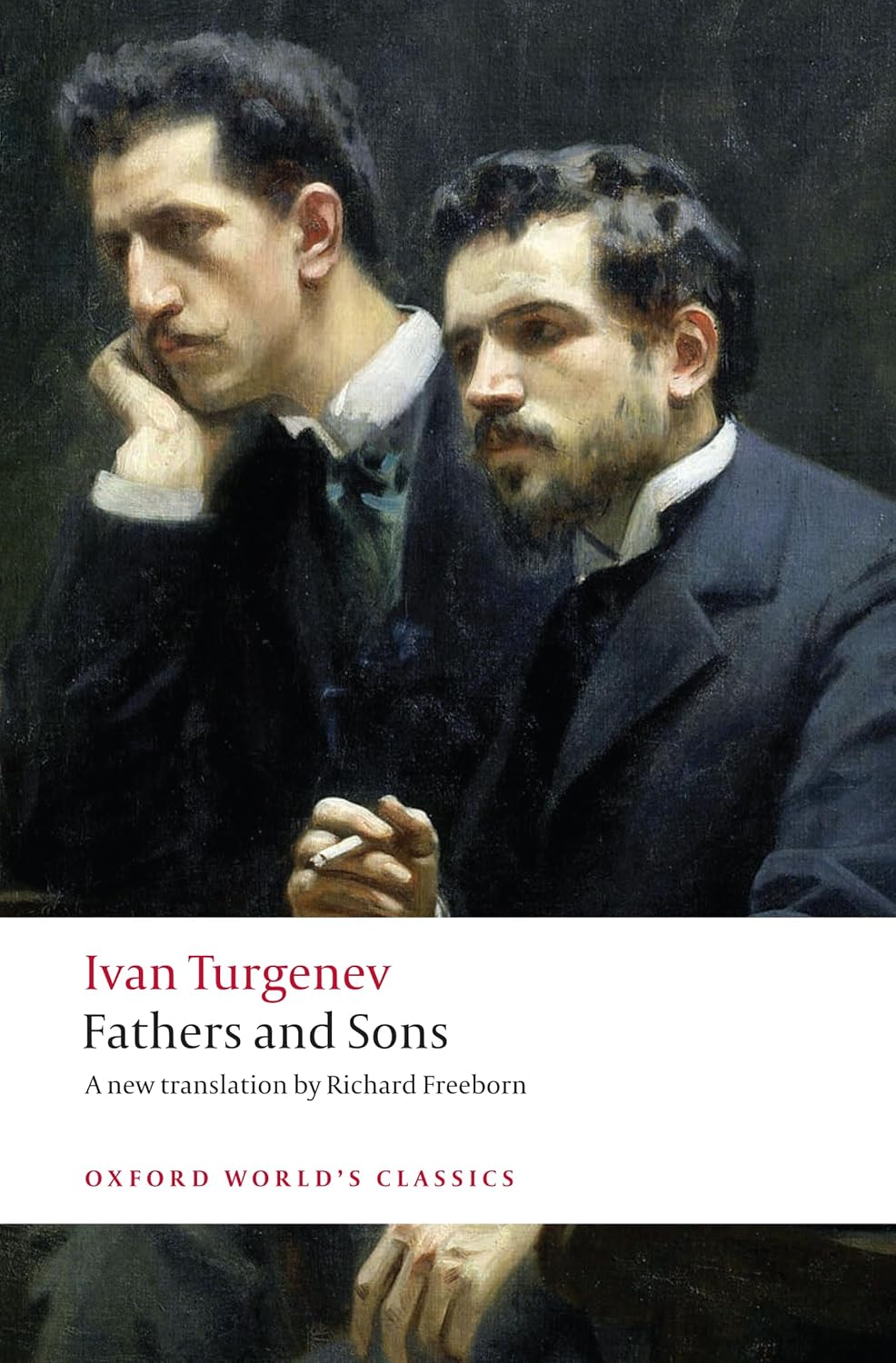
#1 — Fathers and Sons — trans. Richard Freeborn (1991)
- Readability: Readable without being colloquial; measured, civilised quality.
- Accuracy: Very good; faithful to Turgenev's European literary style.
- Tone: Balanced and understated, matching the novel's European quality.
- Accessibility: Ideal for first-time readers with helpful introduction and notes.
Which translation is right for you?
- Choose Freeborn if you want the standard recommended edition for a first reading with measured, civilised prose.
- Choose Katz if you are reading in a classroom context or want the surrounding documents, reviews, and letters.
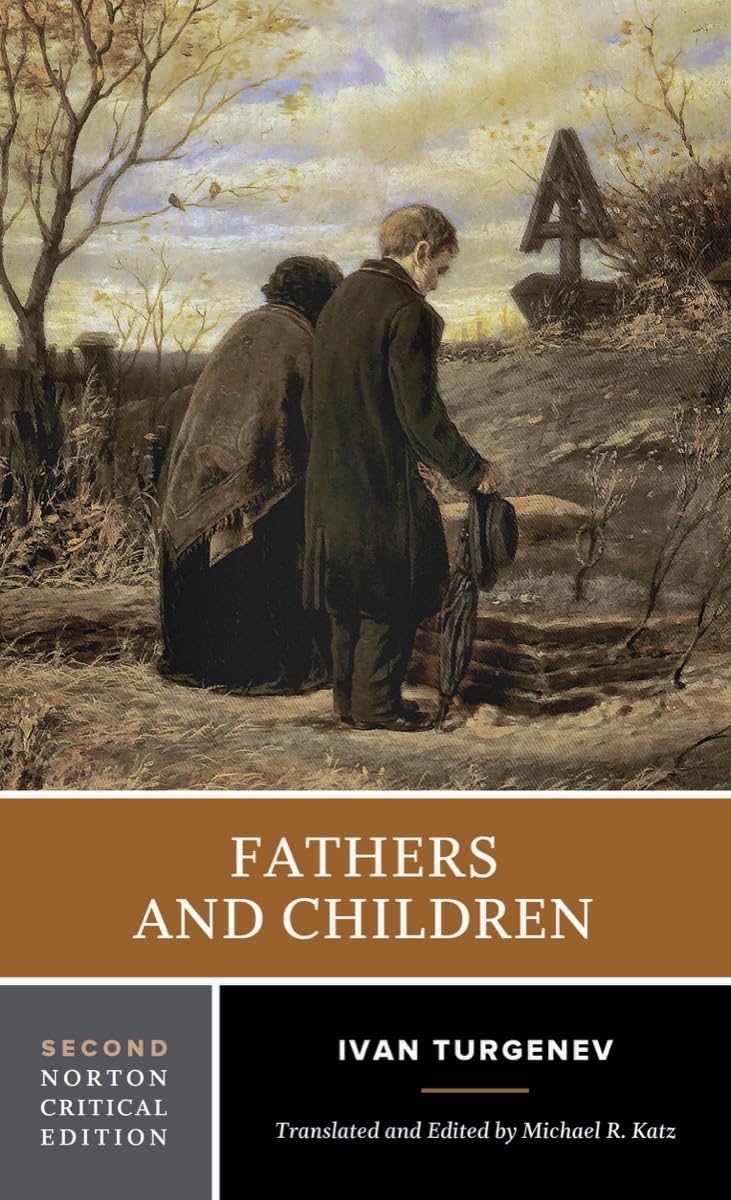
#2 — Fathers and Children — trans. Michael R. Katz (2009)
- Readability: Somewhat more contemporary and colloquial in register.
- Accuracy: Excellent; uses the more literally accurate title.
- Tone: Immediate and scholarly, focused on historical context.
- Accessibility: Best for classroom use with extensive supporting documents.
About the Translators
Richard Freeborn (1926–2020, 1991, Oxford World's Classics): Professor of Russian Literature at the University of London (SSEES) and the leading Turgenev scholar in English. His Oxford WC has been the standard recommended edition for thirty years; he also translated Turgenev's Rudin, Home of the Gentry, and On the Eve. His introduction to the Oxford edition remains one of the best short accounts of the novel's reception and its place in Russian literary history.
Michael R. Katz (2009, Norton Critical Edition): Professor of Russian at Middlebury College; also translated Dostoevsky's Notes from Underground for Norton Critical. His edition uses the more accurate title Fathers and Children and is designed for classroom use, with a substantial surrounding apparatus of letters, contemporary reviews, and modern critical essays.
Themes
Bazarov as genuine intellectual achievement. Turgenev created a character he did not agree with and could not dismiss. Bazarov's materialism, his contempt for sentiment, his empiricism are presented with enough force that the novel cannot simply mock them. His encounter with Odintsova — a woman he cannot account for using his own principles — is the novel's test case: what happens when someone committed to the denial of irrational experience is overwhelmed by irrational experience? His failure to manage the feeling does not refute his position so much as reveal its cost. Turgenev does not let the failure be a simple victory for the fathers.
The fathers as more than foils. Pavel Kirsanov — the fastidious uncle with his irreproachable tailoring and his mysterious romantic wound — is presented with enough sympathy that the novel resists easy generational allegory. His duel with Bazarov is the most deliberately absurd scene in a novel full of deliberate absurdities, and the absurdity is distributed evenly. Neither generation has the right answer; the novel's balance is its most European quality, and the thing that infuriated Russian readers of every political persuasion in 1862.
Bazarov's death. He dies from an accidental infection contracted during an autopsy — an appropriate death for a materialist who believed only in what could be observed and verified. His final scenes with his parents — two old people destroyed by his loss — are the novel's emotional climax, and Turgenev handles them with a restraint that is more devastating than sentimentality would have been.
Key Characters
Yevgeny Bazarov — the nihilist medical student, the novel's dominant presence. He is rude, brilliant, contemptuous, and — in the sequences with Odintsova — suddenly and terribly human. His intellectual positions are presented with full force; his failure to live by them is the novel's argument about their human cost.
Arkady Kirsanov — Bazarov's friend and the novel's witness. He admires Bazarov enormously and gradually discovers he is not, in fact, a nihilist — he likes things too much. His arc from Bazarov's disciple to conventional domesticity is the novel's most socially conservative plot, and Turgenev handles it with wry affection.
Anna Odintsova — the widow who refuses Bazarov's declaration: not because she doesn't feel something but because she has decided that peace matters more to her than passion. She is the novel's most enigmatic figure and possibly its most modern one.
Pavel Kirsanov — Arkady's uncle; the 1840s generation embodied. Romantic, proud, convinced of the importance of principles even when those principles produce no practical result. His duel with Bazarov is one of the strangest and funniest scenes in Russian literature.
Nikolai Kirsanov — Arkady's father; gentle, well-meaning, slightly bewildered, in love with a peasant girl he has installed in his house and slightly ashamed of it. The most sympathetic figure in the novel, and the one least touched by the generational argument that consumes everyone around him.
Recommended Sources
For further academic reading on Turgenev and Fathers and Sons:
- The Slavic and East European Journal (SEEJ) — the flagship journal of AATSEEL; covers Turgenev's fiction and its place in the Russian literary tradition.
- Slavic Review (Cambridge University Press) — essential for understanding the political and cultural context in which the novel was received and the debates it provoked.
- Russian Literature (Elsevier) — the main international journal for Turgenev scholarship, including comparative studies with his European contemporaries.
Which translation is right for you?
Choose Freeborn for a first reading — his Oxford World's Classics translation has been the standard for thirty years and is the most balanced version in terms of accuracy and readability. Choose Katz if you are reading in a classroom context or want the surrounding documents — reviews, letters, Turgenev's retrospective essays — that transform the novel from a literary text into a historical event.
Frequently Asked Questions
What is Fathers and Sons about?
Fathers and Sons explores the generational divide in 19th-century Russia through the story of Arkady Kirsanov and his nihilist friend Bazarov. The novel examines themes of change, tradition, and the conflict between old and new ideas.
Is Fathers and Sons hard to read?
Fathers and Sons can be challenging due to its historical context and philosophical themes. Freeborn's translation is more accessible for first-time readers, while Katz's offers a scholarly approach.
Which Fathers and Sons translation is best?
Freeborn's Oxford World's Classics translation has been the standard recommended edition for three decades and is the most balanced version in terms of accuracy and readability.
Freeborn vs Katz — which should I choose?
Choose Freeborn for a first reading. Choose Katz if you are reading in a classroom context or want the surrounding documents — reviews, letters, Turgenev's retrospective essays.
Which translation is easiest to read?
Freeborn's translation is readable without being colloquial, with the measured, civilised quality of Turgenev's own style.
Which translation is most accurate?
Katz uses the more literally accurate title Fathers and Children and provides the full scholarly apparatus of the Norton Critical Edition.
Why does the title differ between editions?
The novel's title in Russian means literally Fathers and Children — more accurate than the traditional Fathers and Sons used by the Norton Critical Edition.
This guide is based on reading the translations and reviewing scholarly commentary. Last reviewed: June 2026.
As an Amazon Associate, I earn from qualifying purchases.
Looking for another classic? Browse all our translation guides →
Exploring more Russian literature? See our guide to the best War and Peace translations.
For Tolstoy's other masterpiece, our Anna Karenina translation guide compares Pevear & Volokhonsky, Bartlett, and the Maudes.
Reading Dostoevsky alongside Turgenev? Check our comparison of the best Brothers Karamazov translations.
Pushkin's verse novel is another cornerstone of Russian fiction — our Eugene Onegin translation guide weighs Falen, Mitchell, and Nabokov.