Eugene Onegin: What It's About & Best Translation
Pushkin's novel in verse — and the famous debate between literal and poetic translation
As an Amazon Associate, we earn from qualifying purchases.
Eugene Onegin is a novel in verse that follows the life of a disillusioned Russian aristocrat, Eugene Onegin, who befriends the idealistic poet Vladimir Lensky and rejects the love of Tatiana Larina, only to regret it later. The story explores themes of love, friendship, and the consequences of indifference.
Translation Comparison at a Glance
| Translation | Readability | Accuracy | Tone | Best For |
|---|---|---|---|---|
| Falen (1995) | Very high | Very good | Light, witty, idiomatic | First-time readers, pleasure reading |
| Mitchell (2008) | High | Very good | Slightly formal, Victorian cast | Readers wanting Bayley's introduction |
| Nabokov (1964/1975) | Moderate | Excellent | Literal, scholarly prose | Close study alongside verse |
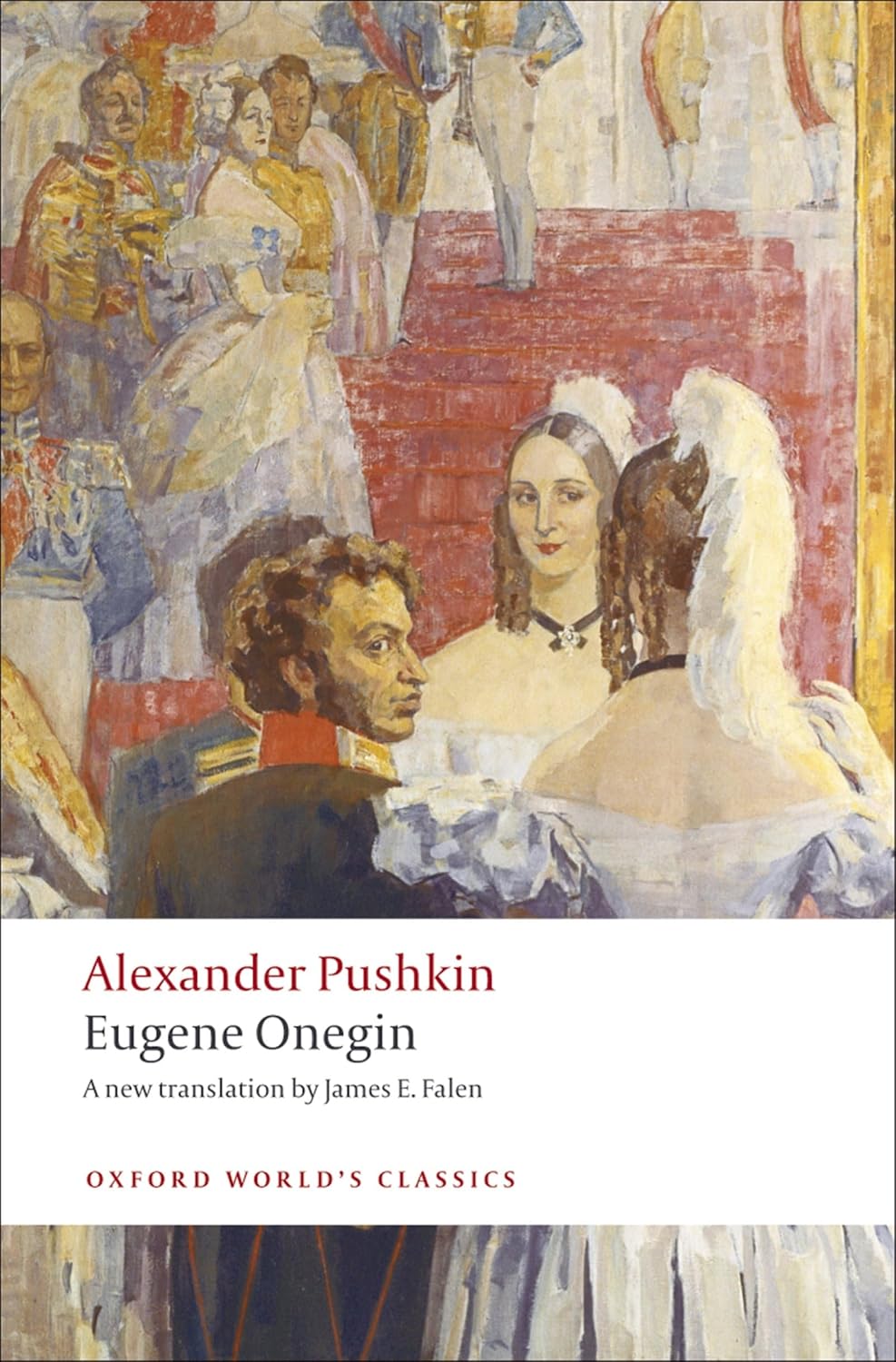
#1 — Eugene Onegin — trans. James E. Falen (1995)
- Readability: Light, idiomatic, and genuinely witty
- Accuracy: Preserves meaning while keeping the Onegin stanza
- Tone: Aristocratic ease with rapid tonal shifts
- Accessibility: Excellent for first-time readers
Which translation is right for you?
- Choose Falen if you want to experience the poem as Pushkin wrote it — rhyming, metered, in the Onegin stanza — without sacrificing meaning.
- Choose Mitchell if you prefer the Penguin Classics edition and John Bayley's excellent introduction.
- Choose Nabokov if you are a careful reader seeking maximum fidelity for study alongside a verse version.
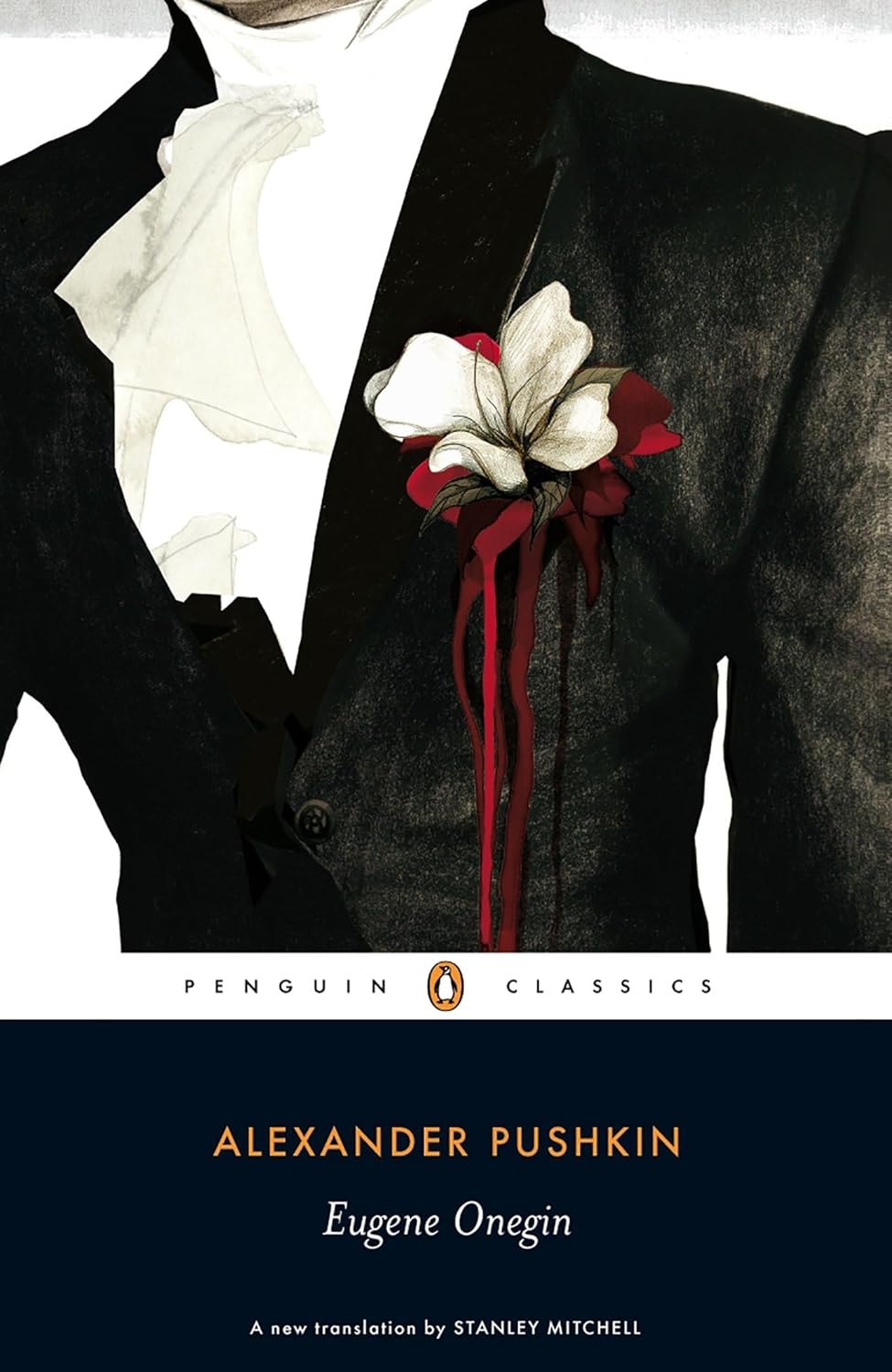
#2 — Eugene Onegin — trans. Stanley Mitchell (2008)
- Readability: Clear verse with slightly formal register
- Accuracy: Preserves the Onegin stanza
- Tone: Victorian cast to some diction
- Accessibility: Good with excellent scholarly introduction
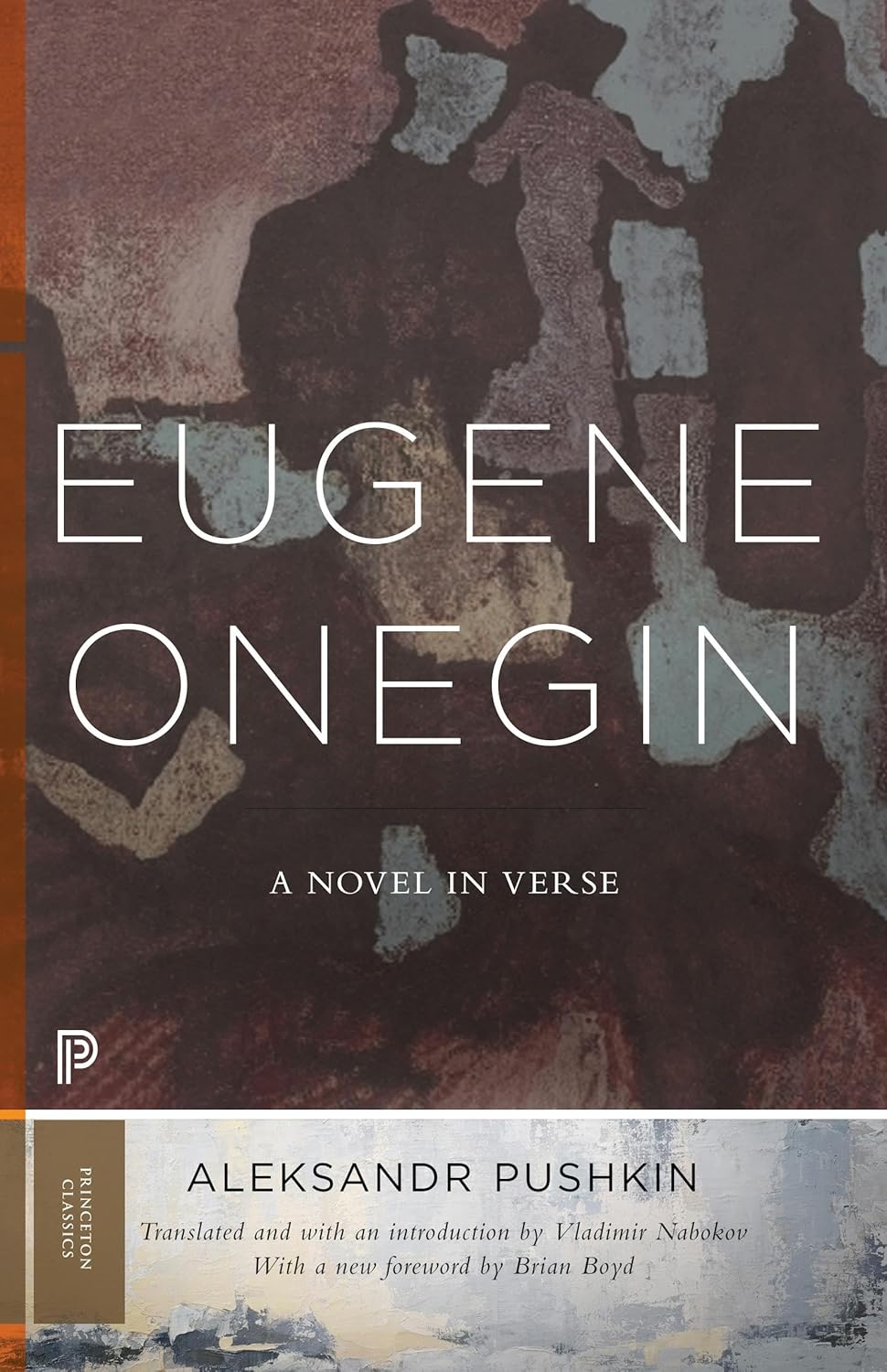
#3 — Eugene Onegin — trans. Vladimir Nabokov (1964, revised 1975)
- Readability: Dense scholarly prose
- Accuracy: Maximum literal fidelity
- Tone: Deliberately unpoetic
- Accessibility: Best used for study, not pleasure
About the Translators
James E. Falen (1927–2014, 1995, Oxford World's Classics): Professor of Russian at the University of Tennessee who spent years producing the verse translation most praised by Pushkin scholars. Falen's English is light, idiomatic, and genuinely witty, preserving the Onegin stanza's rhyme scheme and meter while keeping the meaning intact — the most difficult combination to achieve. His introduction and notes in the Oxford edition are among the best available in English.
Stanley Mitchell (1936–2013, 2008, Penguin Classics): British academic who taught European literature, including at the University of Sussex. His verse translation also preserves the Onegin stanza form and includes a substantial introduction by the Pushkin scholar John Bayley — one of the finest short essays on the poem in English. Mitchell's register is slightly more formal than Falen's, which some readers find appropriate to Pushkin's period.
Vladimir Nabokov (1899–1977, 1964/revised 1975, Princeton University Press): Russian-American novelist whose four-volume Princeton edition — one volume of prose translation, three volumes of commentary — is a monument to the literal approach and to the famous argument with Edmund Wilson that followed its publication. Nabokov's foreword to the translation is itself a major piece of writing about the theory of translation. Brian Boyd, Nabokov's biographer, wrote the foreword for the Princeton Classics single-volume edition.
Themes
The self-aware narrator. The poem is constantly aware of being a poem. Pushkin intrudes as narrator — commenting on his characters, addressing the reader, inserting himself as a character who once knew Onegin personally, digressing into literary debates of the 1820s, commenting on his own digressions. The frame is as important as the story: the Pushkin writing the novel is a character in the novel, and the relationship between author and creation is part of the poem's subject. A translation that suppresses this dimension — by making the narrator's voice indistinguishable from the narrative — loses something central.
Tatiana's dignity as moral argument. The poem's great reversal — Onegin refuses her; years later she refuses him — is not a symmetrical revenge plot. Tatiana tells Onegin clearly that she still loves him and refuses anyway, because she has given her word to her husband. This is not cold duty; it is dignity. Pushkin insists that the capacity to honour one's word in the face of desire is a form of moral greatness, and Tatiana is its exemplar. The poem ends with her, not with Onegin, and she is in the right.
The superfluous man. Onegin is the first fully realised instance of a type that would define Russian literature for fifty years: the intelligent, disaffected man who cannot connect his abilities to any meaningful action. Pechorin in Lermontov, Bazarov in Turgenev, Oblomov in Goncharov all inherit this diagnosis. Pushkin offers the portrait without a cure — the poem ends with Onegin understanding what he has lost, but the poem offers no reason to think he could have chosen differently.
Key Characters
Eugene Onegin — the young St. Petersburg aristocrat who has exhausted every form of urban pleasure, inherited a country estate, and finds rural life equally tedious. He is brilliant, empty, and absolutely unable to value anything until it is gone. His intelligence does not help him; it may be what makes him useless.
Tatiana Larina — the poem's moral center. A provincial girl who has formed herself on romantic novels; she writes Onegin a passionate declaration and is refused; she endures; she becomes the poised and brilliant Princess; she refuses him in turn with absolute dignity. One of the great female characters in European literature.
Vladimir Lensky — Onegin's friend: the romantic, idealistic poet who is everything Onegin is not — earnest, full of feeling, devoted to Olga. His death in the duel is gratuitous, caused by nothing except Onegin's bored provocation, and the poem never quite recovers from it.
Olga Larina — Tatiana's sister, Lensky's fiancée. She forgets him very quickly. She is not a villain — she is simply young and ordinary, and her ordinariness is part of the poem's argument about romantic idealization.
The narrator / Pushkin — the author as character, who claims to have known Onegin personally, addresses Tatiana directly, and mourns Lensky's death with what seems like genuine grief. The boundary between author and creation is deliberately unstable, and this is where much of the poem's comedy and pathos live.
Recommended Sources
For further academic reading on Pushkin and Eugene Onegin:
- The Slavic and East European Journal (SEEJ) — the flagship journal of AATSEEL; regular coverage of Pushkin scholarship and translation debate.
- The Pushkin Review (North American Pushkin Society) — the dedicated English-language journal for Pushkin studies; the primary venue for specialist scholarship on Eugene Onegin in English.
- Slavic Review (Cambridge University Press) — covers the literary, historical, and cultural contexts essential for understanding Pushkin's Russia.
Which translation is right for you?
Choose Falen if you want to experience Eugene Onegin as the poem Pushkin wrote — rhyming, metered, in the Onegin stanza — without sacrificing meaning to formal demands. This is the first-reader recommendation. Choose Mitchell if you want the Penguin edition and John Bayley's introduction, which is one of the finest short essays on the poem in English; his verse is slightly more formal in register. Choose Nabokov if you are a careful reader who wants maximum fidelity and is prepared to use the translation as a scholarly instrument alongside a verse version — not for pleasure reading, but for understanding what Pushkin actually wrote line by line.
Frequently Asked Questions
What is Eugene Onegin about?
Eugene Onegin is a novel in verse that follows the life of a disillusioned Russian aristocrat, Eugene Onegin, who befriends the idealistic poet Vladimir Lensky and rejects the love of Tatiana Larina, only to regret it later. The story explores themes of love, friendship, and the consequences of indifference.
Is Eugene Onegin hard to read?
Eugene Onegin can be challenging due to its poetic form and cultural references. Falen's translation is considered the most readable, capturing the poem's wit and flow, while Nabokov's is more literal and suited for study.
Which Eugene Onegin translation is best?
James Falen's 1995 Oxford World's Classics translation is the best overall choice for most readers because it preserves the Onegin stanza form while remaining light, idiomatic, and witty.
Falen vs Mitchell — which should I choose?
Choose Falen for the most praised verse rendering that balances meaning and form. Choose Mitchell if you prefer the Penguin Classics edition and John Bayley's excellent introduction.
Which translation is easiest to read?
Falen's verse translation is the easiest to read for pleasure because it captures the poem's wit and natural flow in the original Onegin stanza.
Which translation is most accurate?
Nabokov's literal prose version is the most accurate word-for-word, though it sacrifices the poetic experience that verse translations aim to recreate.
Should I read Nabokov's literal translation or a verse version of Eugene Onegin?
Read Nabokov alongside a verse translation if you want maximum fidelity for study; it is not intended for general pleasure reading.
This guide is based on reading all three translations and reviewing scholarly commentary. Last reviewed: June 2026.
As an Amazon Associate, I earn from qualifying purchases.
Looking for another classic? Browse all our translation guides →
If you're exploring Russian classics, see our guide to the best War and Peace translations.
For Tolstoy, our Anna Karenina translation guide compares Pevear & Volokhonsky against Bartlett and the Maudes.
Also reading Dostoevsky? See our guide to the best Brothers Karamazov translation.
Another essential 19th-century Russian novel is covered in our Crime and Punishment translation guide.
For Turgenev's classic, check our Fathers and Sons translation guide.