The Epic of Gilgamesh: What It's About & Best Translation
The world's oldest story, and every version is a reconstruction
As an Amazon Associate, we earn from qualifying purchases.
The Epic of Gilgamesh is an ancient Mesopotamian poem that follows the adventures of Gilgamesh, the king of Uruk, and his companion Enkidu. Together, they embark on quests that explore themes of friendship, the human condition, and the pursuit of immortality. The poem is a profound reflection on the inevitability of death and the search for meaning in life.
Translation Comparison at a Glance
| Translation | Readability | Accuracy | Tone | Best For |
|---|---|---|---|---|
| George (1999) | High | Excellent | Disciplined and plain | Scholarly first reading |
| Mitchell (2004) | Very high | Good | Polished and fluent | Absorbing literary read |
| Ferry (1992) | High | Fair | Spare and rhythmic | Poetic encounter as verse |
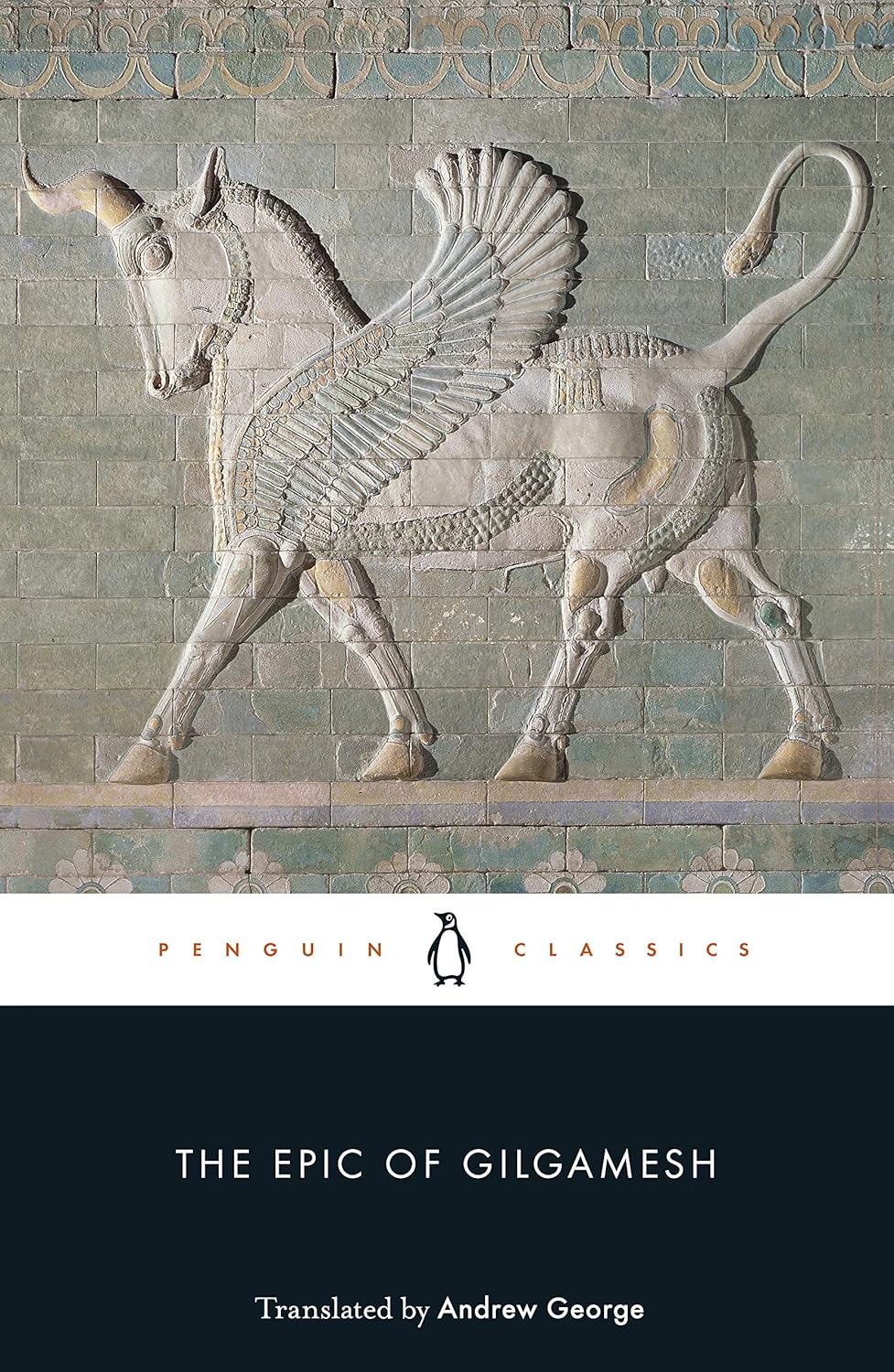
#1 — The Epic of Gilgamesh — trans. Andrew George (1999)
- Readability: Disciplined and relatively plain prose that remains readable cover to cover.
- Accuracy: Most complete English version, clearly marking gaps and including all fragments.
- Tone: Restrained scholarly voice that lets the poem's power stand on its own.
- Accessibility: Comprehensive yet approachable for first-time readers seeking the essential edition.

Guidall's commanding and nuanced narration perfectly complements Mitchell's accessible yet poetic translation, capturing the epic's grandeur and emotional depth.
Listen on Audible →Which translation is right for you?
- Choose George if you want the most complete scholarly edition that marks gaps and includes all surviving fragments.
- Choose Mitchell if you want the most literary and fluent version that reads as a great narrative poem.
- Choose Ferry if you want the most compressed poetic version for readers who already know the story.
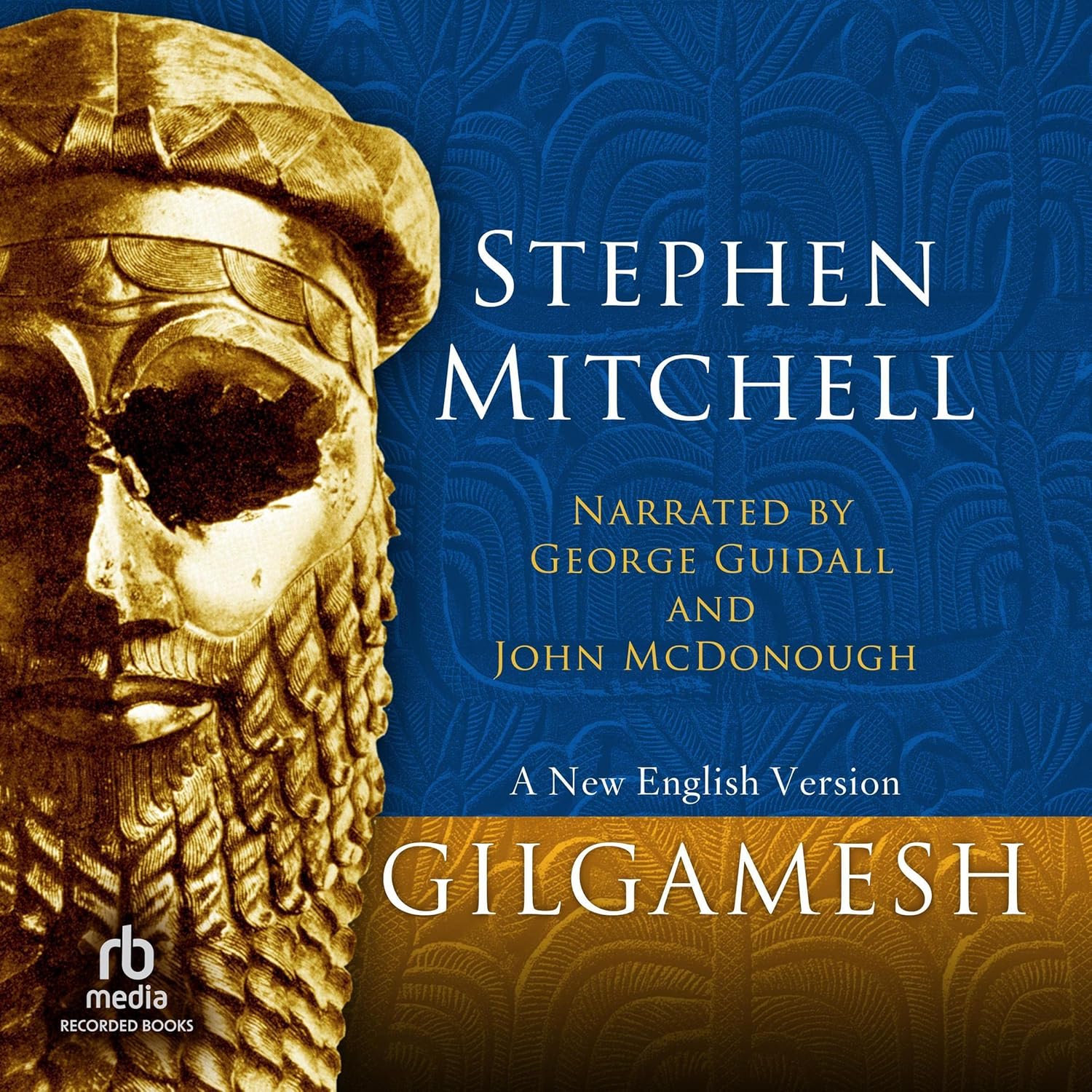
#2 — Gilgamesh: A New English Version — trans. Stephen Mitchell (2004)
- Readability: Polished and fluent, reading like a great poem rather than an artifact.
- Accuracy: Works from scholarly translations and cribs; transparent about not reading Akkadian.
- Tone: Slightly archaic yet contemporary and absorbing.
- Accessibility: Ideal entry point for readers seeking an engaging narrative experience.
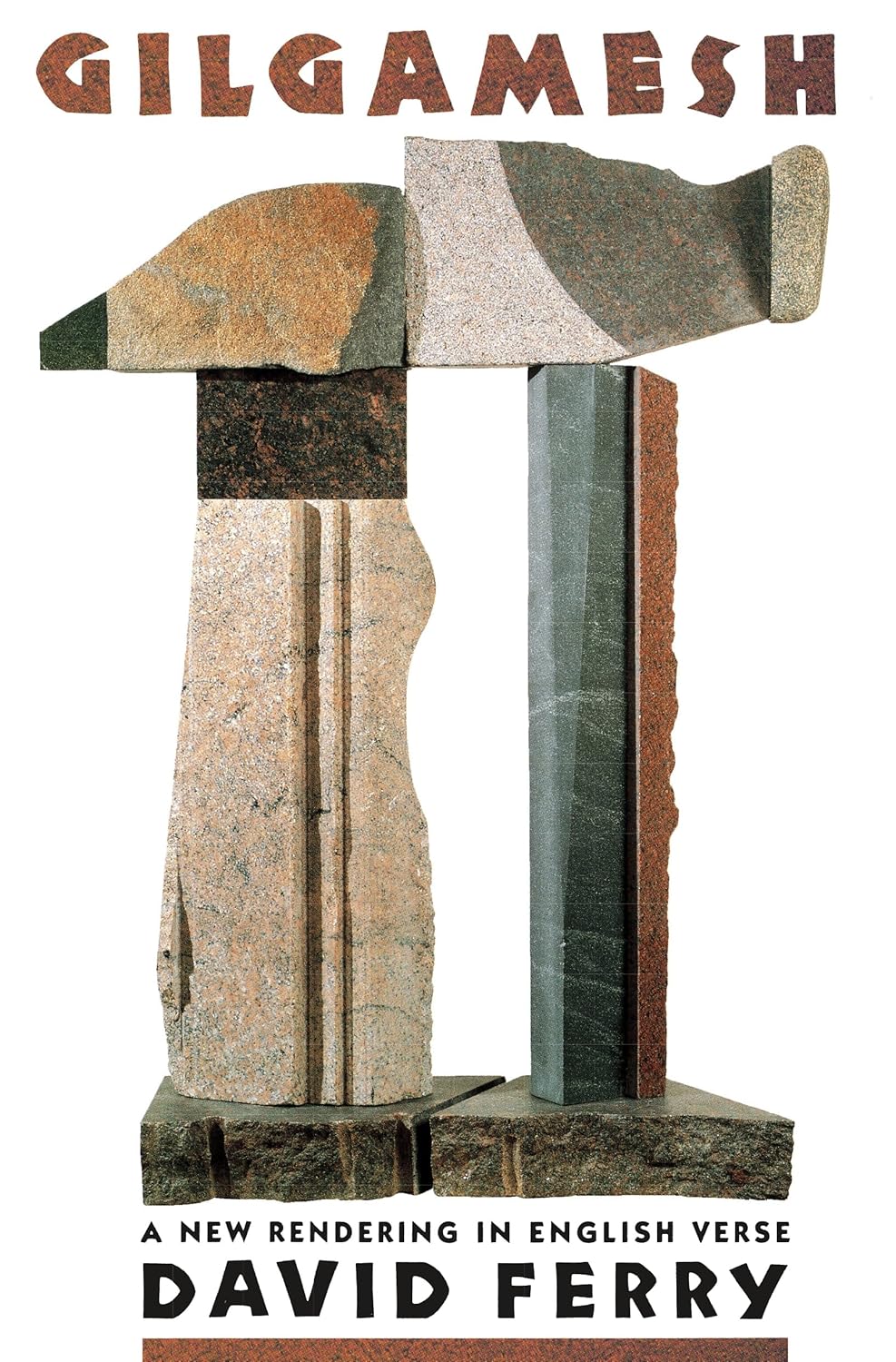
#3 — Gilgamesh: A New Rendering in English Verse — trans. David Ferry (1992)
- Readability: Spare and rhythmically controlled, shorter than the others.
- Accuracy: Makes no attempt to reconstruct missing passages; focuses on surviving sections.
- Tone: Formal dignity with free-verse lines that carry real weight.
- Accessibility: Best for readers already familiar with the story or coming from Homer and Virgil.
About the Translators
Andrew George (b. 1955, 1999, Penguin Classics): Professor of Babylonian at SOAS University of London; the world's leading authority on the Gilgamesh tablets, having spent his career excavating, studying, and comparing every surviving cuneiform fragment. His 1999 Penguin edition is the most complete and rigorously researched English Gilgamesh available.
Stephen Mitchell (2004, Free Press): American poet and translator; not a cuneiformist — he worked from all available scholarly translations and literal cribs to produce the most literary English Gilgamesh. His other translations include the Tao Te Ching, the Book of Job, and Rilke's Letters to a Young Poet.
David Ferry (b. 1924, 1992, FSG): American poet; his other translations include Virgil's Eclogues and Georgics and Horace's Odes. His Gilgamesh is the most compressed and spare English version — a poet's translation that works as a poem first and an archaeological artifact second.
Themes
Friendship as the poem's moral center. Gilgamesh does not begin as a sympathetic figure — he is a tyrannical king who works his people into the ground. Enkidu is created by the gods as his counterpart, and their friendship transforms both of them. Enkidu's death is not an episode but the poem's fulcrum: everything that follows — Gilgamesh's grief, his quest for immortality, his failure and return — happens because he cannot accept losing the one person who was his equal.
Death as unanswerable. The poem's second half is Gilgamesh's journey to find Utnapishtim, the one mortal who achieved immortality after surviving the flood. He fails every test and returns to Uruk without the plant of immortality he briefly found. The poem does not console. The tavern-keeper Siduri, whom Gilgamesh meets on his journey, gives the poem's most direct answer: when the gods created humans they kept death for themselves and gave mortals life — eat, drink, love, tend your children. This is what there is.
The flood narrative. The story Utnapishtim tells Gilgamesh — of a great flood, a god's warning, a boat built to survive it, birds sent to find land — is one of the oldest known flood narratives in the world, predating the Genesis account by at least a thousand years. The relationship between the Babylonian and Hebrew flood traditions is one of the most discussed problems in ancient Near Eastern scholarship.
Key Characters
Gilgamesh — king of Uruk; two-thirds divine, one-third human. His power makes him dangerous; his grief makes him human; his failure to find immortality makes him wise. The poem's ending — he shows Ur-shanabi the walls of Uruk and points to what endures — is one of literature's great quiet conclusions.
Enkidu — created from clay and spit to be Gilgamesh's equal. He begins as a wild man who lives with animals and is civilized by the temple woman Shamhat. His death from an illness sent by the gods — punishment for killing the Bull of Heaven — is the wound the poem never fully heals.
Shamhat — the temple woman who civilizes Enkidu through physical intimacy and teaches him human customs and speech. Her role is central to the poem's understanding of civilization: both a gift and a loss, a crossing from which there is no return.
Utnapishtim — the only mortal to achieve immortality, granted by the gods after surviving the great flood. He lives at the mouth of the rivers; Gilgamesh's desperate journey to find him ends in failure. He is less a character than a test — the poem's way of confronting Gilgamesh with the impossibility of what he seeks.
Ishtar — the goddess of love and war who proposes marriage to Gilgamesh after his triumph over Humbaba. His brutal refusal — he lists her former lovers and the disasters that befell them — provokes her to send the Bull of Heaven, an act whose consequences kill Enkidu and set the poem's second half in motion.
Recommended Sources
For further academic reading on Gilgamesh and ancient Mesopotamian literature:
- Journal of Near Eastern Studies (University of Chicago) — the leading American journal for ancient Mesopotamian scholarship; essential for textual and historical research on the Gilgamesh tablets.
- Iraq (British Institute for the Study of Iraq) — specialist journal covering Mesopotamian archaeology and philology; key source for updates on newly discovered tablet fragments.
- Bulletin of the American Schools of Oriental Research — major venue for ancient Near Eastern archaeology; essential for the flood narrative's relationship to other ancient traditions.
Which translation is right for you?
Choose George (Penguin) for a first reading that is also a scholarly reading — his is the most complete English Gilgamesh, the most rigorously researched, and the one that always shows you what is certain and what is reconstruction. Choose Mitchell (Free Press) for the most literary and fluent version — a Gilgamesh that reads as a great narrative poem rather than a recovered artifact. Choose Ferry (FSG) for the most concentrated poetic version — shortest, most formally controlled, best for readers who already know the story and want to encounter it as verse.
Frequently Asked Questions
What is The Epic of Gilgamesh about?
The Epic of Gilgamesh is an ancient Mesopotamian poem that follows the adventures of Gilgamesh, the king of Uruk, and his companion Enkidu. Together, they embark on quests that explore themes of friendship, the human condition, and the pursuit of immortality. The poem is a profound reflection on the inevitability of death and the search for meaning in life.
Is The Epic of Gilgamesh hard to read?
The difficulty of reading The Epic of Gilgamesh depends on the translation. Andrew George's version is comprehensive and scholarly, ideal for those seeking depth. Stephen Mitchell's translation is more literary and accessible for contemporary readers, while David Ferry offers a poetic and condensed version.
Which Gilgamesh translation is best?
The Andrew George translation is this guide's primary recommendation. It is the most complete and most rigorously researched English Gilgamesh available, and it works as a reading experience as well as a scholarly edition.
Andrew George vs Stephen Mitchell — which should I choose?
Choose George for the most complete scholarly edition that marks gaps and includes all fragments. Choose Mitchell for the most literary and fluent version that reads as a great narrative poem.
Which translation is easiest to read?
Stephen Mitchell's version is the most literary and fluent English Gilgamesh, polished and absorbing for readers wanting a contemporary telling.
Which translation is most accurate?
Andrew George's Penguin Classics edition is the most complete and rigorously researched, always showing what is certain and what is reconstruction from the tablets.
How do translators handle the many missing sections of the Gilgamesh tablets?
Every translation is a reconstruction. George marks gaps clearly with ellipses and brackets; Mitchell produces a fluent literary whole; Ferry compresses to the surviving poetic core without filling lacunae.
This guide is based on reading all 3 translations and reviewing scholarly commentary. Last reviewed: June 2026.
As an Amazon Associate, I earn from qualifying purchases.
Looking for another classic? Browse all our translation guides →
Readers exploring ancient epics will also want our guide to the best Iliad translations.
For another foundational classical poem, see our comparison of the best Aeneid translations.
If you're interested in early heroic verse, our Beowulf translation guide compares Heaney, Tolkien, and Headley.
Another ancient epic worth exploring is covered in our Oresteia translation guide.