Notre-Dame de Paris: What It's About & Best Translation
Hugo's immense novel of Paris, the cathedral, and the outcasts who live in its shadow — nothing like the adaptations
As an Amazon Associate, we earn from qualifying purchases.
Notre-Dame de Paris is centered around the cathedral and the lives of outcasts like Quasimodo and Esmeralda. It explores themes of love, social injustice, and the clash between tradition and progress.
Translation Comparison at a Glance
| Translation | Readability | Accuracy | Tone | Best For |
|---|---|---|---|---|
| Sturrock (1978) | High | Very good | Clear and energetic | First reading, general readers |
| Krailsheimer (1993) | Moderate | Excellent | Formal and precise | Scholarly study, notes |
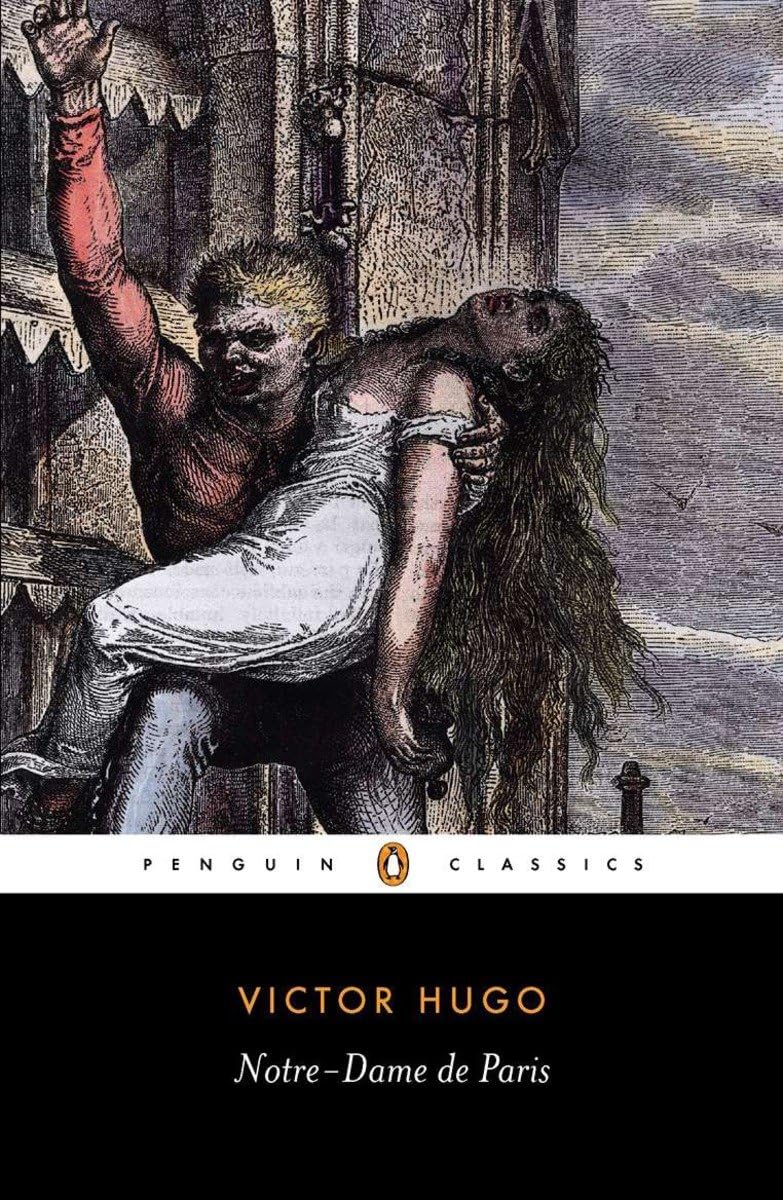
#1 — Notre-Dame de Paris — trans. John Sturrock (1978)
- Readability: Clear, well-paced, easy to sustain across length
- Accuracy: Very good, faithful to Hugo's energy
- Tone: Natural and rhetorical
- Accessibility: Excellent for first-time readers

Homewood's dynamic performance captures the Gothic grandeur and emotional depth of Hugo's masterpiece, while Sturrock's translation preserves the novel's vivid prose and historical richness.
Listen on Audible →Which translation is right for you?
- Choose Sturrock if you want a fluent, readable first encounter with Hugo's rhetorical range and digressions.
- Choose Krailsheimer if you want scholarly notes, precision, and the full Oxford critical apparatus.
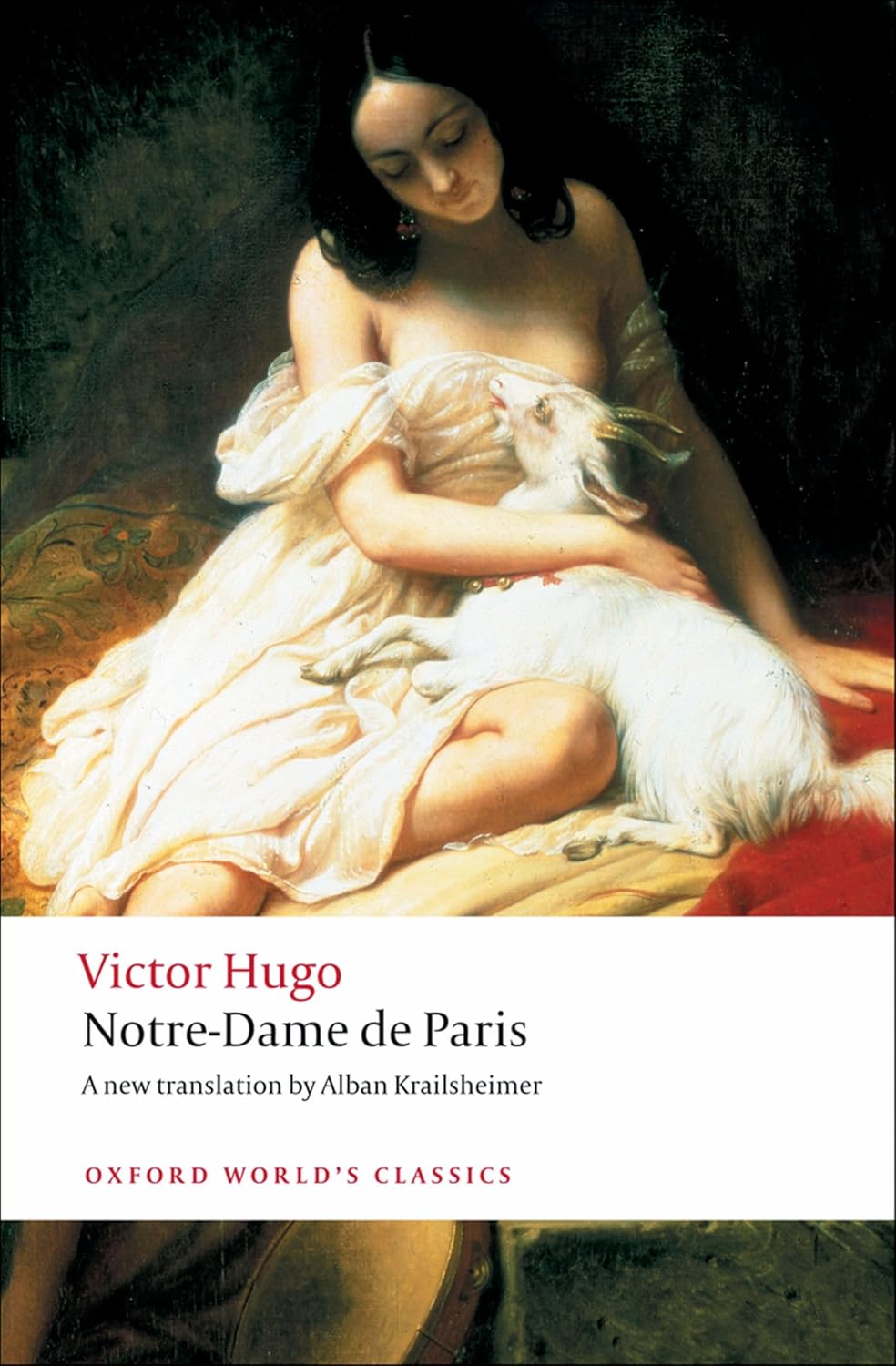
#2 — Notre-Dame de Paris — trans. Alban Krailsheimer (1993)
- Readability: More formal, fewer contemporary concessions
- Accuracy: Excellent, with careful attention to period vocabulary
- Tone: Scholarly and precise
- Accessibility: Best with notes for deeper study
About the Translators
John Sturrock (1942–2009, 1978, Penguin Classics): British critic and translator of French literature; his other Penguin translations include Stendhal's The Charterhouse of Parma; he was also a distinguished essayist on French literary theory. His 1978 Notre-Dame de Paris has been the dominant English literary version for nearly fifty years.
Alban Krailsheimer (1921–2001, 1993, Oxford World's Classics): Oxford Romance scholar who also translated Pascal's Pensées and Rabelais's Gargantua and Pantagruel for Oxford World's Classics. His 1993 Notre-Dame de Paris brings scholarly precision to Hugo's French and carries the full Oxford critical apparatus.
Themes
The cathedral as the novel's argument. Hugo's chapter "This Will Kill That" (Book V) — which interrupts the narrative for nearly twenty pages to argue that the printing press killed architecture as the primary medium of human thought — is not a digression. It is the novel's thesis. Notre-Dame Cathedral is, for Hugo, a stone book: centuries of human history, belief, and imagination compressed into stone. When the printing press made it possible to write that history on paper, architecture lost its purpose. The novel Hugo is writing is simultaneously an elegy for the meaning architecture once carried and an argument for what literature can do instead. The Notre-Dame fire of 2019 and the cathedral's reopening in 2024 made this argument suddenly vivid again.
The outsider as moral center. Quasimodo is deaf, rendered barely human by the world that formed him, capable of love but unable to express it in any way the world will accept. Esmeralda is beautiful, free-spirited, and destroyed by a society that cannot accommodate what she is. Frollo is a scholar who has denied everything human in himself in the name of learning, and is destroyed by what returns when he encounters beauty. Hugo's three central figures are all people the social order has no use for — and the social order destroys all of them. The novel's anger is not only about architectural demolition.
The crowd as historical force. Hugo is fascinated by crowds — the Feast of Fools, the Court of Miracles, the mob that attacks Notre-Dame. His treatment of collective behavior anticipates later crowd psychology. The crowd is simultaneously comic and terrifying: a demonstration of what people become when they act as mass rather than as individuals. The chapters set in the Court of Miracles — the hidden city of beggars and outcasts beneath Paris — are among the novel's most remarkable set pieces.
Key Characters
Quasimodo — the bellringer of Notre-Dame, deaf from the bells, grotesque in appearance, ferociously devoted to both the cathedral and to Frollo who raised him. His love for Esmeralda is the novel's central emotional event. The ending — Quasimodo found dead in Esmeralda's tomb, having gone there to die beside her — is the image the novel insists you carry away.
Esmeralda — the young dancer who represents everything the social order cannot accommodate: beauty, freedom, generosity, and ethnic difference. She is the novel's sacrificial center — the one whose destruction reveals the society's capacity for cruelty most clearly.
Claude Frollo — the Archdeacon of Notre-Dame, a man of learning destroyed by desire he cannot control or acknowledge. He is the novel's most psychologically complex figure: simultaneously villain, victim of his own repression, and a grotesque mirror for the age's relationship between religious authority and human feeling.
Pierre Gringoire — the poet and playwright who wanders through the novel providing comic relief and philosophical commentary. He is partly a self-portrait of Hugo — or at least of Hugo's self-deprecating sense of what a poet is worth in a world of power.
Recommended Sources
For further academic reading on Hugo and Notre-Dame de Paris:
- Nineteenth-Century French Studies (University of Nebraska Press) — the primary English-language journal for Hugo scholarship and 19th century French literature.
- French Studies (Oxford University Press) — the leading British French studies journal; essential historical and cultural context for Hugo's Paris.
- Romanic Review (Columbia University) — covers Romance literatures broadly; essential for placing Hugo in European Romantic literary history.
Which translation is right for you?
Choose Sturrock for most readings — his 1978 Penguin Classics translation handles Hugo's rhetorical range, from the comic to the tragic to the architecturally digressive, with consistent fluency and has served readers well for nearly fifty years. Choose Krailsheimer if you want the scholarly edition with Oxford's critical apparatus; his translation is more formal but equally complete. Both use the original French title Notre-Dame de Paris rather than the English adaptation title The Hunchback of Notre-Dame — which is appropriate, since Quasimodo is not the novel's protagonist.
Frequently Asked Questions
What is Notre-Dame de Paris about?
Notre-Dame de Paris is centered around the cathedral and the lives of outcasts like Quasimodo and Esmeralda. It explores themes of love, social injustice, and the clash between tradition and progress.
Is Notre-Dame de Paris hard to read?
The novel can be challenging due to its length and digressions. Sturrock's translation is more readable for modern audiences, while Krailsheimer's offers scholarly depth.
Which Notre-Dame de Paris translation is best?
John Sturrock's 1978 Penguin Classics translation is the best choice for most readers.
Sturrock vs Krailsheimer — which should I choose?
Choose Sturrock for readability and fluency across the novel's length; choose Krailsheimer for scholarly notes and precision.
Which translation is easiest to read?
Sturrock's version is clearer, better paced, and easier to sustain across Hugo's digressions.
Which translation is most accurate?
Krailsheimer's Oxford edition is the more precise and scholarly rendering with full critical apparatus.
Why do both translations use the French title Notre-Dame de Paris instead of The Hunchback of Notre-Dame?
Quasimodo is not the novel's protagonist; the cathedral itself is the true center, making the original title more accurate.
This guide is based on reading the 2 translations and reviewing scholarly commentary. Last reviewed: June 2026.
As an Amazon Associate, I earn from qualifying purchases.
Looking for another classic? Browse all our translation guides →
Victor Hugo's other masterpiece is covered in our Les Misérables translation guide.
For more 19th-century French fiction, see our comparison of the best Red and the Black translations.
Another sweeping French epic worth exploring is our guide to the best Lost Illusions translation.
If you're reading more French classics, our Madame Bovary translation guide compares Lydia Davis and others.