The Joke: What It's About & Best Translation
Kundera's first novel — and the only English translation he authorised
As an Amazon Associate, we earn from qualifying purchases.
The Joke is about Ludvík Jahn, who is expelled from the Communist Party after a joke goes wrong. The novel explores themes of irony, revenge, and the absurdity of history.
Translation Comparison at a Glance
| Translation | Readability | Accuracy | Tone | Best For |
|---|---|---|---|---|
| Heim (1993) | High | Excellent | Compressed, ironic, faithful | Authentic Kundera experience |
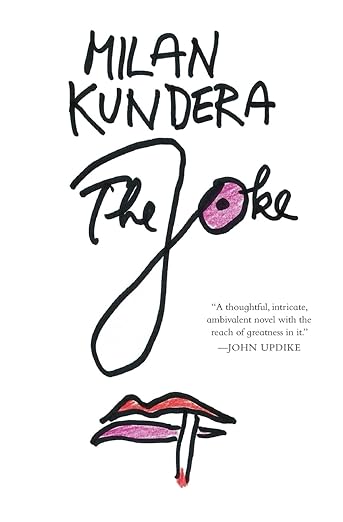
#1 — The Joke: Definitive Version — with Michael Henry Heim (Harper Perennial, 1993)
- Readability: Clear, precise prose that preserves Kundera's compressed style.
- Accuracy: The only version Kundera fully endorsed after line-by-line collaboration.
- Tone: Retains the novel's bitter irony and historical comedy.
- Accessibility: Includes Kundera's preface explaining his translation principles.
Which translation is right for you?
- Choose Heim if you want the only English text Kundera authorised and considered authentic.
About the Translator
Michael Henry Heim (Harper Perennial, 1993 "Definitive Version"): One of the most distinguished literary translators of the twentieth century, Heim worked from Russian, Czech, German, Hungarian, Dutch, and other languages. His translations include Günter Grass's The Tin Drum, Kafka's letters, Chekhov's stories, and Kundera's The Unbearable Lightness of Being (for which he is perhaps best known in the Anglosphere). His collaboration with Kundera on the "Definitive Version" of The Joke was unusual in its intensity — Kundera, who reads English, worked line by line with Heim to ensure the translation matched not just the meaning but the tone and rhythm of the Czech. Heim later recalled that Kundera had strong views about everything and that the collaboration was genuinely demanding. The result is the translation that Kundera considered the only authentic English text of the novel.
Themes
History as joke. The novel's central insight is that history is a system for producing outcomes that no one intended: Ludvík's postcard was a joke that became a denunciation; his revenge is a joke that produces the wrong result; the political system that punished him for a joke has been replaced by a liberal reformism in which the man who denounced him now fancies himself a progressive. The joke is on everyone, always, and no one is exempt — not the idealistic young communists, not their cynical successors, not Ludvík himself.
The impossibility of revenge in a moving world. Ludvík's plan of revenge is undermined at every turn by the passage of time and other people's indifference. The people he wanted to punish have moved on to new performances; the woman he chose as his instrument loves him sincerely; his old friend is absorbed in folk music. The world will not hold still to be confronted with its past. This is the novel's most bitterly comic observation about how history forecloses account-settling.
Memory and the communist past. The novel is organised around the gap between what the Party promised and what it delivered — between the idealism of the early 1950s and the brutality of the purges. Ludvík joined the Party believing it was building something; what it was building was a system for the punishment of inconvenience. His punishment colours every subsequent relationship in his life.
Moravian folk music as survival. Jaroslav's dedication to the preservation of Moravian folk tradition is the novel's counterweight to Ludvík's cynicism — something that persisted through ideologies because it had its roots deeper than any ideology. The novel treats this seriously, not sentimentally.
Key Characters
Ludvík Jahn — the protagonist; cynical, intelligent, shaped by his unjust punishment; the novel's dominant narrator, who spent years in punishment battalions after a satirical postcard was read as a political statement. His plan of revenge is the novel's plot; its failure is its argument.
Helena — one of the novel's four narrators; the wife of the man Ludvík wishes to humiliate; she falls genuinely in love with Ludvík, which is not at all what he wanted. Her narration is the novel's most affecting — she is more seriously wounded by the joke of history than anyone else.
Jaroslav — Ludvík's old friend and the novel's folk music narrator; his absorption in Moravian musical tradition represents a form of integrity that Ludvík cannot quite respect and cannot quite dismiss. The scenes of the folk festival are among the novel's most beautifully observed.
Pavel Zemánek — the man responsible for Ludvík's denunciation; now a liberal reformist intellectual; the novel's most bitter joke. Zemánek has simply become the performance the era requires, as he always has, and Ludvík's desire for a confrontation founders on the discovery that there is no one home to confront.
Recommended Sources
For further reading on Kundera and The Joke:
- Milan Kundera, The Art of the Novel (1986) — Kundera's own essays on fiction, including his theory of translation and his account of what he was trying to do in The Joke. Essential reading alongside any of his novels.
- Slavic Review (Association for Slavic, East European, and Eurasian Studies) — the leading English-language journal for Czech literature and culture; the relevant venue for academic treatment of Kundera's Czech-language work.
- François Ricard, Kundera: A Counterpoint — the most thorough critical study of Kundera's fiction by one of his closest French-language readers.
The "Definitive Version" — the Harper Perennial edition with Kundera's own preface — is the only English text of The Joke worth reading. Kundera spent years working to ensure this translation existed; his preface explains why, and reading it alongside the novel is itself an education in what translation can and cannot do. The Harper Perennial paperback is in print and readily available.
Frequently Asked Questions
What is The Joke about?
The Joke is about Ludvík Jahn, who is expelled from the Communist Party after a joke goes wrong. The novel explores themes of irony, revenge, and the absurdity of history.
Is The Joke hard to read?
The Joke can be challenging due to its ironic tone and historical context. The Heim translation is recommended for its clarity and faithfulness to Kundera's style.
Which The Joke translation is best?
The 1993 Definitive Version with Michael Henry Heim is the only English translation Kundera authorised.
Heim vs earlier translations — which should I choose?
Earlier English versions distorted tone and irony; Heim's collaboration with Kundera produced the only authentic text.
Which translation is easiest to read?
The Heim Definitive Version preserves Kundera's compressed, ironic style without unnecessary simplification.
Which translation is most accurate?
The 1993 version is the only one Kundera considered faithful to the original Czech.
Why did Kundera reject the 1969 and 1982 translations?
He found them imprecise and distorting, eliminating irony and introducing unintended effects.
This guide is based on reading the translation and reviewing scholarly commentary. Last reviewed: June 2026.
As an Amazon Associate, I earn from qualifying purchases.
Looking for another classic? Browse all our translation guides →
If you're reading Kundera, don't miss our guide to the best Unbearable Lightness of Being translation.
Michael Henry Heim also produced the definitive English version of The Tin Drum — see our full comparison.
For another Central European masterpiece in translation, explore our Life and Fate translation guide.
Readers interested in Kundera's themes may also enjoy our Darkness at Noon translation guide.