Journey to the End of the Night: What It's About & Best Translation
Céline's savage first novel — and the indispensable Manheim translation
As an Amazon Associate, we earn from qualifying purchases.
Journey to the End of the Night follows Ferdinand Bardamu through the horrors of World War I, colonial Africa, and industrial America, exposing the absurdity and brutality of modern society.
Translation Comparison at a Glance
| Translation | Readability | Accuracy | Tone | Best For |
|---|---|---|---|---|
| Manheim (1983) | High | Excellent | Vigorous, shifting registers | Definitive reading experience |
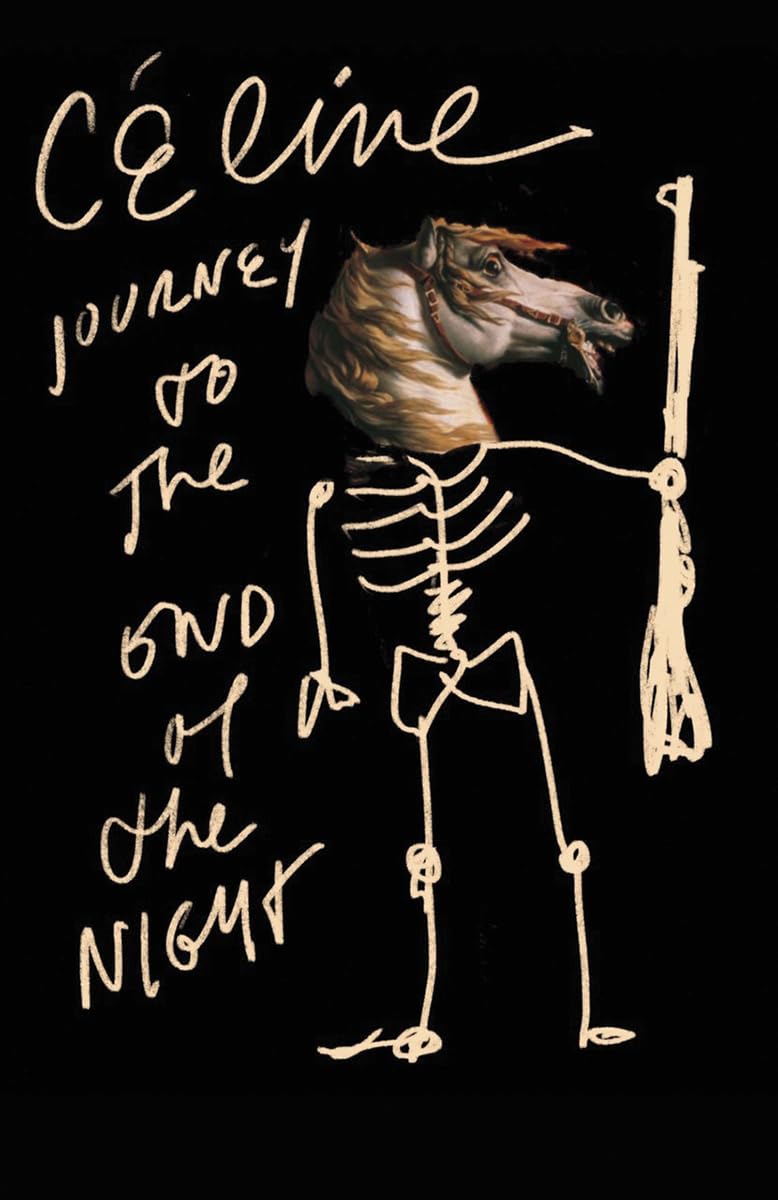
#1 — Journey to the End of the Night — trans. Ralph Manheim (1983)
- Readability: Flexible American English that moves with Céline's urgent rhythm.
- Accuracy: Matches the speed, shocks, and comedy-horror of the original.
- Tone: Shifts between street slang, clinical precision, and lyrical passages.
- Accessibility: The standard edition read by English-speaking audiences for decades.
Which translation is right for you?
- Choose Manheim if you want the definitive English rendering that captures Céline's speed, menace, and anti-literary energy.
About the Translator
Ralph Manheim (1907–1992, 1983, New Directions): one of the most prolific and celebrated translators from German and French of the twentieth century; his translations include Günter Grass's The Tin Drum and Dog Years, Brecht's plays, Heidegger's An Introduction to Metaphysics, and works by Céline, Jarry, and many others. He received the PEN Translation Prize in 1982. His 1983 translation of Journey to the End of the Night for New Directions is universally considered the finest English rendering of Céline's novel — a work that presents extraordinary difficulties, since Céline's prose is deliberately anti-literary, composed in what he called the métro émotif: the urgent, fragmented, hallucinatory rhythm of spoken French at its most raw. Manheim found an English that matches this register without imitating it, a vernacular that is fully American rather than a copy of the French.
Themes
War as the revelation of civilisation's lie. The novel's opening — Bardamu enlisting on an impulse when he sees a military parade, and finding himself almost immediately in the killing grounds of the First World War — establishes Céline's essential method: the protagonist stumbles into situations that reveal, without editorial comment, the murderous absurdity of the institutions and ideologies through which modern societies organise themselves. The war section is among the most harrowing in twentieth-century fiction, not because of its violence but because of its comedy: Bardamu and Robinson wander through the fighting like characters in a Beckett play who have lost the script.
Colonial and industrial violence as extensions of the same logic. After the war, Bardamu goes to colonial Africa, then to Detroit, then returns to France as a doctor in the Paris suburbs. Each location is a variation on the same theme: the systematic exploitation of human beings by structures — colonial administration, industrial capitalism, bourgeois medicine — that present themselves as progressive or humanitarian. Céline's Africa is not the romantic primitivism of contemporaries like Conrad but a bureaucratic nightmare of meaningless paperwork and physical degradation; his Detroit is a mechanised hell in which human beings have been made into components of the assembly line.
The doctor as witness. That Bardamu becomes a doctor is the novel's most significant structural decision: medicine gives him access to human suffering at its most unmediated, without the distance that class or professional position might otherwise afford. His practice in the Paris suburbs, among the workers and the poor, is described with a clinical precision that refuses sentimentality while achieving an effect of genuine moral horror.
Key Characters
Ferdinand Bardamu — the narrator; a young Frenchman who enlists in the First World War, survives it, goes to colonial Africa, works on the Detroit assembly lines, returns to France, and becomes a doctor. He is not a hero; he is a witness — ironic, terrified, disgusted, occasionally tender — whose narration is the novel's instrument for seeing the twentieth century without the consolations that made it bearable for most of its participants.
Robinson — Bardamu's double; the other figure who appears in each of the novel's main settings, always slightly ahead of Bardamu, always having already made the compromise or committed the crime that Bardamu is still contemplating. Whether Robinson is Bardamu's shadow or simply a coincidence of geography, the novel never fully resolves; his death at the end is the closest thing the book has to an emotional climax.
Molly — the American woman in Detroit who falls in love with Bardamu and offers him a life of comfort and affection that he is incapable of accepting; one of the few figures in the novel of genuine human warmth, and their relationship is the closest the novel comes to tenderness.
Sergeant Alcide — a minor figure in the Africa section who embodies, briefly and unexpectedly, a genuine selflessness: he has spent years working in the colonial service to support a niece he has never met. He is one of the novel's rare human beings who cannot be explained by self-interest, and his presence is both moving and slightly embarrassing to the novel's systematic pessimism.
Recommended Sources
For further academic reading on Céline and Journey to the End of the Night:
- French Studies (Oxford University Press) — the primary English-language journal for French literary studies; essential for Journey to the End of the Night in its literary-historical context and its controversial reception history.
- Twentieth-Century Literature (Duke University Press) — key for Céline in relation to literary modernism; his relationship to Beckett, Genet, and the French avant-garde is extensively covered.
- Modern Fiction Studies (Johns Hopkins) — important for the novel's formal innovations — the métro émotif style, the first-person anti-heroic narrator, the picaresque structure — and their influence on postwar fiction.
There is only one English translation in wide circulation. Ralph Manheim's New Directions version (1983) is universally recognised as the standard English-language rendering of Céline's novel, and no competing translation has appeared to challenge it. It is the edition to read.
Frequently Asked Questions
What is Journey to the End of the Night about?
Journey to the End of the Night follows Ferdinand Bardamu through the horrors of World War I, colonial Africa, and industrial America, exposing the absurdity and brutality of modern society.
Is Journey to the End of the Night hard to read?
The novel's dark themes and Céline's unique style can be challenging, but Manheim's translation captures the original's rhythm, making it accessible to modern readers.
Which Journey to the End of the Night translation is best?
Ralph Manheim's 1983 New Directions translation is the definitive English edition and the only one in wide circulation.
Manheim vs other translators — which should I choose?
No competing translation has appeared to challenge Manheim; his version remains the standard for capturing Céline's speed, menace, and energy.
Which translation is easiest to read?
Manheim's flexible American English preserves the urgent, colloquial rhythm of Céline's original without importing distorting class associations.
Which translation is most accurate?
Manheim's translation is universally considered the finest for matching the rhythm, shocks, and unstable comedy-horror of the métro émotif style.
Why has no new translation appeared since Manheim?
Manheim's version has dominated the English market for over forty years because it successfully renders Céline's anti-literary spoken argot.
This guide is based on reading the translation and reviewing scholarly commentary. Last reviewed: June 2026.
As an Amazon Associate, I earn from qualifying purchases.
Looking for another classic? Browse all our translation guides →
Ralph Manheim also produced the classic English version of The Tin Drum translation guide.
For another harrowing account of the First World War, see our All Quiet on the Western Front translation guide.
Readers drawn to Céline’s dark vision often turn next to our guide to the best Stranger translation by Camus.
Explore more French existential fiction in the Nausea translation guide.
Camus’s plague-stricken Oran offers a comparable moral landscape in our Plague translation guide.