All Quiet on the Western Front: What It's About & Best Translation
The greatest anti-war novel ever written — and how its two English translations approach Remarque's German
As an Amazon Associate, we earn from qualifying purchases.
All Quiet on the Western Front follows Paul Bäumer, a young German soldier during World War I, as he experiences the physical and psychological horrors of trench warfare. The novel explores the devastating effects of war on soldiers' humanity and the disconnection from civilian life.
Translation Comparison at a Glance
| Translation | Readability | Accuracy | Tone | Best For |
|---|---|---|---|---|
| Wheen (1929) | High | Good | Urgent and natural | First-time readers, classic experience |
| Tatar (2023) | Moderate | Excellent | Jagged and precise | Close reading, scholarly interest |
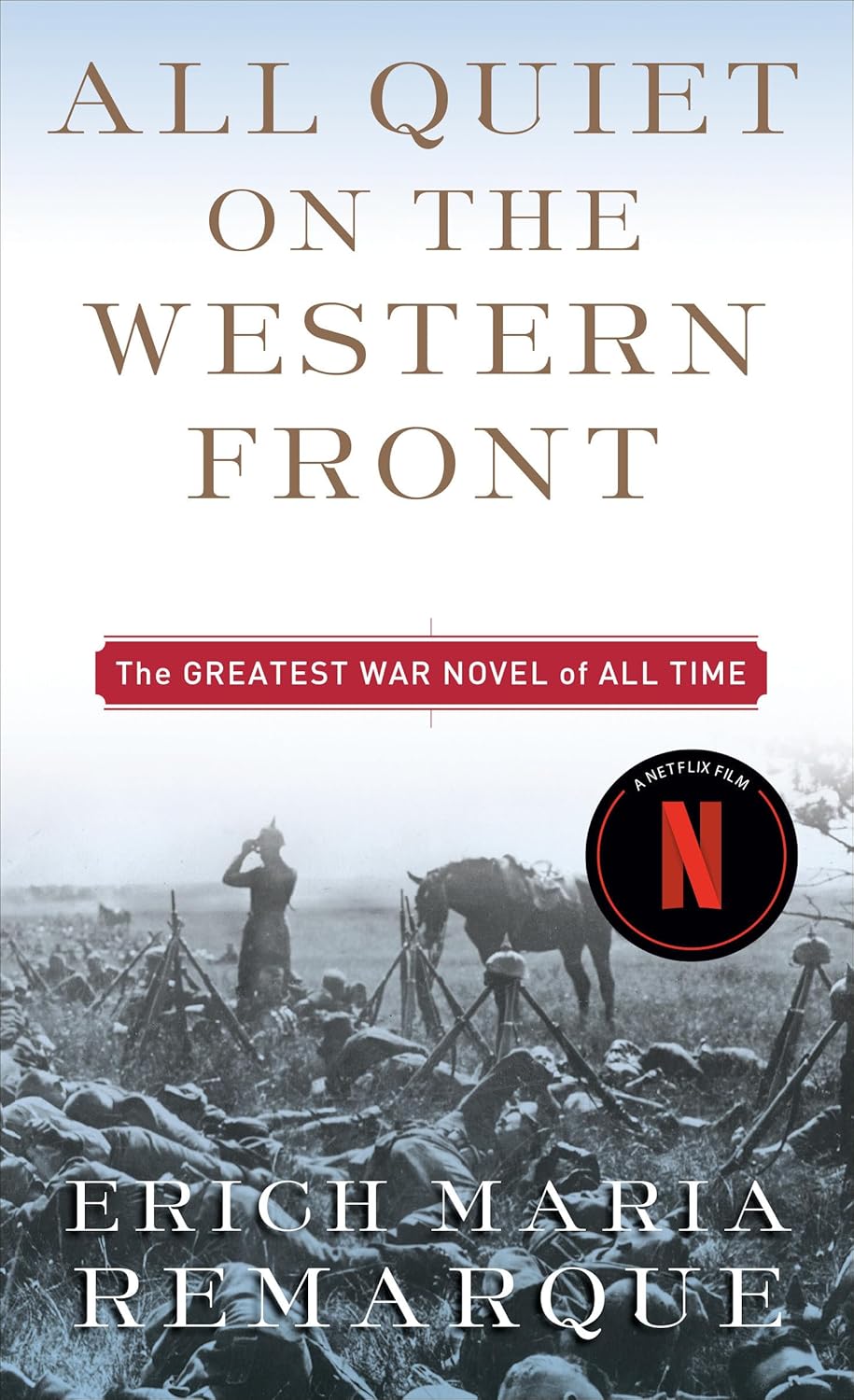
#1 — All Quiet on the Western Front — trans. A.W. Wheen (1929)
- Readability: High — urgent, direct, natural rhythms
- Accuracy: Good — occasionally smooths idioms
- Tone: Matches Remarque's plain, unglamorous voice
- Accessibility: Excellent for first-time readers
Which translation is right for you?
- Choose Wheen if you want the classic version that defined the novel in English and delivers its emotional argument with full force.
- Choose Tatar if you want the most precise scholarly rendering and closer attention to Remarque's tonal shifts and jaggedness.
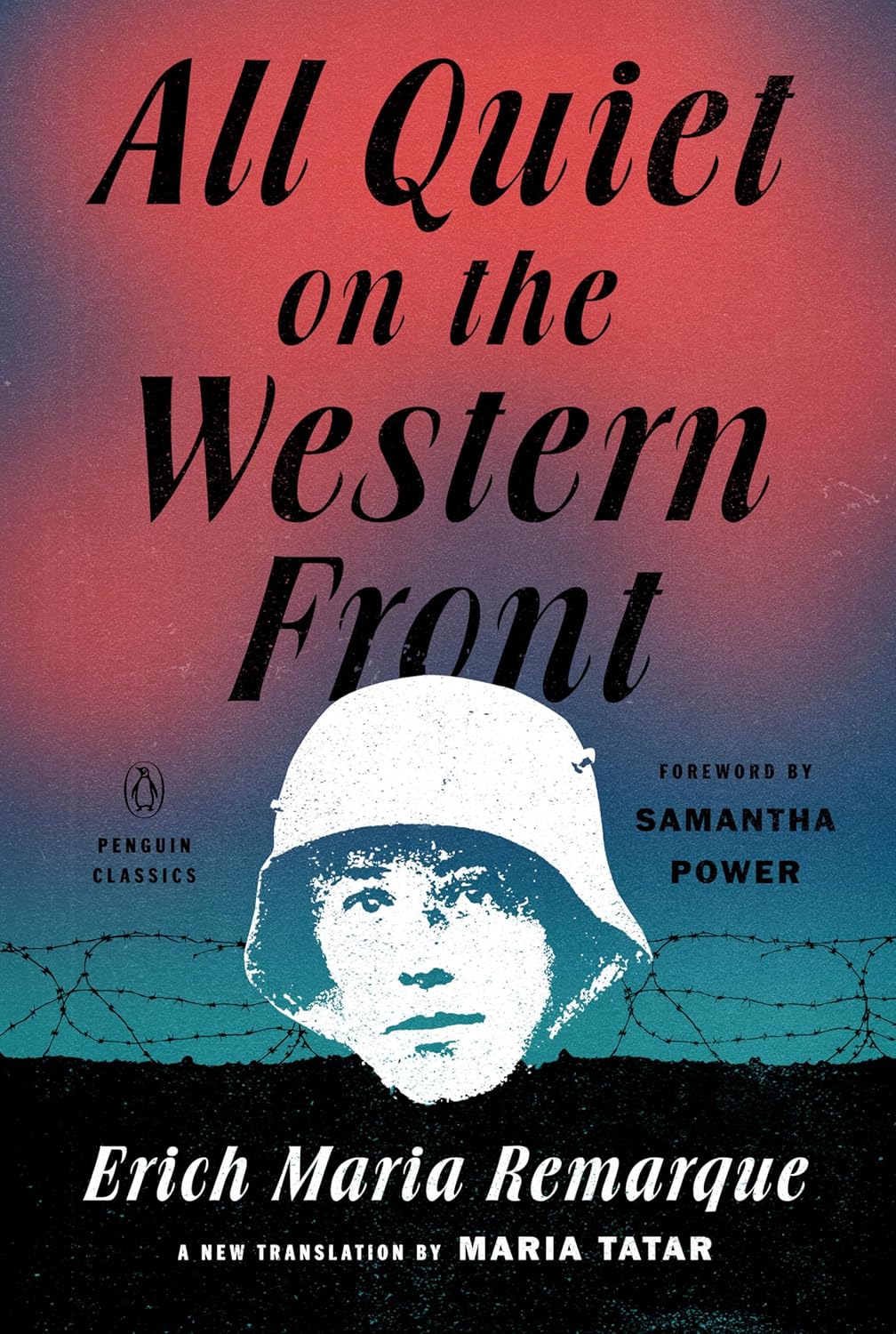
#2 — All Quiet on the Western Front — trans. Maria Tatar (2023)
- Readability: Moderate — more jagged where intended
- Accuracy: Excellent — restores what Wheen smoothed
- Tone: Precise handling of tonal shifts
- Accessibility: Best for close or repeated reading
About the Translators
A. W. Wheen (1897–1971, 1929, Little, Brown): Arthur Wesley Wheen was an Australian-born soldier, scholar, and librarian who served in World War I himself before becoming Assistant Keeper at the Victoria & Albert Museum. He translated the novel the same year it appeared in German, working with Remarque's involvement, and his version shaped English-language reception of the book throughout the twentieth century.
Maria Tatar (b. 1945, 2023, Penguin Classics): John L. Loeb Professor of Germanic Languages and Literatures at Harvard; a leading authority on German fairy tales, folklore, and children's literature; author of Enchanted Hunters (2009) and Beauty and the Beast (2017). Her Penguin Classics translation is the first major new English version in ninety years, published with a foreword by Samantha Power.
Themes
The destruction of a generation. The novel's epigraph states its purpose without metaphor: "This book is to be neither an accusation nor a confession, and least of all an adventure, for death is not an adventure to those who stand face to face with it. It will try simply to tell of a generation of men who, even though they may have escaped its shells, were destroyed by the war." Paul Bäumer and his classmates — recruited by their schoolteacher's enthusiasm — lose not just their lives but their capacity for life. They cannot imagine peacetime; they no longer know how to want ordinary things.
The body as the war's true subject. Remarque's descriptions of wounds, dying, and the physical experience of combat are the novel's most powerful passages — and the ones most likely to be softened in translation or adaptation. The novel is not about tactics or heroism but about what happens to young men's bodies in industrial warfare: gas attacks, artillery barrages, hospital wards, gangrene, and amputations. The physical detail is precise and unsparing, and Remarque's flat reportorial prose makes the accumulation more devastating than any dramatization could.
The ironic distance between home and front. The chapters in which Paul visits his family on leave — in the civilian world of propaganda posters and patriotic enthusiasm that has no relationship to what the front actually is — are among the most devastating in the novel. Paul cannot communicate what he has seen; the people at home cannot receive it. The war has made him a foreigner in his own home before it has killed him.
Key Characters
Paul Bäumer — the nineteen-year-old narrator, whose class was recruited by their schoolteacher Kantorek. He is intelligent, sensitive, and increasingly hollowed out by the war's demands. His death in October 1918, on a day so quiet that the army dispatch simply reads "All quiet on the Western Front," is the novel's final irony — the most important event in the book given the least dramatic weight.
Kat (Stanislaus Katczinsky) — the older soldier who becomes Paul's closest companion and mentor; a resourceful scavenger who always finds food and always knows how to survive. His death — Paul carries him to safety only to find he is already dead — is the novel's emotional breaking point.
Tjaden, Müller, Leer, Haie Westhus — Paul's classmates and comrades, who die one by one across the novel. Their deaths are not dramatic; they happen in the same flat reportorial prose as everything else, which is the novel's most disturbing formal choice.
Kantorek — the schoolteacher who encouraged the class to enlist with patriotic speeches. He later becomes a soldier himself, serving under one of his former students. The reversal is funny and brutal: the generation that sent boys to war is now subject to them.
Recommended Sources
For further academic reading on Remarque and All Quiet:
- German Life and Letters (Wiley-Blackwell) — the leading British journal for German literary studies; essential for Remarque scholarship and the novel's reception history in English.
- Monatshefte (University of Wisconsin) — the primary American journal for German literary and cultural studies; key venue for All Quiet criticism.
- War, Literature and the Arts — interdisciplinary journal focused on artistic responses to war; central for Remarque's relationship to the broader tradition of WWI literature.
Which translation is right for you?
Choose Wheen for the standard reading and the version that generations of critics have cited — his translation is the novel's English-language identity, shaped Remarque's reception across a century, and delivers the emotional argument with full force. Choose Tatar (Penguin Classics 2023) for the most precise rendering of Remarque's German and the version that restores tonal qualities Wheen's speed occasionally smoothed away; the foreword by Samantha Power adds contemporary political urgency.
Frequently Asked Questions
What is All Quiet on the Western Front about?
All Quiet on the Western Front follows Paul Bäumer, a young German soldier during World War I, as he experiences the physical and psychological horrors of trench warfare. The novel explores the devastating effects of war on soldiers' humanity and the disconnection from civilian life.
Is All Quiet on the Western Front hard to read?
The novel's themes are intense, but Wheen's translation is noted for its readability, capturing the urgency of Remarque's prose. Tatar's version offers a more precise but slightly more challenging read due to its attention to detail.
Which All Quiet on the Western Front translation is best?
A.W. Wheen's 1929 translation is the primary recommendation for first-time readers. It has the weight of decades of readership and captures the novel's momentum and emotional force.
Wheen vs Tatar — which should I choose?
Choose Wheen for the standard reading that generations of critics have cited. Choose Tatar for the most precise rendering of Remarque's German and the version that restores tonal qualities Wheen's speed occasionally smoothed away.
Which translation is easiest to read?
Wheen's translation is easiest to read. The prose has an urgency and directness that matches Remarque's own, and the rhythms feel natural rather than translated.
Which translation is most accurate?
Maria Tatar's 2023 translation is the most accurate. It is attentive to places where Wheen's version simplified, smoothed, or simply missed what Remarque wrote.
Why was a new translation needed after ninety years?
Tatar's version is the first major new English translation in nearly a century. It reopens every sentence and captures tonal shifts and jaggedness that Wheen occasionally smoothed over.
This guide is based on reading both translations and reviewing scholarly commentary. Last reviewed: June 2026.
As an Amazon Associate, I earn from qualifying purchases.
Looking for another classic? Browse all our translation guides →
Readers drawn to Remarque's anti-war classic often continue with our guide to the best Tin Drum translation.
For another searing WWI novel, see our Journey to the End of the Night translation guide.
Thomas Mann's great novel of the same era is covered in our Magic Mountain translation guide.
Primo Levi's wartime memoir is examined in our guide to If This Is a Man translations.
More German literature from the period appears in our Buddenbrooks translation guide.