Journey to the West: What It's About & Best Translation
Wu Cheng'en's Chinese epic — Yu's complete scholarly translation versus Waley's beloved abridged Monkey
As an Amazon Associate, we earn from qualifying purchases.
Journey to the West is a Chinese epic that follows the monk Xuanzang and his disciples, including the Monkey King Sun Wukong, as they travel to India to retrieve sacred Buddhist texts. The novel combines adventure, fantasy, and spiritual allegory, exploring themes of redemption and enlightenment.
Translation Comparison at a Glance
| Translation | Readability | Accuracy | Tone | Best For |
|---|---|---|---|---|
| Yu (2006) | High | Excellent | Scholarly, precise, annotated | Complete study and depth |
| Waley (1942) | Very high | Good | Lively, comic, mythological | First encounter and spirit |
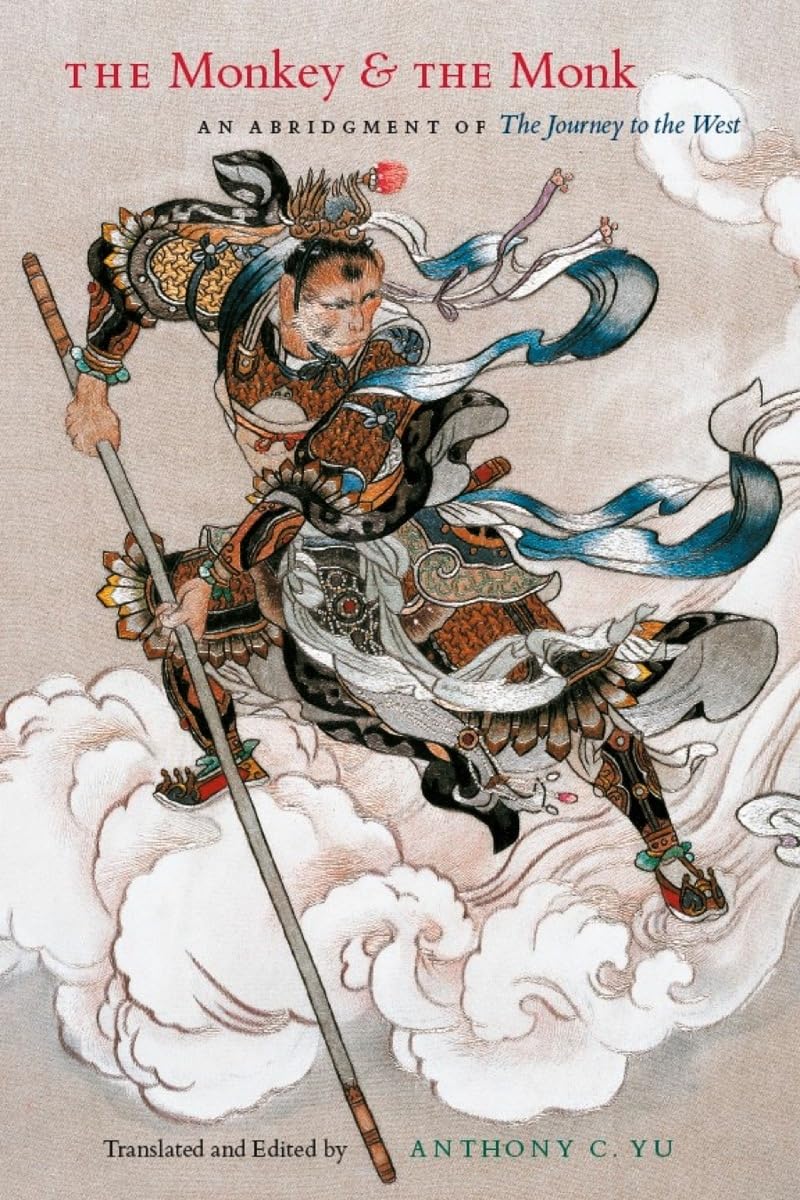
#1 — The Monkey and the Monk — trans. Anthony C. Yu (abridged, 2006)
- Readability: High — condensed but retains full scholarly precision and notes.
- Accuracy: Excellent — verse rendered as verse, complete Buddhist cosmology preserved.
- Tone: Scholarly and precise with comprehensive annotations.
- Accessibility: Best single-volume edition for serious readers.
Which translation is right for you?
- Choose Yu if you want the full scholarly apparatus, verse rendered as verse, and the complete philosophical depth of the novel.
- Choose Waley if you want the comic spirit and mythological core in a vivid, fast-moving abridgement that can be read in an evening.
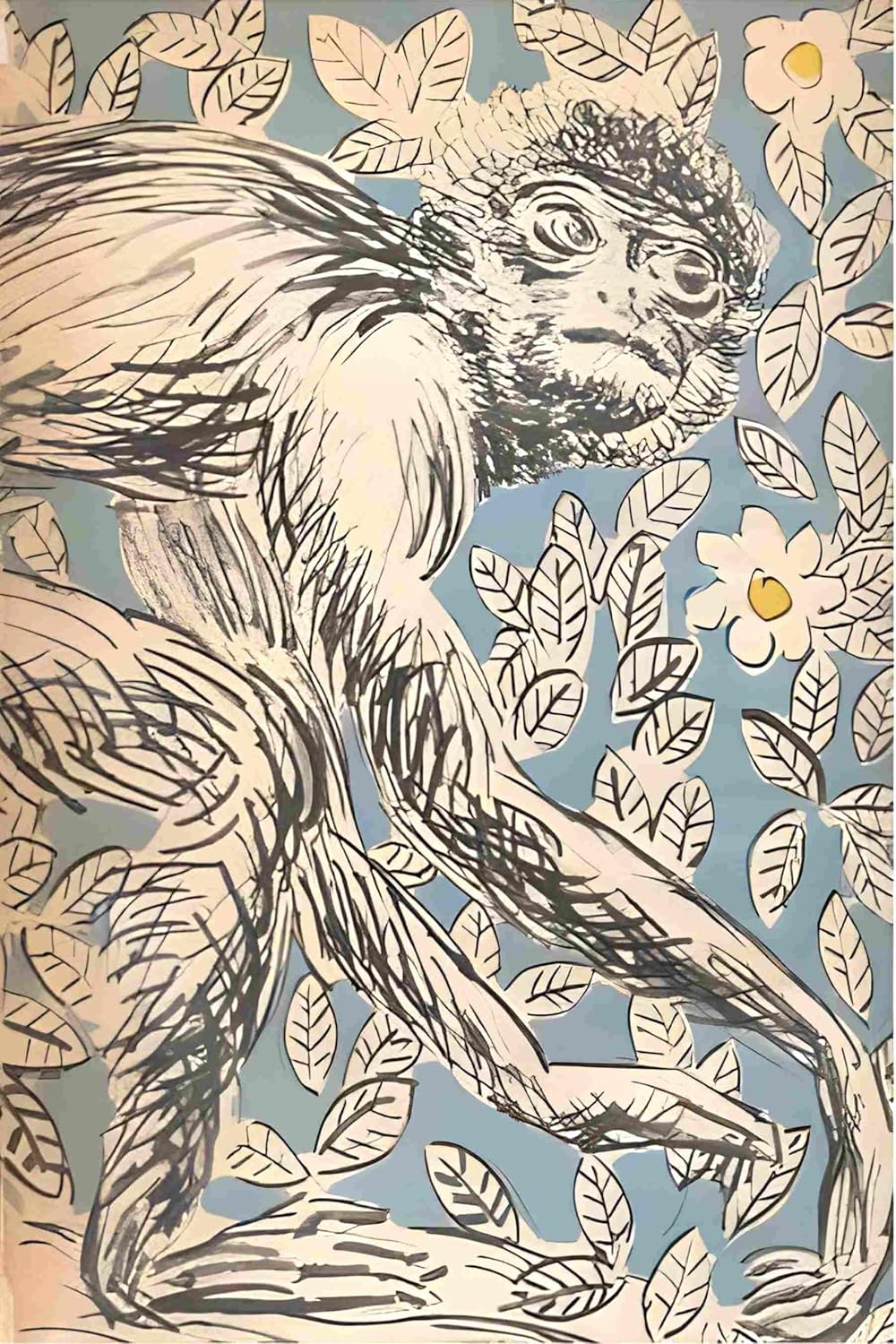
#2 — Monkey — trans. Arthur Waley (1942)
- Readability: Very high — lively prose that can be read in a single evening.
- Accuracy: Good — focuses on the comic and mythological core of the first thirty chapters.
- Tone: Comic, vivid, and mythological with perfect instinct.
- Accessibility: The classic introduction that first brought Sun Wukong to Western readers.
About the Translators
Anthony C. Yu (University of Chicago Press, 1977–1983; abridged as The Monkey and the Monk, 2006): A professor of religion and literature at the University of Chicago and one of the foremost Western scholars of classical Chinese literature, Yu devoted two decades to producing the complete four-volume translation of Journey to the West — the first complete scholarly translation in English. His work is distinguished by its handling of the embedded verse passages: where earlier translators had rendered the poetry as prose, Yu translated all verse as verse, preserving the formal texture of Wu Cheng'en's original. His introductions and notes in the four-volume edition remain the most comprehensive scholarly apparatus available in English for this novel. The Monkey and the Monk (2006) condensed this work into a single volume without sacrificing Yu's characteristic precision.
Arthur Waley (Grove Press, 1942): The most distinguished translator of Chinese and Japanese literature into English of the twentieth century, responsible also for The Tale of Genji, the Chinese lyric tradition, and Confucian texts. His abridgement of Journey to the West, published as Monkey, concentrated on the first thirty or so chapters — Sun Wukong's origin story, his rebellions in Heaven, his imprisonment and release — in a prose style that is alive on every page. Waley created not quite a translation and not quite an adaptation, but a reading of the novel that isolated its comic and mythological core with perfect instinct. It is the version that introduced Sun Wukong to the West, and it has never been bettered as an introduction to the work's spirit.
Themes
The monkey mind. Sun Wukong is the novel's central image for the restless, self-deceiving, endlessly inventive intellect that must be disciplined before spiritual progress is possible. His containment under a mountain for five hundred years, and his gradual taming over the course of the pilgrimage, map a Buddhist psychology of the mind's relationship to practice.
Pilgrimage as transformation. The journey to India to collect Buddhist scriptures is not about arriving but about what happens to the pilgrims along the way. Each of the eighty-one ordeals transforms the travellers in some respect — and Xuanzang, the monk whose gentleness and naivety make him perpetually vulnerable, is the novel's measure of genuine spiritual development.
Buddhist cosmology as narrative landscape. The novel is organised around a fully realised Buddhist cosmology — heavens, hells, mythological geography, the hierarchy of celestial beings — which Verne's marine catalogue and Tolkien's Middle-earth both resemble structurally. Understanding this cosmology is understanding the novel's world.
Comic heroism. The novel's irony is sustained and generous: the most powerful figure (Sun Wukong) is also the most unruly; the monk is repeatedly saved by disciples he cannot manage; the celestial bureaucracy is as prone to confusion as any earthly one. The comic treatment of its own mythology is one of the novel's greatest achievements.
Key Characters
Sun Wukong / The Monkey King — the Great Sage Equal to Heaven; extraordinary powers, impossible vanity, absolute loyalty once committed; imprisoned under Five Elements Mountain for five hundred years and released to escort Xuanzang to India. The novel's centre of energy and its most beloved figure in all of Chinese cultural history.
Xuanzang / Tang Sanzang / Tripitaka — the Buddhist monk whose pilgrimage structures the narrative; gentle, naive, and perpetually in mortal danger; he cannot distinguish demons from ordinary people, which is the novel's running joke, but his sincerity and his faith are presented seriously as the journey's moral foundation.
Zhu Bajie / Pigsy — the pig-demon; gluttonous, lecherous, lazy, and consistently unreliable; the novel's most human character in his inability to control his appetites. His comedy is the comedy of self-knowledge without self-control.
Sha Wujing / Sandy — the sand demon; steadily loyal and uncomplaining; the novel's straight man, who does the work no one notices and never claims credit. His relative invisibility in Western adaptations is the novel's most interesting omission.
The Jade Emperor — the celestial sovereign whose authority Sun Wukong challenges; represents institutional power, divine bureaucracy, and the limits of the celestial order when confronted with something genuinely uncontrollable.
Recommended Sources
For further reading on Journey to the West:
- Anthony Yu's introductions to the four-volume Chicago Press edition — the most comprehensive scholarly overview in English; invaluable for understanding the Buddhist cosmology and the novel's place in Chinese literary tradition.
- Journal of Chinese Literature and Culture (Duke University Press) — the primary English-language venue for current scholarship on classical Chinese literature.
- Victor Mair, ed., The Columbia History of Chinese Literature (2001) — for the Xiyouji's place in the longer tradition of Chinese fiction.
For most readers, the right choice is Yu's one-volume The Monkey and the Monk — it provides the complete scholarly authority of the four-volume edition in a form that can be read in a single sustained encounter. For readers who want the work's spirit first and the scholarship later, Waley's Monkey is one of the most vivid introductions to any major world text available in English. Both are worth owning.
Frequently Asked Questions
What is Journey to the West about?
Journey to the West is a Chinese epic that follows the monk Xuanzang and his disciples, including the Monkey King Sun Wukong, as they travel to India to retrieve sacred Buddhist texts. The novel combines adventure, fantasy, and spiritual allegory, exploring themes of redemption and enlightenment.
Is Journey to the West hard to read?
Journey to the West can be challenging due to its cultural and historical context. Yu's translation offers comprehensive notes and annotations, while Waley's abridged version provides a more accessible introduction with its lively prose.
Which Journey to the West translation is best?
For most readers, Anthony Yu's one-volume The Monkey and the Monk is the right choice: it delivers the complete scholarly authority of his four-volume edition in a form that can be read in a single sustained encounter.
Yu vs Waley — which should I choose?
Choose Yu if you want the full scholarly apparatus, verse rendered as verse, and the complete philosophical depth. Choose Waley if you want the comic spirit and mythological core in a vivid, fast-moving abridgement that can be read in an evening.
Which translation is easiest to read?
Waley's Monkey is the easiest to read: it isolates the comic and mythological heart of the novel in lively prose that remains one of the most vivid introductions to any major world text.
Which translation is most accurate?
Yu's translation is the most accurate and complete: it is fully annotated, translates all verse passages as verse, and includes the scholarly introductions and notes that make the Buddhist cosmology and intertextual references comprehensible.
Should I read the abridged or the complete Journey to the West in English?
Start with Yu's abridged single-volume edition for the essential arc with full scholarly precision; turn to Waley's Monkey when you want the spirit first and the scholarship later.
This guide is based on reading the two translations and reviewing scholarly commentary. Last reviewed: June 2026.
As an Amazon Associate, I earn from qualifying purchases.
Looking for another classic? Browse all our translation guides →
Another of the Four Great Classical Novels of Chinese literature awaits in our Dream of the Red Chamber translation guide.
For more East Asian classics, see our comparison of the best Tale of Genji translations.
Explore foundational Chinese thought with our Tao Te Ching translation guide.
If the pilgrimage theme draws you in, our Bhagavad Gita translation guide is essential reading.