Dream of the Red Chamber: What It's About & Best Translation
Cao Xueqin's great Chinese novel — Hawkes's literary Penguin versus the Yang Xianyi complete translation
As an Amazon Associate, we earn from qualifying purchases.
Dream of the Red Chamber is a classic Chinese novel that explores the rise and fall of the Jia family, focusing on the romantic and tragic life of Jia Baoyu. It delves into themes of love, fate, and the decline of a noble household.
Translation Comparison at a Glance
| Translation | Readability | Accuracy | Tone | Best For |
|---|---|---|---|---|
| Hawkes (1973) | Very high | Very good | Literary and vivid | First-time readers |
| Yang (1978–1980) | Moderate | Excellent | Literal and scholarly | Close study of the original |
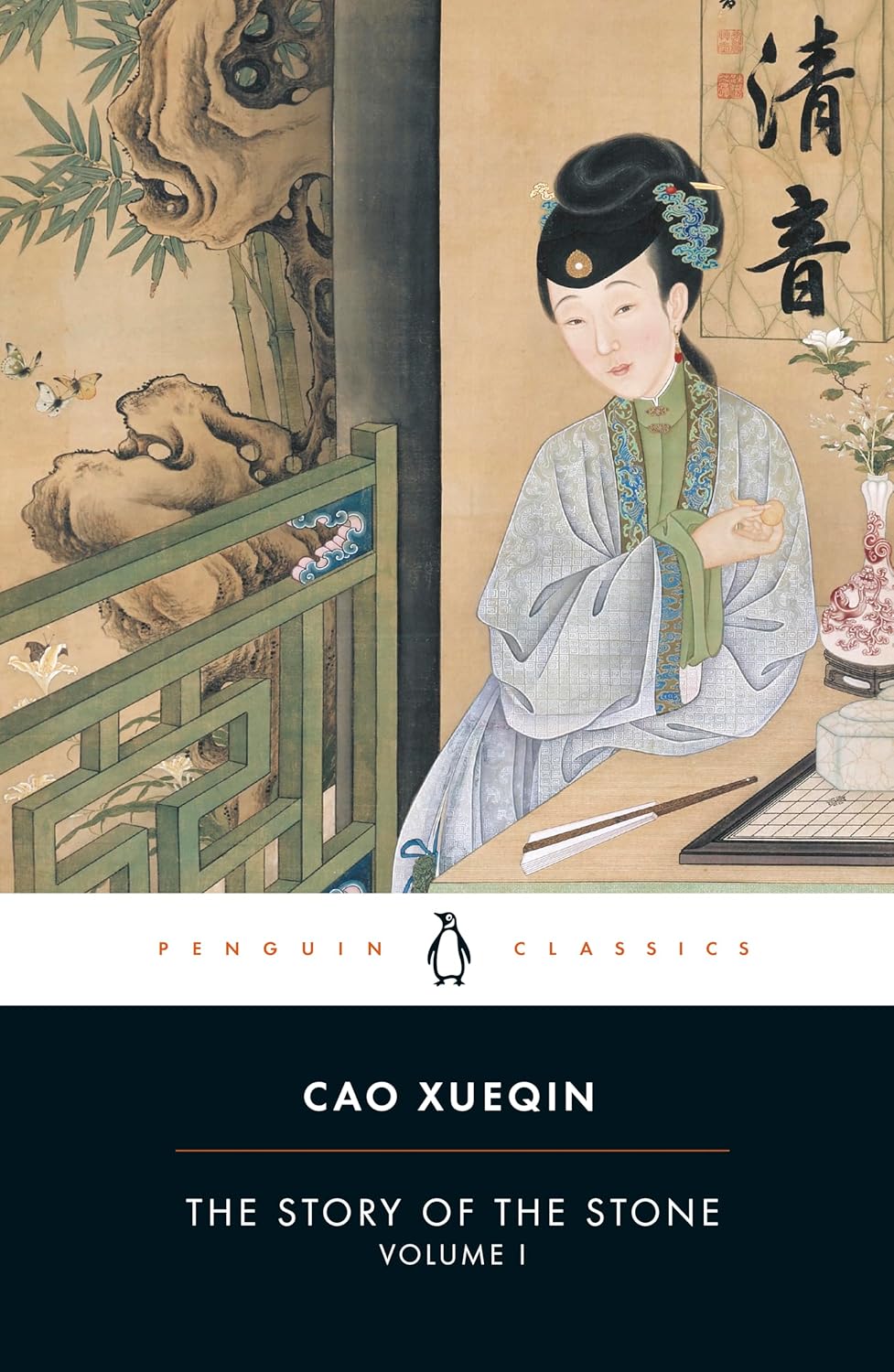
#1 — The Story of the Stone, Vol. 1: The Golden Days — trans. David Hawkes (1973)
- Readability: Exceptionally high; prose feels like a great English novel.
- Accuracy: Very good, with creative but faithful renderings of poetry.
- Tone: Lively, emotionally rich, and fully imagined.
- Accessibility: Excellent for first-time readers.
Which translation is right for you?
- Choose Hawkes if you want literary beauty, emotional depth, and masterful handling of poetry and character.
- Choose Yang Xianyi and Gladys Yang if you want a more literal rendering that stays closer to the Chinese original and is useful for scholarly reference.
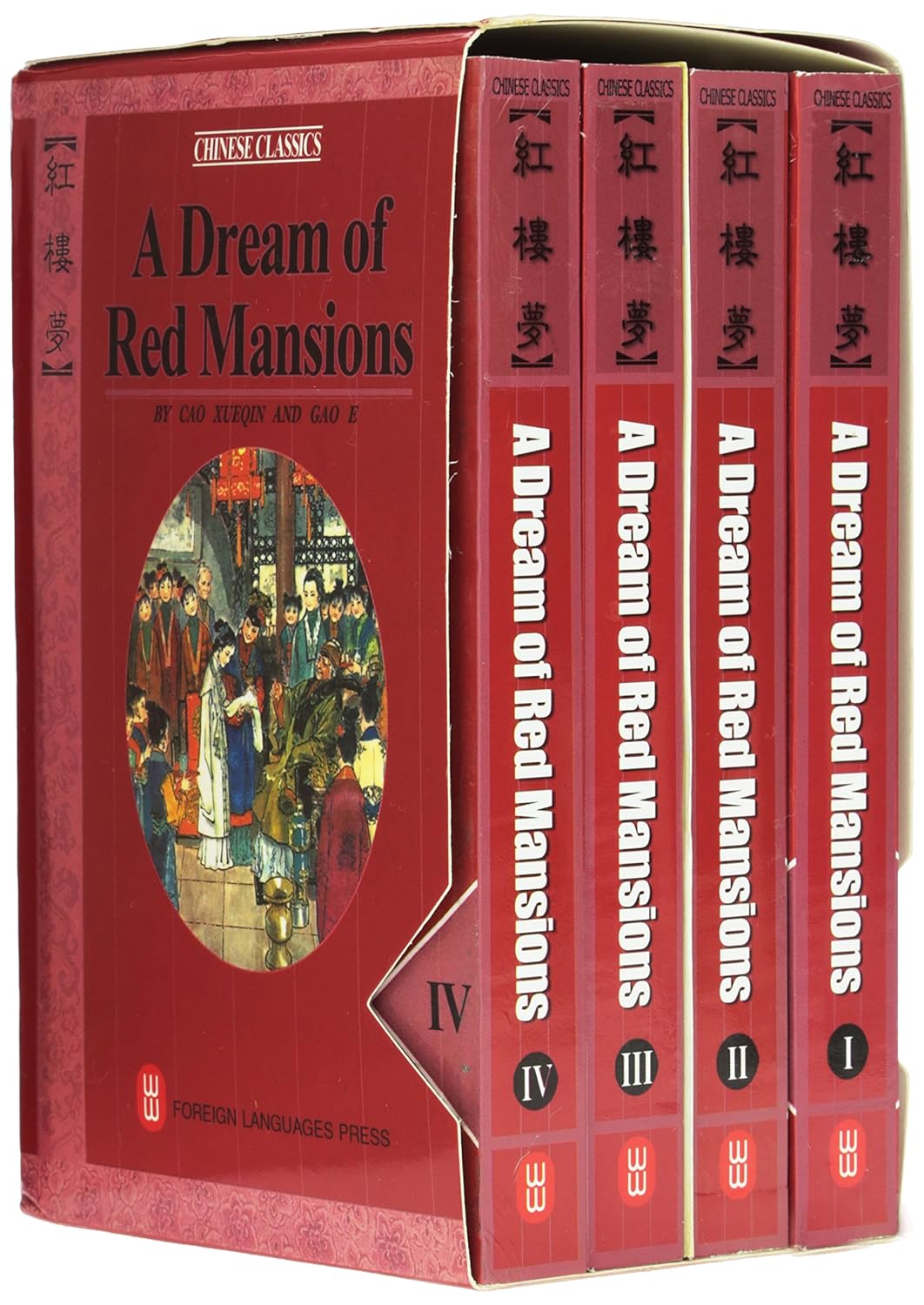
#2 — A Dream of Red Mansions — trans. Yang Xianyi and Gladys Yang (1978–1980)
- Readability: Solid but more literal and less polished.
- Accuracy: Excellent; stays very close to the Chinese text.
- Tone: Straightforward and scholarly.
- Accessibility: Best as a companion for deeper study.
About the Translators
David Hawkes (Penguin Classics, Volumes 1–3: 1973, 1977, 1980) and John Minford (Volumes 4–5: 1982, 1986): Hawkes was a professor of Chinese at Oxford and one of the great literary translators of the twentieth century. He spent nearly two decades on the translation, publishing it over thirteen years, and worked with the governing principle that the English version must be a great novel in its own right — not a scholarly crib but a fully imagined literary object. Minford, his student and son-in-law, completed the work after Hawkes stepped back; Minford went on to translate Sun Tzu's Art of War and other major Chinese texts. The five-volume Penguin set, under the title The Story of the Stone, is widely regarded as one of the greatest sustained feats of literary translation in the English language.
Yang Xianyi and Gladys Yang (Foreign Languages Press, Beijing, 1978–1980): Yang Xianyi was a Chinese scholar and translator, Gladys Yang his English wife — one of the most productive translation partnerships in the history of Chinese literary translation. Their complete four-volume version, produced for the Chinese state publisher's programme of international dissemination, takes a very different approach from Hawkes: closer to the original title (A Dream of Red Mansions), more literal in its rendering, less willing to naturalise the novel into English literary tradition. Their translation is the scholarly standard for readers who want to understand how the Chinese text actually works.
Themes
The impermanence of all worldly things. The novel's dominant philosophical mood is Buddhist: the great Jia household, with all its wealth, beauty, and intricate social life, is shown gradually dissolving over the course of the narrative, and nothing that appears solid and permanent proves to be so. The dream frame — the novel opens and closes in a mythological realm — insists that human life itself is a dream from which the characters will eventually wake.
The tragic waste of female intelligence. The Jia household is full of women of extraordinary talent — poets, politicians, artists, administrators — who have no legitimate avenue for their gifts. The novel's deepest sympathy is with these women, and its most sustained grief is for what their circumstances have cost them. Daiyu's poetry, Wang Xifeng's administrative genius, Baochai's practical wisdom — all are circumscribed or destroyed by the world they inhabit.
The jade and the stone. Baoyu is born with a piece of jade in his mouth; the novel's mythological frame reveals him to be a divine stone given human form. His relationship with the two jades — his own and Daiyu's — is the novel's symbolic system for understanding his nature: sensitive, artistic, constitutionally unsuited to the world of examinations and careers that his family requires him to enter.
The incomplete text. The novel as it exists is the creation of scholars: Cao Xueqin left approximately eighty chapters, completed to 120 by Gao E from notes. The question of what Cao actually wrote, and what Gao added or distorted, continues to generate scholarly debate — and the novel's incompleteness is itself a theme, its irresolution matching the impermanence that is its philosophical subject.
Key Characters
Jia Baoyu — the heir of the household; born with a piece of jade in his mouth; sensitive, artistic, bored by the examinations that his family requires him to pass; constitutionally unsuited to the world he has been born into. His relationships with the women of the household — above all with Daiyu and Baochai — are the novel's emotional centre.
Lin Daiyu — Baoyu's cousin; fragile, brilliantly poetic, constitutionally unsuited to practical life; her relationship with Baoyu is the novel's romantic tragedy. She buries the flowers that fall in the garden because she cannot bear that beauty should be trampled. Her death, and Baoyu's inability to prevent it, is the novel's breaking point.
Xue Baochai — Baoyu's other cousin; practical, accomplished, politically astute, and genuinely admirable in ways the novel acknowledges while insisting that she is not who Baoyu loves. She represents the world Baoyu would rather not inhabit — competent, socially functional, oriented toward the future rather than the present.
Wang Xifeng — the manager of the great household; ruthless, funny, and extraordinarily competent; she keeps the family functioning long after it should have collapsed under its own weight. Her eventual destruction — by her own efficiency, her ambition, and the household's inevitable decline — is among the novel's most affecting sequences.
Grandmother Jia — the family matriarch; her vitality, her pleasure in entertainment, and her love of Baoyu keep the household alive; her death is the beginning of its final dissolution. She is the novel's last repository of the old order.
Recommended Sources
For further reading on the Dream of the Red Chamber:
- David Hawkes's introductions to each volume of the Penguin edition — the most accessible critical overview of the novel's world, characters, and composition history, written by the man who spent the longest with the text in English.
- Chinese Literature Today and Journal of Chinese Literature and Culture — the primary English-language venues for current scholarship on classical Chinese fiction.
- Dore J. Levy, Ideal and Actual in The Story of the Stone (Columbia, 1999) — one of the best English-language critical studies of the novel's philosophical themes and structure.
Hawkes and Minford's five-volume Penguin translation (The Story of the Stone) is one of the great achievements of literary translation in any language, and it is the edition that gives English readers the fullest and most vivid access to the novel's world. The Yang Xianyi translation is the scholarly complement — closer to the Chinese original, more useful for understanding the novel's structure and linguistic texture. For a first reader, the Hawkes is the right choice; a complete five-volume set is the ideal, but the first volume stands fully on its own.
Frequently Asked Questions
What is Dream of the Red Chamber about?
Dream of the Red Chamber is a classic Chinese novel that explores the rise and fall of the Jia family, focusing on the romantic and tragic life of Jia Baoyu. It delves into themes of love, fate, and the decline of a noble household.
Is Dream of the Red Chamber hard to read?
The novel can be challenging due to its intricate plot and cultural context. Hawkes's translation is more accessible for first-time readers, while Yang's version offers a closer look at the original text.
Which Dream of the Red Chamber translation is best?
Start with David Hawkes's five-volume Penguin translation, The Story of the Stone. It is widely regarded as one of the greatest feats of literary translation in English, with vivid prose that makes the novel feel like a fully imagined work of fiction.
Hawkes vs Yang — which should I choose?
Choose Hawkes for literary beauty, emotional depth, and masterful handling of poetry and character. Choose Yang Xianyi and Gladys Yang for a more literal rendering that stays closer to the Chinese original and is useful for scholarly reference.
Which translation is easiest to read?
Hawkes's version is the most readable. His prose is alive on every page, with natural English equivalents for the novel's embedded poetry and intricate family politics.
Which translation is most accurate?
The Yang Xianyi translation is the most accurate in a literal sense. It retains the original title and renders the text with greater fidelity to the Chinese, making it valuable for understanding structure and detail.
Should I read the complete five-volume Hawkes set or just the first volume?
The first volume stands fully on its own as an introduction. A complete five-volume set is ideal for the full experience, with Volumes 4–5 completed by John Minford after Hawkes stepped back.
This guide is based on reading both translations and reviewing scholarly commentary. Last reviewed: June 2026.
As an Amazon Associate, I earn from qualifying purchases.
Looking for another classic? Browse all our translation guides →
Another of the Four Great Classical Novels of Chinese literature, our Journey to the West translation guide compares Yu's complete edition against Waley's abridged Monkey.
For more East Asian classics, see our Tale of Genji translation guide comparing Tyler, Seidensticker, and Waley.
Modern Chinese fiction is represented in our Three-Body Problem translation guide, covering Ken Liu's definitive English edition.
Readers of vast family sagas may also enjoy our One Hundred Years of Solitude translation guide on Rabassa's landmark version.