Kama Sutra: What It's About & Best Translation
The translation you choose determines which book you actually read
As an Amazon Associate, we earn from qualifying purchases.
The Kama Sutra is an ancient Indian text on human sexual behavior, courtship, and the art of living well. It covers various aspects of love and relationships, situating erotic pleasure within the broader context of a balanced life.
Translation Comparison at a Glance
| Translation | Readability | Accuracy | Tone | Best For |
|---|---|---|---|---|
| Doniger & Kakar (2002) | High | Excellent | Clear, intelligent, direct | Most readers, scholarly context |
| Daniélou (1994) | Moderate | Very good | Literal, occasionally awkward | Full commentary tradition |
| Haksar (2011) | Very high | Good | Fluid, natural prose | Comfortable general reading |
| Burton (1883) | Moderate | Fair | Victorian grandeur, euphemistic | Historical interest only |
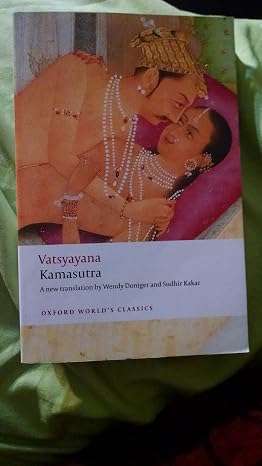
#1 — Kamasutra — trans. Wendy Doniger & Sudhir Kakar (2002)
- Readability: Clean, direct English prose that avoids euphemism or sensationalism.
- Accuracy: Philologically rigorous and restores full cultural context.
- Tone: Intelligent and clinical in the best sense.
- Accessibility: Well-annotated Oxford paperback suitable for general readers.
Which translation is right for you?
- Choose Doniger & Kakar if you want the most accurate, scholarly, and contextually rich modern translation.
- Choose Daniélou if you want the complete classical commentary tradition alongside the text.
- Choose Haksar if you want a clean, fluid, and comfortable modern prose version without heavy apparatus.
- Choose Burton if you want to read the Victorian translation that shaped Western ideas of the text, as a historical document.
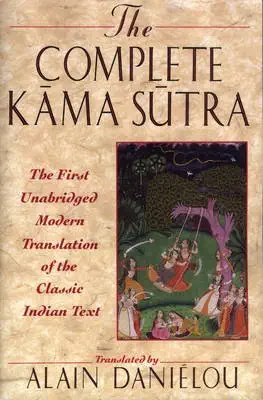
#2 — The Complete Kama Sutra — trans. Alain Daniélou (1994)
- Readability: More literal and occasionally awkward than Doniger.
- Accuracy: Very good, with the added value of classical commentary.
- Tone: Scholarly and comprehensive.
- Accessibility: Best for readers seeking the full interpretive tradition.
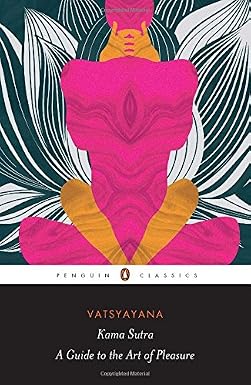
#3 — Kama Sutra — trans. A.N.D. Haksar (2011)
- Readability: Most fluid and natural modern English prose.
- Accuracy: Good, though less exhaustive than Doniger.
- Tone: Comfortable and direct.
- Accessibility: Compact Penguin edition ideal for general readers.
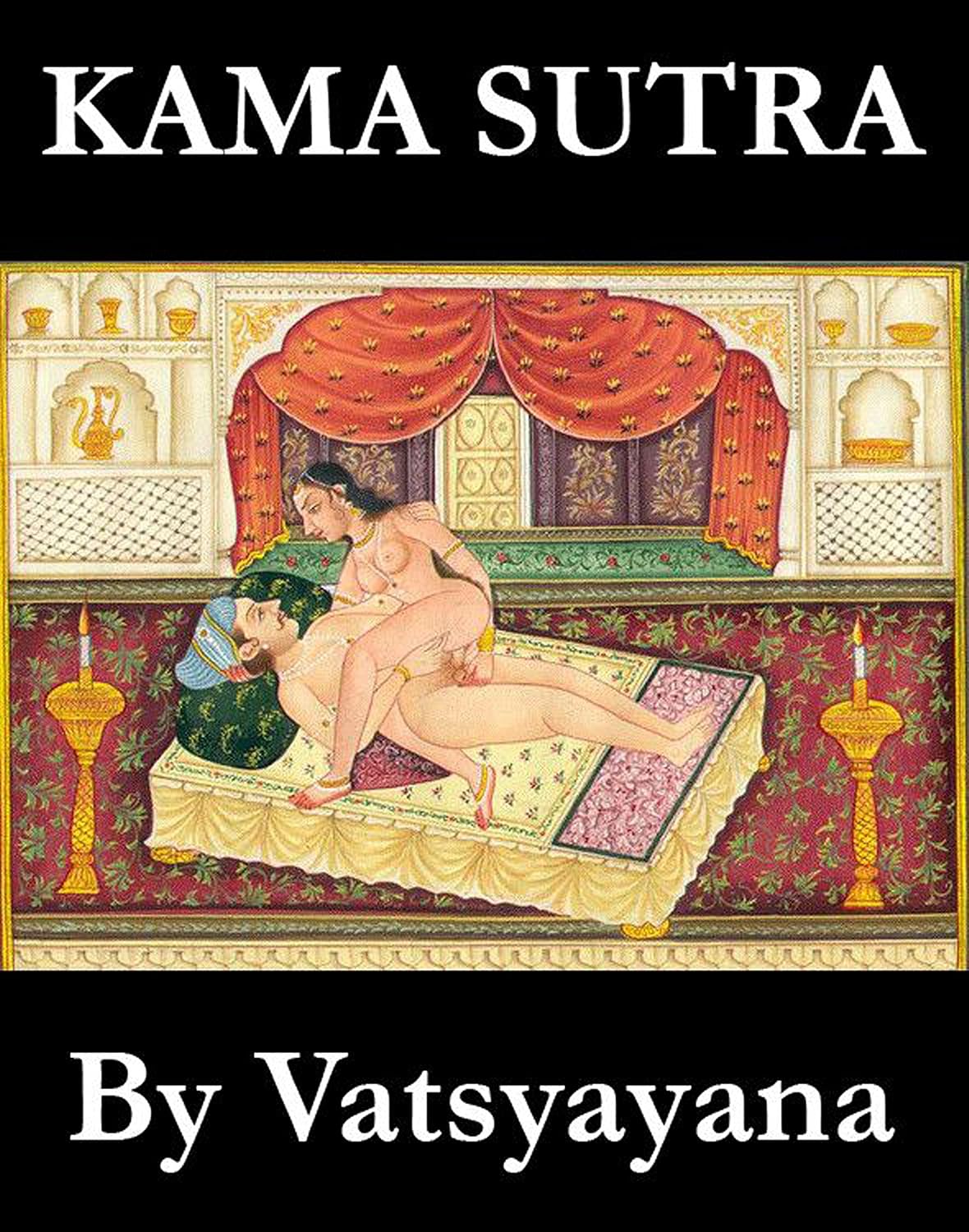
#4 — Kama Sutra — trans. Sir Richard Francis Burton & F.F. Arbuthnot (1883)
- Readability: Victorian grandeur that many still find compelling.
- Accuracy: Fair; relies on Hindi intermediary and systematic euphemism.
- Tone: Colonial-era assumptions and Victorian sensibilities.
- Accessibility: Public-domain editions widely available but outdated.
About the Translators
Wendy Doniger and Sudhir Kakar (Oxford World's Classics, 2002): Doniger is a professor at the University of Chicago and one of the foremost scholars of Sanskrit and Hindu religion in the world, with major translations and studies of the Rigveda, the Laws of Manu, and the Hindu erotic tradition. Kakar is an Indian psychoanalyst and cultural theorist whose work on Indian selfhood and sexuality brings a different but complementary perspective. Their collaboration produced the translation that finally gave English readers the text Vatsyayana actually wrote — their introduction alone is essential reading for anyone who has encountered the Burton version and wants to understand what it obscured.
Alain Daniélou (Inner Traditions, 1994): A French musicologist and scholar of Indian religion who lived in India for many years and wrote extensively on Shaivism, Hindu philosophy, and Indian music. His Complete Kama Sutra was the first unabridged modern English translation and remains the only edition to include the Jayamangala — the major 13th-century Sanskrit commentary by Yashodhara — alongside each passage. More literal than Doniger and occasionally awkward, but indispensable for the commentary.
A.N.D. Haksar (Penguin Classics, 2011): A retired Indian Foreign Service officer and Sanskrit scholar who has translated several classical Indian texts for Penguin, including the Shukasaptati and the Mudrarakshasa. His Kama Sutra prioritises readable English prose over strict literalness, making it the most comfortable complete version for general readers.
Sir Richard Francis Burton and F.F. Arbuthnot (privately printed 1883): Burton — the Victorian explorer, linguist, and adventurer — and his collaborator Forster Fitzgerald Arbuthnot privately printed their translation through the fictitious Kama Shastra Society to avoid obscenity prosecution. Burton did not read Sanskrit and relied on Hindi intermediary texts; the Victorian euphemisms and colonial assumptions are pervasive. Now read as a document of Victorian translation history as much as a guide to Vatsyayana.
Themes
Kama as one of the three goals of human life. The Kama Sutra situates erotic pleasure within the classical Indian framework of the three purusharthas — dharma (virtue), artha (prosperity), and kama (pleasure). The text is not a manual for transgression but a guide to one legitimate domain of human excellence, pursued with the same seriousness applied to the other two goals.
The art of living well. The Kama Sutra's erotic content occupies less than a fifth of the text. The remainder addresses how to set up a cultivated household, how to conduct oneself in social situations, how to court, how to evaluate potential partners, and how to navigate the various social contexts in which desire operates. It is a book about urbane life in ancient India as much as about sex.
Translation history as cultural history. The Kama Sutra's Western reception is a case study in the power of translation to create or destroy a text's meaning. The Burton version — which shaped Western ideas about the text for over a century — was a selective, euphemistic distortion made without direct access to the Sanskrit. The scholarly recovery of Vatsyayana's actual text is also the recovery of an entire lost context.
Key Characters
Vatsyayana Mallanaga — the compiler and commentator; he presents himself as summarising and systematising a tradition rather than originating it; his voice in the sutras is aphoristic, systematic, and without affect — clinical in the best sense. Almost nothing is known about him historically.
Yashodhara — the author of the Jayamangala, the major Sanskrit commentary on the Kama Sutra, composed in the 13th century CE; his commentary is essential for passages that a bare translation leaves opaque, and it is included in Daniélou's edition.
The nagaraka — the ideal addressee of the text; a cultivated urban gentleman of means whose life should be organised around the intelligent pursuit of pleasure, prosperity, and virtue in due proportion. He is less a character than a type, but a fully realised one.
Recommended Sources
For further reading on Vatsyayana and the Kama Sutra:
- Journal of the American Oriental Society — the primary English-language venue for Sanskrit and Indological scholarship; the relevant place for serious academic treatment of Vatsyayana's text.
- Wendy Doniger, The Hindus: An Alternative History (2009) — places the Kama Sutra in the longer context of Hindu textual tradition and the history of sexuality in India.
- Patrick Olivelle's work on Arthashastra and dharmashastra — for the parallel textual tradition of the other two purusharthas, which contextualises the Kama Sutra's scope and ambition.
Doniger and Kakar's Oxford translation is the right choice for virtually every reader: it is the most accurate, the best contextualised, and the edition that finally gives English readers the book Vatsyayana wrote. Daniélou is the essential supplement for anyone who wants the classical commentary tradition. Burton should be read after Doniger — as a fascinating historical document — not instead of it.
Frequently Asked Questions
What is Kama Sutra about?
The Kama Sutra is an ancient Indian text on human sexual behavior, courtship, and the art of living well. It covers various aspects of love and relationships, situating erotic pleasure within the broader context of a balanced life.
Is Kama Sutra hard to read?
The Kama Sutra can be challenging due to its historical context and cultural references. However, translations like those by Doniger and Haksar offer accessible prose that makes it easier for modern readers.
Which Kama Sutra translation is best?
Wendy Doniger and Sudhir Kakar's Oxford translation is the most accurate modern scholarly translation available, restoring the full cultural context of the original.
Doniger vs Daniélou — which should I choose?
Choose Doniger for accuracy and readability; choose Daniélou if you want the full classical commentary tradition included alongside the text.
Which translation is easiest to read?
A.N.D. Haksar's Penguin Classics edition offers the most fluid and natural modern English prose without heavy academic apparatus.
Which translation is most accurate?
Doniger and Kakar's Oxford translation is the most accurate, philologically rigorous, and free of the Victorian distortions found in Burton.
Why is the Burton translation still widely reprinted despite its problems?
Burton's 1883 version introduced the Kama Sutra to English readers and remains in the public domain, though it relies on a Hindi intermediary and reflects colonial-era assumptions.
This guide is based on reading all 4 translations and reviewing scholarly commentary. Last reviewed: June 2026.
As an Amazon Associate, I earn from qualifying purchases.
Looking for another classic? Browse all our translation guides →
Readers exploring ancient Indian philosophy will also want our guide to the best Bhagavad Gita translations.
For another foundational Sanskrit text, see our comparison of the best Yoga Sutras translations.
If you're interested in other classic works of Eastern wisdom, our Tao Te Ching translation guide is essential reading.
Those who enjoyed the cultural context in Doniger's Kama Sutra may also appreciate our Shahnameh translation guide.