The Reader: What It's About & Best Translation
Schlink's novel of guilt, complicity, and postwar Germany — translated by Carol Brown Janeway
As an Amazon Associate, we earn from qualifying purchases.
The Reader is about a young boy, Michael Berg, who has an affair with an older woman, Hanna Schmitz, who is later revealed to have been a Nazi guard. The novel explores themes of guilt, complicity, and the moral complexities of postwar Germany.
Translation Comparison at a Glance
| Translation | Readability | Accuracy | Tone | Best For |
|---|---|---|---|---|
| Janeway (1997) | High | Excellent | Clean and direct | University courses and first-time readers |
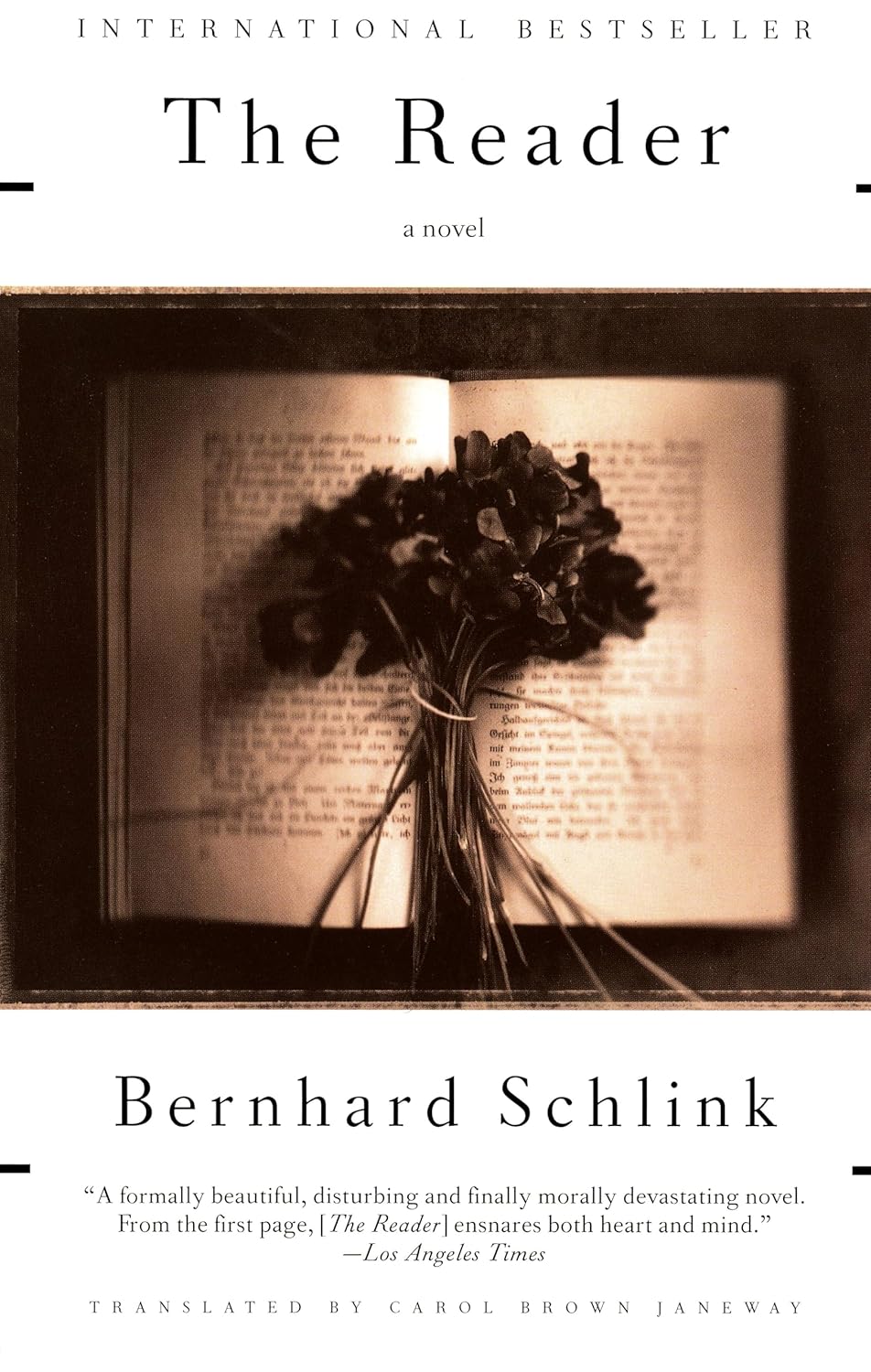
#1 — The Reader — trans. Carol Brown Janeway (1997)
- Readability: Clean, direct prose matching the novel's stripped-down style.
- Accuracy: The sole English text, preserving moral architecture exactly.
- Tone: Unadorned and morally intense.
- Accessibility: Ideal for university syllabi and general readers.

Campbell Scott's measured and nuanced narration perfectly complements Schlink's introspective prose in this Janeway translation, capturing both the emotional weight and moral complexity of the novel.
Listen on Audible →Which translation is right for you?
- Choose Janeway if you want the only available English edition that delivers the novel's moral clarity with direct, unadorned prose.
About the Translator
Carol Brown Janeway (1944–2014, 1997, Vintage International): American editor and translator; a senior editor at Knopf and Pantheon for three decades, where she was responsible for bringing major works of contemporary German, French, and Central European literature to American readers — including Schlink's novel, Christa Wolf's Medea, and Erich Loest's The Rebellion of the Bookkeeper Plottner. She worked primarily as an editor rather than a professional literary translator, but her English version of Der Vorleser is the work for which she is now principally remembered; its directness and moral clarity serve the novel's stripped-down intensity well, and the Vintage International edition credits her by name on the cover — a practice more common in European publishing than in the American market.
Themes
Guilt and the second generation. The novel's central preoccupation is the question that Michael Berg represents: how does a German born after the war stand in relationship to the generation that perpetrated it — a generation that includes people he has known and loved? He cannot prosecute them; he cannot forgive them; he cannot pretend to be unrelated to what they did. Schlink's answer is not consoling: Michael's relationship to Hanna is itself a figure for the second generation's relationship to German history — intimate, formative, compromised, and impossible to resolve.
Literacy, illiteracy, and the question of comprehension. Hanna's secret — the illiteracy she would rather face a worse prison sentence than reveal — is the novel's pivot point, and it raises the question of what kind of moral comprehension is available to someone who cannot read. She could not read the reports from the camp about what she was doing; she had the women read to her before selecting who would die. The novel does not offer this as an excuse — Schlink is careful about this — but as an explanation, and as a meditation on what kinds of knowledge moral responsibility requires.
Reading aloud as intimacy and power. The novel begins with Michael reading aloud to Hanna — Schiller, Chekhov, Homer — before their sexual encounters; it ends with Michael recording himself reading and sending the tapes to Hanna in prison, where she is teaching herself to read. Reading is the novel's central activity and its central metaphor: the means by which Hanna accesses the world, the means by which Michael maintains their connection across decades, and the means — ultimately — by which she confronts what she did.
Key Characters
Michael Berg — the narrator; a lawyer who tells the story in retrospect; his relationship with Hanna at fifteen shapes his subsequent life in ways he can neither understand nor escape. His passive, emotionally constrained narration is itself a symptom of what the novel is about: a generation paralysed between knowledge and action.
Hanna Schmitz — the former SS guard, now a tram conductor, who is Michael's lover and the novel's most morally complex figure. Her illiteracy explains certain facts about her behaviour in the camp (why she always chose women who could read); it does not explain or excuse the choices she made within those constraints. Her decision, at the trial, to accept blame for a report she did not write rather than reveal her illiteracy is the novel's central moral paradox.
Recommended Sources
For further academic reading on Schlink and The Reader:
- German Life and Letters (Wiley-Blackwell) — the leading British journal for German literature; essential for The Reader in the context of postwar German memory and the literature of the second generation.
- Holocaust and Genocide Studies (Oxford University Press) — the primary journal for Holocaust scholarship; key for readings of the novel's treatment of perpetrators, bystanders, and the question of complicity.
- New German Critique (Duke University Press) — the leading American journal for critical German studies; essential for the political and cultural dimensions of the novel's reception, including the significant debates about whether it aestheticises or trivialises its subject.
There is only one English translation of The Reader. Carol Brown Janeway's Vintage International text is the translation through which the novel became an international phenomenon and a perennial of university syllabi. The current Vintage International paperback is the standard edition and the one to buy.
Frequently Asked Questions
What is The Reader about?
The Reader is about a young boy, Michael Berg, who has an affair with an older woman, Hanna Schmitz, who is later revealed to have been a Nazi guard. The novel explores themes of guilt, complicity, and the moral complexities of postwar Germany.
Is The Reader hard to read?
The Reader is not hard to read in terms of language, especially in Carol Brown Janeway's clear and direct translation. However, the moral and emotional themes can be challenging for some readers.
Which The Reader translation is best?
Carol Brown Janeway's 1997 translation is the only English edition and the standard text through which the novel became an international phenomenon.
Janeway vs any other translator — which should I choose?
There is no competing English translation; Janeway's direct, clear prose is the sole version available and serves the novel's moral intensity perfectly.
Which translation is easiest to read?
Janeway's version is deliberately clean and direct, matching Schlink's stripped-down style with no ornate flourishes.
Which translation is most accurate?
Janeway's translation is the definitive and only English text, preserving the novel's construction and moral architecture exactly.
Why does the Vintage International edition credit the translator on the cover?
Janeway was a senior editor at Knopf who championed German literature; the cover credit reflects European publishing norms and acknowledges her contribution to the novel's success.
This guide is based on reading the translation and reviewing scholarly commentary. Last reviewed: June 2026.
As an Amazon Associate, I earn from qualifying purchases.
Looking for another classic? Browse all our translation guides →
Explore Günter Grass's postwar reckoning in our Tin Drum translation guide.
For another essential Holocaust memoir, see our guide to If This Is a Man translations.
Readers drawn to Vasily Grossman's epic of war and totalitarianism will want our Life and Fate translation guide.
Thomas Mann's great German novels are compared in our Magic Mountain translation guide.