Silence: What It's About & Best Translation
Endō's novel of faith and apostasy in seventeenth-century Japan — and the translation that brought it to Western readers
As an Amazon Associate, we earn from qualifying purchases.
Silence follows the story of Father Sebastião Rodrigues, a Portuguese Jesuit priest, who travels to Japan in the 17th century to find his mentor, Ferreira, who is rumored to have apostatized. The novel explores themes of faith, apostasy, and the silence of God amidst persecution.
Translation Comparison at a Glance
| Translation | Readability | Accuracy | Tone | Best For |
|---|---|---|---|---|
| Johnston (1969) | High | Very good | Plain, direct, theological | First-time readers, spiritual engagement |
| Washburn (2016) | Moderate | Excellent | Scholarly, precise | Close reading, academic study |
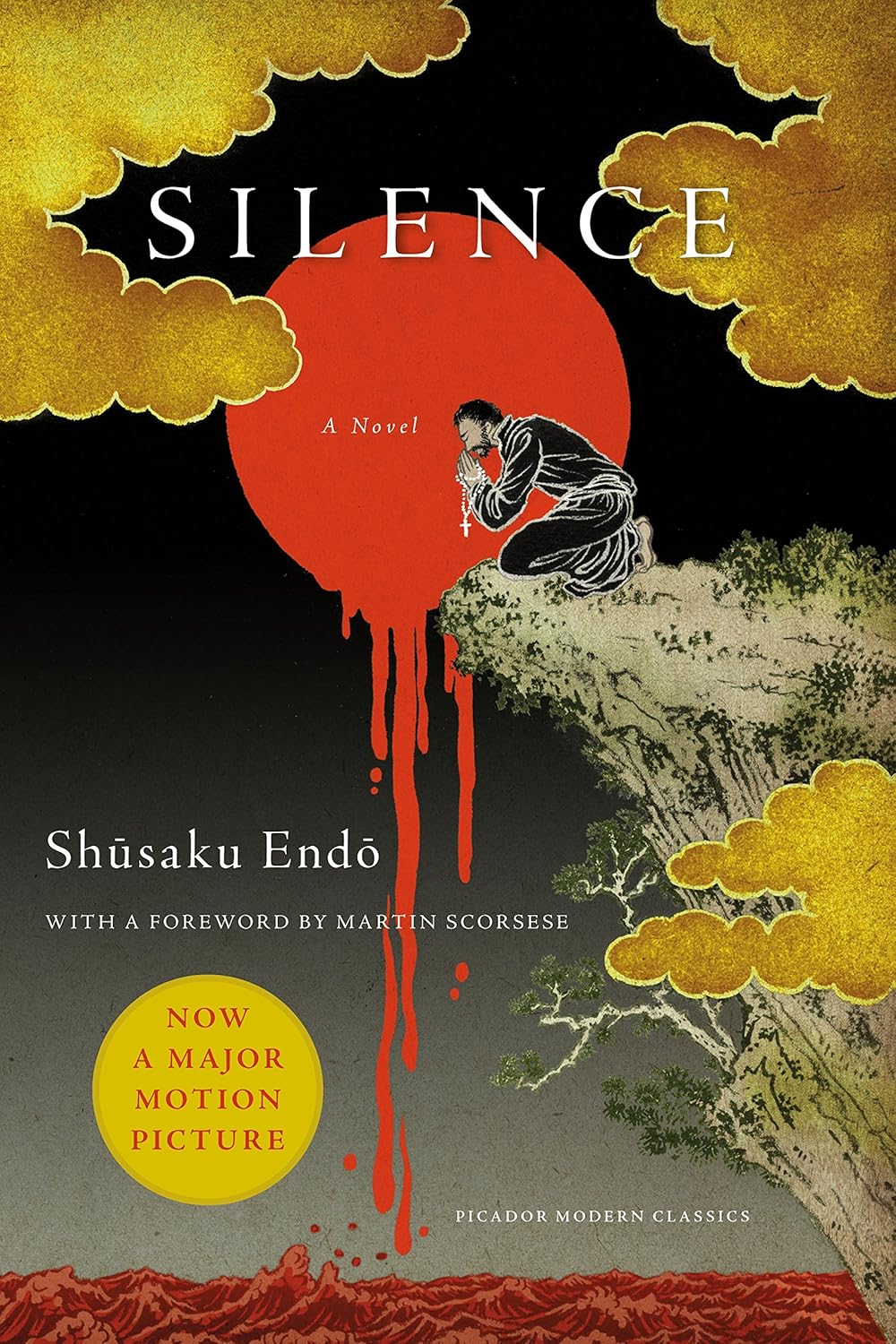
#1 — Silence — trans. William Johnston (1969)
- Readability: Clear, unadorned, and unhurried prose.
- Accuracy: Strong fidelity to theological and spiritual dimensions.
- Tone: Plain and direct, focused on moral drama.
- Accessibility: Excellent entry point for new readers.
Which translation is right for you?
- Choose Johnston if you want the most spiritually resonant and readable introduction to the novel.
- Choose Washburn if you prefer scholarly precision and a more contemporary literary style.
About the Translators
William Johnston (1925–2010, 1969, Peter Pauper / Picador): Irish-born Jesuit priest who lived and taught in Japan for more than forty years; scholar of Japanese Buddhist mysticism and the author of Silent Music and The Mirror Mind, both classics of comparative spirituality. His translations from Japanese include several works of Japanese Catholic spirituality and Kawabata's shorter fiction. His Jesuit formation shaped his reading of the novel in ways that distinguish it from any translation a secular literary professional could produce: he reads the silence of God with the specificity of someone who has spent a lifetime in contemplative prayer, and his English — plain, direct, unhurried — reflects the spiritual register of the original without calling attention to itself.
Dennis Washburn (2016, Columbia University Press): Professor of Japanese Literature and Culture at Dartmouth College; his other translations include Kawabata's The Sound of the Mountain, novels by Masuji Ibuse, and works of Natsume Sōseki; his translation practice is that of the literary scholar — attentive to Endō's prose style, to the specific rhythms of the Japanese, and to the novel's place in the twentieth-century Japanese literary tradition. His 2016 Columbia University Press translation appeared to coincide with Scorsese's film and offers a more philologically precise English than Johnston's — valuable for readers who want to engage the novel as a literary object.
Themes
The silence of God. The novel's central theological question — and its title — is posed by the fact that as Rodrigues watches Japanese Christians being tortured and executed, God says nothing. The silence is not simply the absence of miraculous intervention; it is the failure of any discernible divine response to human suffering offered in the name of faith. Endō does not resolve this question: the novel's most debated passage, in which a voice from the face on the fumie speaks to Rodrigues as he is about to apostatise, is ambiguous about whether it is the voice of God or of Rodrigues's own broken mind.
Apostasy and its ambiguity. The act of fumie — treading on an image of Christ to prove non-belief — is the persecution's central instrument, and Rodrigues's eventual performance of it is the novel's moral climax. Endō frames the act not as simple betrayal but as an act of love: Rodrigues tramples the image to end the suffering of the Japanese Christians being tortured around him. Whether this constitutes apostasy, a deeper act of faith, or something that cannot be categorised in either theological language — this ambiguity is the novel's lasting moral challenge.
The "swamp" of Japan and the transplantation of Christianity. The apostate priest Ferreira tells Rodrigues that Japan is a swamp in which the roots of Christianity cannot take hold — that what Japanese Christians worship is not the God of Christianity but a version of the divine shaped by Japanese culture. This is Endō's most personal theme (he was a Japanese Catholic who spent his career exploring what Christianity meant in a non-Christian culture), and the novel refuses to adjudicate between Ferreira's corrosive scepticism and Rodrigues's faith.
Key Characters
Father Sebastião Rodrigues — the young Portuguese Jesuit narrator; a man of genuine faith and considerable vanity who arrives in Japan imagining his own martyrdom and discovers that what awaits him is something harder than martyrdom. His gradual psychological dissolution under the weight of the suffering he witnesses and cannot prevent is the novel's primary subject.
Kichijiro — the Japanese apostate who guides Rodrigues to Japan, betrays him to the authorities, and returns again and again to confess and be absolved; the novel's most theologically complex figure. He is the weakest person in the book, the one who consistently chooses survival over martyrdom, and — Endō gradually suggests — perhaps the one whom Rodrigues is really sent to minister to.
Christovão Ferreira — the Portuguese Jesuit who apostatised under torture ten years before Rodrigues's arrival and who now lives as a Japanese man; a figure of corruption and terrible clarity whose arguments against Christianity in Japan have the force of someone who once believed them completely.
The Inquisitor Inoue — the Japanese official who orchestrates the persecution not through crude torture but through psychological pressure; a man of intelligence and sophistication who understands that killing martyrs creates testimony, and that breaking them creates silence.
Recommended Sources
For further academic reading on Endō and Silence:
- Journal of Japanese Studies (Society for Japanese Studies) — the primary English-language journal for Japanese literature; essential for Endō's place in the twentieth-century Japanese literary tradition and his relationship to other Japanese Catholic writers.
- Christianity and Literature (Sage) — the primary journal for the relationship between literature and Christian thought; key for the theological dimensions of Silence and their relationship to the tradition of literary representations of faith and doubt.
- Religion and Literature (Notre Dame) — important for Silence as a work of Catholic literary imagination and its relationship to the European tradition of Catholic fiction — Graham Greene, François Mauriac, Georges Bernanos.
The Johnston translation (Picador Modern Classics) is the standard English text of Silence — the version through which the novel became an international classic, and the one Scorsese's film and foreword are tied to. The Washburn translation (Columbia University Press) is the more philologically precise version and is available for readers who want to compare; it is particularly useful for close reading and for scholars. For a first reading, and for most readers, the Johnston edition remains the natural choice.
Frequently Asked Questions
What is Silence about?
Silence follows the story of Father Sebastião Rodrigues, a Portuguese Jesuit priest, who travels to Japan in the 17th century to find his mentor, Ferreira, who is rumored to have apostatized. The novel explores themes of faith, apostasy, and the silence of God amidst persecution.
Is Silence hard to read?
Silence can be challenging due to its deep theological themes and historical context. Johnston's translation is more accessible for general readers, while Washburn's offers a more scholarly approach.
Which Silence translation is best?
Johnston's 1969 translation is the best starting point for most readers.
Johnston vs Washburn — which should I choose?
Choose Johnston for spiritual depth and readability; choose Washburn for scholarly precision and contemporary literary style.
Which translation is easiest to read?
Johnston's plain, direct English is the most accessible.
Which translation is most accurate?
Washburn's 2016 version is the more philologically precise translation.
How does the Scorsese film tie-in affect the choice of translation?
The Johnston Picador edition includes Scorsese's foreword and is the version most directly connected to the 2016 film.
This guide is based on reading the translation(s) and reviewing scholarly commentary. Last reviewed: June 2026.
As an Amazon Associate, I earn from qualifying purchases.
Looking for another classic? Browse all our translation guides →
Exploring more Japanese fiction? See our guide to the best Kokoro translation.
For another modern Japanese masterpiece, our Snow Country translation guide compares Seidensticker's definitive version.
Readers of Endō may also enjoy our comparison of the best Akutagawa translations.
If you're drawn to Murakami, check our guide to the best Wind-Up Bird Chronicle translation.