The Sorrows of Young Werther: What It's About & Best Translation
Goethe's epistolary novel of unrequited love — the Penguin Classics versus the Signet Classics
As an Amazon Associate, we earn from qualifying purchases.
The Sorrows of Young Werther is an epistolary novel about a young artist named Werther who falls hopelessly in love with Charlotte, a woman engaged to another man. His unrequited love leads to deep despair and ultimately his tragic end.
Translation Comparison at a Glance
| Translation | Readability | Accuracy | Tone | Best For |
|---|---|---|---|---|
| Hulse (1989) | High | Very good | Fluent, modern, emotionally immediate | First reading, university courses |
| Hutter (1962) | Moderate | Good | Formal with period flavour | Readers wanting extra Goethe writings |
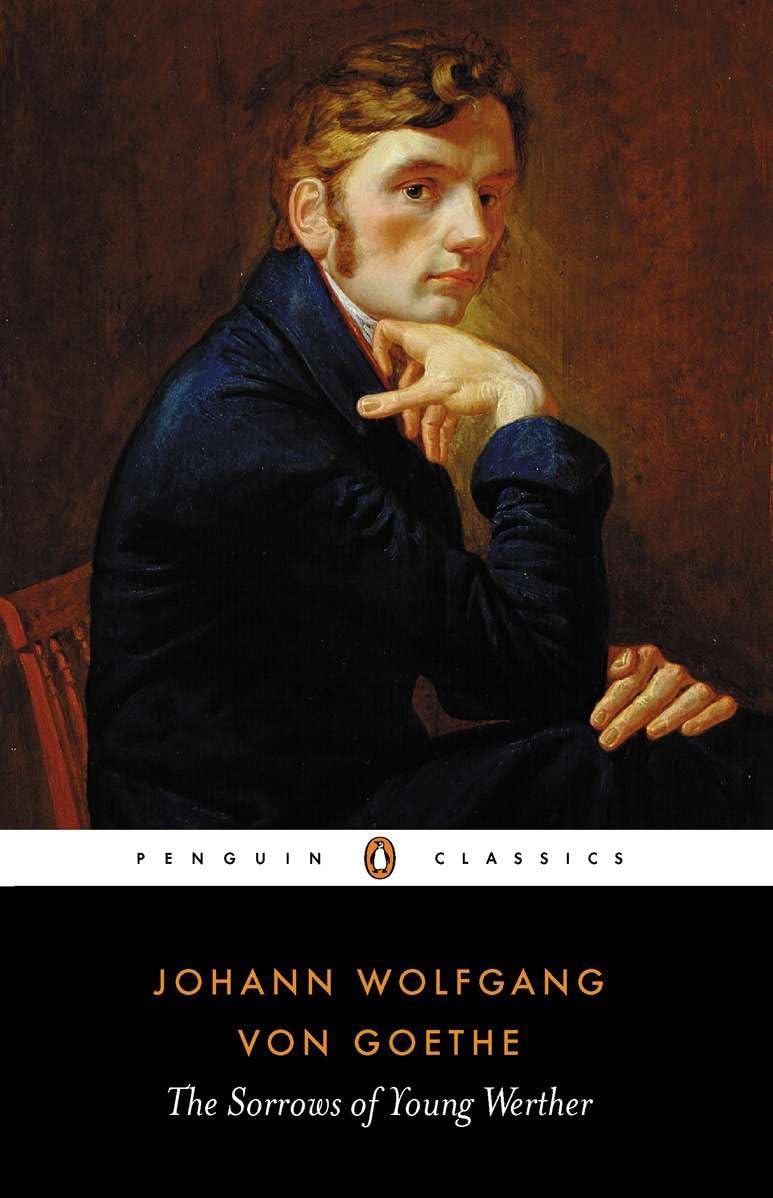
#1 — The Sorrows of Young Werther — trans. Michael Hulse (1989)
- Readability: Fluent and modern without being anachronistic.
- Accuracy: Faithful to the 1787 revised text with literary sensibility.
- Tone: Emotionally credible rather than melodramatic.
- Accessibility: Ideal for first-time readers and university courses.
Which translation is right for you?
- Choose Hulse if you want the most emotionally alive modern translation and the standard recommendation for a first reading.
- Choose Hutter if you want the novel plus a selection of Goethe's other writings in one inexpensive paperback.
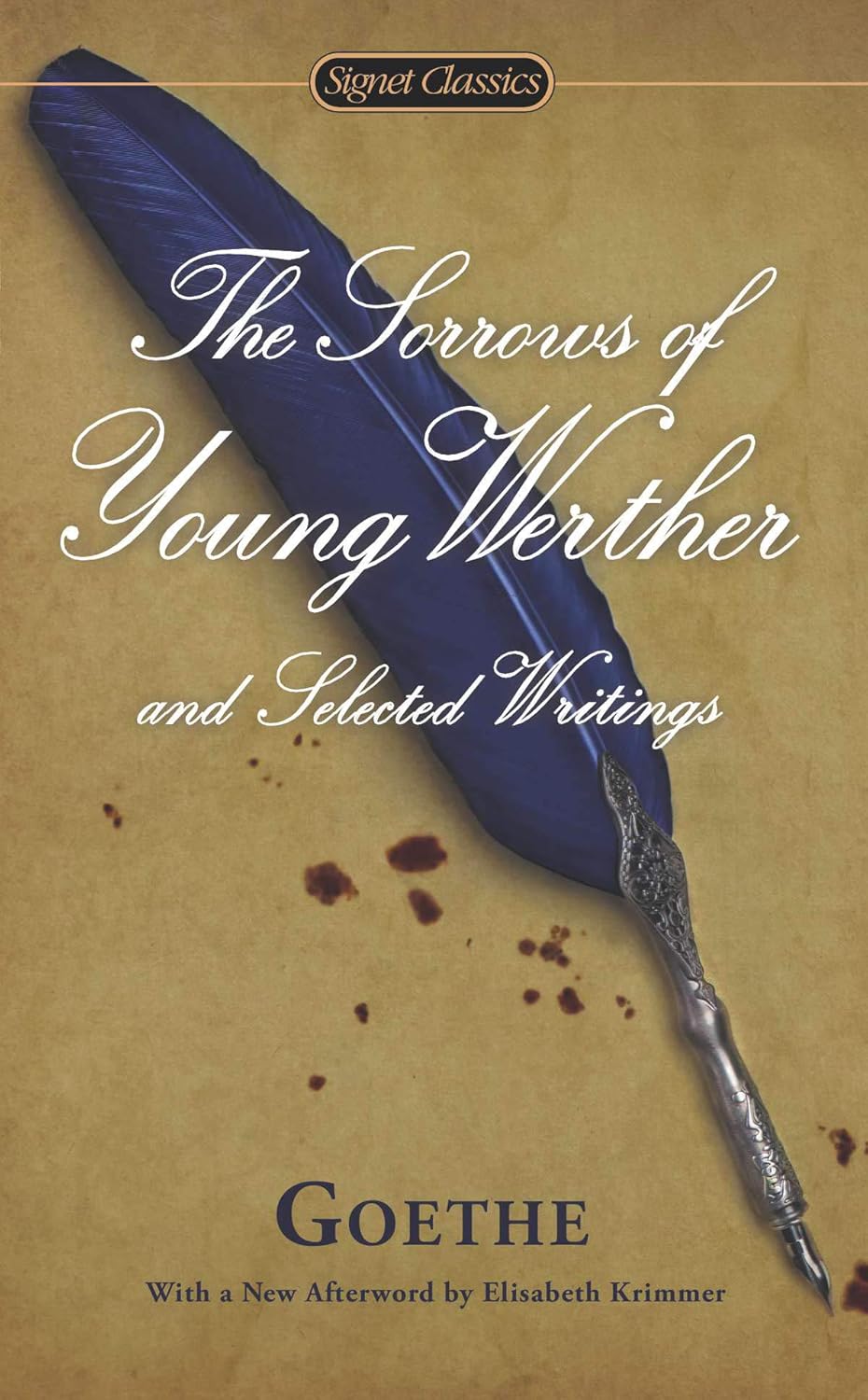
#2 — The Sorrows of Young Werther and Selected Writings — trans. Catherine Hutter (1962)
- Readability: Slightly more formal with a faint period flavour.
- Accuracy: Faithful to the 1787 revised text in an older American style.
- Tone: Elegant and direct, belonging to the Garnett tradition.
- Accessibility: Best when you want extra Goethe context in one volume.
About the Translators
Michael Hulse (Penguin Classics, 1989): A British poet and translator who has also produced major translations of Rilke, W.G. Sebald (The Emigrants, The Rings of Saturn), and Thomas Bernhard. Hulse's literary sensibility gives his Werther a quality that purely scholarly translations lack: the voice is recognisably that of a young man of the Enlightenment era — saturated with Rousseau and Ossian, ardent in his self-presentation — but the emotional texture is alive on the page. His translation has become the standard for university courses and book clubs precisely because it manages to make Werther sympathetic without making him ridiculous.
Catherine Hutter (Signet Classics, 1962): An American literary translator whose version belongs to an older tradition of German-English translation — formal, elegant, and carrying a faint period flavour that some readers find appropriate to the novel's eighteenth-century register. The Signet edition's advantage over the Penguin is its scope: it includes a selection of other Goethe writings — verse, letters, aphorisms — and an afterword by Elisabeth Krimmer placing Werther in the context of Goethe's life and the literary movement of Sturm und Drang. For readers who want more than just the novel, this is the most contextualising edition available at a reasonable price.
Themes
The validation of feeling over convention. What made Werther explosive in 1774 was its radical proposition that Werther's feelings — overwhelming, impossible, ultimately fatal — deserve to be taken seriously rather than corrected. The novel does not endorse Werther's suicide, but it refuses to treat his emotional life as a disorder to be managed. This validation of inner experience as the central subject of prose fiction was Goethe's most lasting contribution to the European novel.
The Werther effect. The novel was associated almost immediately with a wave of imitative suicides among young European men who dressed like Werther and carried his novel. This "Werther effect" — the statistical phenomenon of suicide contagion triggered by prominent depictions of suicide — has been studied by social scientists ever since, and the novel's original cultural moment remains one of the most dramatic examples of a book changing the behaviour of its readers.
Nature as mirror. Werther's descriptions of the landscape around Wahlheim track his psychological state with perfect fidelity — the early letters describe a paradise of harmony between inner and outer worlds; the later letters describe the same landscape as threatening, decayed, and alienated. The correspondence between mind and world is Goethe's sustained technical achievement in the novel.
The impossibility of possessing the beloved. Charlotte belongs to another and will not leave him. This impossibility is at once the cause of Werther's suffering and the condition of the love — a love that depends on its own frustration and could not survive its satisfaction. Goethe is too honest to suggest that happiness with Charlotte would have saved Werther; the problem is in Werther, not in the obstacle.
Key Characters
Werther — the letter-writer; young, ardent, saturated with Rousseau and Ossian; his descent from ecstasy to despair is both genuinely moving and occasionally absurd, and the novel honours both qualities. He is not a fool, but he is a man who has made himself the centre of a universe that does not share his priorities.
Charlotte (Lotte) — engaged to, then married to, Albert; she genuinely cares for Werther and cannot save him; she is not cruel, not cold, not indifferent — she simply cannot give him what he requires without destroying herself. Her final scene with Werther, before his death, is among the most painful in the novel.
Albert — Lotte's husband; decent, rational, and constitutionally unsuited to understanding Werther; he is not a villain — the novel is careful about this — but an obstacle by nature: his ordinariness is what Werther cannot forgive, not any particular cruelty.
Wilhelm — Werther's correspondent, to whom all the letters are addressed; he never replies within the novel; his silence is the necessary mirror for Werther's self-projection. The convention of the epistolary novel requires a recipient, and his function is to receive — to be, for the reader, a placeholder for the sympathy the novel demands.
Recommended Sources
For further reading on Goethe and Werther:
- Nicholas Boyle, Goethe: The Poet and the Age (Oxford, 1991– ) — the definitive English-language biography of Goethe; the first volume covers the period of Werther's composition and reception in extraordinary detail.
- Goethe Yearbook (North American Goethe Society) — the primary English-language venue for current Goethe scholarship; essential for academic treatment of Werther's place in his career and in European literary history.
- Matthew Bell, Goethe's Naturalistic Anthropology: Man and Other Plants — for the philosophical background to Goethe's understanding of feeling, nature, and organic development that underlies the novel's imagery.
Hulse's Penguin Classics translation is the right choice for most readers — the most emotionally alive version, the most widely recommended, and the one that makes Werther sympathetic without making him merely pitiful. Hutter's Signet edition is the better choice for readers who want a wider sense of Goethe's range, with selections from his other work alongside the novel. Both translations use the standard 1787 revised text that Goethe considered definitive.
Frequently Asked Questions
What is The Sorrows of Young Werther about?
The Sorrows of Young Werther is an epistolary novel about a young artist named Werther who falls hopelessly in love with Charlotte, a woman engaged to another man. His unrequited love leads to deep despair and ultimately his tragic end.
Is The Sorrows of Young Werther hard to read?
The novel's language can be challenging due to its period style, but Hulse's translation offers a modern and emotionally engaging version, while Hutter's retains a more formal tone.
Which The Sorrows of Young Werther translation is best?
Michael Hulse's 1989 Penguin Classics translation is the edition most widely read in universities and book clubs today and the one to recommend for a first reading.
Hulse vs Hutter — which should I choose?
Choose Hulse for the most emotionally alive and modern-feeling version; choose Hutter if you want the novel plus a selection of Goethe's other writings in one inexpensive paperback.
Which translation is easiest to read?
Hulse's translation is fluent and modern without being anachronistic, making Werther's letters read as emotionally credible rather than melodramatic.
Which translation is most accurate?
Both translations use the standard 1787 revised text. Hulse brings a literary sensibility that keeps the emotional texture alive while remaining faithful to the period voice.
Why does the Signet edition include extra Goethe writings?
Catherine Hutter's 1962 Signet Classics edition pairs the novel with selections from Goethe's poetry, letters, and prose plus an afterword by Elisabeth Krimmer, offering wider context for readers who want more than just Werther.
This guide is based on reading the two translations and reviewing scholarly commentary. Last reviewed: June 2026.
As an Amazon Associate, I earn from qualifying purchases.
Looking for another classic? Browse all our translation guides →
Goethe's other masterpiece is covered in our Faust translation guide, comparing Greenberg, Luke, and Arndt.
For more German literature, see our Magic Mountain translation guide on Thomas Mann.
Our Death in Venice translation guide compares the best versions of Mann's novella.
Readers of German classics may also enjoy our Steppenwolf translation guide for Hermann Hesse.