One Thousand and One Nights: What It's About & Best Translation
Scheherazade tells a story inside a story inside a story — and keeps talking for a thousand nights and one
As an Amazon Associate, we earn from qualifying purchases.
One Thousand and One Nights is a collection of Middle Eastern folk tales compiled during the Islamic Golden Age. The frame story follows Scheherazade, who tells a series of stories to delay her execution by a king who distrusts women.
Translation Comparison at a Glance
| Translation | Readability | Accuracy | Tone | Best For |
|---|---|---|---|---|
| Lyons (2008) | High | Very good | Clear, rhythmic modern prose | First complete reading |
| Haddawy (1990) | Moderate | Excellent | Faithful, literary | Scholarly study of core text |
| Burton (1885–1888) | Low | Fair | Archaic, extravagant | Historical curiosity |
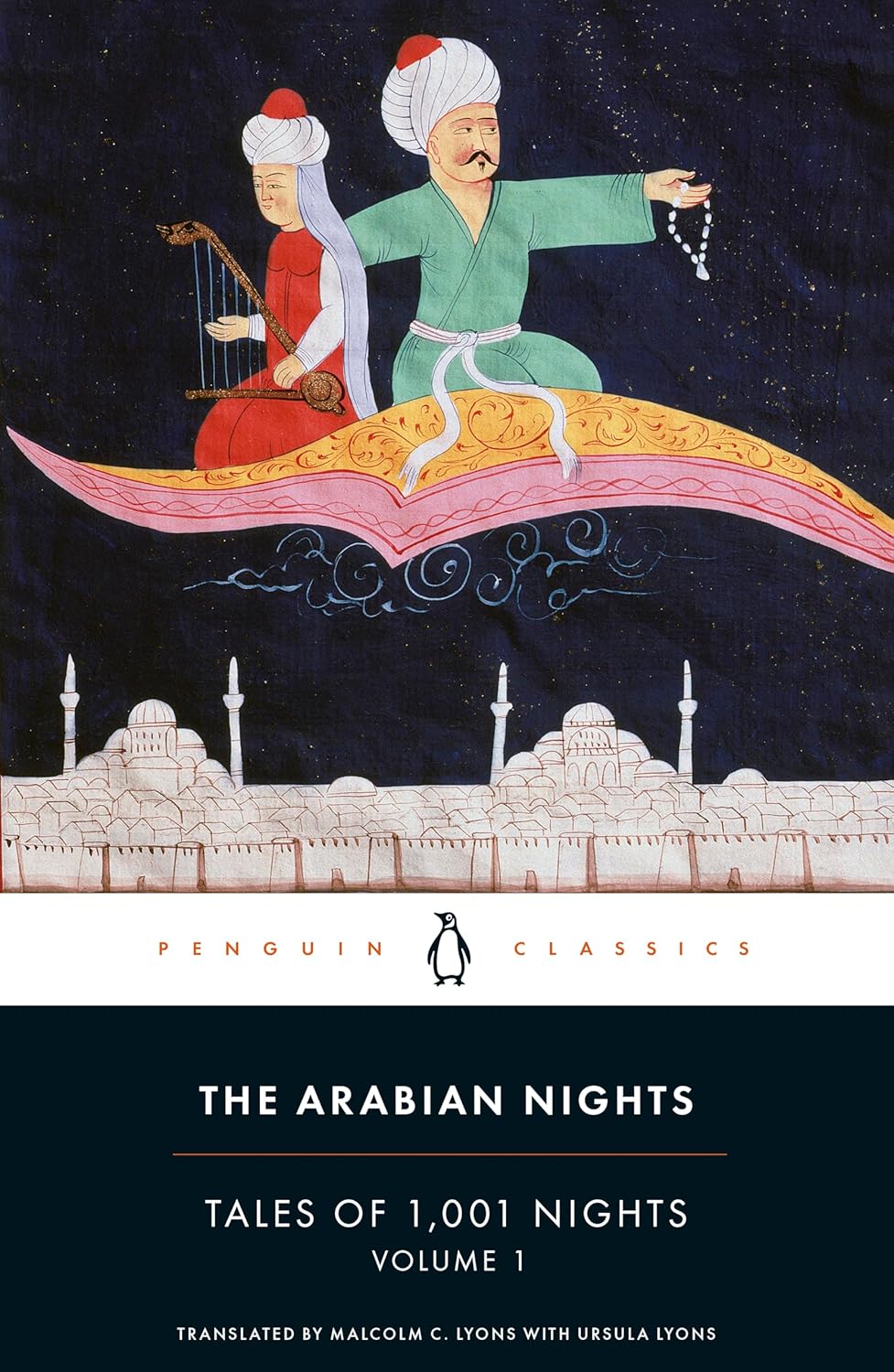
#1 — The Arabian Nights: Tales of 1,001 Nights (3 vols.) — trans. Malcolm C. Lyons with Ursula Lyons (2008)
- Readability: Clear, direct prose that catches the storytelling rhythm without monotony.
- Accuracy: Very good, based on the Calcutta II printed text covering all 1,001 nights.
- Tone: Scholarly yet highly readable with a substantial introduction by Robert Irwin.
- Accessibility: Excellent for first-time readers wanting the fullest version.
Which translation is right for you?
- Choose Lyons if you want the most complete modern translation covering all 1,001 nights in readable prose with helpful scholarly context.
- Choose Haddawy if you want the most philologically accurate version of the oldest surviving Arabic manuscript, even if it omits later additions like Aladdin.
- Choose Burton if you are already familiar with the Nights and want to experience the eccentric Victorian classic with its famous footnotes.
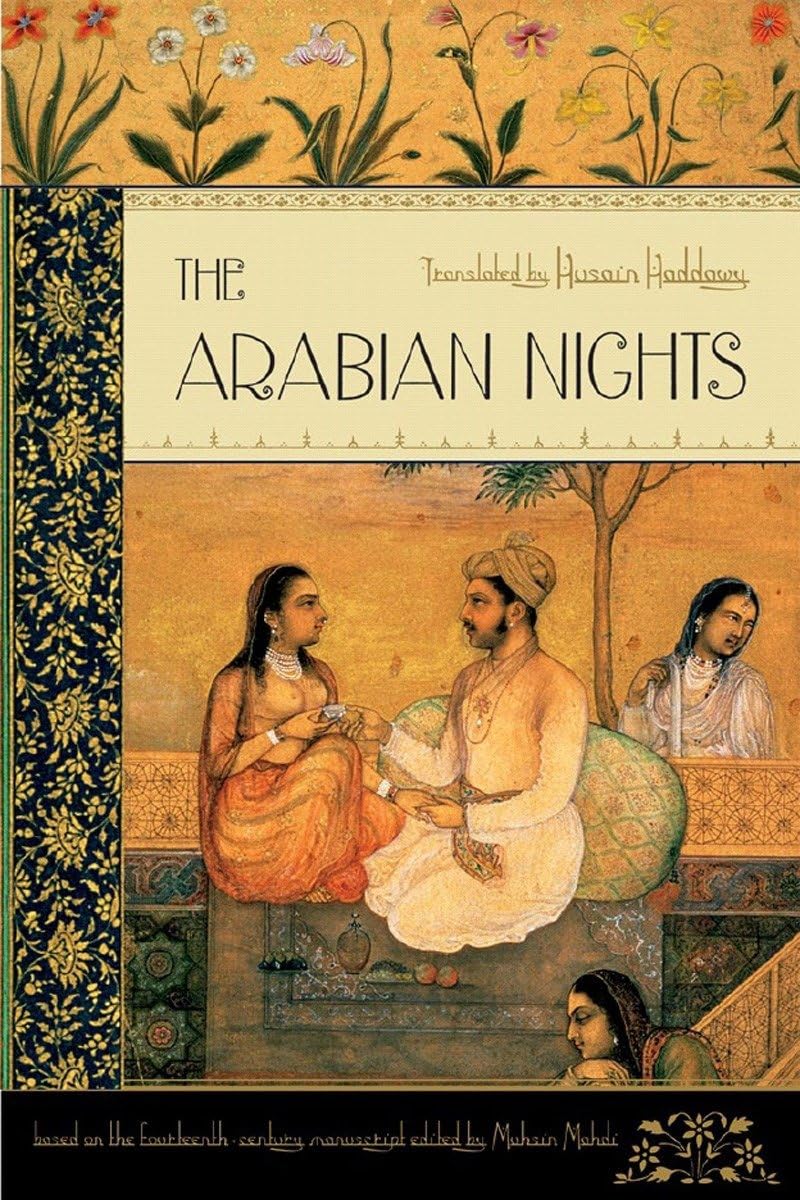
#2 — The Arabian Nights — trans. Husain Haddawy, ed. Muhsin Mahdi (1990 / 2008)
- Readability: Supple and vivid literary prose.
- Accuracy: Excellent, based on the oldest 14th-century Syrian manuscript.
- Tone: Faithful to the core tradition with clear handling of nested frames.
- Accessibility: Best for readers seeking the purest original text.
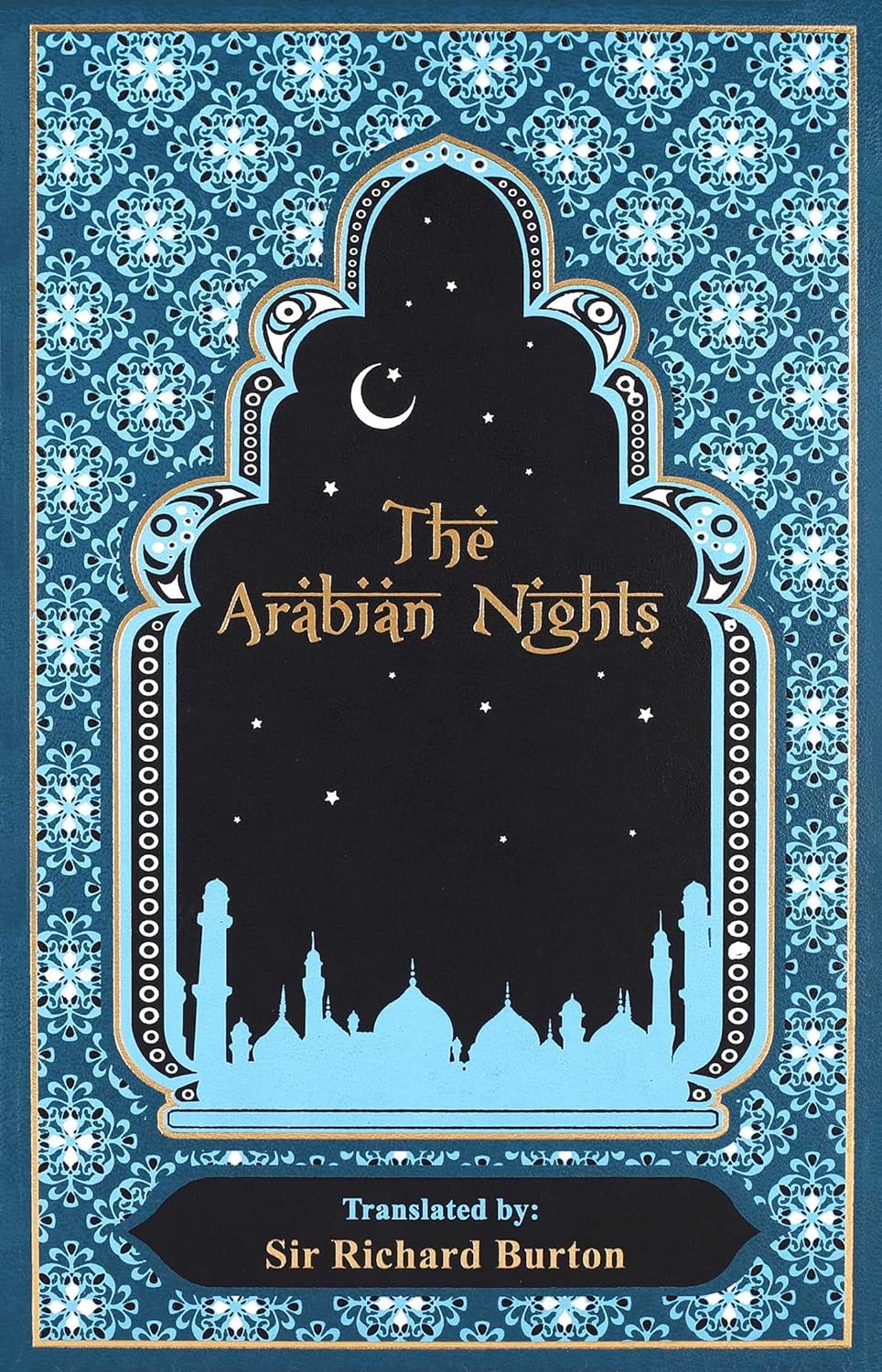
#3 — The Arabian Nights — trans. Sir Richard Francis Burton (1885–1888)
- Readability: Low due to deliberately archaic style.
- Accuracy: Fair, reflecting the translator's own obsessions.
- Tone: Extravagant, Arabised, and highly annotated.
- Accessibility: Best for experienced readers interested in Victorian scholarship.
About the Translators
Malcolm C. Lyons (with Ursula Lyons, 2008, Penguin Classics): Arabist at Cambridge; his three-volume Penguin translation is the most complete modern English version of the Arabian Nights, working from the Calcutta II printed text. The set includes an introduction by Robert Irwin, author of the indispensable companion volume The Arabian Nights: A Companion.
Husain Haddawy (1990, Norton): Translated from Muhsin Mahdi's critical edition of the 14th-century Syrian manuscript — the oldest and most carefully transmitted Arabic text of the Nights. His version covers only the stories in the Mahdi text (roughly 271 nights) but is the most philologically authoritative English rendering of the core tradition.
Sir Richard Francis Burton (1885–1888): Explorer, linguist, and intelligence officer who spoke over forty languages. His sixteen privately printed volumes remain one of the most eccentric monuments in English literary history — the translation is deliberately archaic, the footnotes are legendary, and the whole enterprise reflects its author's personality as much as its source material.
Themes
Narrative as survival. The frame story is among the most elegant in world literature: Scheherazade tells stories to stay alive, each ending at dawn with an unresolved thread that forces the king to spare her for one more day. This transforms storytelling from entertainment into a matter of life and death — and implicitly argues that narrative is how human beings make the world livable, how we impose meaning on violence and loss. The frame also generates the collection's structure: every story can contain another, those stories further stories, and the nesting continues indefinitely.
The Nights as accumulated world literature. The Arabian Nights is not a single text by a single author from a single culture. Stories from Persian, Indian, Arabic, Greek, and other traditions were absorbed and transformed over centuries; the most famous tales — Aladdin, Ali Baba — were added by European translators in the eighteenth century and may have no Arabic original. Every translator must therefore confront not just a linguistic problem but a textual and cultural one: which Nights is it translating?
The oral logic of repetition. The Nights was designed to be told, not read, and its structure is oral: repetition, formula, and digression are features rather than flaws. Translators who smooth these away in the name of readability lose part of how the stories work — the way that repetition builds hypnotic accumulation, the way the frame constantly reasserts Scheherazade's situation even as we become absorbed in the inner stories.
Key Characters
Scheherazade — the vizier's daughter who volunteers to marry King Shahryar and delays her execution through storytelling, never finishing at dawn. She is literature's greatest argument for narrative as power — she has no weapons but language and structure, and they are enough.
King Shahryar — the king who murders his brides each morning after discovering his first wife's infidelity. His transformation over a thousand and one nights — from traumatized tyrant to a husband capable of trust — is the frame's implicit arc, though the Nights does not dwell on it.
Sinbad the Sailor — the most famous figure of the inner stories: a Baghdad merchant who tells seven tales of his impossible voyages to a poor porter, arguing that the risks of sea travel earned his wealth. Present in most major editions.
Aladdin and Ali Baba — the characters most familiar to Western readers, both likely added by Antoine Galland in his early eighteenth-century French translation and not present in the oldest Arabic manuscripts. Haddawy's translation omits them; Lyons's includes versions of both.
Recommended Sources
For further academic reading on the Arabian Nights and Arabic literary tradition:
- Journal of Arabic Literature (Brill) — the primary scholarly journal for Arabic literary studies in English; central venue for research on the Nights and its textual history.
- Middle Eastern Literatures (Taylor & Francis) — essential for the Nights in its broader cultural and historical context across the Islamic literary world.
- PMLA (Modern Language Association) — key venue for comparative and theoretical readings of the Nights in relation to world literary tradition.
Which translation is right for you?
Choose Lyons (Penguin, 3 vols.) for a first sustained encounter — it is the most complete modern translation, the most readable, and Robert Irwin's introduction provides the best available orientation to the textual history. Choose Haddawy (Norton) if you want the most philologically authoritative version of the oldest Arabic text, knowing that Aladdin and Ali Baba are absent as later additions. Choose Burton only after reading one of the others — he is a monument, not an introduction, and his eccentricities are best appreciated by readers who already know what the original is doing.
Frequently Asked Questions
What is One Thousand and One Nights about?
One Thousand and One Nights is a collection of Middle Eastern folk tales compiled during the Islamic Golden Age. The frame story follows Scheherazade, who tells a series of stories to delay her execution by a king who distrusts women.
Is One Thousand and One Nights hard to read?
The difficulty of reading One Thousand and One Nights depends on the translation. Lyons's version is the most readable with modern prose, while Burton's is more challenging due to its archaic style.
Which Arabian Nights translation is best?
Malcolm Lyons's three-volume Penguin Classics translation is the most complete modern English version and the best starting point for most readers.
Lyons vs Haddawy — which should I choose?
Choose Lyons for the fullest set of stories across all 1,001 nights in readable modern prose. Choose Haddawy if you want the most philologically accurate rendering of the oldest surviving 14th-century manuscript.
Which translation is easiest to read?
Malcolm Lyons's Penguin translation is the most readable, with clear, direct prose that preserves the storytelling rhythm without becoming monotonous.
Which translation is most accurate?
Husain Haddawy's translation is the most accurate, being based directly on Muhsin Mahdi's critical edition of the oldest surviving Arabic manuscript.
Should I read Burton's Victorian Arabian Nights translation?
Burton's version is best read after Lyons or Haddawy; it is an eccentric Victorian monument with legendary footnotes but deliberately archaic and sometimes inaccurate prose.
This guide is based on reading all 3 translations and reviewing scholarly commentary. Last reviewed: June 2026.
As an Amazon Associate, I earn from qualifying purchases.
Looking for another classic? Browse all our translation guides →
Readers drawn to Scheherazade's frame narrative will also enjoy our guide to the best Decameron translation.
For another foundational work of Persian storytelling tradition, see our Shahnameh translation guide.
If you like epic tales of adventure and survival, try our comparison of the best Gilgamesh translations.
Those exploring non-Western storytelling epics may also want our Journey to the West translation guide.
Borges's fascination with the Nights makes our guide to Borges in English a natural next step.