Twenty Thousand Leagues: What It's About & Best Translation
The novel that shaped modern science fiction — and why almost every reader encountered the wrong book for over a century
As an Amazon Associate, we earn from qualifying purchases.
Twenty Thousand Leagues Under the Seas follows Professor Aronnax, his servant Conseil, and the Canadian whaler Ned Land as they are captured by Captain Nemo aboard the submarine Nautilus. They embark on a journey across the world's oceans, encountering marine wonders and the enigmatic Captain Nemo, who harbors a deep-seated resentment against imperial powers.
Translation Comparison at a Glance
| Translation | Readability | Accuracy | Tone | Best For |
|---|---|---|---|---|
| Butcher (1998) | High | Very good | Scholarly yet fluid | First-time readers, study |
| Walter (1875 Illus.) | Moderate | Excellent | Literal, period-faithful | Illustration lovers, comparison |
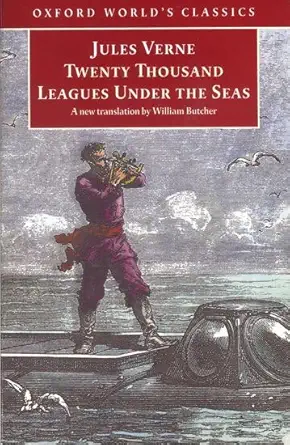
#1 — Twenty Thousand Leagues Under the Seas — trans. William Butcher (1998)
- Readability: High — fluid and engaging while remaining precise.
- Accuracy: Very good — restores all cut passages and corrects Mercier errors.
- Tone: Scholarly yet accessible with rich scientific detail.
- Accessibility: Excellent for first-time readers thanks to notes and introduction.
Which translation is right for you?
- Choose Butcher if you want the most readable scholarly edition with extensive notes and context.
- Choose Walter if you prefer a strictly literal translation paired with the original 1875 illustrations.
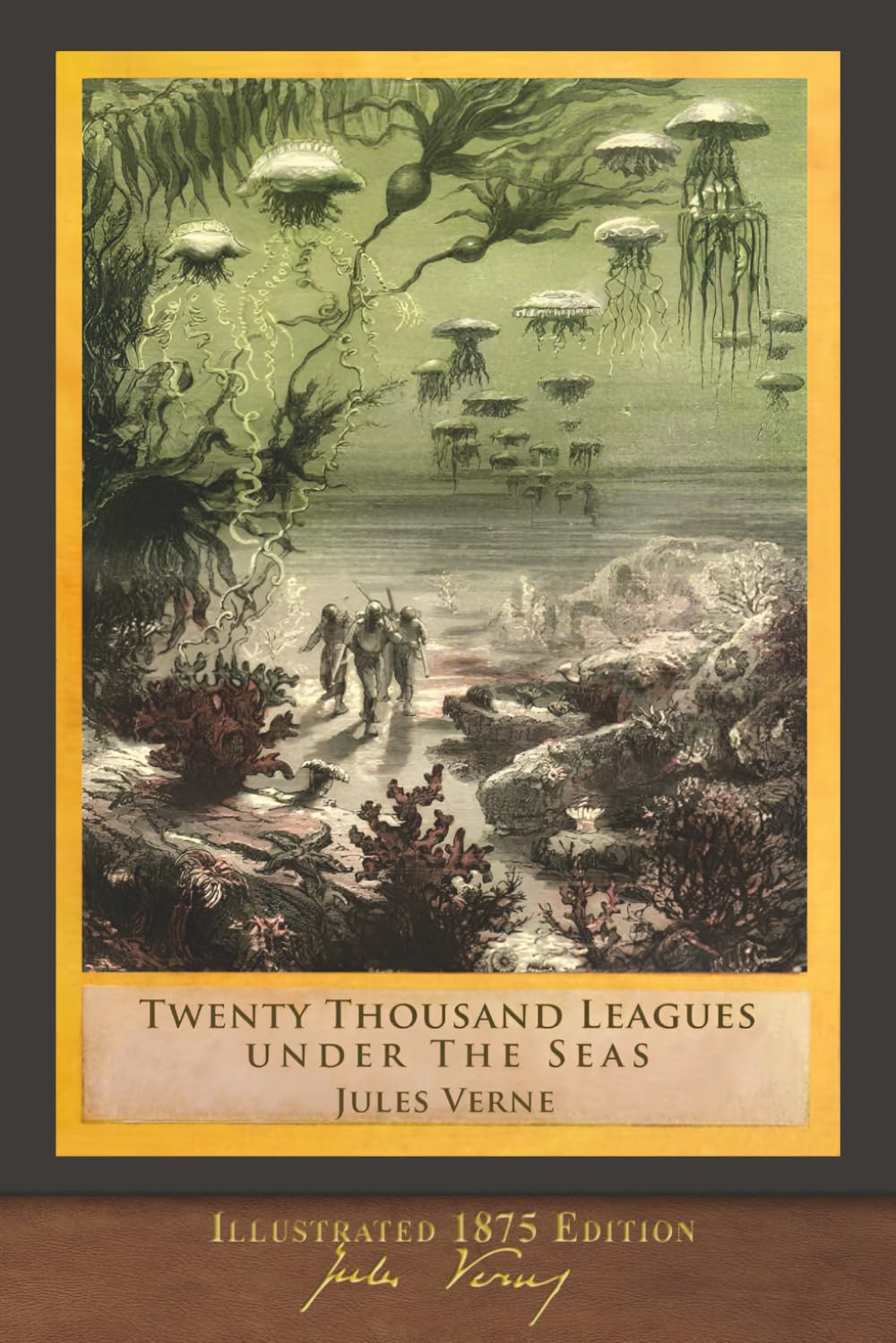
#2 — Twenty Thousand Leagues Under the Seas — trans. F.P. Walter (Illustrated 1875 Edition)
- Readability: Moderate — more literal and occasionally less fluid.
- Accuracy: Excellent — strictly faithful to the French original.
- Tone: Literal and period-authentic.
- Accessibility: Best for readers who want the original illustrations.
About the Translators
William Butcher (Oxford World's Classics, 1998): A Verne scholar who has spent decades studying the manuscripts, the science, and the publication history of Verne's novels. Butcher's biography Jules Verne: The Definitive Biography is the most thorough English-language study of Verne's life and work. His translation of Twenty Thousand Leagues is the culmination of that scholarship: he had direct access to Verne's manuscripts, understood the scientific vocabulary precisely, and could restore what the Victorian mistranslation had cut or distorted. His introductions and notes in the Oxford edition are the most comprehensive scholarly apparatus available for the novel in English.
Frederick Paul Walter (multiple editions): An academic who undertook his complete translation specifically to correct the record after the Mercier version had dominated for a century. Walter aimed for maximum fidelity to Verne's French — where Butcher occasionally adjusts for English flow, Walter stays close to the French even when it produces slightly awkward English. His translation is presented in the Illustrated 1875 Edition paired with Édouard Riou's original engravings from the novel's first French book publication — the form closest to how Verne's first readers encountered the text.
Lewis Page Mercier (1873): The Victorian translator whose version dominated the English-speaking world for over a century — and who did not read French well. Mercier cut approximately twenty-five percent of Verne's text, invented passages, softened Nemo's anti-colonialism, and introduced thousands of errors. His version is responsible for the critical dismissal of Verne as a writer of simple boys' adventure tales; it is not the novel Verne wrote. Of historical interest only.
Themes
The ocean as unknowable depth. Verne's undersea world is not merely spectacular but philosophically disorienting — a space outside national jurisdiction, outside the law, outside the civilisation that Nemo has rejected. The luminous passages of deep-sea description, with their obsessive cataloguing of species and formations, read as something close to lyric prose in Butcher's translation.
Anti-colonialism and wounded sovereignty. Nemo is not merely a misanthrope; he is a man whose homeland has been destroyed by a colonial power and who has placed himself outside all states as a consequence. This political dimension — largely suppressed by Mercier and restored by Butcher and Walter — gives the novel its tragic grandeur and makes Nemo a figure of genuine moral complexity rather than romantic eccentricity.
Scientific encyclopaedism as literary mode. Verne's obsessive cataloguing of natural history, depths, species, and mineral formations is not decorative padding but the novel's characteristic mode of wonder. Aronnax's scientific enthusiasm — his genuine delight in what he is seeing — transforms what could be travelogue into something stranger and more moving.
The impossibility of rescue. Aronnax, Conseil, and Ned Land are passengers on the Nautilus, not guests; they are prisoners who eventually escape. Nemo cannot be saved from himself; he refuses rescue and chooses the sea. The novel ends with his fate unknown — a deliberate withholding that is the most honest thing Verne could have done with the character.
Key Characters
Captain Nemo — the novel's tragic centre; a man of brilliant intellect and comprehensive self-sufficiency, fuelled by anti-imperialist rage and an absolute refusal to participate in the world that destroyed what he loved; his backstory is deliberately incomplete and his real name unknown until the sequel.
Professor Pierre Aronnax — the marine biologist narrator; attached to the Paris Museum of Natural History; an intelligent observer and genuine scientist whose enthusiasm for what he sees aboard the Nautilus is entirely credible, but who remains fundamentally a passenger in Nemo's world.
Conseil — Aronnax's Flemish manservant; loyal, taxonomically encyclopaedic, philosophically unflappable; he insists on addressing Aronnax in the third person throughout and maintains this formality even in the most extreme circumstances. The novel's comic relief, but genuinely touching in his devotion.
Ned Land — the Canadian harpooner; the novel's man of action and its only character who consistently, urgently, practically wants to escape. His impatience is the counterweight to Aronnax's scientific wonder, and his insistence on escape is the one thing that finally makes it happen.
Recommended Sources
For further reading on Verne and Twenty Thousand Leagues:
- Verniana: Jules Verne Studies — the primary English-language scholarly journal for Verne scholarship; available online and essential for current research on the texts and their publication history.
- William Butcher, Jules Verne: The Definitive Biography (2006) — the most thorough English-language account of Verne's life and the circumstances of his major novels' composition and publication.
- Arthur B. Evans's scholarship on Verne in Science Fiction Studies — Evans has done more than any other American scholar to correct the record on Victorian Verne translation and establish his proper place in literary history.
Butcher's Oxford edition is the translation to read for a first encounter — the most complete, the most accurately rendered, and the best equipped with scholarly context. For readers who want the novel in the form that Verne's original audience encountered it — with Riou's extraordinary illustrations — Walter's Illustrated 1875 Edition is the rewarding alternative. The Mercier translation, in any of its many reprints, should be avoided.
Frequently Asked Questions
What is Twenty Thousand Leagues Under the Seas about?
Twenty Thousand Leagues Under the Seas follows Professor Aronnax, his servant Conseil, and the Canadian whaler Ned Land as they are captured by Captain Nemo aboard the submarine Nautilus. They embark on a journey across the world's oceans, encountering marine wonders and the enigmatic Captain Nemo, who harbors a deep-seated resentment against imperial powers.
Is Twenty Thousand Leagues Under the Seas hard to read?
The novel can be challenging due to its detailed scientific descriptions and 19th-century language. Butcher's translation is more readable, while Walter's is more literal, which may feel less fluid.
Which Twenty Thousand Leagues Under the Seas translation is best?
William Butcher's Oxford World's Classics translation (1998) is the best overall choice for first-time readers: it is complete, rigorously accurate, and equipped with extensive scholarly notes.
Butcher vs Walter — which should I choose?
Choose Butcher for the most readable scholarly edition with full annotation. Choose Walter if you want the novel paired with Édouard Riou's original 1875 illustrations and a strictly literal rendering.
Which translation is easiest to read?
Butcher's translation is the most readable while remaining faithful; Walter is slightly more literal and can feel less fluid in places.
Which translation is most accurate?
Both Butcher and Walter are excellent; Walter tends toward maximum literal fidelity while Butcher balances accuracy with readability and provides the most comprehensive notes.
Why should I avoid the Mercier translation?
The 1873 Mercier version cut 25% of the text, invented passages, softened Nemo's politics, and introduced thousands of errors; it is responsible for the long-standing critical dismissal of Verne.
This guide is based on reading the translations and reviewing scholarly commentary. Last reviewed: June 2026.
As an Amazon Associate, I earn from qualifying purchases.
Looking for another classic? Browse all our translation guides →
Readers who enjoy Verne's adventure often turn next to our guide to the best Count of Monte Cristo translation.
For another landmark of French adventure fiction, see our comparison of the best Three Musketeers translations.
If you're exploring 19th-century French novels, our Les Misérables translation guide is essential reading.
Another major French classic worth comparing is our guide to the best Germinal translation.
For more 19th-century French literature, try our recommendations for the best Lost Illusions translation.