The Count of Monte Cristo: What It's About & Best Translation
The translation you choose determines whether you get the whole novel
As an Amazon Associate, we earn from qualifying purchases.
The Count of Monte Cristo follows Edmond Dantès, a young sailor falsely imprisoned for treason. After escaping, he discovers a hidden treasure and assumes the identity of the Count of Monte Cristo to exact revenge on those who betrayed him, exploring themes of justice, vengeance, and redemption.
Translation Comparison at a Glance
| Translation | Readability | Accuracy | Tone | Best For |
|---|---|---|---|---|
| Buss (2003) | High | Excellent | Fluent, measured, operatic | First read, complete experience |
| Bair (1956) | High | Fair | Fast-moving thriller | Quick revisit after Buss |
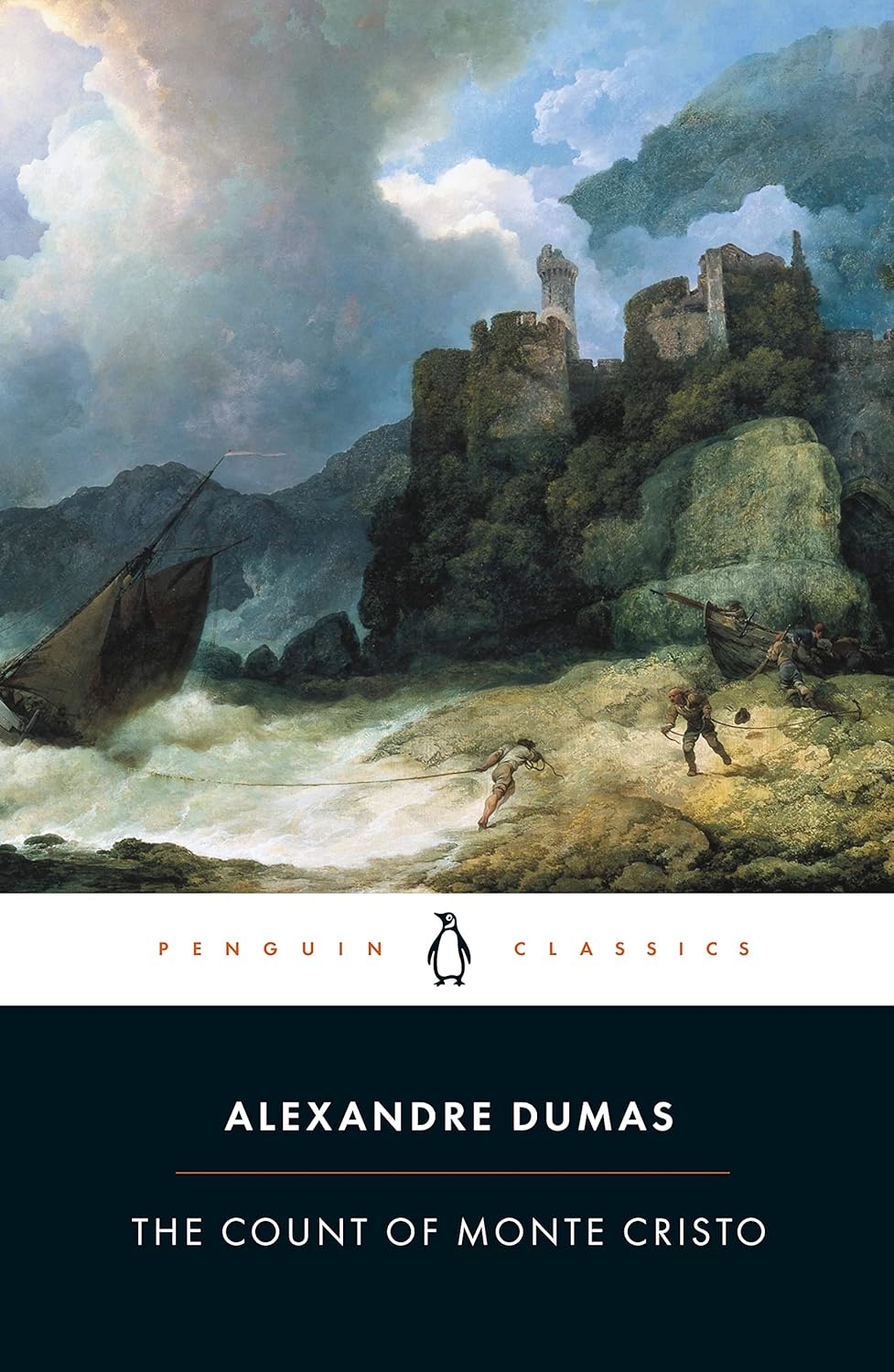
#1 — The Count of Monte Cristo — trans. Robin Buss (2003)
- Readability: Fluent and forward-moving while preserving scale.
- Accuracy: Fully unabridged — all 117 chapters preserved.
- Tone: Light touch that lets Dumas's plotting carry the pace.
- Accessibility: Standard edition for first-time readers and courses.

John Lee's commanding and nuanced narration perfectly captures the epic scale and intricate revenge plot, while Robin Buss's modern translation preserves the novel's richness and readability.
Listen on Audible →Which translation is right for you?
- Choose Buss if you want the complete novel with every subplot, character, and thematic layer intact.
- Choose Bair if you have already read the full text and want a quicker revisit or are genuinely pressed for time.
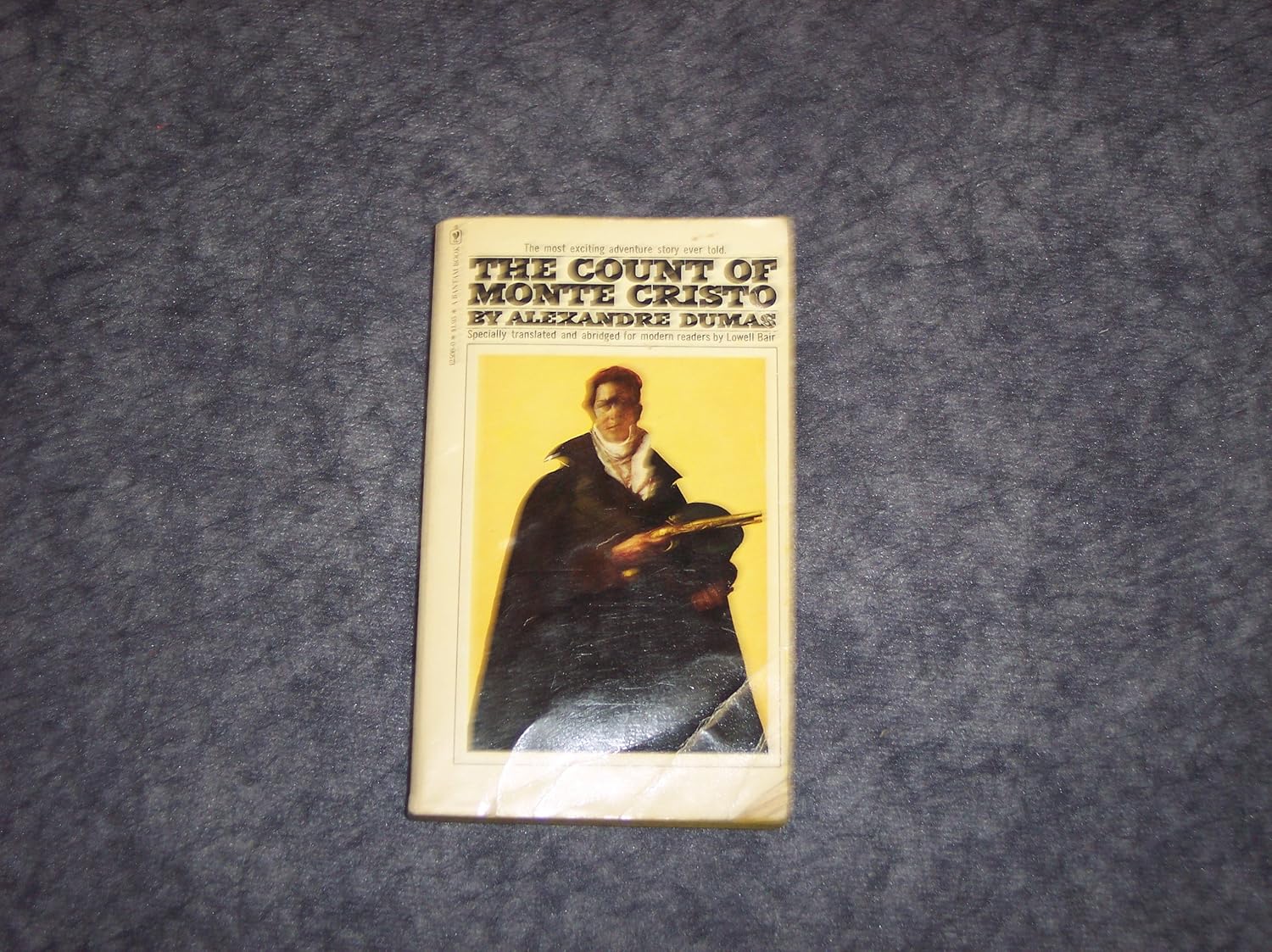
#2 — The Count of Monte Cristo — trans. Lowell Bair (1956)
- Readability: Fast-moving and well-paced.
- Accuracy: Abridged — roughly one-third of the text omitted.
- Tone: Straightforward thriller emphasis.
- Accessibility: Widely available but incomplete introduction.
About the Translators
Robin Buss (1941–2002, 2003, Penguin Classics): British translator and academic whose other Penguin Classics translations include works by Zola, Stendhal, and Dumas père. His unabridged Count of Monte Cristo — completed shortly before his death — is the first fully complete English translation of the novel and the standard edition for all serious readers.
Lowell Bair (1956, Bantam Classics): American translator whose version has been in continuous print for nearly seventy years and remains widely available. His translation is substantially abridged — roughly a third of the text cut — making it a different and lesser book than Dumas wrote.
Themes
The transformation of Edmond Dantès. The novel's first question is what fourteen years of unjust imprisonment does to a person. The man who enters the Château d'If is young, in love, and innocent. The Count who emerges is patient, calculating, and almost inhuman in his capacity to delay and control his desires. Dumas follows this transformation with extraordinary care — the years of imprisonment, the friendship with Abbé Faria, the escape, the discovery of the treasure — and the gap between Dantès and the Count is the novel's true subject. By the end, the Count himself is uncertain the transformation was worth it.
The corrupting logic of perfect revenge. The Count's plan is elegant: his enemies will be destroyed not by his hand directly but by the consequences of their own greed, ambition, and moral weakness — he simply arranges the conditions. The novel follows through on this logic and then shows its cost. Innocents are caught in the machinery alongside the guilty. The Count discovers he cannot calibrate justice with the precision he imagined. The moment of supposed triumph is hollow. Dumas built the perfect revenge plot and then asked whether perfect revenge is worth having.
Money as the mechanism of justice — and its limits. The Count's treasure is not incidental to the plot: it is the engine of everything. With unlimited wealth he can construct any identity, access any social circle, purchase any loyalty, arrange any outcome. The novel is simultaneously a fantasy about what absolute financial power enables and a critique of the society in which such power can purchase anything — including the justice, and the social identity, that were taken from Dantès. The final movement of the novel questions whether all this purchased justice has made anyone happy.
Key Characters
Edmond Dantès / The Count of Monte Cristo — the novel's protagonist across both halves. The gap between the young Dantès and the cold, calculating Count who returns is the novel's true subject — a transformation the novel tracks with care but never fully endorses. The Count at the end is not the man who entered the Château d'If, and this is partly a loss.
Abbé Faria — the scholarly priest who shares Dantès's imprisonment, educates him, reveals the treasure's location, and dies before the escape. Without Faria there is no Count of Monte Cristo. He is the novel's Merlin figure, its conscience, and the only person in the book who asks Dantès what he plans to do with the gift he is being given.
Mercédès — Dantès's fiancée, who believed him dead and married Fernand. She recognizes the Count at their first meeting, says nothing, and acts to protect their son. Her final scenes with Dantès are among the novel's most affecting passages — two people who cannot go back and cannot go forward.
Fernand Mondego / Count de Morcerf — the man who betrayed Dantès for love of Mercédès. His destruction is the most personal of the revenge plots and the one whose collateral damage the novel scrutinizes most carefully.
Danglars — the scheming first mate who became a banker; his downfall is the novel's most financially elaborate revenge, and the most darkly comic. His final humiliation — stripped of everything, left alive — is the Count's most ambiguous act of mercy.
Recommended Sources
For further academic reading on Dumas and The Count of Monte Cristo:
- Nineteenth-Century French Studies (University of Nebraska Press) — the primary English-language journal for Dumas scholarship and 19th century French popular fiction.
- French Studies (Oxford University Press) — the leading British French studies journal; essential historical and cultural context for Dumas's world.
- Romanic Review (Columbia University) — covers Romance literatures broadly; essential for placing Dumas in European literary history.
Which translation is right for you?
There is one complete English translation. Choose Robin Buss's Penguin Classics edition — it is the only unabridged version, and it is the novel Dumas actually wrote. The Bantam Bair and other abridged editions cut roughly a third of the text, including subplots and characters essential to the novel's full argument about justice, identity, and the cost of revenge. An abridged Monte Cristo is a lesser version of a great novel, not an efficient version of the same one.
Frequently Asked Questions
What is The Count of Monte Cristo about?
The Count of Monte Cristo follows Edmond Dantès, a young sailor falsely imprisoned for treason. After escaping, he discovers a hidden treasure and assumes the identity of the Count of Monte Cristo to exact revenge on those who betrayed him, exploring themes of justice, vengeance, and redemption.
Is The Count of Monte Cristo hard to read?
The novel's complexity lies in its length and intricate plot. Buss's translation is praised for its readability and fluency, making it accessible for most readers, while Bair's abridged version offers a quicker, though less complete, experience.
Which Count of Monte Cristo translation is best?
Robin Buss's 2003 Penguin Classics edition is the only unabridged English translation and the definitive choice for any reader who wants the complete novel Dumas wrote.
Buss vs Bair — which should I choose?
Choose Buss if you want the full 1,200+ page novel with all subplots and characters. Bair's version is abridged by roughly a third and should only be considered for a quick revisit after reading the complete text.
Which translation is easiest to read?
Buss's translation reads with fluency and forward drive that makes the enormous novel feel manageable while preserving Dumas's operatic scale.
Which translation is most accurate?
Buss's unabridged Penguin Classics edition is the only complete and accurate English version; all widely available alternatives cut substantial portions of the original text.
Why do so many editions of The Count of Monte Cristo feel incomplete?
Most popular English versions, including the long-running Bair translation, are abridged and omit roughly a third of Dumas's original content, including essential subplots and characters.
This guide is based on reading the 2 translations and reviewing scholarly commentary. Last reviewed: June 2026.
As an Amazon Associate, I earn from qualifying purchases.
Looking for another classic? Browse all our translation guides →
Same author? See our guide to the best Three Musketeers translation.
For another sweeping 19th-century French novel, our Les Misérables translation guide compares Fahnestock, Denny, and Rose.
Balzac's world is explored in our Lost Illusions translation guide, which recommends MacKenzie's modern edition.
Stendhal's masterpiece is covered in our Red and the Black translation guide, comparing Slater and Adams.
Another French classic: our Madame Bovary translation guide weighs Lydia Davis against Wall and Steegmuller.