The Peloponnesian War: What It's About & Best Translation
Thucydides on Athens and Sparta — Warner's Penguin, Hammond's Oxford, and the Landmark edition
As an Amazon Associate, we earn from qualifying purchases.
The Peloponnesian War is a historical account by Thucydides of the war between Athens and Sparta, highlighting the political and military struggles of the time. It explores themes of power, democracy, and human nature.
Translation Comparison at a Glance
| Translation | Readability | Accuracy | Tone | Best For |
|---|---|---|---|---|
| Warner (1954) | High | Good | Clear and vigorous | First-time readers |
| Hammond (2009) | Moderate | Very good | Literal and precise | Closer textual study |
| Landmark / Crawley-Hanson (1996) | Moderate | Good | Formal, Victorian | Reference and maps |
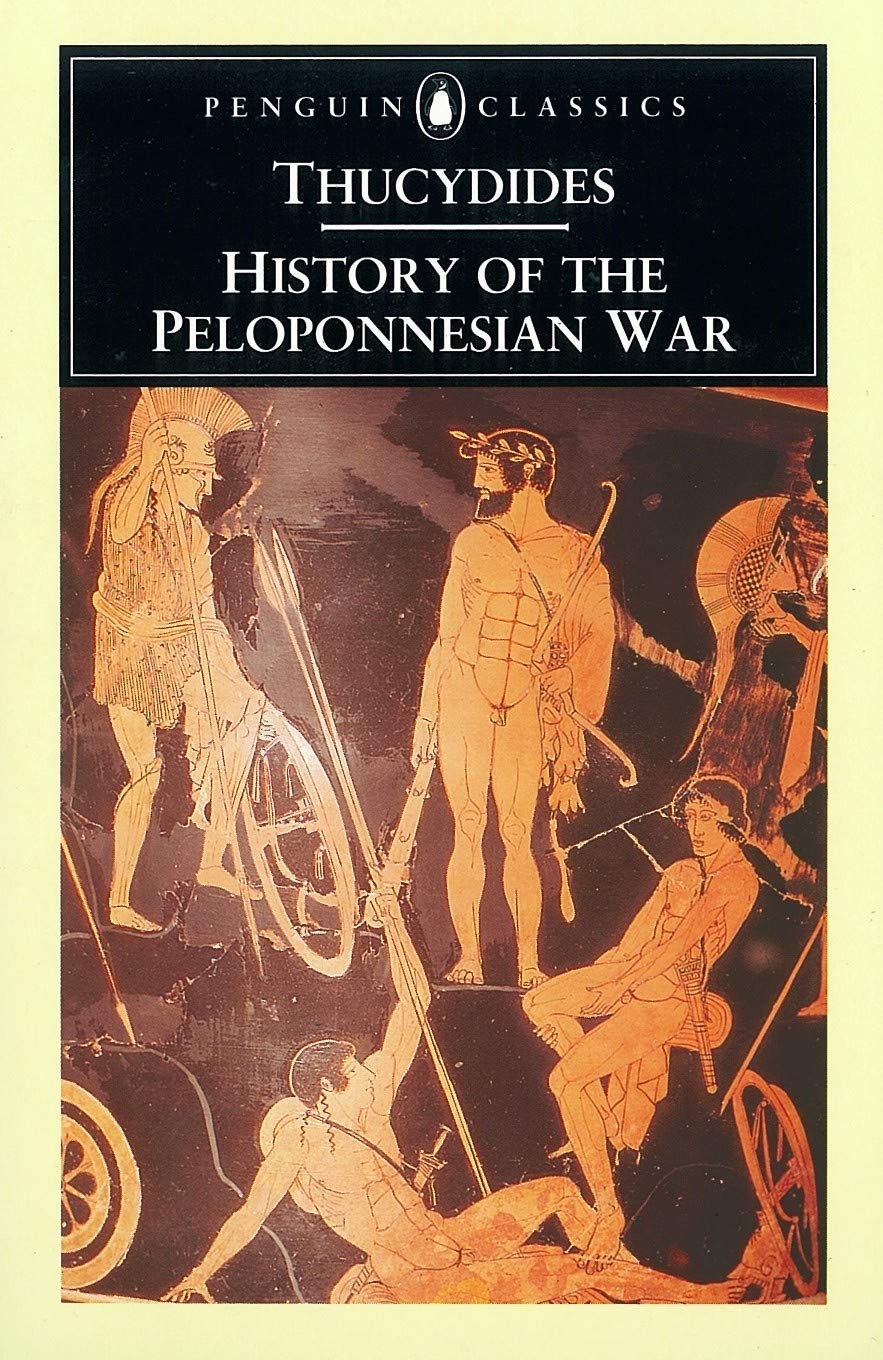
- Readability: Clear, vigorous English that makes the narrative flow with unusual momentum.
- Accuracy: Good; sometimes smooths over Thucydides's difficult syntax.
- Tone: Direct and eloquent, especially in the speeches.
- Accessibility: Excellent for first-time readers.

Griffin's commanding and articulate delivery perfectly captures the gravity and drama of Thucydides' history, while Warner's translation remains the most accessible and widely respected modern English version.
Listen on Audible →Which translation is right for you?
- Choose Warner if you are reading Thucydides for the first time and want fluent, accessible prose that makes the narrative flow.
- Choose Hammond if you want a more literal translation that preserves Thucydides's difficult syntax and syntactic complexity.
- Choose the Landmark edition if you need maps, appendices, and scholarly apparatus for sustained study or reference.
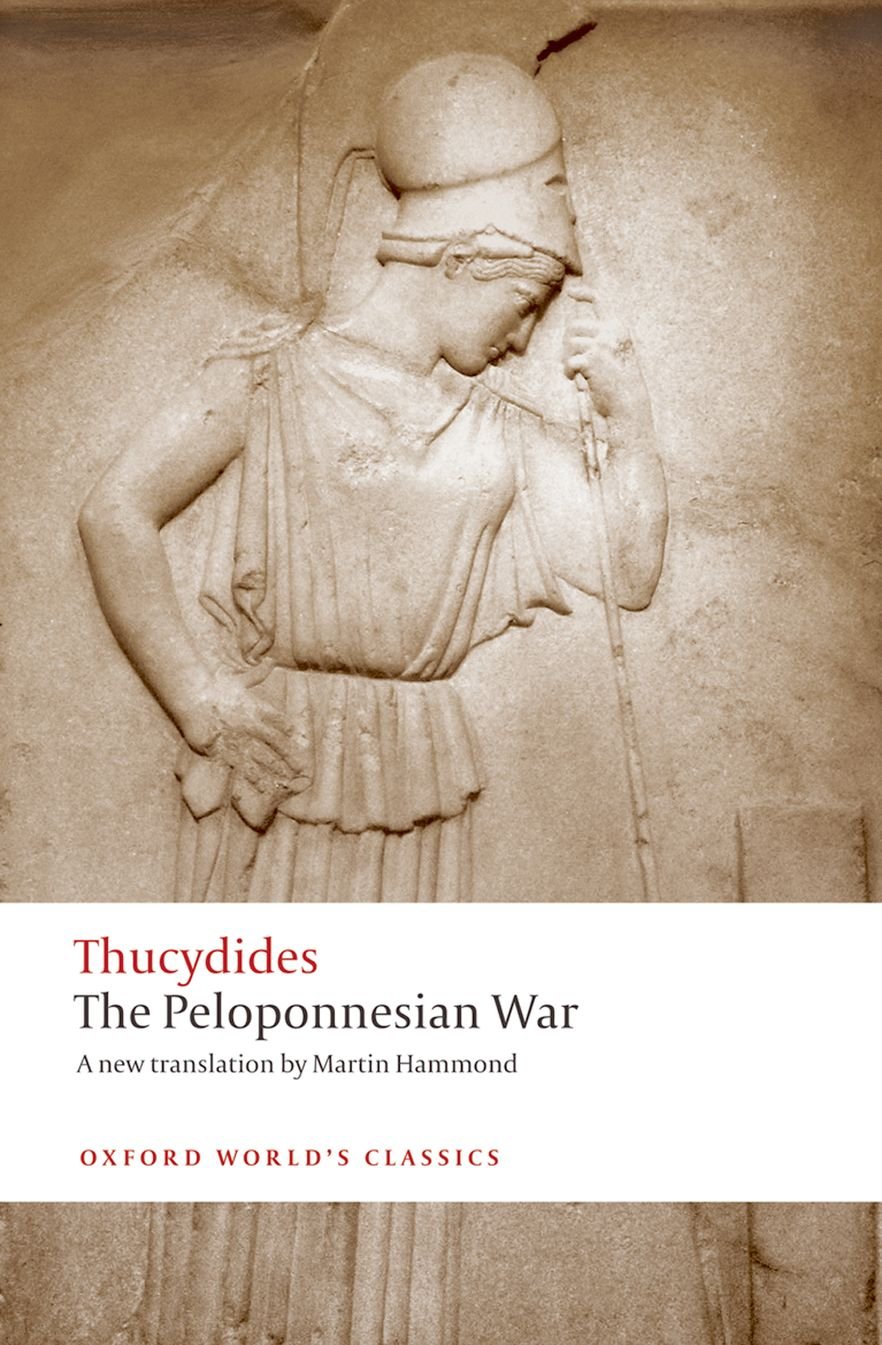
- Readability: Readable but more demanding than Warner.
- Accuracy: Very good; more literal and faithful to the Greek.
- Tone: Precise, preserving qualifications and compression.
- Accessibility: Best for readers wanting closer engagement with the text.
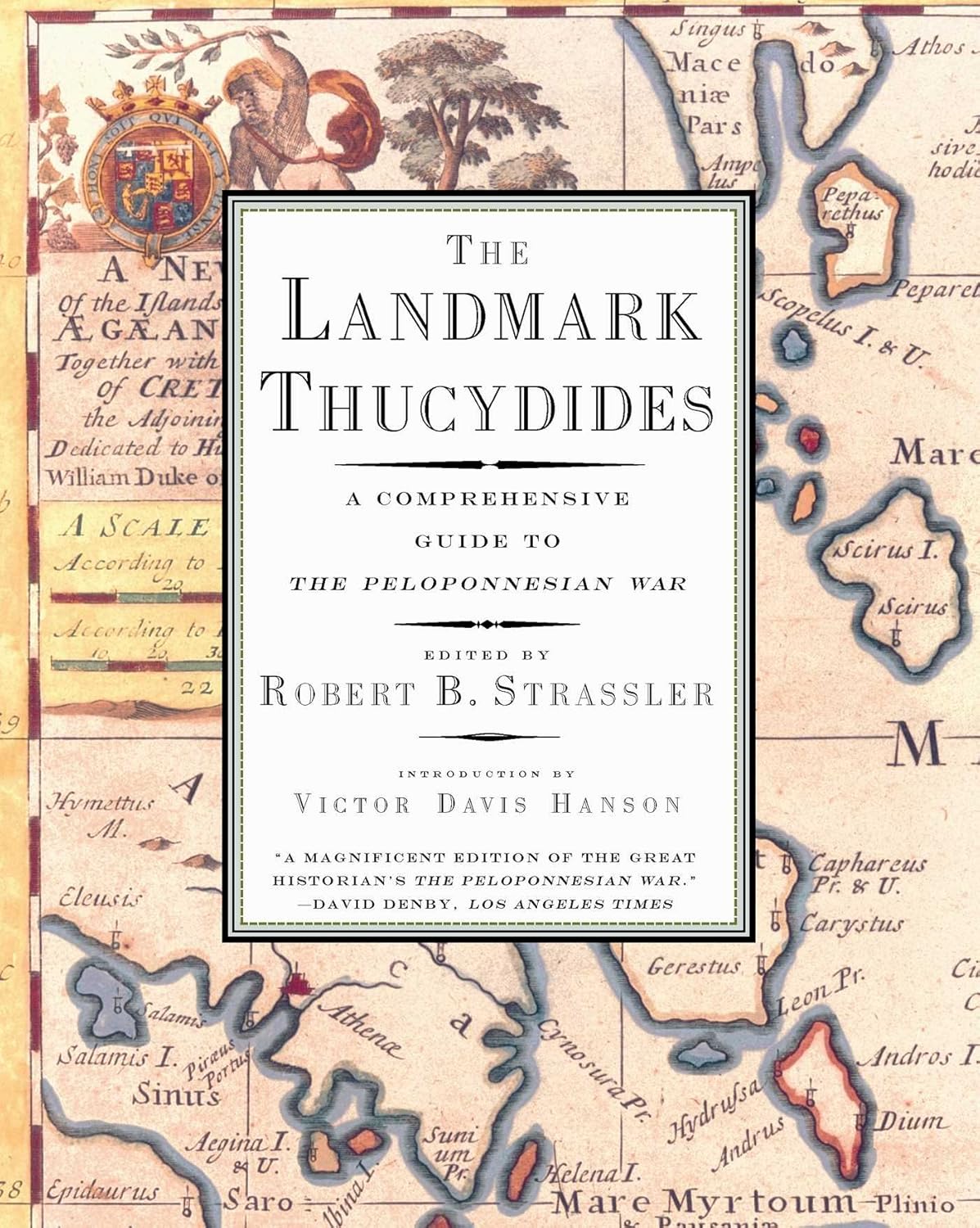
- Readability: Moderate; formal Victorian register.
- Accuracy: Good; revised Crawley text with scholarly oversight.
- Tone: Elevated and nineteenth-century in feel.
- Accessibility: Best as a reference work with extensive apparatus.
About the Translators
Rex Warner (1905–1986, 1954, Penguin Classics): British novelist, poet, and classical scholar; his novels of the 1930s — The Wild Goose Chase, The Aerodrome — established him as a significant literary figure before he turned to classical translation; his other translations for Penguin include Plutarch's Fall of the Roman Republic and Caesar's War Commentaries. His Penguin Classics introduction was written by M.I. Finley (1912–1986), the most distinguished ancient economic and social historian of the twentieth century and the author of foundational studies of ancient democracy and slavery.
Martin Hammond (2009, Oxford World's Classics): British classicist and educator; former headmaster of Tonbridge School and Rugby School; his other Oxford translations include Herodotus's Histories and Homer's Iliad. His Thucydides is more literal than Warner's — preserving more of the syntactic complexity of the Greek — and comes with a scholarly introduction and notes by P.J. Rhodes (Durham), one of the foremost scholars of Athenian history.
Richard Crawley (1874, revised by Victor Davis Hanson, 1996, Free Press): Crawley's Victorian translation was the standard English Thucydides for most of the twentieth century; its formal register — slightly archaic, elevated, appropriate to the nineteenth-century sense of Thucydides as a moralist — gives it a distinctive character. Victor Davis Hanson (Hoover Institution), the military historian, revised it for the Landmark edition; his preface explains the nature and extent of the revision.
Themes
Power and its logic. The Melian Dialogue — in which Athenian envoys inform the neutral island of Melos that the strong do what they can and the weak suffer what they must — is the most concise statement of realpolitik in ancient literature and arguably in any literature. Thucydides presents it without explicit moral commentary, which is itself a form of commentary: the reader supplies the judgement that the Athenians decline to make. The logic of power — that it operates independently of justice, that the appearance of justice is itself a form of power — runs through the entire narrative.
Democratic deliberation and its failures. Thucydides is deeply interested in how democracies make decisions, and his account is not flattering. The Athenians are repeatedly shown making catastrophic decisions in assembly — voting for the Sicilian Expedition against the advice of Nicias, executing the Mytilenean rebels and then reconsidering the next day, becoming susceptible to the flattery and charisma of Alcibiades. The relationship between democratic energy and democratic self-destruction is one of the work's most persistent subjects, and one that has made Thucydides a favourite text of political scientists.
The Sicilian Expedition as the central catastrophe. The three books covering the Athenian expedition to Sicily in 415–413 BCE — one of the most ambitious military operations in ancient history — are among the greatest sustained narratives in any historical work. Thucydides traces the logic by which an initial strategic overconfidence, compounded by the loss of Alcibiades to exile, the caution of Nicias, and a series of contingent misfortunes, culminated in the total destruction of an enormous Athenian force. It is both a narrative of military disaster and an analysis of how individual decisions interact with collective forces to produce outcomes that no one intended.
Key Characters
Pericles — the Athenian general-statesman who dominates the early books; his Funeral Oration over the Athenian war dead is the greatest single speech in ancient historiography and Thucydides's most complete expression of what Athens stood for; his death in the plague of 430 BCE removes the only figure capable of managing Athenian democracy's self-destructive tendencies.
Alcibiades — the most brilliant and most dangerous figure in the narrative; beautiful, charismatic, and constitutionally incapable of accepting any constraint on his ambition; his sponsorship of the Sicilian Expedition, his subsequent recall and defection to Sparta, and his eventual return to Athens form the narrative's most novelistic throughline. Thucydides regards him with a fascination he cannot quite conceal behind his analytical prose.
Nicias — the cautious Athenian general who opposed the Sicilian Expedition, was given command of it against his will, and conducted it to catastrophic defeat; a man of genuine piety and considerable military competence who was destroyed by a campaign he had correctly argued should not be attempted. His death — executed after the final Athenian surrender in Syracuse — is the work's most explicitly tragic moment.
Brasidas — the Spartan general of unusual charisma, strategic imagination, and personal bravery; almost unique in the Spartan military tradition for combining conventional Spartan courage with diplomatic skill and the ability to inspire non-Spartans. His death at Amphipolis (in the same battle that ended Cleon) removed the most energetic military personality from both sides simultaneously.
Recommended Sources
For further academic reading on Thucydides and the Peloponnesian War:
- Histos (Durham University) — the specialist open-access journal for ancient historiography; the primary venue for current Thucydides scholarship in English.
- Classical Quarterly (Cambridge University Press) — essential for Thucydides's prose style, his methodological preface, and his relationship to Herodotus and the pre-Socratic philosophers.
- American Journal of Philology (Johns Hopkins) — key for the Speeches controversy — the question of how to read Thucydides's reconstructed speeches — and for the work's place in the development of historical method.
Which translation is right for you?
Choose Warner (Penguin Classics) for a first reading — his prose makes the narrative accessible, the speeches land with force, and M.I. Finley's introduction is the best short guide to why Thucydides matters. Choose Hammond (Oxford World's Classics) for a closer reading — his translation is more faithful to Thucydides's difficult Greek, and P.J. Rhodes's notes provide the most thorough scholarly apparatus in any trade edition. Choose the Landmark (Free Press) for sustained study — the maps on every page, the appendices, and the comprehensive index make it the essential reference edition for anyone who wants to follow the Peloponnesian War as a military, political, and naval history.
Frequently Asked Questions
What is The Peloponnesian War about?
The Peloponnesian War is a historical account by Thucydides of the war between Athens and Sparta, highlighting the political and military struggles of the time. It explores themes of power, democracy, and human nature.
Is The Peloponnesian War hard to read?
The Peloponnesian War can be challenging due to its complex themes and historical context. Warner's translation is the most accessible, while Hammond's offers a more literal approach.
Which Peloponnesian War translation is best?
Start with Rex Warner's 1954 Penguin Classics translation for a first reading. His prose is direct and readable, making the narrative flow with unusual momentum.
Warner vs Hammond — which should I choose?
Choose Warner for accessibility and first-time readers. Choose Hammond for a closer reading that preserves more of Thucydides's difficult syntax and syntactic complexity.
Which translation is easiest to read?
Rex Warner's Penguin Classics translation is the easiest to read. It writes a clear, vigorous English that makes the narrative accessible to general readers.
Which translation is most accurate?
Martin Hammond's Oxford World's Classics translation is the most accurate to the Greek. It is more literal than Warner's and preserves the qualifications and deliberate compression of Thucydides's prose.
When should I choose the Landmark Thucydides edition?
Choose the Landmark edition for sustained study. Its maps on every page, appendices, and scholarly apparatus make it the essential reference for military and political analysis.
This guide is based on reading all 3 translations and reviewing scholarly commentary. Last reviewed: June 2026.
As an Amazon Associate, I earn from qualifying purchases.
Looking for another classic? Browse all our translation guides →
Thucydides's great contemporary deserves equal attention — see our guide to the best Histories translation.
For the Greek epic tradition that shaped Thucydides's world, compare the best Iliad translations.
Readers of ancient Greek history will also want our Republic translation guide for Plato.
Explore more classical drama with our recommendations for the best Oresteia translation.
Another foundational Greek text: our guide to the best Theban Plays translations.