The Adventures of Pinocchio: What It's About & Best Translation
Collodi's original is stranger, darker, and funnier than any adaptation — and the translation matters
As an Amazon Associate, we earn from qualifying purchases.
The Adventures of Pinocchio follows a wooden puppet named Pinocchio who dreams of becoming a real boy. His journey is filled with mischief and moral lessons as he encounters various characters and learns about honesty, responsibility, and the consequences of his actions.
Translation Comparison at a Glance
| Translation | Readability | Accuracy | Tone | Best For |
|---|---|---|---|---|
| Lucas (1996) | High | Excellent | Faithful, precise | Scholarly study, complete text |
| Hooper (2009) | Very high | Good | Colloquial, fluent | Casual reading, quick pace |
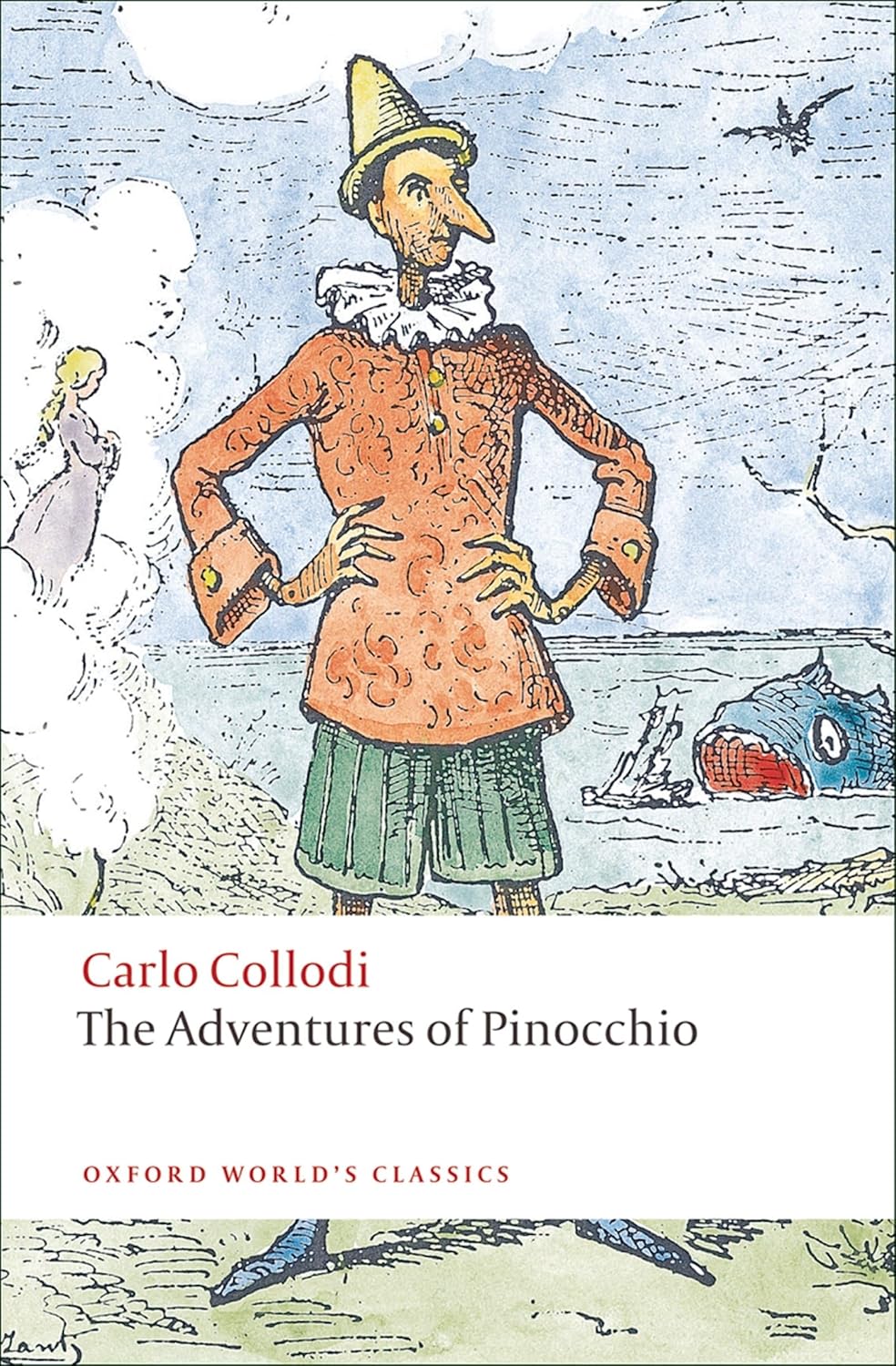
#1 — The Adventures of Pinocchio — trans. Ann Lawson Lucas (1996)
- Readability: Faithful to Collodi's eccentric style while remaining readable English prose.
- Accuracy: Most complete and accurate; does not smooth over disturbing episodes.
- Tone: Precise and scholarly, preserving the novel's darker humour and violence.
- Accessibility: Best with extensive notes and introduction for serious readers.

Simon Vance's rich, expressive narration brings Pinocchio's whimsical and moral journey to life, while Hooper's translation preserves the original Italian charm and nuance.
Listen on Audible →Which translation is right for you?
- Choose Lucas if you want the definitive scholarly edition with full critical apparatus and complete, unexpurgated text.
- Choose Hooper if you want a fluent, colloquial modern translation for casual, enjoyable reading without scholarly depth.
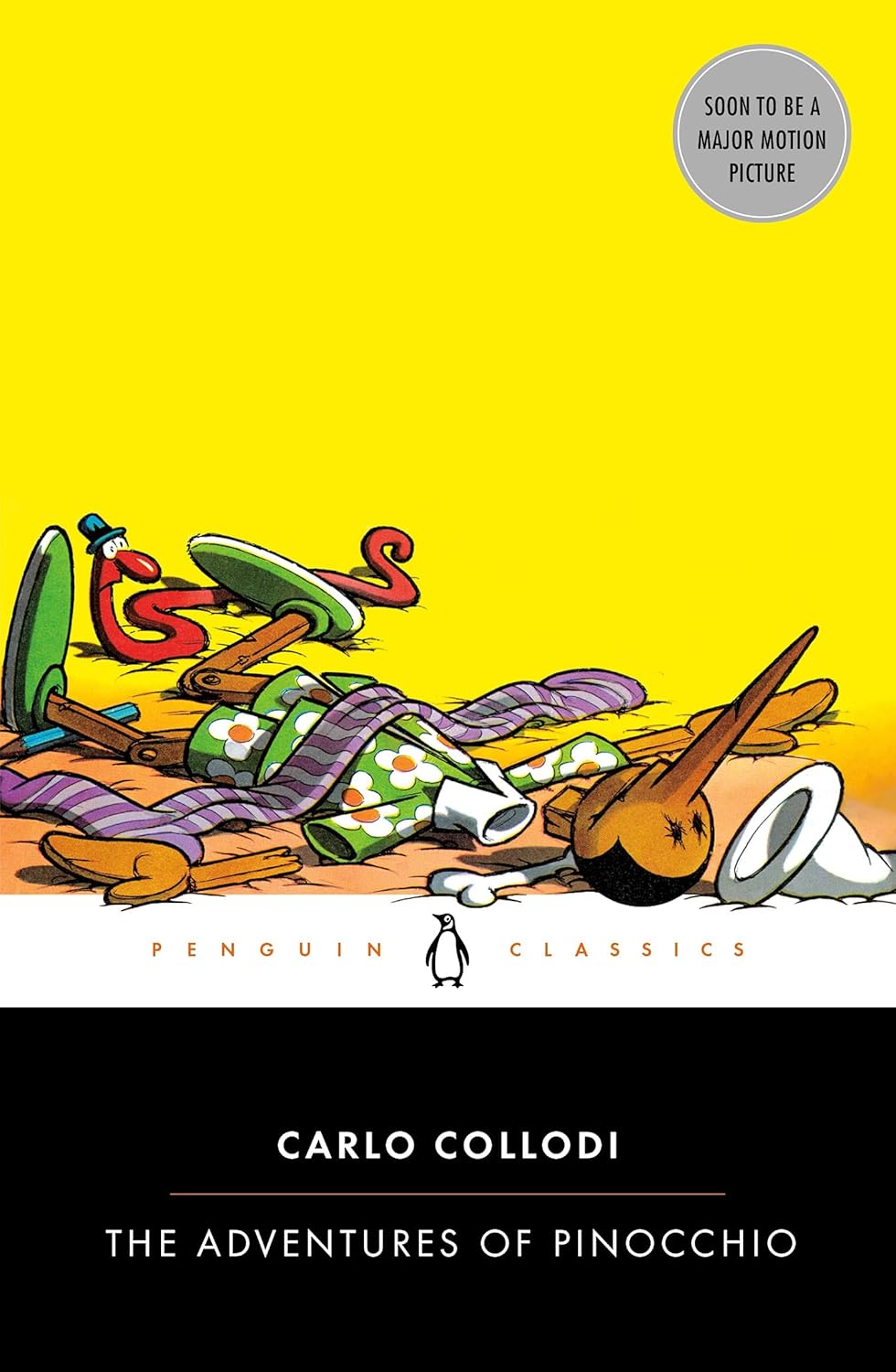
#2 — The Adventures of Pinocchio — trans. John Hooper (2009)
- Readability: Highly fluent and colloquial, easy to read at speed.
- Accuracy: Good overall but prioritises naturalness over strict precision.
- Tone: More modern and conversational than Lucas.
- Accessibility: Ideal for casual readers wanting an enjoyable introduction.
About the Translators
Ann Lawson Lucas (Oxford World's Classics, 1996): A specialist in Italian children's literature and one of the few translators to approach Pinocchio with the full scholarly apparatus the text requires. Lucas's translation is both faithful to Collodi's often-difficult Italian — which mixes elevated literary register with dialect and slang in ways that defy easy rendering — and readable as English prose. Her introduction and extensive notes illuminate the novel's serial publication history, its transformations between newspaper and book form, and the cultural context of Collodi's Italy. The edition is complete and unexpurgated, reproducing the original Enrico Mazzanti illustrations from the 1883 first book edition.
John Hooper and Anna Kraczyna (Penguin Classics, 2009; reissued with new cover 2022): Hooper, best known as a journalist and author of books on contemporary Italy and Spain, brings a fluent readability to the translation that makes it easy to move through quickly. His English is more colloquial than Lucas's, generally prioritising naturalness over precision. The 2022 reissue of the Penguin edition was timed to coincide with Guillermo del Toro's Academy Award-winning Netflix adaptation, which brought the novel renewed attention.
Themes
Conscience and its evasion. Pinocchio repeatedly learns lessons — about honesty, about the consequences of disobedience, about the value of work — and immediately forgets them when the next temptation appears. The novel is not a story of gradual improvement but of cyclical failure, which makes its eventual conclusion all the more surprising and earned.
The cost of fantasy over reality. Every fantastic promise Pinocchio pursues — the Land of Toys, the Field of Miracles, the easy life — ends in punishment, exploitation, or near-death. The novel has a consistent economy: pleasure that bypasses work leads to suffering; suffering that is accepted willingly leads to growth.
Transformation as moral achievement. Becoming a "real boy" is not a gift but a reward — and it is earned not through a single heroic act but through the accumulated weight of small choices made over time. The novel's ending is genuinely moving because it has taken so long and cost so much.
The comedy of violence. Collodi's Pinocchio is funnier and more violent than any adaptation acknowledges. Characters die and come back; Pinocchio is hanged and survives; the Talking Cricket — the cricket Jiminy Cricket is based on — is killed with a hammer and returns as a ghost. The violence is not cruel but carnivalesque, in the tradition of puppet theatre from which Pinocchio himself emerges.
Key Characters
Pinocchio — the wooden puppet; vain, impulsive, easily distracted, and incapable of sustained effort or deferred gratification; his transformation is moving precisely because he is not naturally virtuous and must earn his humanity the hard way. He is not a lovable rascal but a genuinely difficult character who becomes lovable through suffering.
Geppetto — the woodcarver who made him; old, poor, patient, and repeatedly abandoned and then sought out in rescue operations; his love for Pinocchio is unconditional and slightly bewildering, and the novel treats it with complete seriousness.
The Fairy with Turquoise Hair (the Blue Fairy) — Pinocchio's supernatural guide; she dies, comes back, changes form, acts as a child and then as a grown woman, lies to Pinocchio and forgives him; her relationship with Pinocchio is far more complicated than any adaptation suggests. She represents the possibility of transformation but will not do the work for him.
The Fox and the Cat — the novel's recurring villains; charming, plausible, and reliably treacherous; they represent the adult world of exploitation and deceit that Pinocchio keeps failing to recognise until he has been robbed or worse. Their persistence in the story long after they should have been abandoned is one of the novel's darker jokes.
Recommended Sources
For further reading on Collodi and Pinocchio:
- Giorgio Manganelli, Pinocchio: A Parallel (translated by Henry Martin, Archipelago Books) — the most celebrated Italian critical essay on the novel; Manganelli reads Pinocchio as a profoundly dark and philosophically serious text, not a children's story.
- Rebecca West's scholarship on Collodi and Italian children's literature — useful for the historical context of Collodi's career as a journalist and the serial publication history of the Giornale per i Bambini.
- Italian Studies (Maney Publishing) — the primary English-language journal for Italian literary scholarship; the relevant venue for academic treatment of Collodi's place in Italian literature.
Lucas's Oxford World's Classics translation is the right choice for any reader who wants the real novel — complete, accurately rendered, and with the best scholarly apparatus. Hooper and Kraczyna's Penguin version is a good choice for readers who want a comfortable, readable introduction without committing to a scholarly edition. For either reader, the experience of the actual Collodi is likely to be considerably stranger, funnier, and more affecting than any prior encounter with Pinocchio prepared them for.
Frequently Asked Questions
What is The Adventures of Pinocchio about?
The Adventures of Pinocchio follows a wooden puppet named Pinocchio who dreams of becoming a real boy. His journey is filled with mischief and moral lessons as he encounters various characters and learns about honesty, responsibility, and the consequences of his actions.
Is The Adventures of Pinocchio hard to read?
The difficulty of reading The Adventures of Pinocchio depends on the translation. Lucas's version is more scholarly and precise, while Hooper's is more colloquial and accessible for general readers.
Which Pinocchio translation is best?
Ann Lawson Lucas's Oxford World's Classics translation is the definitive scholarly English edition of Pinocchio.
Lucas vs Hooper — which should I choose?
Choose Lucas for the most complete and accurate version with the best editorial apparatus. Choose Hooper for a lighter, more colloquial read aimed at general readers.
Which translation is easiest to read?
John Hooper's Penguin Classics translation is the most accessible current English version, with fluent readability that suits the pace of Collodi's serial narrative.
Which translation is most accurate?
Ann Lawson Lucas's Oxford World's Classics translation is the most complete and accurate version, faithful to Collodi's often-difficult Italian without smoothing over darker episodes.
Why do most Victorian English translations of Pinocchio differ so much from the original?
Most Victorian English translations sanitised or abridged the novel significantly, removing its subversive energy, violence, and adult wit.
This guide is based on reading both translations and reviewing scholarly commentary. Last reviewed: June 2026.
As an Amazon Associate, I earn from qualifying purchases.
Looking for another classic? Browse all our translation guides →
Italian literature offers many more translation challenges — start with our Decameron translation guide.
For the foundational Italian epic, see our comparison of the best Divine Comedy translations.
Readers who enjoyed Collodi may also like our guide to the best Invisible Cities translation.
Another essential Italian novel: our Leopard translation guide compares the two leading editions.
If you're exploring modern Italian fiction, try our Name of the Rose translation guide.